
Chef Juliana
Acaçá de Milho Branco
You think this is sacred enough to be impossible. It isn't. Acaçá is patience, stirring, and ponto, taught plainly, with respect for the terreiros that carry it.
A cooking platform built around craft, culture, and the stories behind what we eat.

Created by
You think you'll turn zucchini into mush. Fine. Anota aí: high heat, wide pan, salt at the end, and suddenly this little green side starts solving dinner.
You know that quiet kitchen sentence, "isso não é pra mim"? It usually appears right before a pan of vegetables goes watery and sad. I know it because I said it too, as a grown woman, standing over onions I had already managed to ruin. Cooking isn't a gift, it's something you learn. Even zucchini.
This is the green that fills the pê-efe without making a speech about itself. Rice, beans, meat or egg, something green. That's not glamour, that's the plate that keeps a country fed and itself. Abobrinha refogada belongs there because it's cheap when it's in season, fast enough for Tuesday, and honest comida de verdade, built from a real refogado of onion and garlic instead of a packet pretending to be flavor.
The whole method is restraint. Cut the zucchini evenly so it cooks evenly. Use a wide pan so the water can escape. Keep the heat high enough that the edges catch a little color. Salt near the end, because salt pulls water out, and we are not making zucchini soup by accident today.
You'll pull it while it still bites, glossy and garlicky, with soft onion clinging to the pieces. That's a recipe that works: not fancy, not mysterious, just taught properly.
Abobrinha, the Brazilian word used for zucchini and related summer squash, entered everyday urban cooking as a quick refogado because it cooks fast and stretches a plate cheaply. In home kitchens and marmitas, it often appears beside rice and beans as the green portion of the prato feito, sometimes plain with garlic, sometimes with tomato or cheiro-verde depending on the house. The debate is not regional pride here; it's texture, because overcooked abobrinha turns watery fast.
Quantity
4 medium, about 1 1/2 pounds
cut into 1/2-inch half-moons
Quantity
2 tablespoons
Quantity
1 small
thinly sliced
Quantity
4 cloves
minced
Quantity
3/4 teaspoon, divided, plus more to taste
Quantity
1/4 teaspoon
Quantity
2 tablespoons
chopped
Quantity
1 teaspoon
| Ingredient | Quantity |
|---|---|
| zucchinicut into 1/2-inch half-moons | 4 medium, about 1 1/2 pounds |
| oil | 2 tablespoons |
| onionthinly sliced | 1 small |
| garlicminced | 4 cloves |
| salt | 3/4 teaspoon, divided, plus more to taste |
| freshly ground black pepper | 1/4 teaspoon |
| parsley or cheiro-verdechopped | 2 tablespoons |
| lime juice (optional) | 1 teaspoon |
Cut the zucchini into half-moons about 1/2 inch thick, then pat them dry with a clean towel. Keep the pieces close in size so they finish together. Wet zucchini hits the pan and drops the heat, and then you're steaming it before you even started.
Warm the oil in a wide skillet over medium-high heat. Add the onion and 1/4 teaspoon of the salt, then cook, stirring often, until it softens and turns shiny at the edges, about 2 minutes. The onion needs a head start because zucchini cooks fast, and raw onion hiding in cooked zucchini is nobody's dream.
Add the garlic and stir for 30 to 45 seconds, just until you smell it. Keep it moving. Garlic gives you sweetness when it warms through, but it turns bitter when it browns too hard, and bitterness is very clingy.
Add the zucchini and spread it out in the widest layer you can manage. Let it sit for one minute before stirring, then cook for 4 to 5 minutes, tossing every now and then, until the cut sides look glossy and a few edges take on pale golden spots. A crowded pan traps water, so if your skillet is small, cook in two batches and save yourself the mush.
Add the remaining 1/2 teaspoon salt and the black pepper, then cook for 1 more minute. Taste a piece. It should be tender but still have a little bite in the center. Pull it now, because zucchini keeps softening from its own heat after it leaves the pan.
Turn off the heat and stir in the parsley or cheiro-verde. Add the lime juice only if the zucchini tastes flat, not because every vegetable needs a little ceremony. Serve right away beside rice and beans, or cool it for marmita before it overcooks in the container.
1 serving (about 165g)
Culinary guides, cultural storytelling, and the editorial depth that makes cooking meaningful.
Discover Culinary ExplorerChef Juliana
You think this is sacred enough to be impossible. It isn't. Acaçá is patience, stirring, and ponto, taught plainly, with respect for the terreiros that carry it.

Chef Juliana
You think cornmeal will turn into lumps and shame. It won't. Cold water first, patient stirring, and a real garlic base give you angu that solves dinner.

Chef Juliana
Everyone swears they can't make good rice. They're wrong. Refogue onion and garlic, use two parts water to one rice, then close the lid and leave the poor thing alone.
Chef Juliana
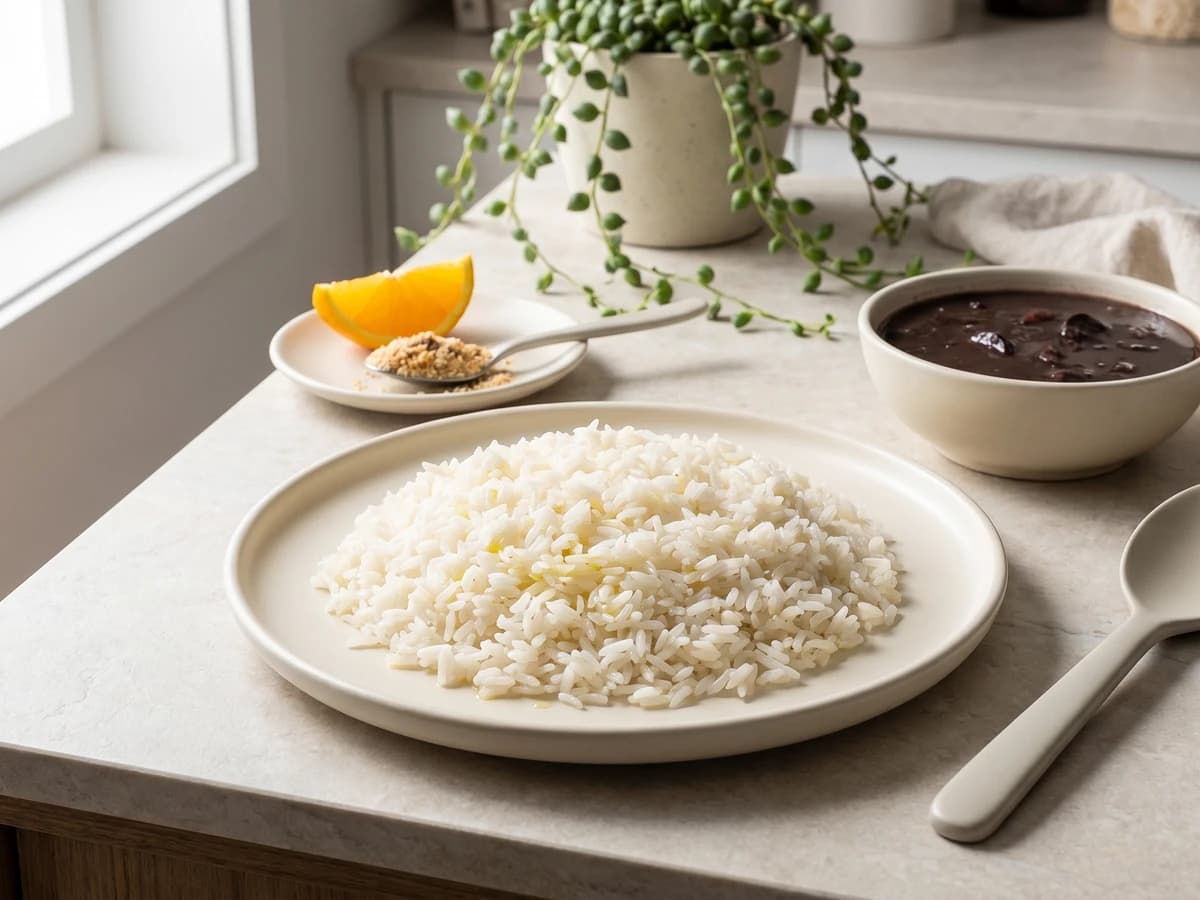
You think rice is hard. It isn't. Two parts water to one of rice, a real refogado, and the discipline to stop stirring. Anota aí.