
Chef Juliana
Abobrinha Refogada
You think you'll turn zucchini into mush. Fine. Anota aí: high heat, wide pan, salt at the end, and suddenly this little green side starts solving dinner.
A cooking platform built around craft, culture, and the stories behind what we eat.
Created by
You think rice is hard. It isn't. Two parts water to one of rice, a real refogado, and the discipline to stop stirring. Anota aí.
You have that little voice, I know it. Isso não é pra mim. Rice always burns, rice always sticks, rice turns to paste, rice is for people who were born knowing. No. Cozinhar não é dom, é um aprendizado. I learned late too, with a cheap caderno open beside the stove and more gummy rice than I care to confess.
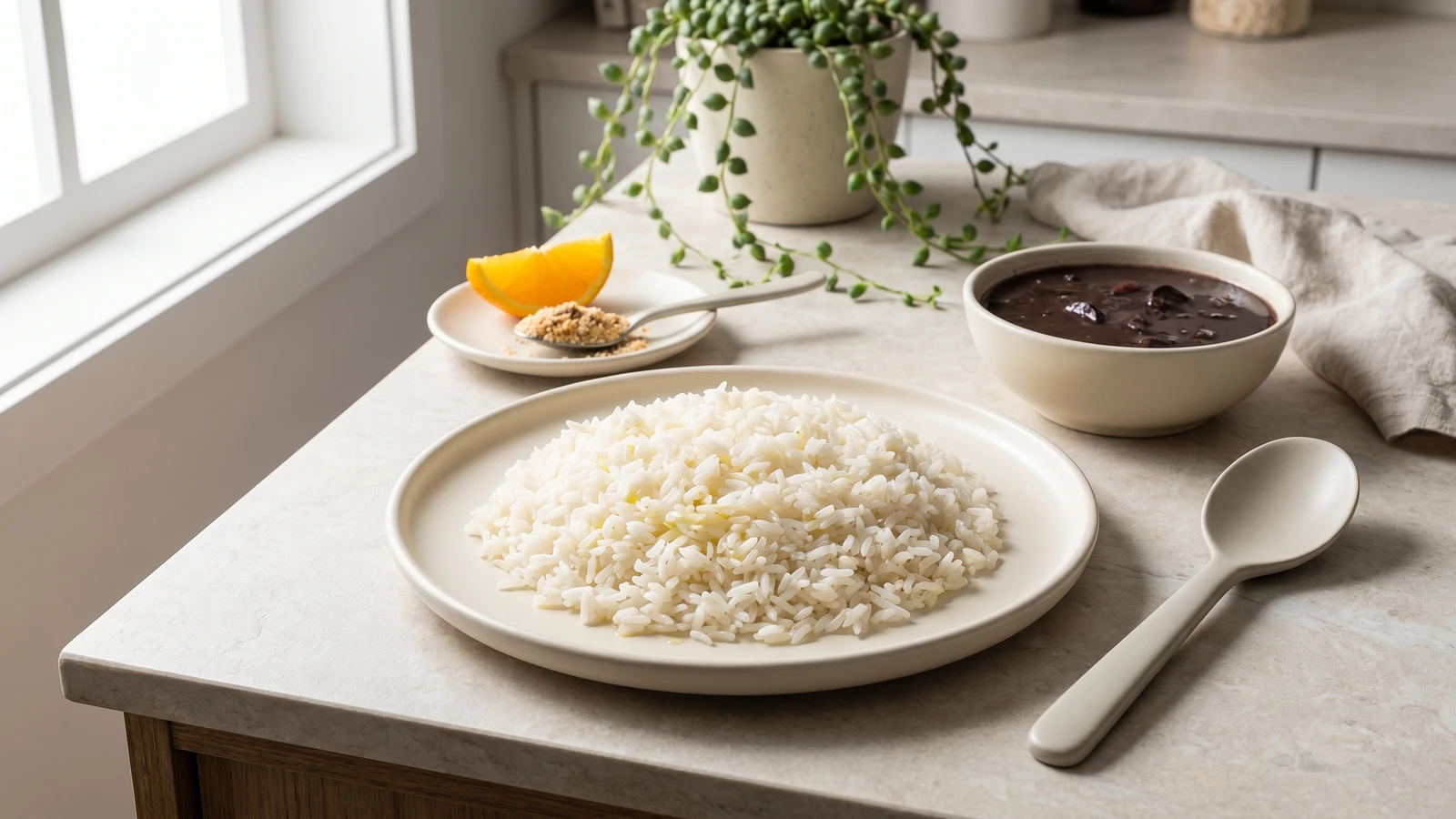
This rice is the quiet half of the Brazilian plate. Beside feijoada, it matters even more, because black beans and pork need something clean, loose, and gentle to carry them. A good arroz soltinho doesn't compete. It catches the caldo, makes room for farofa, couve, orange, and turns a heavy pot into a proper table.
The method is small and exact. Wash if your rice is very starchy, refogar it in onion and garlic so each grain gets coated in fat, add hot water in the right measure, then stop touching it. Stirring breaks the grains and releases starch, and then you get glue in a pot wondering who betrayed you. The spoon did.
By the end you'll have separate, tender grains, not dry, not wet, ready to resolver o jantar. This is comida de verdade at its most ordinary, which is exactly why it matters.
White rice became a daily Brazilian staple through Portuguese colonial routes and local cultivation, then settled into the rice-and-beans pairing that defines the prato feito across the country. For feijoada, especially the Saturday black-bean-and-pork meal associated with Rio de Janeiro and now eaten nationally, plain white rice is not a garnish. It is the neutral base that carries the bean broth, farofa, sautéed couve, and orange slices without turning the plate into a fight.
Quantity
1 cup
Quantity
2 tablespoons
Quantity
1/2 small
finely chopped
Quantity
1 clove
minced
Quantity
2 cups
Quantity
1 teaspoon
| Ingredient | Quantity |
|---|---|
| long-grain white rice | 1 cup |
| neutral oil or olive oil | 2 tablespoons |
| onionfinely chopped | 1/2 small |
| garlicminced | 1 clove |
| hot water | 2 cups |
| salt | 1 teaspoon |
Look at the rice. If it feels dusty or leaves the water cloudy when rinsed, wash it in a sieve under running water until the water runs clearer, then drain very well. If your rice is already clean and polished, you can skip the wash. The point is not ceremony. The point is removing extra loose starch so the grains don't cling like they owe each other money.
Warm the oil in a small heavy pot over medium heat. Add the onion and cook, stirring now and then, until it murcha, soft and see-through, about 3 minutes. Add the garlic and cook for 30 seconds, just until you smell it. This is where flavor begins, and burnt garlic is bitter enough to make the whole pot sulk.
Add the rice to the refogado and stir for 1 to 2 minutes, until the grains look glossy and a few turn slightly pearly at the edges. This coating helps the grains cook separate instead of surrendering into paste. Don't brown the rice. You're not making it toasted, you're teaching it to stay soltinho.
Pour in the hot water and add the salt. Stir once, scraping the bottom so nothing is stuck, then stop. Let it come to a lively boil with the lid off. Hot water keeps the cooking moving, and one good stir is enough to spread the salt. After that, the spoon becomes the enemy.
When the water is boiling, lower the heat to the smallest steady flame, cover the pot, and cook for 12 to 15 minutes. Do not stir. Listen for the bubbling to quiet down and look for little holes on the surface of the rice. That means the water has moved through the grains instead of sitting on top.
Turn off the heat and leave the pot covered for 10 minutes. This rest finishes the rice gently and lets the moisture even out, so the top isn't dry while the bottom is damp. Fluff with a fork from the edges toward the center, lifting instead of mashing. The grains should be tender, separate, and ready for feijoada.
1 serving (about 145g)
Culinary guides, cultural storytelling, and the editorial depth that makes cooking meaningful.
Discover Culinary ExplorerChef Juliana
You think you'll turn zucchini into mush. Fine. Anota aí: high heat, wide pan, salt at the end, and suddenly this little green side starts solving dinner.

Chef Juliana
You think this is sacred enough to be impossible. It isn't. Acaçá is patience, stirring, and ponto, taught plainly, with respect for the terreiros that carry it.

Chef Juliana
You think cornmeal will turn into lumps and shame. It won't. Cold water first, patient stirring, and a real garlic base give you angu that solves dinner.

Chef Juliana
Everyone swears they can't make good rice. They're wrong. Refogue onion and garlic, use two parts water to one rice, then close the lid and leave the poor thing alone.