
Chef Juliana
Abobrinha Refogada
You think you'll turn zucchini into mush. Fine. Anota aí: high heat, wide pan, salt at the end, and suddenly this little green side starts solving dinner.
A cooking platform built around craft, culture, and the stories behind what we eat.
Created by
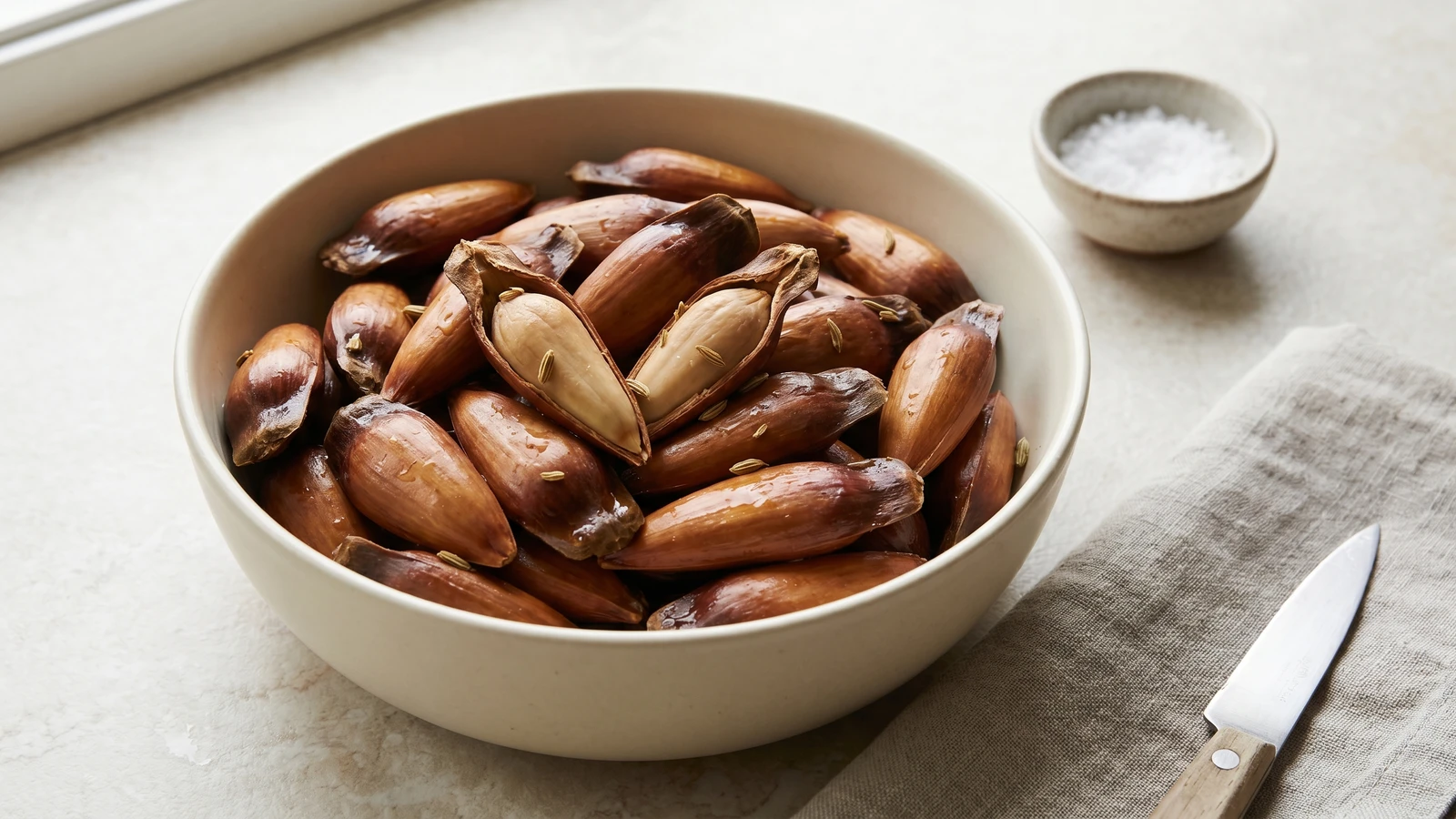
You don't need courage for this, just water, salt, erva-doce, and patience. Cook the pinhão until the shell gives way and the inside turns tender, nutty, and worth the cracked fingers.
You look at a pile of pinhão and think, quietly, isso não é pra mim. It has a shell like armor, it comes from a tree with a serious name, and somebody's uncle always has an opinion about the only correct way to cook it. Fine. Let the uncle talk. A gente is going to boil it properly.
This is comida de verdade in its plain winter clothes: seed, water, salt, erva-doce. No packet, no powder pretending to be Festa Junina. The method is almost embarrassingly simple, which is my favorite kind of recipe because it exposes the lie that cooking is a gift. Cozinhar não é dom, é um aprendizado. You wash, you cover with water, you season, you cook until the shell opens a little and the inside crushes tender between your teeth.
Pinhão doesn't replace the pê-efe, it stands beside it. Put it near arroz soltinho, feijão with a real refogado, a piece of meat or egg, and something green, and suddenly the plate knows what season it is. June down south tastes different from January in São Paulo, and that's the point. Cook with the season and the season cooks for you.
Anota aí: buy pinhão when it's heavy, glossy, and cheap in winter, usually from May to July. If it traveled a week and looks dry and tired, cook something else. I won't let you blame yourself for a sad seed.
Pinhão is the seed of Araucaria angustifolia, the Paraná pine, a tree native to southern Brazil and closely tied to winter food traditions in Paraná, Santa Catarina, and Rio Grande do Sul. Long before Festa Junina made it a seasonal snack, Indigenous peoples in the region gathered and cooked pinhão as an important cold-weather food. Today it appears boiled, roasted, in farofas, stews, and rice dishes, but the warm paper bag of boiled pinhão is still the most direct version.
Quantity
1 kg
washed
Quantity
8 cups, or enough to cover by 2 fingers
Quantity
1 tablespoon
Quantity
1 tablespoon
| Ingredient | Quantity |
|---|---|
| fresh pinhãowashed | 1 kg |
| water | 8 cups, or enough to cover by 2 fingers |
| coarse salt | 1 tablespoon |
| fennel seeds (sementes de erva-doce) | 1 tablespoon |
Pick through the pinhão and throw away any that are cracked, moldy, very light, or rattling inside the shell. Wash them well under running water, rubbing with your hands until the water runs clean. The shell goes into the pot with the seed, so dirt on the outside becomes dirt in the cooking water. Nobody invited that to dinner.
Put the pinhão in a heavy pot or pressure cooker and cover with water by about 2 fingers. Add the salt and erva-doce. The water needs room to move around the shells so they cook evenly, and the erva-doce perfumes the seed gently instead of shouting over it.
For a pressure cooker, lock the lid and cook for 30 minutes after it reaches pressure, then turn off the heat and let the pressure release naturally. For a regular pot, simmer covered for 1 hour to 1 hour 20 minutes, adding hot water if the level drops. The pinhão is done when a shell starts to split or a knife slides into the base with steady pressure. Too soon and the center stays chalky. Give it time.
Let the cooked pinhão sit in the hot cooking water for 10 minutes. This little rest lets the salt settle in and keeps the seeds warm while the shell softens just enough to crack more easily. Drain only what you're going to eat right away.
Hold each pinhão with a cloth, cut or bite the tip, and squeeze from the rounded end so the warm seed slides out. It should be firm, tender, and nutty, not dry or crumbly. Eat warm, with more salt if needed. This is finger food, not a performance.
1 serving (about 115g)
Culinary guides, cultural storytelling, and the editorial depth that makes cooking meaningful.
Discover Culinary ExplorerChef Juliana
You think you'll turn zucchini into mush. Fine. Anota aí: high heat, wide pan, salt at the end, and suddenly this little green side starts solving dinner.

Chef Juliana
You think this is sacred enough to be impossible. It isn't. Acaçá is patience, stirring, and ponto, taught plainly, with respect for the terreiros that carry it.

Chef Juliana
You think cornmeal will turn into lumps and shame. It won't. Cold water first, patient stirring, and a real garlic base give you angu that solves dinner.

Chef Juliana
Everyone swears they can't make good rice. They're wrong. Refogue onion and garlic, use two parts water to one rice, then close the lid and leave the poor thing alone.