Chef Isabel
Abanico Ibérico a la Plancha
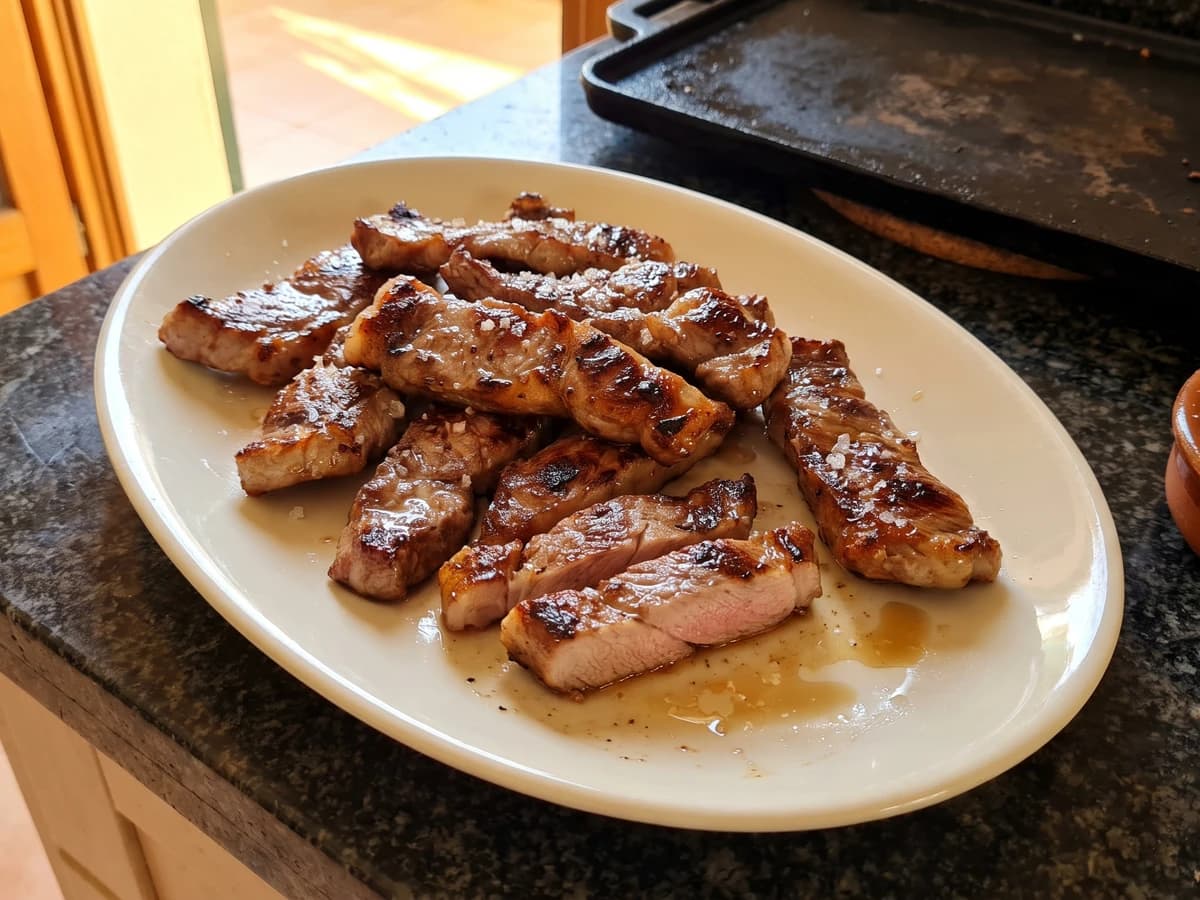
Extremadura's dehesa gives us this fan-shaped, marbled rib cut: salt it at the last moment, lay it on a fierce plancha, and count in seconds so the centre stays juicy.
A cooking platform built around craft, culture, and the stories behind what we eat.
Created by
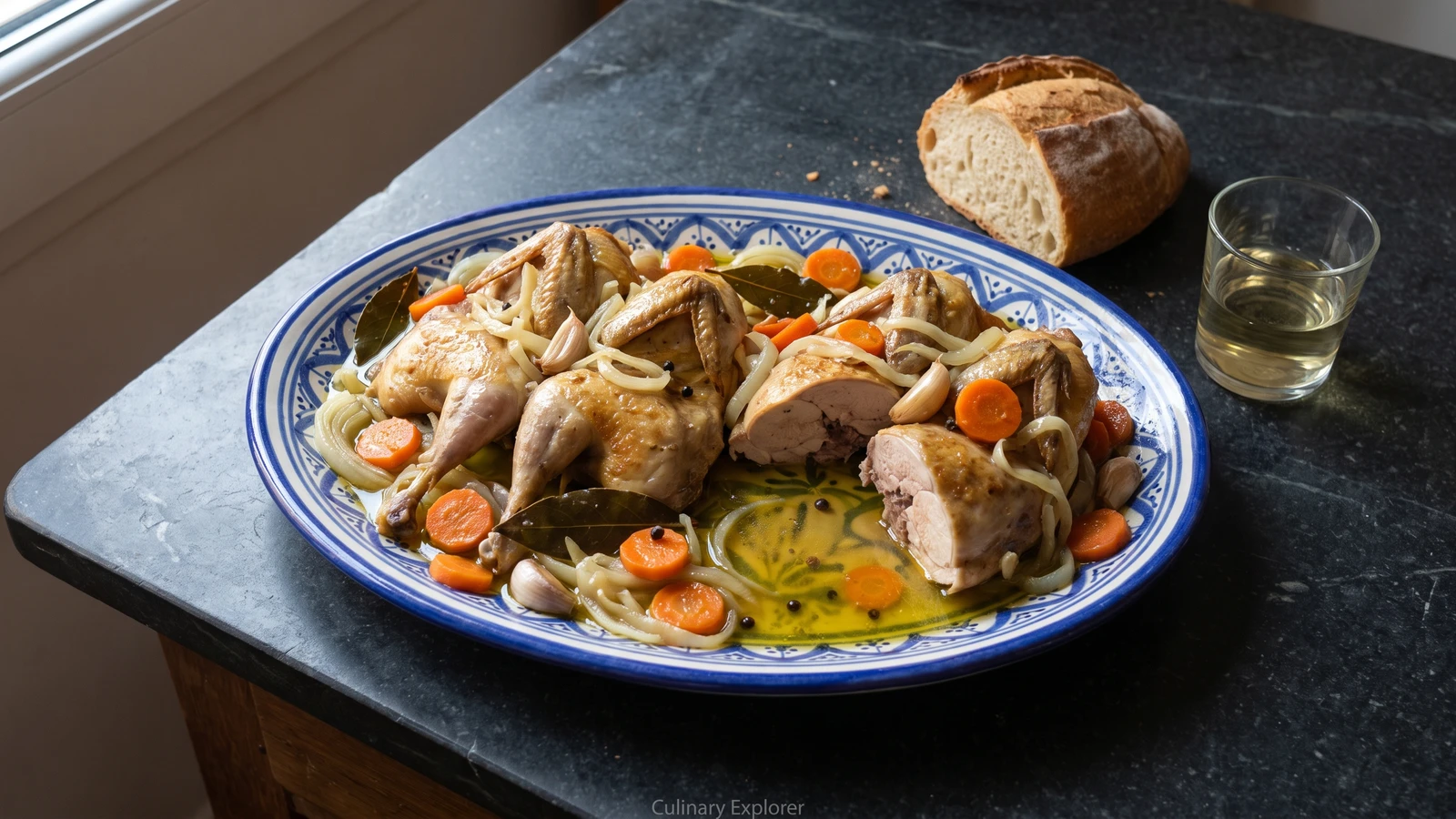
Castilla-La Mancha keeps partridge tender in a quiet bath of olive oil, white wine vinegar, garlic and bay, then lets a night's rest turn sharpness into the clean, deep flavor of escabeche.
Perdices en escabeche are Castilian, above all of Castilla-La Mancha: lean partridge gently cooked with olive oil, white wine vinegar, garlic, bay, onion, carrot and pepper, then left beneath that liquor until every bite carries it. This isn't a roast bird with vinegar poured over afterward. The cooking and the keeping are one job.
The method that decides it is the barest tremble, followed by a full night's rest. Let the escabeche boil hard and the lean breast tightens before the legs soften. Cook it covered, turn the birds once, and stop when the thigh joint yields and the meat is safely cooked through. Then cool the partridges under their liquor. By the next day the vinegar has rounded, the garlic has softened, and the oil carries everything through the meat. I make this before I need it because impatience contributes nothing useful here.
If partridge is beyond reach, use eight whole quail and cook them for only 20 to 25 minutes. A Castilian kitchen knows that as codornices en escabeche, quail in escabeche. The meat is milder and the portions smaller, but the preserving method remains true. No hace falta haber pisado España. Use sound birds, clean wine vinegar and a gentle heat. In the Margin beside mine, I wrote only this: the second day, not the first. Siempre sale, si lo sigues.
Perdices en escabeche belong especially to Castilla-La Mancha, where red-legged partridge has long been hunted across the open country of La Mancha and the Montes de Toledo. The vinegar-and-oil liquor allowed a successful hunt to feed the household over several days, with the birds kept beneath the escabeche in an orza, a glazed earthenware storage jar. The word escabeche entered Iberian cooking through Arabic al-sikbaj, a sour meat preparation, while Castile made the method its own with local game, wine vinegar, garlic, bay and olive oil.
Quantity
2 (400 to 500g each)
giblets removed
Quantity
12g
divided
Quantity
1g
Quantity
200ml
divided
Quantity
300g
sliced 5mm thick
Quantity
180g
peeled and sliced 5mm thick
Quantity
8
unpeeled and lightly crushed
Quantity
3
Quantity
5g
Quantity
4g
Quantity
250ml
Quantity
180ml
about 6% acidity
Quantity
250ml
| Ingredient | Quantity |
|---|---|
| whole oven-ready partridgesgiblets removed | 2 (400 to 500g each) |
| fine sea saltdivided | 12g |
| freshly ground black pepper | 1g |
| extra virgin olive oildivided | 200ml |
| yellow onionssliced 5mm thick | 300g |
| carrotspeeled and sliced 5mm thick | 180g |
| garlic clovesunpeeled and lightly crushed | 8 |
| bay leaves | 3 |
| fresh thyme sprigs | 5g |
| whole black peppercorns | 4g |
| dry white wine | 250ml |
| white wine vinegarabout 6% acidity | 180ml |
| water | 250ml |
Check the cavities, remove any remaining feathers and pat the birds completely dry. Season them inside and out with 8g of the salt and all the ground pepper. Leave them for 20 minutes while you slice the vegetables. Pésalo, no lo adivines: the remaining 4g of salt belongs in the escabeche.
Heat 60ml of the olive oil in a heavy 24 to 26cm casserole over medium heat. Add the partridges and brown them lightly for 8 to 10 minutes, turning until the skin is evenly golden. Don't chase a dark crust. Escabeche wants a clean, pale liquor, not the taste of scorched skin. Lift the birds onto a plate.
Lower the heat and add the onions, carrots and garlic to the same casserole. Cook for 10 to 12 minutes, stirring now and then, until the onion is translucent and the carrot begins to bend but neither takes much color. Add the bay, thyme and peppercorns and cook for 1 minute, just until the garlic and herbs smell full.
Pour in the white wine and let it bubble gently for 3 minutes to lose its raw edge. Add the remaining 140ml olive oil, the vinegar, water and reserved 4g salt. Bring the liquor only to a quiet simmer and stir once. Taste a cooled spoonful. It should seem sharper than a finished sauce because the bird and the night's rest will soften it.
Return the partridges to the casserole, breast side down, nestling them among the vegetables. Cover and keep the liquid at the barest tremble for 25 minutes. Turn the birds breast side up, cover again and cook for another 25 minutes. Check the thickest part of the breast and the inner thigh: both must reach 74°C, and a skewer pushed into the thigh joint should meet little resistance. An older wild bird may need another 10 to 20 minutes. Don't raise the heat. Hard boiling dries the breast before patience has softened the legs.
Let the birds settle in the casserole for 20 minutes. Transfer them and all the vegetables to a snug glass or glazed ceramic container, then pour over every drop of escabeche. The birds should sit beneath the liquor; use a clean small plate to hold them down if necessary. Set the container in a cold-water bath until lukewarm, refrigerate uncovered until cold, then cover. Leave it for at least 24 hours, preferably 48.
Take the escabeche from the refrigerator 30 minutes before serving. Lift out the partridges and divide each bird into two portions with sturdy kitchen shears, or separate the breasts and legs. Arrange the meat with the softened carrot, onion and garlic, then spoon over enough liquor and green-gold oil to gloss every piece. Serve cool, not numb from the refrigerator, with bread for the escabeche.
1 serving (about 410g)
Culinary guides, cultural storytelling, and the editorial depth that makes cooking meaningful.
Discover Culinary ExplorerChef Isabel
Extremadura's dehesa gives us this fan-shaped, marbled rib cut: salt it at the last moment, lay it on a fierce plancha, and count in seconds so the centre stays juicy.

Chef Isabel
Alboronía is Andalucía's old pumpkin and aubergine stew, deepened with tomato, pimentón, and cumin, then cooked without hurry until the vegetables settle into a glossy, sweet, spoon-soft whole.

Chef Isabel
Aletría Murciana is Murcia's humble noodle guiso: fine fideos, pork ribs, potato, saffron, and a dark sweet sofrito. Get that base right and the pot knows where it's going.

Chef Isabel
Asturias opens clams in tart natural cider over a slow onion and garlic sofrito, making a bright, briny sauce that asks for bread and rewards one rule: lift each clam as it opens.