Culinary Explorer
A cooking platform built around craft, culture, and the stories behind what we eat.
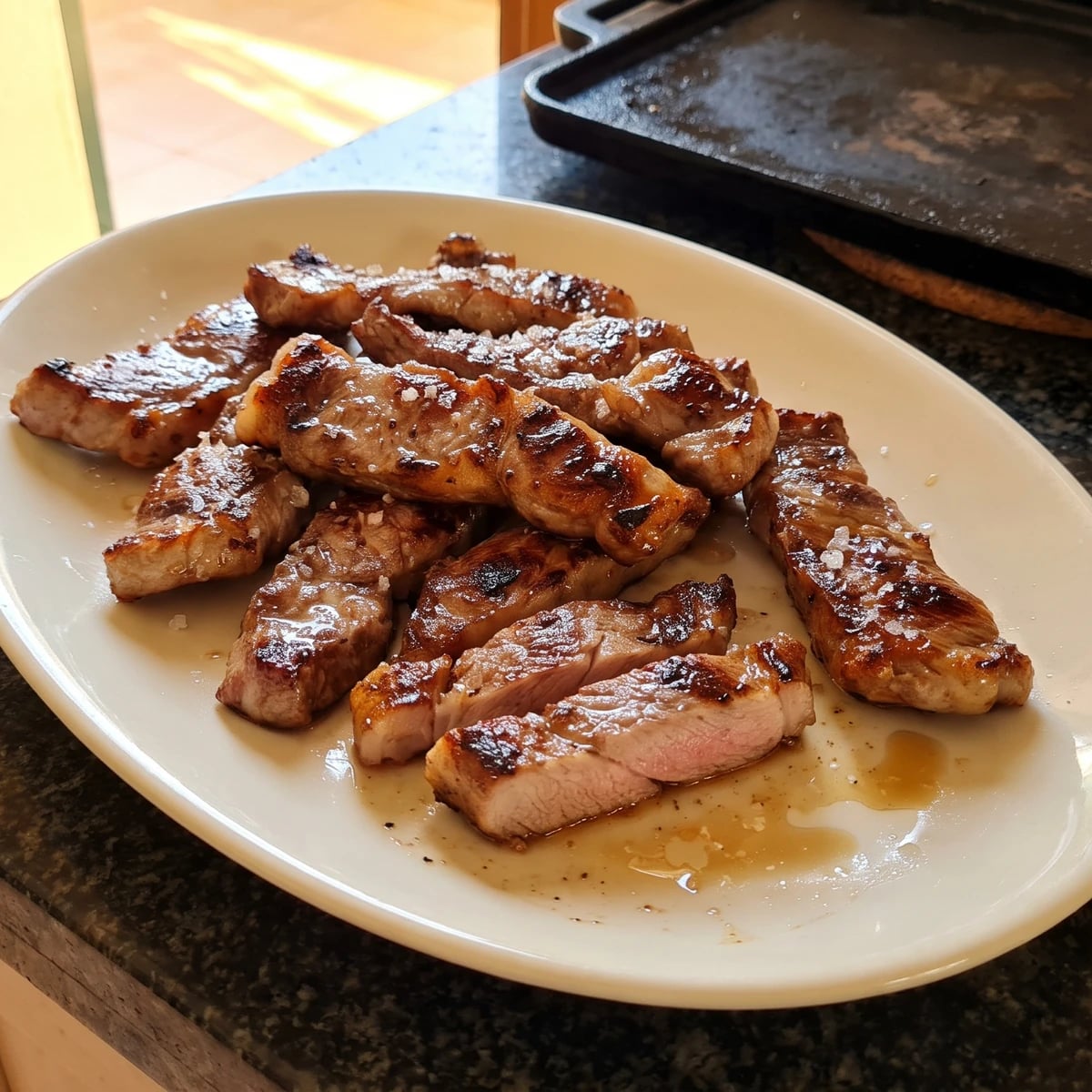
Abanico Ibérico a la Plancha
Created by Chef Isabel
Extremadura's dehesa gives us this fan-shaped, marbled rib cut: salt it at the last moment, lay it on a fierce plancha, and count in seconds so the centre stays juicy.
Abanico ibérico a la plancha belongs to the dehesa belt of Extremadura and western Andalucía. It is the thin, fan-shaped sheet of meat covering the outside of the Iberian pig's ribs, crossed with fine seams of fat and cooked on iron with coarse salt. This isn't a pork chop beaten flat, and it doesn't need a marinade. It is one of the fresh cuts that shows why the Ibérico animal matters before a single leg is cured.
The method that decides it is fierce heat for very little time. I dry the meat well, heat the plancha until the oil shimmers at once, and count in seconds. Those seams of fat must brown before the lean muscle has time to tighten. A lukewarm pan slowly renders the fat, boils the surface in its own juices, and leaves the cut dry. The extra minute is the danger here, not the missing sauce.
If you cannot find abanico, ask for well-marbled cabecero de lomo, pork collar, and have it sliced across the grain to 8-10mm. It will be firmer and less deeply flavoured, but it takes the same quick plancha treatment honestly. No hace falta haber pisado España, you don't need to have set foot in Spain. The Margin beside mine says, "Set the table first." The meat waits for nobody. Siempre sale, si lo sigues, it turns out if you follow it.
Ingredients
abanico ibérico
Quantity
600g
tough silverskin removed, divided into 4 pieces about 8-12mm thick
coarse sea salt
Quantity
7g
divided into 5g for cooking and 2g for finishing
extra virgin olive oil
Quantity
5ml
| Ingredient | Quantity |
|---|---|
| abanico ibéricotough silverskin removed, divided into 4 pieces about 8-12mm thick | 600g |
| coarse sea saltdivided into 5g for cooking and 2g for finishing | 7g |
| extra virgin olive oil | 5ml |
Where cooking meets culture.
Culinary guides, cultural storytelling, and the editorial depth that makes cooking meaningful.
Discover Culinary Explorer