Chef Lupita
Birria Tacos with Consome
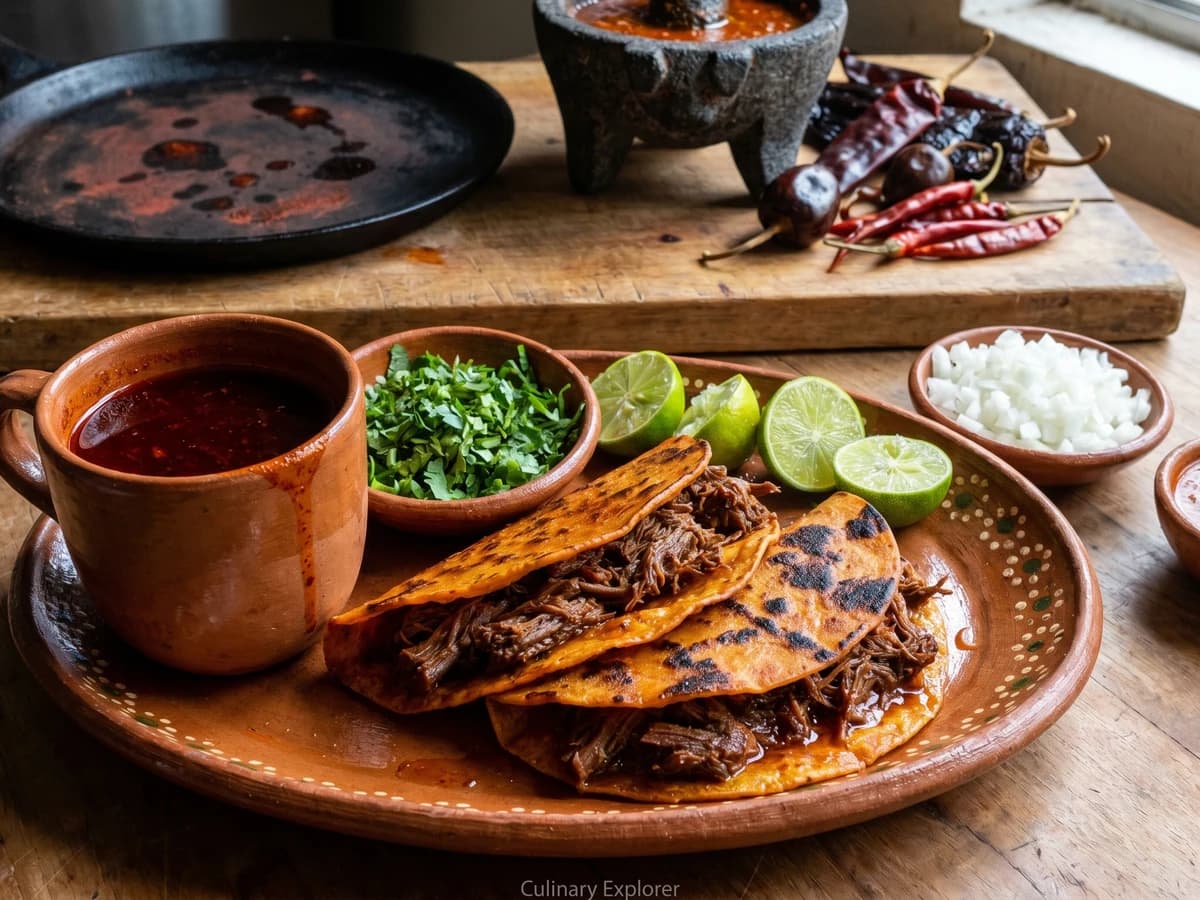
Jalisco's goat birria, born around Cocula and carried into Guadalajara's markets, slow-braised in ancho, guajillo, cascabel, and chile de arbol, then tucked into corn tortillas crisped in its own red fat.
A cooking platform built around craft, culture, and the stories behind what we eat.

Created by
Oaxaca's pellizcadas, pinched from fresh masa and spread with asiento, the dark caramelized sediment from the chicharron pot, then layered with black beans perfumed by hoja de aguacate, salsa verde, and crumbled queso fresco.
This is Oaxacan street food, and the name tells you everything. Pellizcar means to pinch. You press out a thick round of masa, cook it on the comal, and while it's still hot enough to burn your fingers, you pinch up the edge all the way around to make a rim. That rim holds the asiento, the beans, the salsa. Without it, you have a fat tortilla. With it, you have a pellizcada. The pinch is the dish.
The asiento is what makes this Oaxacan and not from anywhere else. Asiento is the dark, caramelized residue that sinks to the bottom of the pot when you render lard for chicharron. It's brown, granular, intensely porky, with a depth that clean lard cannot touch. In the Valles Centrales, you buy it by the scoop at the market from the chicharronera, and it costs less than the lard itself. Outside Oaxaca, most people have never heard of it. Inside Oaxaca, it's on everything: pellizcadas, tlayudas, memelas, tamales de rajas. La manteca es el sabor, and asiento is the soul of the manteca.
The beans are black, cooked with hoja de aguacate, the dried leaf of the native Mexican avocado tree that gives Oaxacan frijoles their anise-like perfume. Not basil. Not anise seed. Hoja de aguacate. There is no substitute that does the same thing, and I will not pretend otherwise. If you can find it, your beans will taste like Oaxaca. If you cannot, your beans will still be good, but they will not be the same.
I learned pellizcadas from a senora named Dona Reina at the Mercado 20 de Noviembre in Oaxaca city. She pinched the rims without flinching, her fingers calloused from years of it, and she spread the asiento with the back of a spoon in one motion. She told me: 'If it doesn't burn your fingers a little, the masa is too cold and the pinch won't hold.' She was right. Recetas probadas y garantizadas.
Pellizcadas belong to the broad family of masa antojitos, including sopes, picadas, huaraches, and tlacoyos, that trace their lineage to pre-Columbian Mesoamerica, where nixtamalized corn dough was shaped and cooked on clay comales thousands of years before the Spanish arrival. The Oaxacan pellizcada is distinguished from its Veracruz cousin the picada and its central Mexican cousin the sope by the specific use of asiento, the caramelized pork lard sediment that became central to Oaxacan cooking after the introduction of pigs by the Spanish in the 16th century. The pairing with black beans and hoja de aguacate, the leaf of the native Persea drymifolia, reflects an older, pre-Columbian layer of Oaxacan cuisine that survived colonialism intact, making the pellizcada a dish that carries both indigenous and colonial ingredients in a single bite.
Quantity
1 pound
or 2 cups masa harina mixed with 1 1/4 cups warm water
Quantity
1/2 teaspoon
Quantity
1/3 cup
Quantity
1 1/2 cups
with their broth
Quantity
2
Quantity
1
Quantity
1 tablespoon
Quantity
6 medium
husked and rinsed
Quantity
2
stemmed
Quantity
1/4 cup
Quantity
1/4 medium
roughly chopped
Quantity
1/2 teaspoon, plus more to taste
Quantity
1/2 cup
crumbled
Quantity
for serving
thinly sliced
Quantity
for serving
| Ingredient | Quantity |
|---|---|
| fresh masa for tortillasor 2 cups masa harina mixed with 1 1/4 cups warm water | 1 pound |
| kosher salt (for masa) | 1/2 teaspoon |
| asiento (caramelized pork lard sediment) | 1/3 cup |
| cooked black beanswith their broth | 1 1/2 cups |
| dried hoja de aguacate (avocado leaves) | 2 |
| garlic clove | 1 |
| pork lard (manteca de cerdo) | 1 tablespoon |
| tomatilloshusked and rinsed | 6 medium |
| fresh chile serranostemmed | 2 |
| fresh cilantro leaves and tender stems | 1/4 cup |
| white onion (for salsa)roughly chopped | 1/4 medium |
| kosher salt (for salsa) | 1/2 teaspoon, plus more to taste |
| queso frescocrumbled | 1/2 cup |
| white onion (for serving) (optional)thinly sliced | for serving |
| fresh cilantro leaves (optional) | for serving |
If your beans are not already cooked, rinse one cup of dried black beans and place them in a medium pot with six cups of water, one clove of garlic, and both hojas de aguacate. Bring to a boil, then lower the heat and simmer, partially covered, for two to two and a half hours until the beans are soft and creamy and the broth has turned dark and fragrant. Add salt only in the last twenty minutes. Salting early toughens the skins. If using already-cooked beans, warm them gently with the hoja de aguacate in their broth for fifteen minutes so the leaf perfumes them.
Heat the tablespoon of lard in a skillet over medium heat. Add the cooked black beans with about half a cup of their broth. Mash them with a bean masher or the back of a wooden spoon until you have a thick, spreadable paste. Some chunks are fine. You are not making baby food. The consistency should hold on the back of a spoon without running. If it's too thick, add a splash more broth. Taste for salt. The beans should be well-seasoned because they carry the pellizcada.
Place the tomatillos and chiles serrano in a small saucepan, cover with water, and bring to a boil. Cook for eight to ten minutes, until the tomatillos turn olive green and soften. Drain, saving a splash of the cooking water. Transfer the tomatillos, chiles, cilantro, chopped onion, and salt to a blender. Blend until smooth but with some texture. Taste it. The salsa should be bright, tart, and with a clean heat from the serrano that hits the back of your throat. If it tastes flat, add more salt. Salsa verde that tastes shy is salsa verde that isn't finished.
If using fresh masa, knead it with the salt until smooth and pliable, about two minutes. It should feel like soft clay and not crack at the edges when you press it. If using masa harina, mix it with the warm water and salt, let it rest five minutes, then knead until smooth. Divide the dough into twelve equal balls, each about the size of a golf ball. Cover them with a damp cloth so they don't dry out.
Heat a dry comal or cast iron griddle over medium heat. Take one ball of masa and press it between your palms or in a tortilla press lined with plastic into a round about four inches across and a quarter-inch thick. Thicker than a tortilla. This is important. Too thin and you cannot pinch the rim. Place the round on the hot comal and cook for about two minutes on the first side, until the bottom sets and develops light brown spots. Flip and cook another minute and a half on the second side. The masa should be cooked through but still pliable enough to pinch.
This is the step that names the dish. While the round is still hot from the comal, pick it up and pinch the edge between your thumb and forefinger, working your way around the entire circumference to create a raised rim about half an inch tall. Work quickly. The masa needs to be warm enough to shape without cracking. If it cools too much, put it back on the comal for thirty seconds to warm it up. The rim creates a shallow well that holds everything. Without it, you have a thick tortilla. With it, you have a pellizcada.
Place the pinched pellizcada back on the comal over medium-low heat. Spread a generous teaspoon of asiento across the inside of the well with the back of a small spoon. The asiento will melt into the warm masa, darkening the surface and releasing a deep, smoky pork fragrance. This is what makes the pellizcada Oaxacan. Asiento is not lard. It is the dark, granular sediment from the bottom of the chicharron pot, where the bits of pork have caramelized in rendered fat. La manteca es el sabor, and asiento is the deepest expression of it.
Spread a generous spoonful of the refried black beans over the asiento. Spoon salsa verde on top of the beans. Finish with crumbled queso fresco, a few rings of thinly sliced raw white onion, and a scatter of cilantro leaves. Serve immediately, while the masa is still warm and the asiento has soaked into it. Repeat with the remaining masa balls, cooking and assembling in batches so each pellizcada goes from comal to table without sitting. Asi se hace y punto.
1 serving (about 295g)
Culinary guides, cultural storytelling, and the editorial depth that makes cooking meaningful.
Discover Culinary ExplorerChef Lupita
Jalisco's goat birria, born around Cocula and carried into Guadalajara's markets, slow-braised in ancho, guajillo, cascabel, and chile de arbol, then tucked into corn tortillas crisped in its own red fat.
Chef Lupita
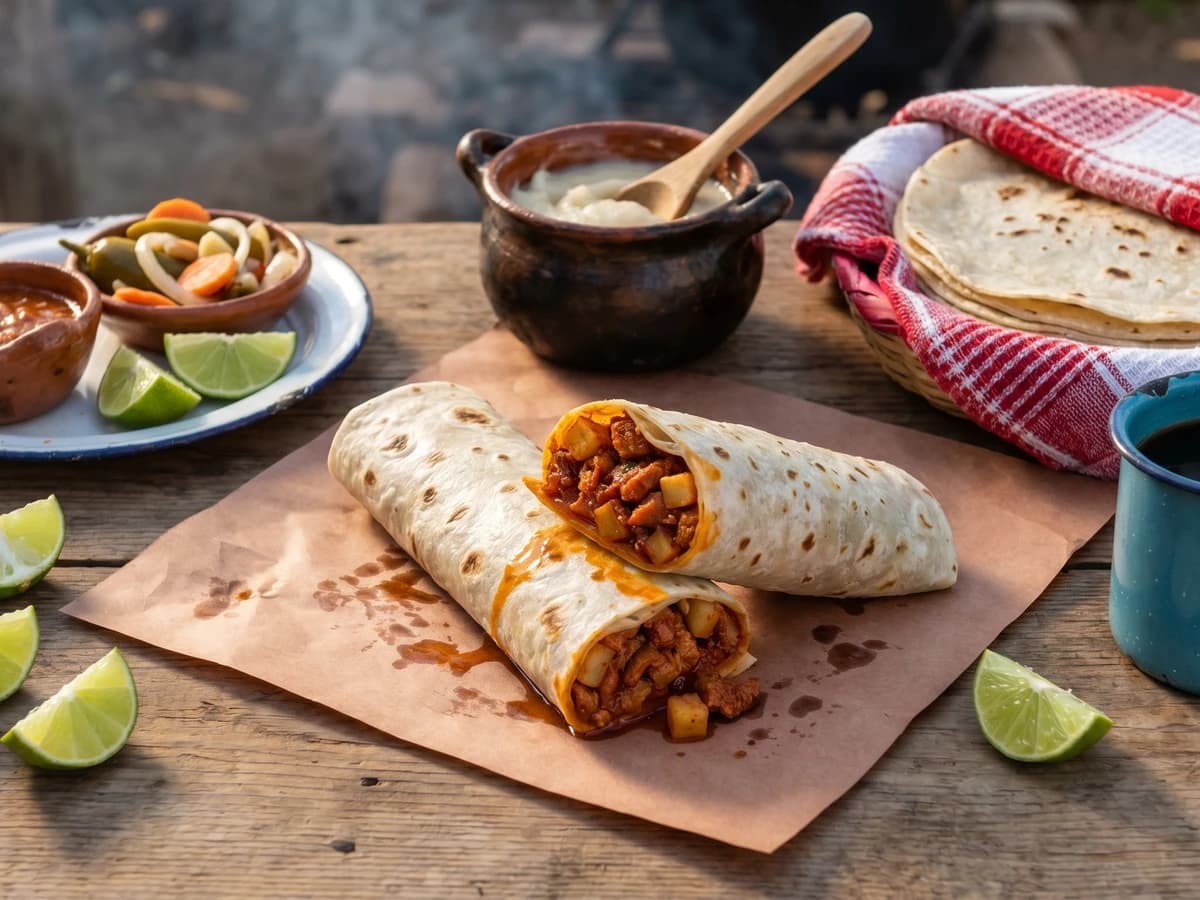
Sonora's working morning burrito: chicharrón de cáscara stewed in chile colorado with diced potato, rolled tight in a paper-thin tortilla sobaquera and eaten standing up at the carreta.
Chef Lupita
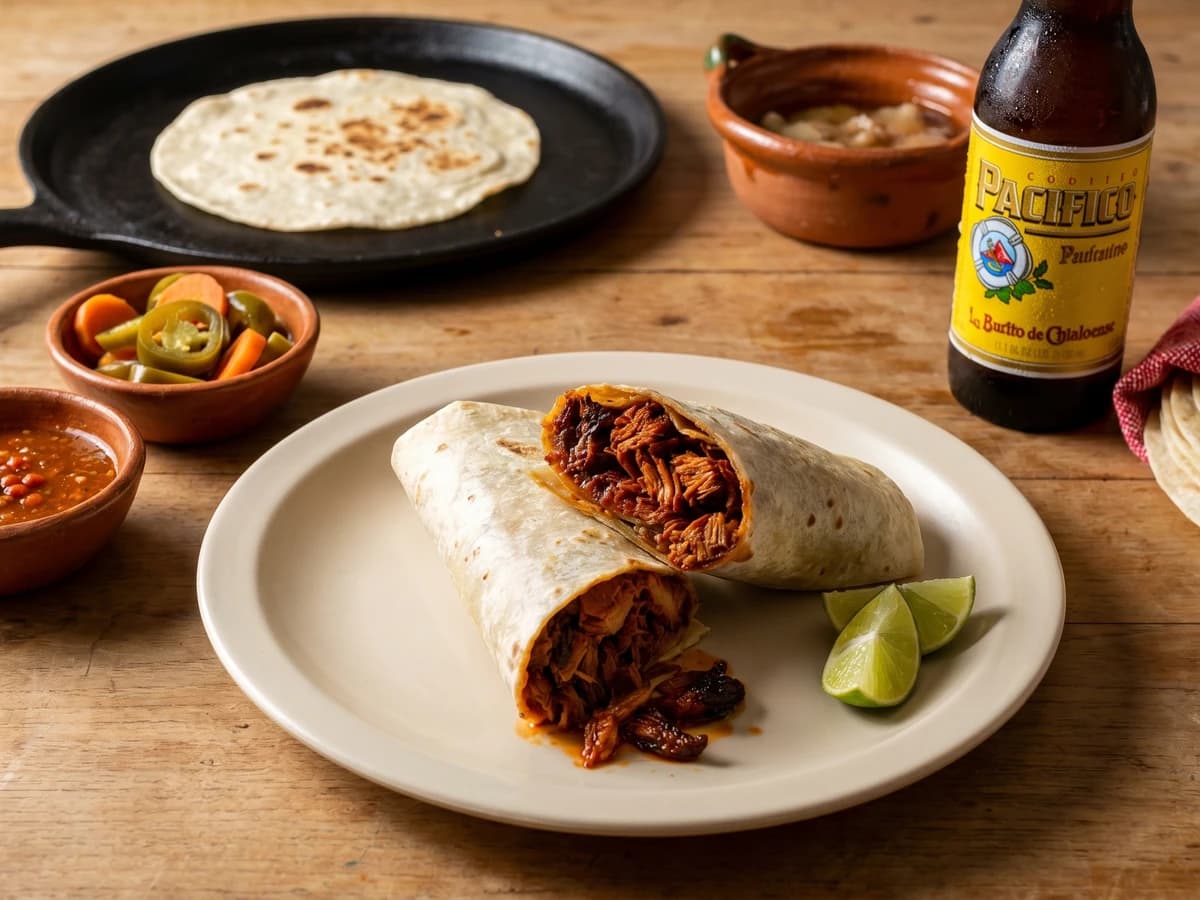
Mocorito's pork chilorio, shredded and confited in lard with chile ancho and pasilla, rolled into a thin handmade flour tortilla. The burrito Sinaloa sends out into the world.
Chef Lupita
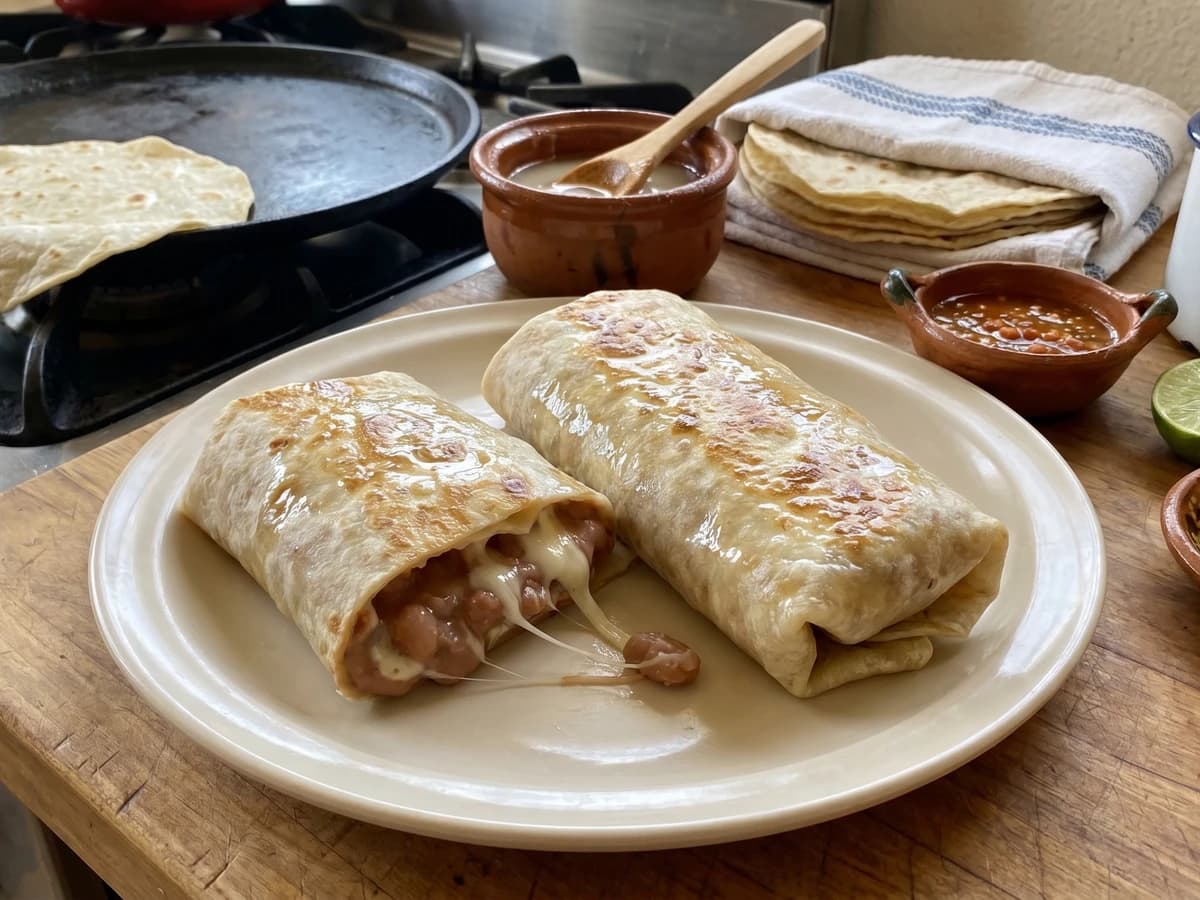
Sonora's morning burrito of mashed pinto frijoles puercos and melted queso asadero, wrapped in a paper-thin sobaquera and seared on the comal until the cheese pulls in long strings.