
Chef Margarida
Amêijoas à Bulhão Pato
The clam dish that made a poet immortal, nothing but garlic, wine, and coentros meeting the brine of the sea. Ten minutes from pan to table. Bread mandatory.
A cooking platform built around craft, culture, and the stories behind what we eat.
Created by
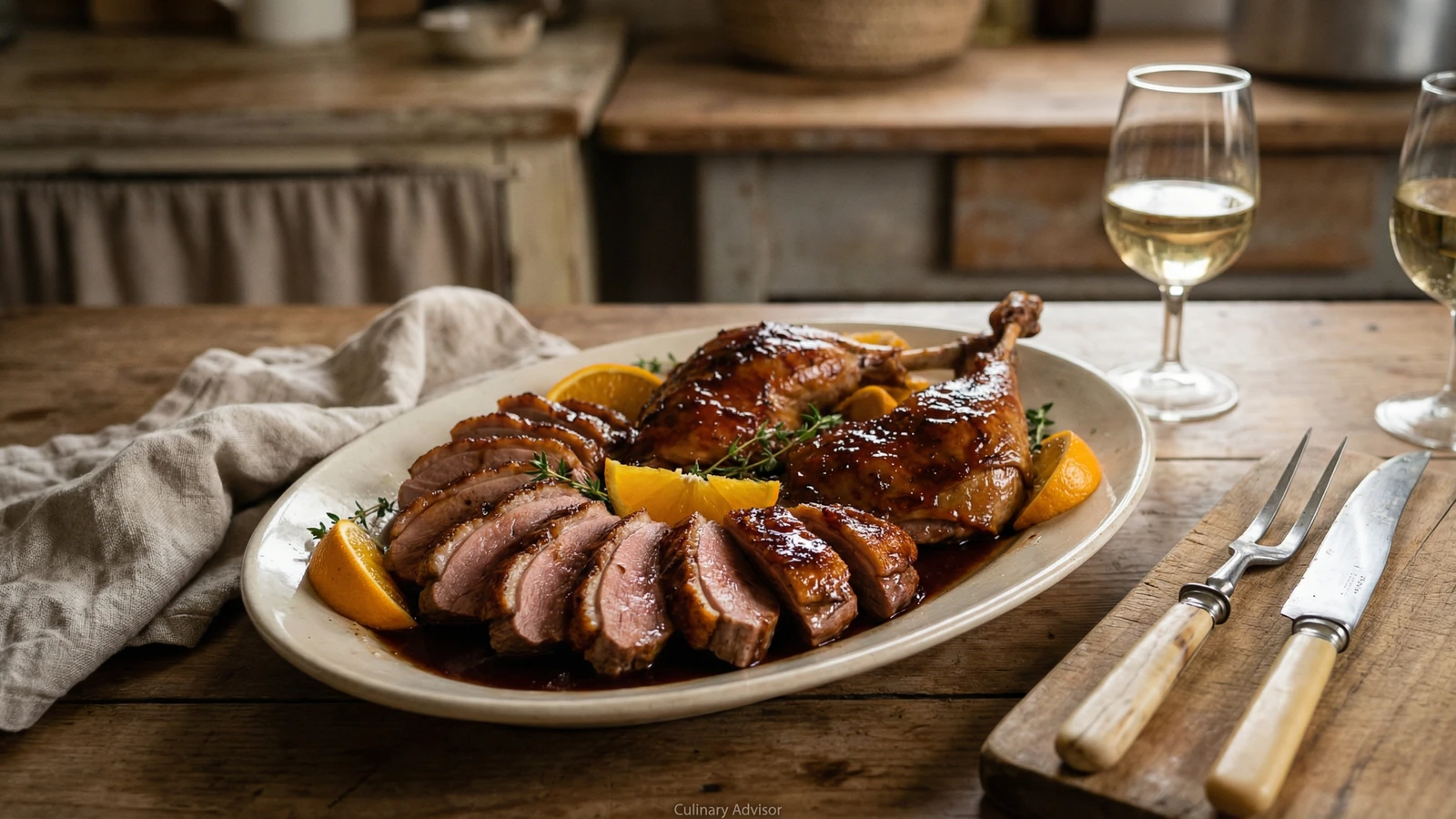
Roasted duck glazed with bright orange and aged port, the kind of dish that appears on the table when the family gathers and something important is being celebrated. Crispy skin, glossy sauce, a kitchen that smells like home.
This is the dish that appeared on Avó Leonor's table at Christmas. Never at any other time. Christmas meant pato com laranja, and pato com laranja meant Christmas. The anticipation was part of it. You waited all year for that smell to fill the house.
She'd start the morning before, salting the duck, letting it dry in the cold cellar. Then the slow roasting, the house filling with the scent of citrus and warm spices, the glaze going on in layers until the skin turned the color of polished wood. We children weren't allowed in the kitchen during this process. "Sai daqui," she'd say. Get out of here. The duck needed concentration.
The French have their canard à l'orange, refined and precise. The Portuguese version is different. It's heartier. Less about technique and more about abundance. The port wine adds a depth that orange alone can't achieve, something almost caramelized, something that speaks of winters in the Douro Valley where the grapes grow on impossible slopes.
At my Mesa da Avó dinners, I serve this at our December gatherings. People taste it and remember their own grandmothers' tables, their own family Christmases, wherever those happened to be. A cozinha é memória. The duck is just the vessel.
The marriage of citrus and poultry dates to medieval Portuguese cooking, when bitter oranges from Moorish gardens flavored both sweet and savory dishes. The addition of port wine came later, likely in the 18th century as port production flourished in the Douro. While the French claim duck with orange, the Portuguese combination of citrus, port, and warm spices predates nouvelle cuisine by centuries.
Quantity
1 (about 2-2.5 kg)
Quantity
2 teaspoons
Quantity
1 teaspoon
freshly ground
Quantity
4 large
Quantity
1 cup
Quantity
2 tablespoons
Quantity
1 tablespoon
Quantity
2 cups
Quantity
2
Quantity
4 sprigs
Quantity
2 tablespoons
cold
Quantity
1
Quantity
3
| Ingredient | Quantity |
|---|---|
| whole duck | 1 (about 2-2.5 kg) |
| coarse sea salt | 2 teaspoons |
| black pepperfreshly ground | 1 teaspoon |
| oranges | 4 large |
| aged tawny port wine | 1 cup |
| honey | 2 tablespoons |
| red wine vinegar | 1 tablespoon |
| duck or chicken stock | 2 cups |
| bay leaves | 2 |
| fresh thyme | 4 sprigs |
| buttercold | 2 tablespoons |
| cinnamon stick | 1 |
| whole cloves | 3 |
Remove the duck from the refrigerator one hour before cooking. Pat it completely dry inside and out with paper towels. This step matters. Wet skin doesn't crisp. Score the skin in a crosshatch pattern, cutting through the fat but not into the meat. This helps render the fat during roasting. Season generously with salt and pepper, rubbing it into every crevice.
Cut one orange into quarters. Stuff the cavity of the duck with the orange quarters, bay leaves, thyme sprigs, cinnamon stick, and cloves. These aromatics perfume the meat from within as it roasts. Tuck the wing tips under and tie the legs loosely together if you want a prettier presentation. Avó Leonor never bothered with tying. The duck doesn't care.
Place the duck breast-side up on a rack set in a roasting pan. Roast at 150°C (300°F) for 1 hour and 30 minutes. This low, slow start renders the fat beneath the skin. You'll see it pooling in the pan. That liquid gold is what makes the skin crisp later. Don't rush this step.
While the duck roasts, prepare the glaze. Zest two oranges and juice all three remaining oranges. In a saucepan, combine the orange juice, zest, port wine, and honey. Bring to a simmer and reduce by half, about 15 minutes. The kitchen will smell like Christmas. Add the vinegar at the end. Taste and adjust. It should be sweet, bright, and complex from the port.
Remove the duck from the oven. Carefully drain off the rendered fat. Increase the oven temperature to 200°C (400°F). Brush the duck generously with the glaze. Return to the oven and roast for another 45 minutes to 1 hour, basting with more glaze every 15 minutes. The skin should turn deep mahogany, lacquered and crispy. A thermometer inserted into the thickest part of the thigh should read 75°C (165°F).
Transfer the duck to a cutting board and let it rest for 15 minutes. Meanwhile, place the roasting pan over medium heat. Pour in the stock and remaining glaze, scraping up all the caramelized bits from the bottom. These fond bits are flavor. Let the sauce simmer and reduce by half, about 10 minutes. Strain into a clean saucepan. Off heat, whisk in the cold butter one tablespoon at a time. This gives the sauce body and shine.
Carve the duck: remove the legs and thighs, then slice the breast against the grain. Arrange on a warm platter. Spoon the sauce around (not over, you've worked hard for that crispy skin). Garnish with fresh orange segments if you like. Serve immediately with roasted potatoes or arroz de cenoura. This is celebration food. Treat it that way.
1 serving (about 250g)
Culinary guides, cultural storytelling, and the editorial depth that makes cooking meaningful.
Discover Culinary ExplorerChef Margarida
The clam dish that made a poet immortal, nothing but garlic, wine, and coentros meeting the brine of the sea. Ten minutes from pan to table. Bread mandatory.

Chef Margarida
Rice and beans, the combination that kept Portuguese families alive through hard times. Poor food that proves poverty breeds genius. Every spoonful is survival made delicious.

Chef Margarida
Portugal's greatest celebration of the sea: rice swimming in saffron broth, piled high with prawns, clams, mussels, and crab. Malandrinho, wet, abundant, the dish that brings families to the table.

Chef Margarida
The octopus rice of Portugal's coast, where the sea meets the pot and everything becomes one. Malandrinho style: loose, creamy, and deeply savory with every spoonful tasting of the Atlantic.