
Chef Margarida
Amêijoas à Bulhão Pato
The clam dish that made a poet immortal, nothing but garlic, wine, and coentros meeting the brine of the sea. Ten minutes from pan to table. Bread mandatory.
A cooking platform built around craft, culture, and the stories behind what we eat.
Created by
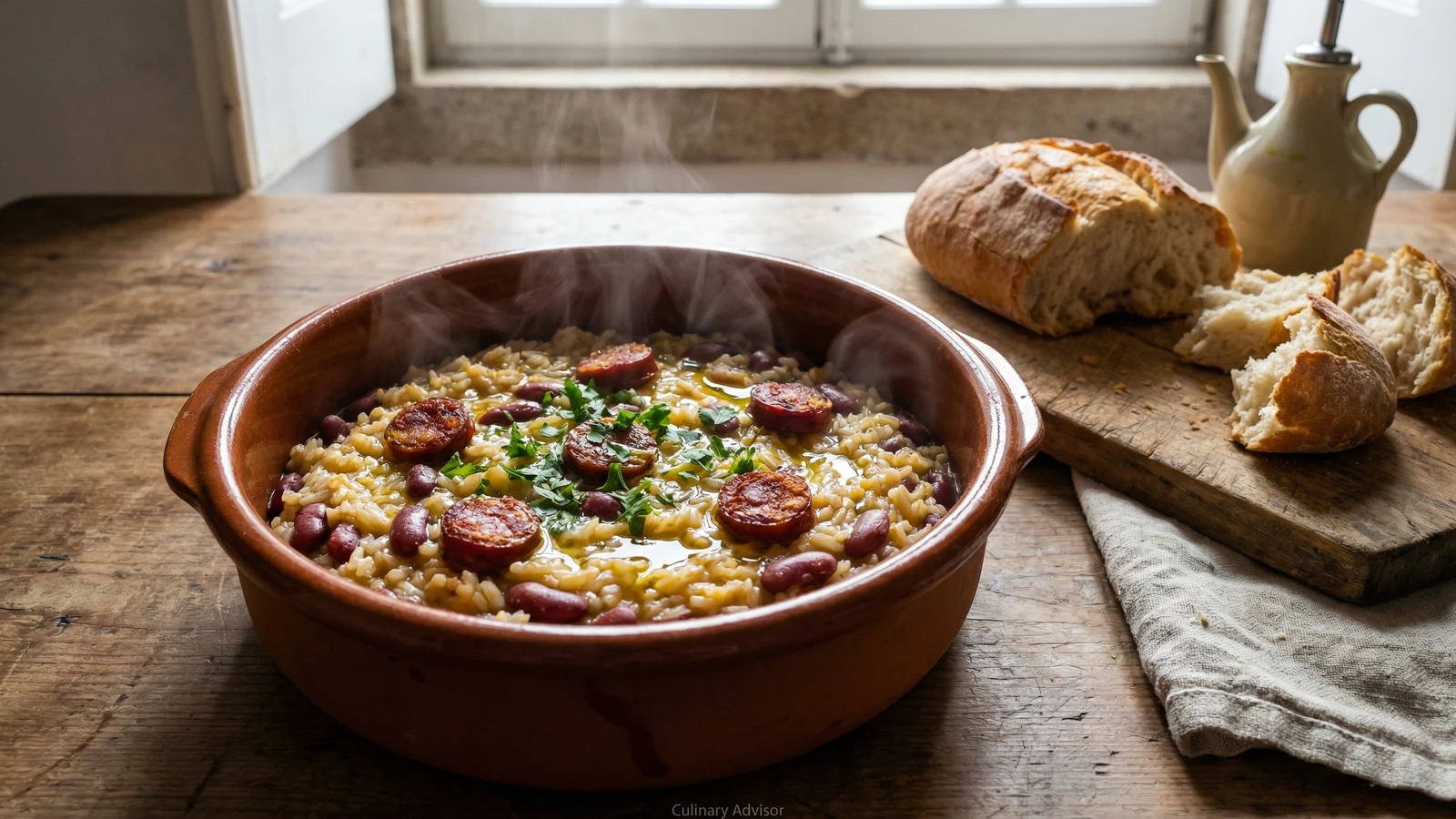
Rice and beans, the combination that kept Portuguese families alive through hard times. Poor food that proves poverty breeds genius. Every spoonful is survival made delicious.
This is the dish that doesn't get written about in food magazines. No chef is putting arroz de feijão on a tasting menu. And that's exactly why I love it.
Avó Leonor made this on Mondays, using whatever was left from Sunday. A handful of beans. Some rice. The chouriço end that was too small to slice for anything else. She'd build a refogado slowly, add the beans with their cooking liquid, then let the rice drink it all up. Nothing fancy. Nothing wasted. Everything delicious.
This is the food of people who couldn't afford meat every day but understood that beans and rice together make you strong. Complete protein, the nutritionists say now. The grandmothers knew it without the science. They knew that a pot of arroz de feijão, some bread, a glass of wine, that's a meal. That's survival. That's love on a budget.
I've documented versions of this dish from the Minho to the Alentejo. Some use white beans, some red. Some add tomato, some don't. Some finish with coentros, some with salsa. All of them are right. The principle is what matters: slow refogado, beans cooked until creamy, rice that absorbs everything. As avós sabem.
Arroz de feijão dates back centuries, emerging from the necessity of combining two cheap, storable ingredients into a complete meal. The dish became essential after rice cultivation expanded in the Mondego and Sado river valleys in the 15th and 16th centuries, meeting beans that had been a Portuguese staple since Roman times. This combination sustained rural workers, fishermen's families, and anyone stretching ingredients to feed many mouths.
Quantity
250g
soaked overnight
Quantity
1
Quantity
1/4 cup
Quantity
1 large
finely chopped
Quantity
3 cloves
minced
Quantity
1
peeled, seeded, and chopped
Quantity
100g
sliced into rounds
Quantity
1 teaspoon
Quantity
300g
Quantity
to taste
Quantity
to taste
freshly ground
Quantity
for serving
chopped
| Ingredient | Quantity |
|---|---|
| dried red kidney beans (feijão vermelho)soaked overnight | 250g |
| bay leaf | 1 |
| extra virgin olive oil (azeite) | 1/4 cup |
| onionfinely chopped | 1 large |
| garlicminced | 3 cloves |
| ripe tomatopeeled, seeded, and chopped | 1 |
| chouriço (optional)sliced into rounds | 100g |
| sweet paprika (pimentão doce) | 1 teaspoon |
| medium-grain rice | 300g |
| salt | to taste |
| black pepperfreshly ground | to taste |
| fresh parsley or coentroschopped | for serving |
Drain the soaked beans and place them in a large pot with the bay leaf. Cover with fresh cold water by about 8 centimeters. Bring to a boil, then reduce to a gentle simmer. Cook until the beans are tender but still hold their shape, about 1 hour to 1 hour 15 minutes depending on the age of the beans. Don't salt yet. Salt toughens the skins. Reserve the cooking liquid when done. You'll need about 1 liter of it.
In a heavy pot or Dutch oven, heat the azeite over medium-low heat. Add the onion and cook slowly, stirring occasionally, until soft and golden, about 12 to 15 minutes. Não tenhas pressa. This is the foundation of the dish. Add the garlic and cook for another minute until fragrant. Add the chopped tomato and paprika, stirring until the tomato breaks down and the oil turns a beautiful orange-red, about 5 minutes.
Add the chouriço rounds to the refogado and cook for 2 to 3 minutes, letting the fat render and the edges crisp slightly. The chouriço will release its smoky, paprika-laced flavor into the oil. This is the moment the kitchen starts to smell like a Portuguese grandmother's house.
Add the cooked beans to the pot along with about 750ml of their cooking liquid. Bring to a simmer. Taste the liquid and season with salt now. Remember, the rice will absorb everything, so the liquid should taste well-seasoned. Add the rice, stir once to distribute evenly, and let it come back to a simmer.
Reduce heat to low, cover the pot, and cook for about 18 to 20 minutes. Don't stir. Don't peek for the first 15 minutes. The rice needs to absorb the liquid slowly and evenly. After 18 minutes, check. The rice should be tender and have absorbed the liquid but still be slightly moist, not dry. If it's still soupy, cook uncovered for another few minutes. If it's dry but rice isn't cooked, add a splash more bean liquid and continue.
Remove from heat and let rest, covered, for 5 minutes. This allows the rice to finish absorbing and the texture to settle. Fluff gently with a fork. Taste and adjust seasoning. Serve in deep bowls, scattered with fresh parsley or coentros. A drizzle of your best azeite on top is not optional. Bread on the side. Always bread.
1 serving (about 380g)
Culinary guides, cultural storytelling, and the editorial depth that makes cooking meaningful.
Discover Culinary ExplorerChef Margarida
The clam dish that made a poet immortal, nothing but garlic, wine, and coentros meeting the brine of the sea. Ten minutes from pan to table. Bread mandatory.

Chef Margarida
Portugal's greatest celebration of the sea: rice swimming in saffron broth, piled high with prawns, clams, mussels, and crab. Malandrinho, wet, abundant, the dish that brings families to the table.

Chef Margarida
The octopus rice of Portugal's coast, where the sea meets the pot and everything becomes one. Malandrinho style: loose, creamy, and deeply savory with every spoonful tasting of the Atlantic.

Chef Margarida
The ugly fish becomes beautiful in the pot. Firm monkfish, creamy rice, rich broth. This is arroz malandrinho, the naughty rice that refuses to behave like a pilaf, and we love it for that.