
Chef Lupita
Arroz a la Oaxaqueña
Oaxaca's red rice, stained with tomato and fried in lard, steamed with carrots, ejotes, black beans, and epazote. The side that anchors a Oaxacan family meal and earns its place beside the main.
A cooking platform built around craft, culture, and the stories behind what we eat.
Created by
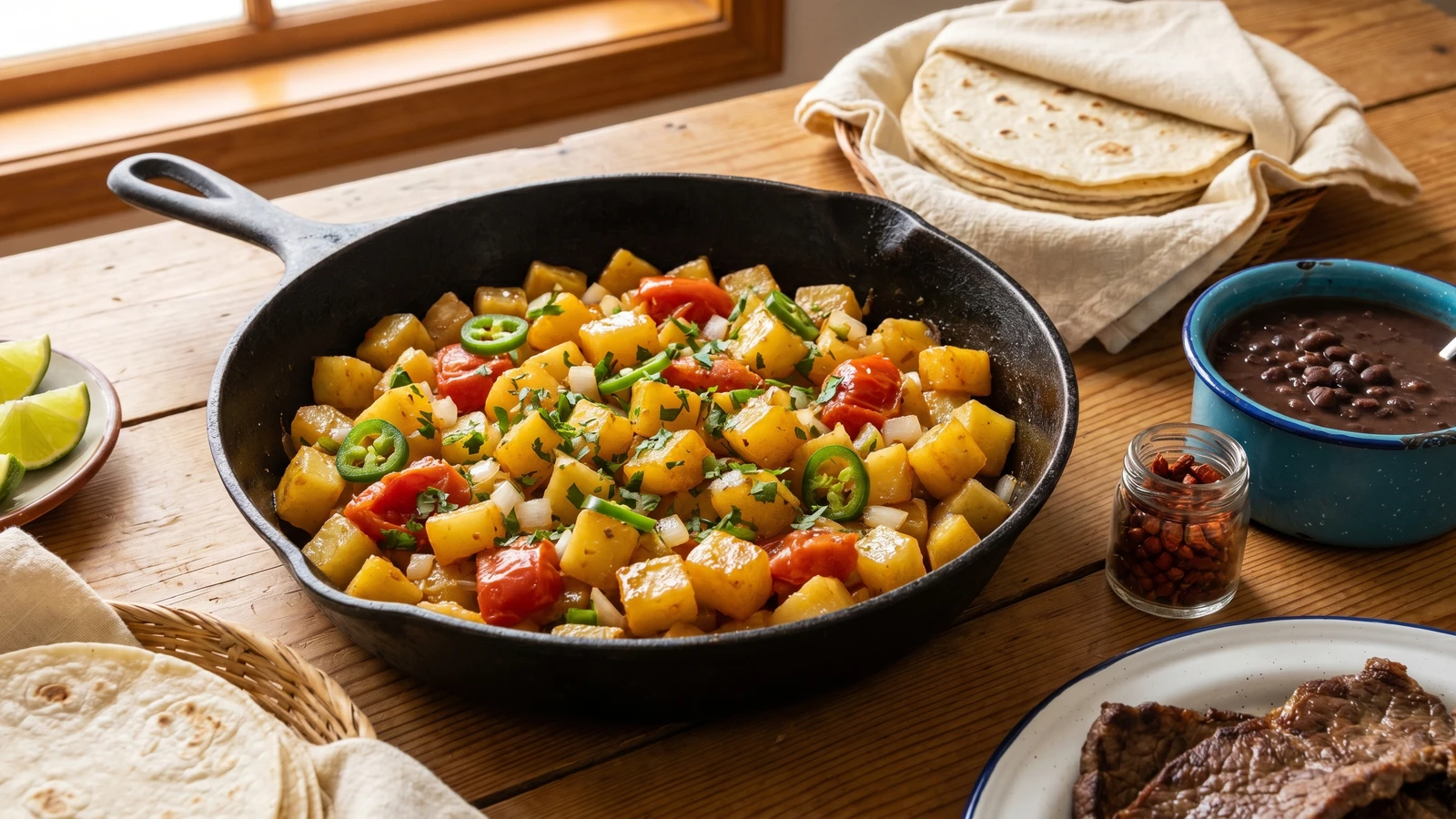
Sinaloa's everyday skillet of cubed potatoes browned in lard with white onion, ripe tomato, and chile serrano. The side that lives next to the carne asada on Sunday and inside the burrito on Monday morning.
This is a Sinaloa side dish. It belongs on the parrillada table next to the carne asada, the frijoles puercos, the stack of flour tortillas wrapped in a cloth. It is everyday cooking, the kind of pan a mother makes on a Tuesday and a tio reheats on Sunday morning to fold into a burrito with the leftover meat from the night before.
The name tells you the dish. A la mexicana means the trio that carries the colors of the flag: white onion, red tomato, green chile serrano. Three ingredients, plus the potato and the lard, and that is the recipe. There is no shortcut here because there is nothing to shortcut. What there is, is doing each step right. Cubes the same size. Lard, not oil. Potatoes browned before the tomato hits the pan. Serrano with the seeds in. Mexican oregano crumbled between your palms over the skillet at the end.
In the Noroeste the tortilla is flour, not corn. Sinaloa is wheat country and cattle country, and the flour tortilla is what you tear apart to scoop these potatoes off the plate. Anyone who tells you to use corn here did not grow up eating this food. Cada estado, su propia cocina, and this skillet belongs to the north.
My mother was from Jalisco and she made her own version, but I learned this one from a senora named Dona Chayo in a kitchen in Los Mochis who served it next to machaca and refused to call it a recipe. She called it lo de siempre, the usual. That is what this dish is. The usual. And the usual, when it is done with respect, is the most honest cooking there is.
The potato arrived in Mexico from the Andes via the Spanish trade routes of the 16th century, but it took root most firmly in the cooler highland and northern regions where the climate suited it. The phrase 'a la mexicana' as a culinary classification, denoting the tomato-onion-chile trio that mirrors the colors of the national flag, became codified in the post-revolutionary decades of the 1920s and 1930s as cookbooks like those of Josefina Velazquez de Leon promoted a unified national cuisine vocabulary. In Sinaloa, where the dish entered the everyday repertoire as a side for the state's cattle-and-grill culture, papas a la mexicana also moved into the morning burrito tradition, becoming a standard filling alongside machaca and frijoles in the lonche culture of the Noroeste.
Quantity
2 pounds
peeled and cut into 1/2-inch cubes
Quantity
3 tablespoons
Quantity
1 medium
finely chopped
Quantity
3
finely chopped
Quantity
3 to 4
stemmed and finely chopped, seeds in
Quantity
3 medium
finely chopped
Quantity
1 teaspoon
crumbled between your palms
Quantity
1 1/2 teaspoons, plus more to taste
Quantity
1/4 cup, if needed
Quantity
2 tablespoons
chopped, for finishing
Quantity
for serving
Quantity
for serving
| Ingredient | Quantity |
|---|---|
| yellow waxy potatoespeeled and cut into 1/2-inch cubes | 2 pounds |
| manteca de cerdo (pork lard) | 3 tablespoons |
| white onionfinely chopped | 1 medium |
| garlic clovesfinely chopped | 3 |
| fresh chile serranostemmed and finely chopped, seeds in | 3 to 4 |
| ripe Roma tomatoesfinely chopped | 3 medium |
| dried Mexican oreganocrumbled between your palms | 1 teaspoon |
| kosher salt | 1 1/2 teaspoons, plus more to taste |
| water or chicken broth | 1/4 cup, if needed |
| fresh cilantrochopped, for finishing | 2 tablespoons |
| warm flour tortillas (optional) | for serving |
| lime wedges (optional) | for serving |
Peel the potatoes and cut them into even half-inch cubes. Even is the word. If one cube is twice the size of the next, the small one will go to mush before the big one is cooked through. Drop the cubes into a bowl of cold water as you go to keep them from oxidizing.
Drain the potatoes and pat them dry with a kitchen towel. Wet potatoes will not brown. Heat the manteca in a wide heavy skillet, cast iron is ideal, over medium-high heat until it shimmers. Add the potatoes in a single layer. Let them sit untouched for four or five minutes so the bottoms turn golden, then stir and brown another side. La manteca es el sabor. Vegetable oil will get you cooked potatoes. It will not get you papas a la mexicana.
Push the potatoes to one side of the skillet. Add the chopped onion, garlic, and serrano to the cleared space. Cook for two minutes, stirring the aromatics in their own corner, until the onion turns translucent and the chile smells sharp and green. Then fold everything together. The serrano goes in with the seeds. This is Sinaloa, not a polite dinner party.
Add the chopped Roma tomato and the salt. Stir to coat. The tomato will release its juice and the skillet will go from dry to saucy in about a minute. Crumble the dried oregano between your palms over the pan, that little gesture wakes the oils, and stir it through. Lower the heat to medium.
Cover the skillet with a tight lid. Cook for ten to twelve minutes, lifting the lid every few minutes to stir gently from the bottom so nothing sticks. The potatoes finish cooking in the steam of their own tomato juice. If the pan looks dry before the potatoes are tender, add the splash of water or broth. A knife should slide through a cube without resistance. Taste and adjust the salt now.
Pull the lid off and raise the heat for the last minute to cook off any extra liquid. The pan should be glossy, not soupy. The potatoes should hold their cubes but yield to a fork. Scatter the chopped cilantro across the top, give one last stir, and bring the skillet to the table. Serve next to carne asada, alongside frijoles puercos, with warm flour tortillas to scoop. In Sinaloa, the tortilla is wheat. Asi se hace y punto.
1 serving (about 185g)
Culinary guides, cultural storytelling, and the editorial depth that makes cooking meaningful.
Discover Culinary ExplorerChef Lupita
Oaxaca's red rice, stained with tomato and fried in lard, steamed with carrots, ejotes, black beans, and epazote. The side that anchors a Oaxacan family meal and earns its place beside the main.

Chef Lupita
Sinaloa's home-cook white rice topped with cold cubes of cream cheese that soften into the warm grain, finished with crema and a sprinkle of chiltepin at the table. The trick that makes a side dish feel like a small luxury.

Chef Lupita
Sonora's white rice, toasted in butter and steamed with sweet corn and tender peas. The clean, quiet partner to a plate of carne asada, not the red rice of central Mexico.

Chef Lupita
Yucatán's white rice with sweet corn kernels, toasted in lard with garlic and onion. The quiet base that holds up against the peninsula's bold achiote-stained stews.