Chef Lupita
Birria Tacos with Consome
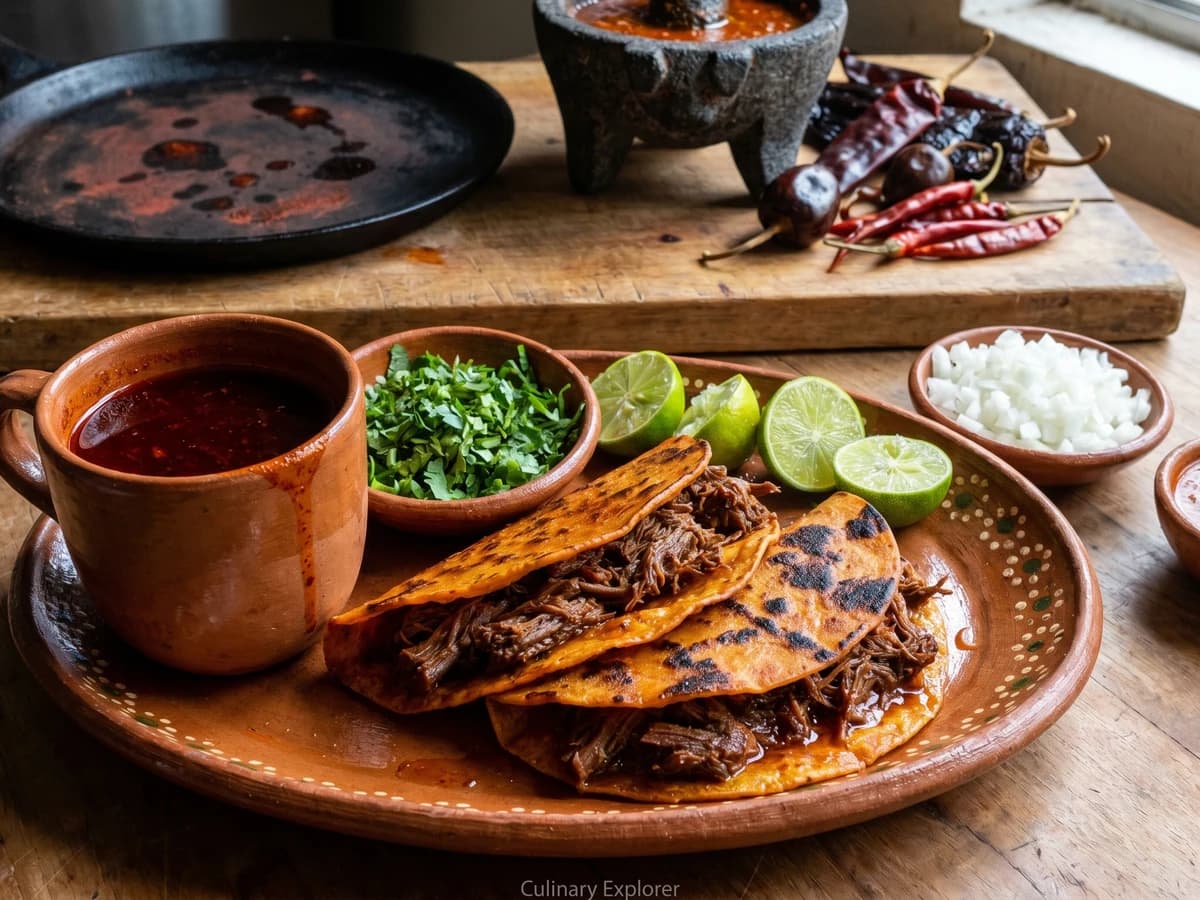
Jalisco's goat birria, born around Cocula and carried into Guadalajara's markets, slow-braised in ancho, guajillo, cascabel, and chile de arbol, then tucked into corn tortillas crisped in its own red fat.
A cooking platform built around craft, culture, and the stories behind what we eat.

Created by
Mérida's panuchos topped with eastern Yucatán pavo en escabeche oriental: turkey simmered in vinegar, clove, cinnamon, and charred chile xcatic, piled on bean-stuffed tortillas crisped in lard.
This is from Yucatán. Specifically from Mérida and the towns east of it, Valladolid, Tizimín, the pueblos of the oriente where pavo en escabeche carries the suffix that locates it: oriental. Eastern. The escabeche of the east is different from what you find in Campeche or in the western Yucatán. More vinegar, more clove, more cinnamon, and the charred chile xcatic floating in the broth as both signature and warning.
The Peninsula has its own grammar. Recado, naranja agria, achiote, banana leaf, chile habanero, chile xcatic. These are not Mexican ingredients in the generic sense. They are Yucatecan, with Maya and colonial Andalusian roots that the rest of the country never absorbed. A panucho is not a tostada. A panucho is a corn tortillas puffed on the comal, slit open, stuffed with refried black beans, and fried in lard until the bottom crackles and the bean filling holds the structure together. The bean inside the tortilla is the whole point. Without it, you have a salbute, which is its own dish from the same kitchen.
I spent three weeks in Mérida documenting the panucherias along Calle 62 and at the Lucas de Gálvez market. The señora at one stall, Doña Conchi, told me the escabeche has to taste sharp enough to make you sit up straight. If your first bite does not make your eyes open wider, you used too little vinegar or you did not char the chiles long enough. Recetas probadas y garantizadas. Cada estado, su propia cocina, and this one belongs to the east of Yucatán.
Pavo en escabeche traces to the colonial overlay of Spanish escabeche, a Persian-derived vinegar preservation technique brought to the Iberian peninsula by Arab cooks, onto the indigenous Maya tradition of cooking the native ocellated turkey (pavo de monte) with local spices and bitter orange. The eastern Yucatecan variant, escabeche oriental, became codified in Valladolid in the 19th century as a wedding and feast-day dish, and the city still claims it as a municipal heritage food. The chile xcatic, a pale yellow Yucatecan landrace named from the Maya word for blond, is grown almost exclusively on the peninsula and is rarely seen in markets outside it; its mild heat and distinctive smoky perfume when charred are what distinguish escabeche oriental from the milder western versions of the dish.
Quantity
2 pounds
Quantity
1 medium
halved
Quantity
2 large
sliced into thin half-moons
Quantity
1
halved crosswise
Quantity
8
roasted on a comal until charred
Quantity
2
Quantity
1 tablespoon, plus more to taste
Quantity
1 teaspoon
Quantity
1 teaspoon
oregano yucateco if you can find it
Quantity
4
charred on a comal until blistered
Quantity
1 tablespoon
or substitute spice mix in headnote
Quantity
6
Quantity
1 stick, about 3 inches
Quantity
1/2 cup
Quantity
1/4 cup
or mix of 2 parts orange, 1 part lime, 1 part vinegar
Quantity
3 tablespoons, plus more for frying
Quantity
1 pound
or 2 cups masa harina mixed with 1 1/4 cups warm water
Quantity
1/2 teaspoon
Quantity
2 cups
refried with epazote and lard, smooth and thick
Quantity
1 medium
sliced into very thin half-moons
Quantity
1/2 cup
or substitute mix
Quantity
1 teaspoon
Quantity
1/2 teaspoon
Quantity
2
charred on a comal and sliced thin
Quantity
for serving
| Ingredient | Quantity |
|---|---|
| bone-in turkey thighs and drumsticks, skin on | 2 pounds |
| white onion (for broth)halved | 1 medium |
| white onions (for escabeche)sliced into thin half-moons | 2 large |
| head of garlic (for broth)halved crosswise | 1 |
| garlic cloves (for escabeche)roasted on a comal until charred | 8 |
| bay leaves | 2 |
| kosher salt | 1 tablespoon, plus more to taste |
| black peppercorns | 1 teaspoon |
| dried Mexican oreganooregano yucateco if you can find it | 1 teaspoon |
| fresh chile xcatic (or chile guero)charred on a comal until blistered | 4 |
| recado blancoor substitute spice mix in headnote | 1 tablespoon |
| whole cloves | 6 |
| Mexican canela (true cinnamon) | 1 stick, about 3 inches |
| white vinegar | 1/2 cup |
| naranja agria juice (for escabeche)or mix of 2 parts orange, 1 part lime, 1 part vinegar | 1/4 cup |
| manteca de cerdo (pork lard) | 3 tablespoons, plus more for frying |
| masa de maíz nixtamalizadoor 2 cups masa harina mixed with 1 1/4 cups warm water | 1 pound |
| kosher salt (for masa) | 1/2 teaspoon |
| frijoles negros refritos yucatecosrefried with epazote and lard, smooth and thick | 2 cups |
| red onion (for pickling)sliced into very thin half-moons | 1 medium |
| naranja agria juice (for pickled onions)or substitute mix | 1/2 cup |
| dried Mexican oregano (for pickled onions) | 1 teaspoon |
| kosher salt (for pickled onions) | 1/2 teaspoon |
| chile habanero (optional)charred on a comal and sliced thin | 2 |
| lime wedges (optional) | for serving |
Drop the sliced red onions into a heatproof bowl. Cover with boiling water for ten seconds, then drain. This takes the raw bite off without cooking them. Return to the bowl and add the naranja agria juice, oregano, and salt. Press the onions down so they sit submerged. Leave on the counter for at least 30 minutes while you build the rest of the dish. They will turn the color of a Mérida sunset.
Place the turkey in a heavy pot with the halved onion, halved head of garlic, bay leaves, peppercorns, oregano, and one tablespoon salt. Cover with cold water by two inches. Bring to a gentle simmer over medium heat. Skim the foam that rises in the first fifteen minutes. Cook at a lazy bubble, partially covered, for 50 to 60 minutes, until the meat pulls cleanly from the bone. Cold water start, slow simmer. A rolling boil makes the meat stringy and the broth cloudy.
While the turkey simmers, heat a dry comal over medium-high. Lay the chile xcatic directly on the metal. Turn them until the skin blisters and blackens in patches on every side, about 6 minutes total. Pull them off. Now char the 8 garlic cloves in their skins until the papery exterior is dark and the cloves inside are soft, about 8 minutes. Peel the garlic. The char is not optional. Without it, the escabeche tastes flat. The Yucatecan kitchen runs on fire.
Lift the turkey from the broth and let it rest until cool enough to handle. Reserve 2 cups of the strained broth. Pull the meat from the bones in large rough pieces, leaving the skin attached where it wants to stay. Discard the bones. In a wide cazuela or heavy skillet, melt the 3 tablespoons of lard over medium heat. Add the sliced white onions and cook until they soften and turn translucent without browning, about 8 minutes. Add the charred garlic, the recado blanco, whole cloves, and canela stick. Stir for one minute until the spices wake up.
Pour in the white vinegar and the 1/4 cup naranja agria juice. Let it bubble hard for 30 seconds to cook off the sharp edge. Add the reserved 2 cups of turkey broth and the charred chiles xcatic. Bring to a simmer, then lower the heat. Return the pulled turkey to the pot. Cook at a bare simmer for 20 minutes so the meat drinks in the vinegar, clove, and cinnamon. Taste for salt. The escabeche should taste bright, warm with spice, and unmistakably acidic. That sharpness is the point. Esto no es comida de un solo México.
Knead the masa with 1/2 teaspoon of salt until smooth and pliable. If using masa harina, mix with warm water and let it hydrate for 20 minutes before kneading. The dough should hold its shape when you press it but not crack at the edges. If it cracks, work in another tablespoon of warm water. Divide into 18 balls, about the size of a golf ball, and cover with a damp cloth so they do not dry out.
Heat a comal over medium-high. Press each masa ball between two sheets of plastic in a tortilla press into a 4-inch round, slightly thicker than a regular tortilla. This thickness matters. Lay one tortilla on the hot comal. Cook 30 seconds, flip, cook one minute, flip again. On the third turn it should puff up like a balloon. That puff is what makes a panucho a panucho. If it does not puff, the tortilla is too thin, too thick, or the comal is wrong. Keep going. You will get a rhythm by the fourth one.
While each tortilla is still warm and puffed, slit a small opening along the edge with a sharp knife, lifting the top layer like a pocket. Spoon a generous tablespoon of the refried black beans inside. Smooth the beans flat across the interior. Press the pocket closed. Set aside on a tray. Continue with the rest. The beans inside the tortilla is what separates a panucho from a salbute. Both are Yucatecan. They are not the same dish.
In a wide cast iron skillet, melt enough lard to come a quarter inch up the sides. Heat over medium-high until a pinch of masa sizzles immediately. Fry the panuchos two or three at a time, bean-side down first, for about 90 seconds, until the bottom is golden and crisp. Flip and fry the other side for 45 seconds. Lift onto a wire rack. La manteca es el sabor. Do not fry them in vegetable oil. The flavor will be wrong and the crisp will not hold.
Set each warm panucho on a talavera plate, bean-side up. Pile on a generous tangle of the pavo en escabeche with some of the cooked onions and a spoonful of the vinegar broth. Top with a heap of the pickled red onions. Lay one or two slices of charred habanero on the side for the brave. Serve immediately with lime wedges. Eat them with your hands, in two or three bites each, while the bottom is still crisp and the escabeche is still warm. Así se hace y punto.
1 serving (about 340g)
Culinary guides, cultural storytelling, and the editorial depth that makes cooking meaningful.
Discover Culinary ExplorerChef Lupita
Jalisco's goat birria, born around Cocula and carried into Guadalajara's markets, slow-braised in ancho, guajillo, cascabel, and chile de arbol, then tucked into corn tortillas crisped in its own red fat.
Chef Lupita
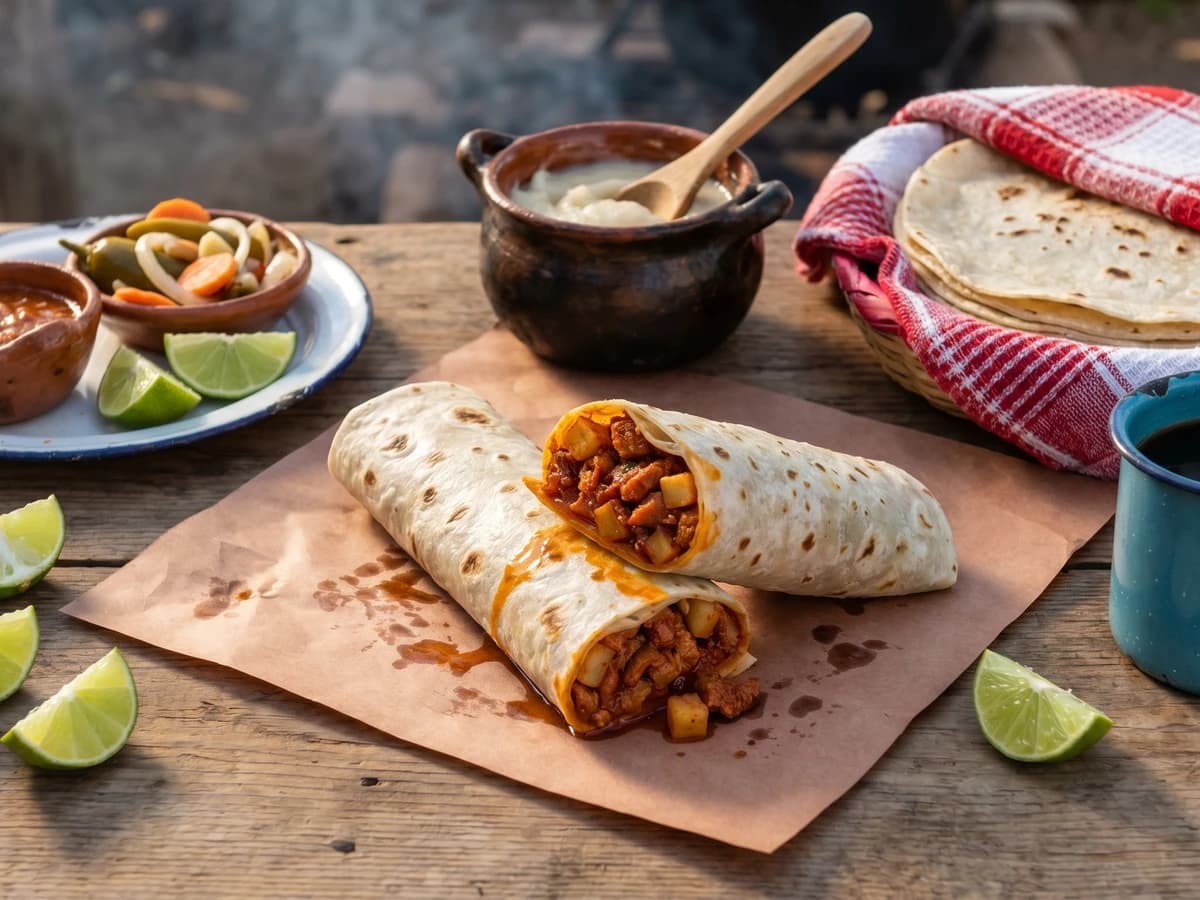
Sonora's working morning burrito: chicharrón de cáscara stewed in chile colorado with diced potato, rolled tight in a paper-thin tortilla sobaquera and eaten standing up at the carreta.
Chef Lupita
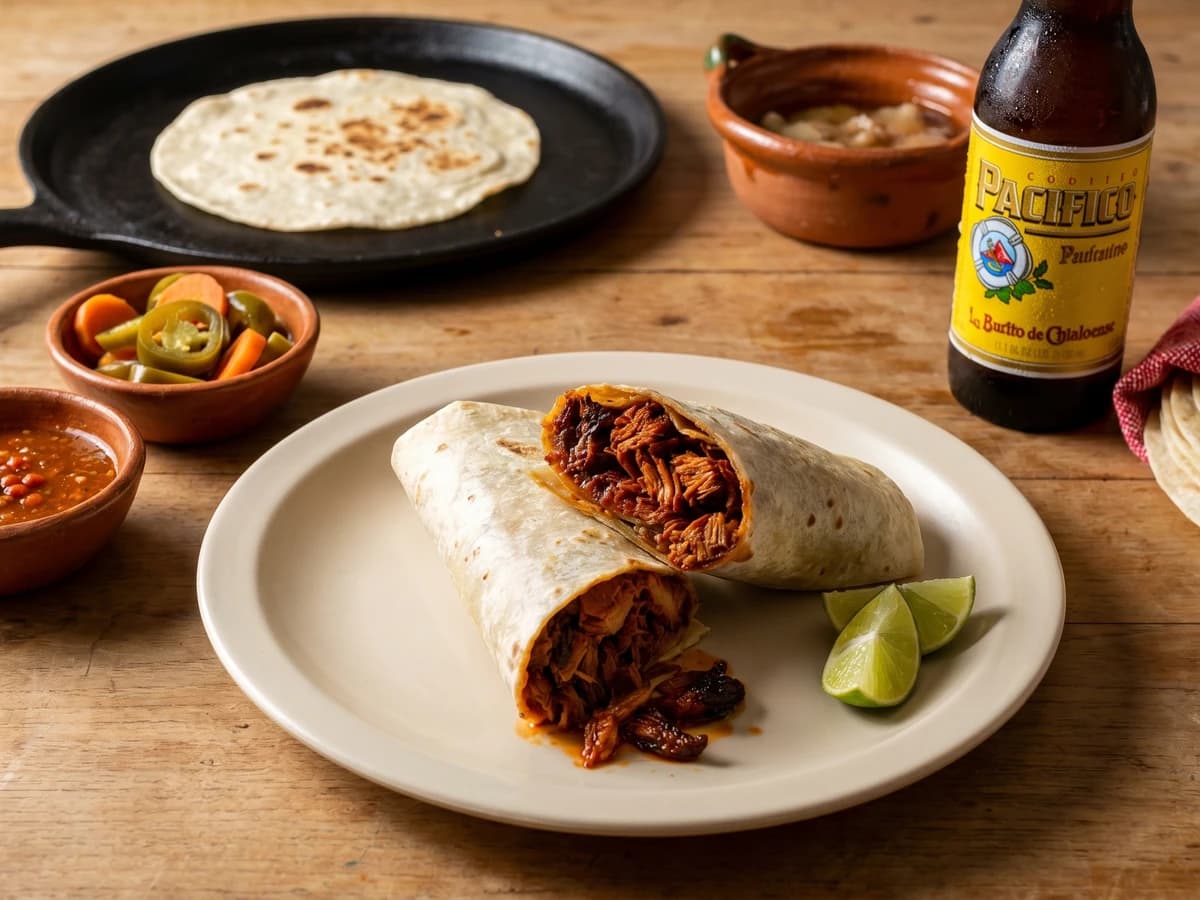
Mocorito's pork chilorio, shredded and confited in lard with chile ancho and pasilla, rolled into a thin handmade flour tortilla. The burrito Sinaloa sends out into the world.
Chef Lupita
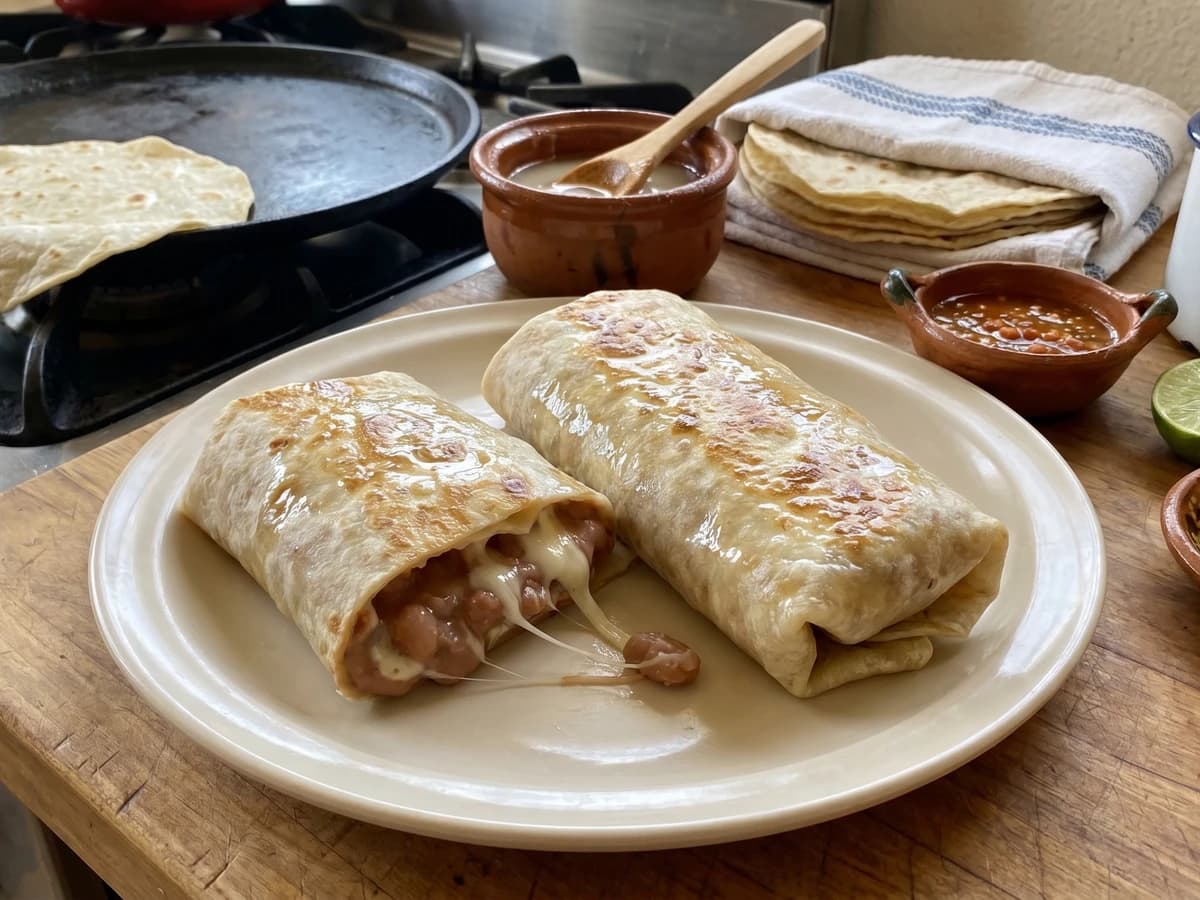
Sonora's morning burrito of mashed pinto frijoles puercos and melted queso asadero, wrapped in a paper-thin sobaquera and seared on the comal until the cheese pulls in long strings.