
Chef Juliette
Sandwiches
Five classical fillings between bread buttered to every edge, cut into tidy rectangles and held under a light weight: a French buffet lesson in softness, proportion, and restraint.
A cooking platform built around craft, culture, and the stories behind what we eat.
Created by
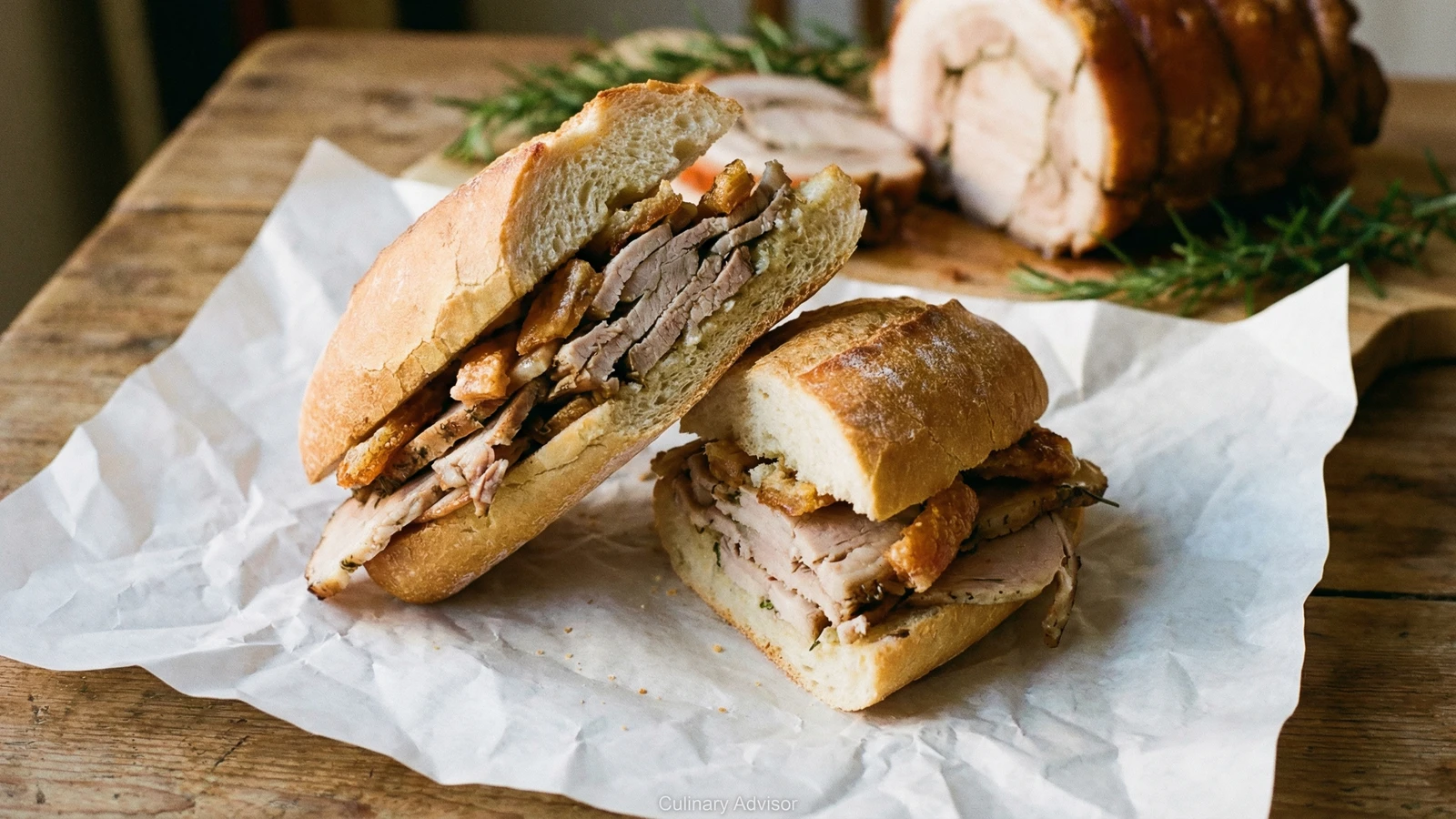
The sandwich that has fed Romans for centuries: herb-scented roast pork with crackling skin, sliced onto a crusty roll. Nothing more. Nothing needed.
Ariccia is a small town in the Castelli Romani hills, twenty kilometers southeast of Rome. It is famous for exactly one thing, and that one thing is porchetta. Whole pigs, deboned and rolled with rosemary, garlic, wild fennel, and black pepper, roasted for hours until the skin crackles and the meat yields to the slightest pressure. This is what the porchettari have done for five hundred years.
The sandwich requires bread and pork. That is all. Romans do not add condiments. They do not add vegetables. They do not add cheese. The porchetta provides everything: the fat for richness, the herbs for fragrance, the crackling for texture. What you keep out is as significant as what you put in.
A whole porchetta weighs seventy kilos and requires equipment most home cooks do not possess. What I give you here is a method for achieving the essential character of porchetta using pork belly wrapped around a loin roast. The technique is the same. The flavors are correct. The result will remind you why this simple sandwich has sustained workers, travelers, and Sunday picnickers in Lazio for generations.
Porchetta has roots in ancient Roman cookery, but Ariccia claimed it as its own by the 15th century. The town's porchettari traveled to markets throughout Lazio, their mobile stands becoming fixtures of Roman street life. In 2011, Porchetta di Ariccia received IGP status, protecting the specific preparation methods that distinguish it from versions made elsewhere in Italy.
Quantity
3 pounds
skin on
Quantity
1 1/2 pounds
Quantity
8
minced
Quantity
3 tablespoons
minced
Quantity
2 tablespoons
lightly crushed
Quantity
1 tablespoon
coarsely ground
Quantity
2 tablespoons
Quantity
1 teaspoon
Quantity
8
| Ingredient | Quantity |
|---|---|
| pork bellyskin on | 3 pounds |
| boneless pork loin | 1 1/2 pounds |
| garlic clovesminced | 8 |
| fresh rosemary leavesminced | 3 tablespoons |
| fennel seedslightly crushed | 2 tablespoons |
| black peppercornscoarsely ground | 1 tablespoon |
| kosher salt | 2 tablespoons |
| red pepper flakes | 1 teaspoon |
| crusty Italian rolls | 8 |
Place the pork belly skin-side down on your work surface. Using a sharp knife, score the flesh in a crosshatch pattern, cutting about half an inch deep. These cuts allow the seasoning to penetrate. Do not cut through to the skin.
Combine the minced garlic, rosemary, crushed fennel seeds, ground pepper, salt, and red pepper flakes in a small bowl. Mix thoroughly. The mixture should be fragrant and coarse. This is the battuto that defines porchetta.
Rub two-thirds of the herb paste over the scored surface of the pork belly, pressing it into the cuts. Season the pork loin on all sides with the remaining paste. Place the loin in the center of the belly, perpendicular to the grain.
Roll the belly tightly around the loin, tucking in the ends as you go. The skin should be on the outside, the loin completely encased. Tie the roll firmly with kitchen twine at one-inch intervals. The roll should be compact with no gaps.
Score the skin in a diamond pattern with a very sharp knife, cutting just through the skin but not into the fat beneath. Pat the skin completely dry with paper towels. If time permits, refrigerate the roll uncovered for several hours or overnight. Dry skin is essential for proper crackling.
Remove the pork from the refrigerator one hour before cooking. Heat your oven to 450°F. Place the porchetta on a rack in a roasting pan. Roast for 40 minutes. The skin should begin to blister and crackle.
Reduce the oven temperature to 300°F. Continue roasting until the internal temperature reaches 145°F in the thickest part of the loin, approximately 2 1/2 to 3 hours more. The skin should be deeply golden and crackling, the fat rendered.
Remove the porchetta from the oven and let it rest for at least 30 minutes before slicing. The juices must redistribute. Cutting too soon wastes the work you have done.
Remove the twine. Using a sharp knife, slice the porchetta as thin as you can manage while keeping the slices intact. Each slice should include some of the herb-scented meat, some of the rich fat, and some of the crackling skin.
Split the rolls horizontally. Do not toast them. Pile thin slices of porchetta generously onto the bottom half, including pieces of the crackling. Close the sandwich. Serve immediately. The bread absorbs the pork fat as you eat. This is correct.
1 serving (about 280g)
Culinary guides, cultural storytelling, and the editorial depth that makes cooking meaningful.
Discover Culinary ExplorerChef Juliette
Five classical fillings between bread buttered to every edge, cut into tidy rectangles and held under a light weight: a French buffet lesson in softness, proportion, and restraint.

Chef Juliette
Steak grilled dark at the edges, cooled, sharpened with horseradish and mustard, then pressed between buttered loaf heels until the crumb catches every juice: a race-day sandwich substantial enough to be supper.

Chef Thomas
Back bacon crisped in a hot pan, a ripe tomato that actually tastes of something, crisp lettuce and real butter on proper toast. A sandwich that earns its place in the notebook.

Chef Isabel
Almussafes is Valencian bar-counter food: a crusty roll filled with sobrasada, cheese, and onion, then pressed on the plancha until the bread crisps and the filling runs together.