
Chef Juliana
Ambrosia Baiana
You think curdled milk means you ruined dessert. Good. Tonight you'll do it on purpose, with lemon, yolks, cravo, and sugar, until the pot turns into golden gruminhos.
A cooking platform built around craft, culture, and the stories behind what we eat.
Created by
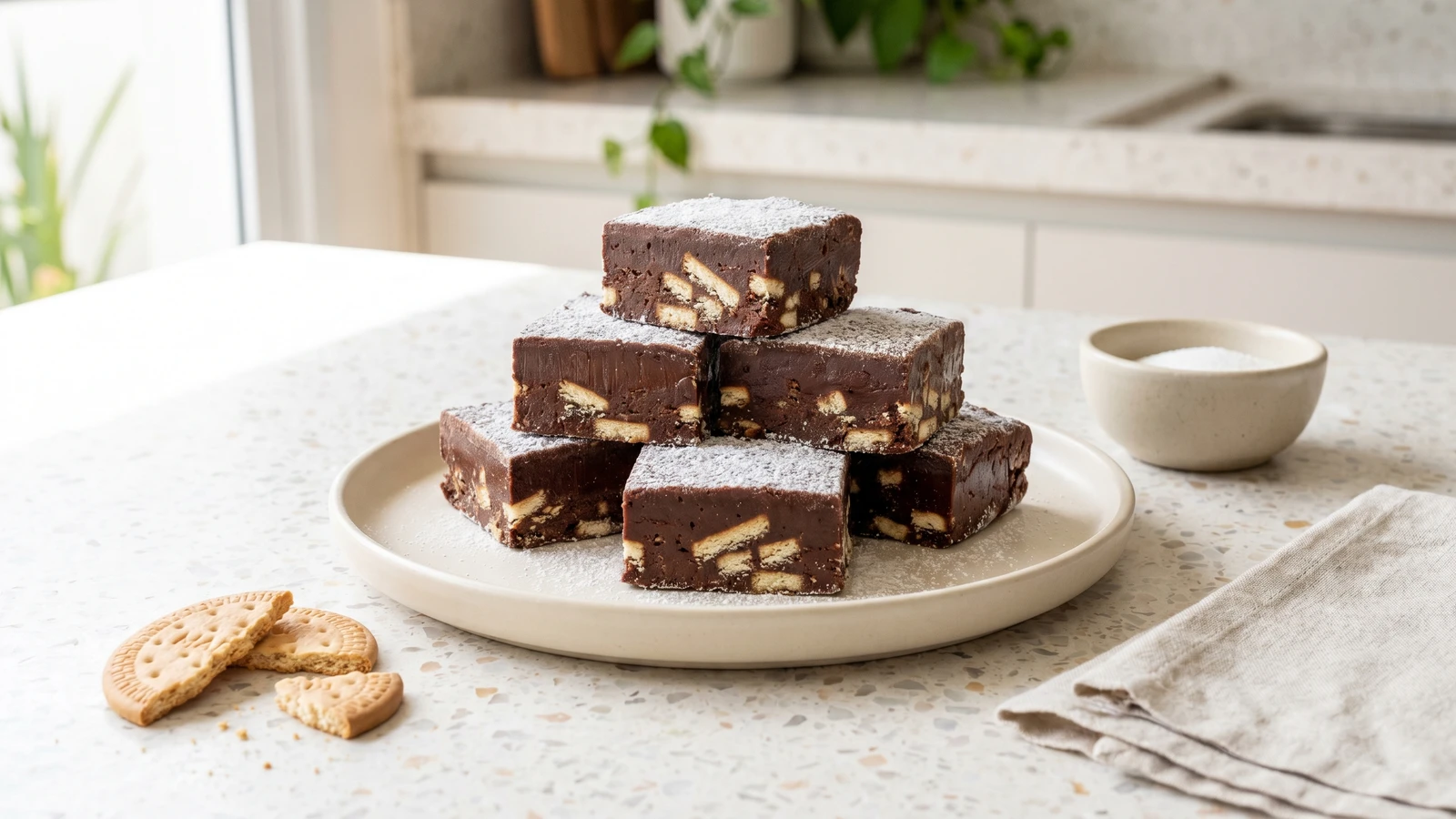
No oven, no courage test, no mystery. Cook brigadeiro until it holds a trail, fold in Maria biscuits, press it flat, and tomorrow's sweet is already solved.
You who looks at a pan of sugar and chocolate and thinks, isso não é pra mim, come here. This is exactly for you. Palha italiana is the kind of sweet that proves cooking isn't a gift, it's something you learn: stir, watch, feel the spoon drag, stop at the ponto.
I like a dessert that respects the same logic as the pê-efe. Rice, beans, a bit of meat or egg, something green, then one square of something sweet because a real table has room for joy. Comida de verdade was never supposed to mean joyless food. That little lie can go sit in the corner.
The method is brigadeiro with structure. Butter keeps the pan kind, cocoa gives the chocolate a clean bitterness, and condensed milk thickens as water cooks off and sugar concentrates. The crushed Maria biscuits are not decoration. They interrupt the fudge, make it slice cleanly, and give your teeth something to meet.
You'll press the warm mass into a pan, chill it, cut it into squares, and dust it with sugar. Anota aí: the only place people go wrong is leaving the pan too soon. Watch the bottom of the pan, not your fear.
Palha italiana is a Brazilian sweet, despite the name, built from brigadeiro and dry biscuits and common at birthday tables, bakeries, school fairs, and potlucks. Its name likely nods to Italian salame di cioccolato, a chocolate-and-biscuit confection brought through immigrant influence, but the condensed-milk brigadeiro base makes the Brazilian version its own thing. In Brazil it is usually cut into squares and dusted with sugar, not shaped like a log.
Quantity
1 tablespoon, plus more for greasing
Quantity
1 can (14 ounces or 395g)
Quantity
3 tablespoons
sifted
Quantity
1/8 teaspoon
Quantity
1 teaspoon
Quantity
5 ounces
broken into small pieces
Quantity
1/3 cup
for coating
| Ingredient | Quantity |
|---|---|
| unsalted butter | 1 tablespoon, plus more for greasing |
| sweetened condensed milk | 1 can (14 ounces or 395g) |
| unsweetened cocoa powdersifted | 3 tablespoons |
| fine salt | 1/8 teaspoon |
| vanilla extract (optional) | 1 teaspoon |
| Maria biscuits or plain tea biscuitsbroken into small pieces | 5 ounces |
| granulated sugarfor coating | 1/3 cup |
Line an 8-inch square pan with parchment and butter the paper lightly. Leave two parchment handles hanging over the sides so you can lift the slab out later. Do this before the stove goes on, because once the brigadeiro hits the ponto, it waits for no one.
Break the Maria biscuits into small irregular pieces, about the size of beans and almonds, with some crumbs too. Don't crush them into sand. The pieces are what make the squares slice with little pale pockets through the chocolate, instead of turning into one dull paste.
Put the butter, condensed milk, sifted cocoa, and salt in a medium heavy pan off the heat and stir until the cocoa disappears into the milk. Start off the heat so you don't get dry cocoa lumps floating around later, because lumps are not personality, they're impatience.
Set the pan over medium-low heat and stir constantly with a silicone spatula, scraping the bottom and corners. Cook until the mixture thickens, turns glossy, and when you drag the spatula across the bottom, the pan shows for 2 seconds before the chocolate closes over again, about 8 to 12 minutes. That's the ponto. Stop too early and the squares slump; cook too long and they chew like a bad decision.
Turn off the heat, stir in the vanilla if using, then fold in the broken biscuits until every piece is coated in chocolate. Work firmly but don't smash them. You want biscuit islands inside the fudge, because that contrast is the whole point.
Scrape the warm mixture into the prepared pan and press it into an even layer with a buttered spatula or a piece of parchment. Smooth the top without fussing it to death. Chill until firm enough to lift and cut cleanly, at least 2 hours. Cold sets the butter and sugar so your knife makes squares, not chocolate mud.
Lift the slab out by the parchment handles and cut into 25 small squares with a sharp knife. Wipe the knife between cuts if the edges get sticky. Toss each square in granulated sugar, coating the sides lightly, so they don't cling together and so they get that familiar festa finish.
1 serving (about 24g)
Culinary guides, cultural storytelling, and the editorial depth that makes cooking meaningful.
Discover Culinary ExplorerChef Juliana
You think curdled milk means you ruined dessert. Good. Tonight you'll do it on purpose, with lemon, yolks, cravo, and sugar, until the pot turns into golden gruminhos.

Chef Juliana
You are not ruining the milk. You're curdling it on purpose, slowly, until sugar, eggs, cinnamon, and patience turn cheap ingredients into dessert.

Chef Juliana
You think curdled milk means failure. Not here. Milk, yolks, sugar, and lemon cook into golden curds in amber whey, a Minas sweet where the ponto teaches the whole recipe.

Chef Juliana
You already trust rice for dinner. Trust it for dessert: cook it gently with milk, coconut, and canela until each grain turns soft, creamy, and impossible to blame on lack of talent.