
Chef Juliana
Ambrosia Baiana
You think curdled milk means you ruined dessert. Good. Tonight you'll do it on purpose, with lemon, yolks, cravo, and sugar, until the pot turns into golden gruminhos.
A cooking platform built around craft, culture, and the stories behind what we eat.
Created by
You already trust rice for dinner. Trust it for dessert: cook it gently with milk, coconut, and canela until each grain turns soft, creamy, and impossible to blame on lack of talent.
You, who looks at a pot of milk and rice and hears that little voice, isso não é pra mim, come here. That voice has terrible timing and worse information. This isn't a dessert for gifted hands. It's stirring, watching, and stopping before the bottom catches. Cozinhar não é dom, é um aprendizado. Anota aí: the pot will teach you if you don't abandon it.
The same rice that sits beside beans on the pê-efe, with meat or egg and something green, can end the meal sweetly. That's the quiet genius of comida de verdade: one cheap grain solves dinner, then comes back with milk, coconut, sugar, and canela to make the house smell like someone remembered you.
I say Bahian with respect from my São Paulo counter. Bahian cooks carry their own pots, their own coconut, their own measure of canela, and I won't pretend to own that. This is a home version, tested in cups and spoons, with the method laid bare: cook the rice first in water so it softens, add warm milk so the simmer doesn't collapse, wait on the sugar until the grains are tender, then finish with coconut milk on low heat so it stays creamy.
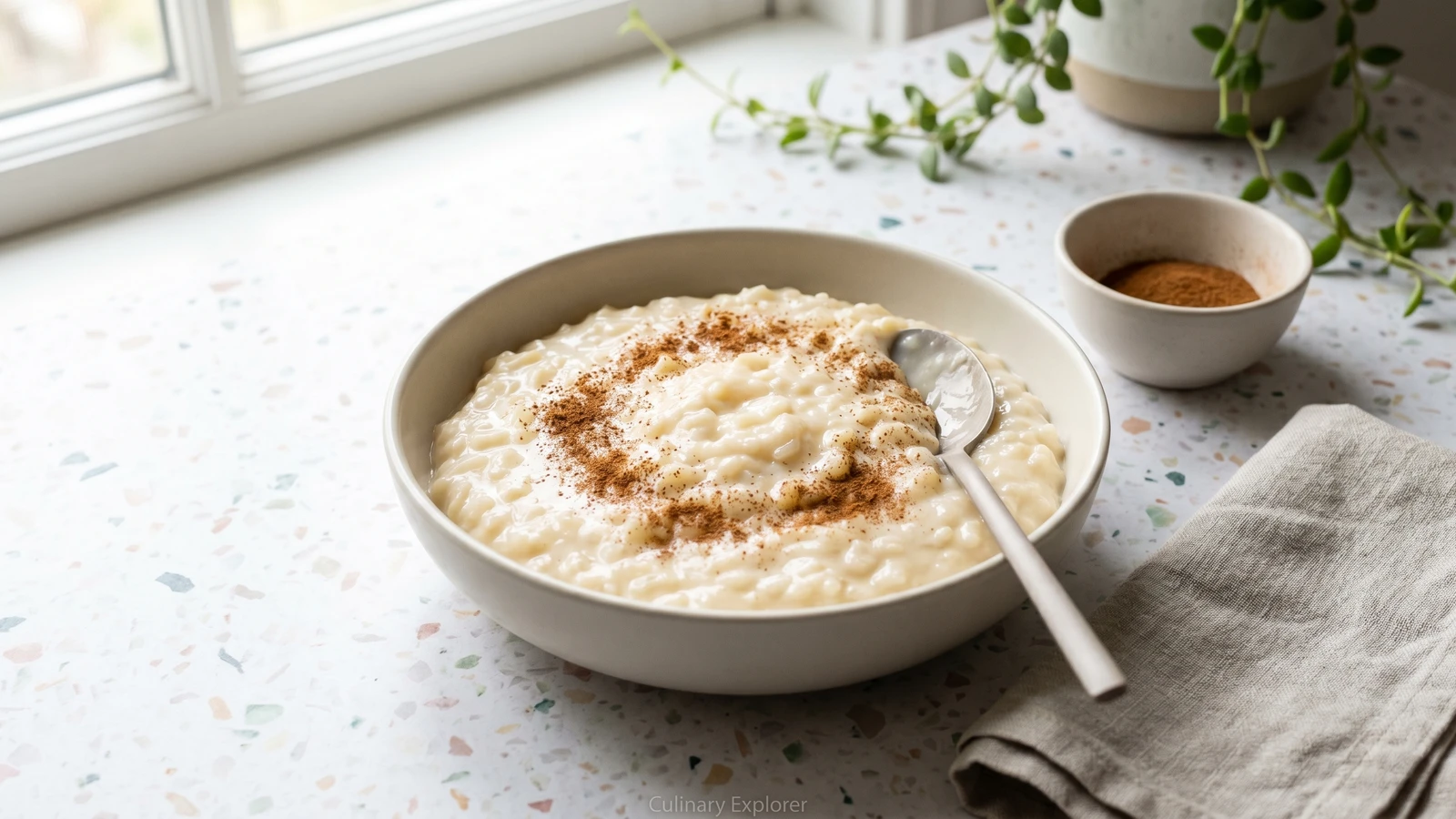
By the end, you should have arroz-doce that falls from the spoon in soft mounds, glossy and fragrant, not stiff, not scorched, not powdered imitation of dessert. Just rice taught patiently.
Arroz-doce in Brazil descends from Portuguese arroz doce, the rice, milk, sugar, and canela side of the convent sweet tradition that traveled with colonization, alongside the egg-yolk sweets tied to nuns using egg whites to starch their habits. In Bahia, African and Afro-Brazilian cooks shaped many colonial sweets in casas-grandes and home kitchens, adding coconut where the coast made it natural. Versions still differ: some are loose and warm, some thick and chilled, but canela on top is the mark everyone recognizes.
Quantity
1 cup
medium-grain or short-grain if possible
Quantity
2 cups
Quantity
1
Quantity
2
Quantity
1/4 teaspoon
Quantity
4 cups
warmed or brought to room temperature
Quantity
1/2 cup
Quantity
1 cup
Quantity
1/2 cup
Quantity
1 tablespoon
Quantity
1 teaspoon
for finishing
| Ingredient | Quantity |
|---|---|
| white ricemedium-grain or short-grain if possible | 1 cup |
| water | 2 cups |
| cinnamon stick | 1 |
| whole cloves (optional) | 2 |
| salt | 1/4 teaspoon |
| whole milkwarmed or brought to room temperature | 4 cups |
| granulated sugar | 1/2 cup |
| unsweetened coconut milk | 1 cup |
| freshly grated unsweetened coconut (optional) | 1/2 cup |
| unsalted butter (optional) | 1 tablespoon |
| ground cinnamonfor finishing | 1 teaspoon |
Rinse the rice in a sieve for 10 seconds, just enough to wash off dust, not until the water runs perfectly clear. Put it in a heavy pot with the water, cinnamon stick, cloves if using, and salt. Bring to a boil, then lower to a gentle simmer and cook, stirring twice, until the water is mostly absorbed and the grains are swollen but still a little firm in the center, 12 to 15 minutes. A light rinse keeps the flavor clean; over-rinsing washes away too much starch, and starch is what makes arroz-doce creamy without a packet.
While the rice cooks, warm the milk until it feels warm, not hot, when you touch a drop, or let it sit out until it loses the fridge chill. Add cold milk straight from the refrigerator and the pot loses its gentle simmer. The rice pauses instead of softening, and the bottom gets more time to stick. A gente quer low and steady, not stop and start.
Pour the warm milk into the rice and stir well, scraping the bottom of the pot. Keep the heat low and cook uncovered, stirring every few minutes at first and more often as it thickens, until the grains are fully tender and the milk looks creamy around them, 20 to 25 minutes. Low heat matters because milk scorches before it forgives you, and scorched milk tastes like the bottom of the pan all the way through.
Stir in the sugar only after the rice is tender, then add the coconut milk and grated coconut if using. Keep the heat low and simmer, stirring slowly, until the spoon leaves a soft path that closes back over itself, 8 to 10 minutes. Sugar goes in late because it slows the rice from softening. Coconut milk goes in late because a hard boil can make it split and taste greasy instead of round and creamy.
Turn off the heat. Fish out the cinnamon stick and cloves, then stir in the butter if using. Let the arroz-doce rest for 10 minutes before serving. It will thicken as it sits because the rice keeps drinking the milk, so stop cooking when it is looser than the final texture you want. If it looks perfect in the pot, it may stand like a brick in the bowl.
Spoon into bowls warm, at room temperature, or chilled. Dust with ground canela right before serving, not an hour before, so the perfume stays alive and the top doesn't turn muddy. If serving chilled, stir in 2 to 4 tablespoons of milk to loosen it first. The pudding should fall from the spoon in soft mounds, glossy and creamy.
1 serving (about 260g)
Culinary guides, cultural storytelling, and the editorial depth that makes cooking meaningful.
Discover Culinary ExplorerChef Juliana
You think curdled milk means you ruined dessert. Good. Tonight you'll do it on purpose, with lemon, yolks, cravo, and sugar, until the pot turns into golden gruminhos.

Chef Juliana
You are not ruining the milk. You're curdling it on purpose, slowly, until sugar, eggs, cinnamon, and patience turn cheap ingredients into dessert.

Chef Juliana
You think curdled milk means failure. Not here. Milk, yolks, sugar, and lemon cook into golden curds in amber whey, a Minas sweet where the ponto teaches the whole recipe.

Chef Juliana
You already know how to cook rice. Now let it go sweet, creamy, and soft, with milk, cinnamon, and the good sense to stop before it turns stiff.