
Chef Ally
Beignets with Powdered Sugar
Pillowy squares of yeasted dough, fried until golden and hollow inside, then buried beneath a mountain of powdered sugar. Simple enough for a Sunday morning, celebratory enough for any occasion worth marking.
A cooking platform built around craft, culture, and the stories behind what we eat.
Created by Chef Remy
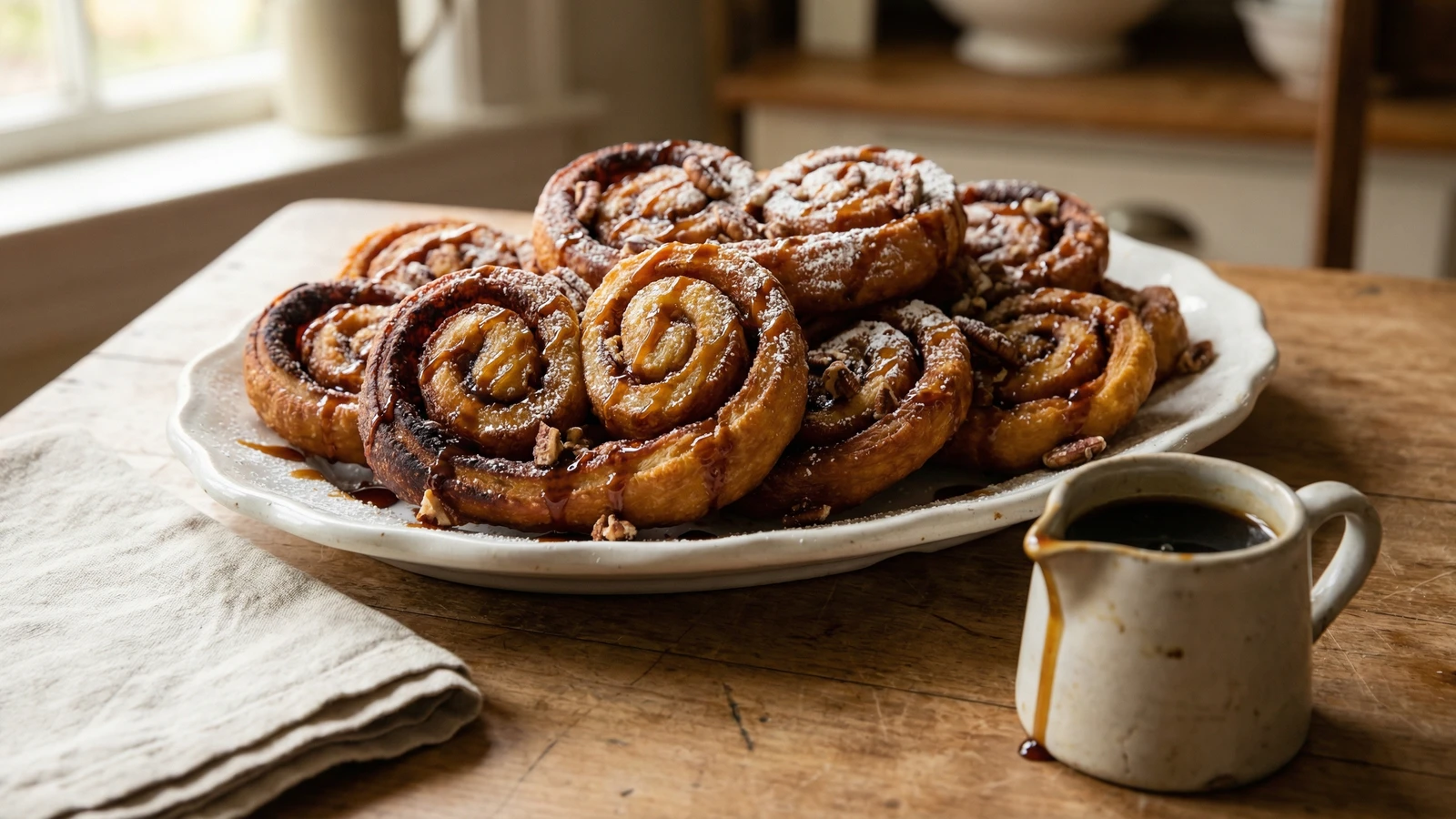
Delicate fried dough strips that curl into whimsical shapes as they sizzle, then get drenched in dark Louisiana cane syrup and scattered with toasted pecans, the kind of Mardi Gras sweet that makes children steal seconds when nobody's looking.
Some desserts tell you exactly where they come from. Oreilles de cochon belong to the Cajun country as surely as live oaks and Spanish moss. The name means pig's ears, and one look at these curled, golden pastries shows you why. They twist and ruffle in the hot oil, forming shapes that look like nothing so much as a hog's ear after a good scratch.
This is celebration food, pure and simple. During Mardi Gras, during boucheries, during any gathering worth remembering, someone's grandmother would set up near the stove with her rolling pin and a pot of shimmering oil. The technique came over with the Acadians and stayed because it works. Simple dough, rolled impossibly thin, fried fast, and baptized in cane syrup while still warm enough to absorb that dark sweetness.
At Lagniappe, we serve these during Carnival season and watch grown men fight over the last one on the plate. The secret is twofold: roll the dough thinner than you think possible, and use real Louisiana cane syrup. That syrup has a mineral depth and a molasses note that no imitation can match. It clings to the pastry and soaks into every crevice.
My grandmother Evangeline made these without measuring a thing. She knew the dough was right by how it felt under her hands. I've given you measurements because that's what a recipe requires, but taste as you go. Trust your instincts. When the last bite is as good as the first, you've done it right.
Quantity
3 cups (375g)
plus more for rolling
Quantity
3 tablespoons
Quantity
1 teaspoon
Quantity
1/2 teaspoon
Quantity
1/4 teaspoon
freshly grated
Quantity
4 tablespoons (1/2 stick)
cold, cut into small pieces
Quantity
3
at room temperature
Quantity
1/4 cup
Quantity
1 teaspoon
Quantity
about 3 cups
for frying
Quantity
1 1/2 cups
Quantity
1 cup
toasted and roughly chopped
Quantity
for dusting
| Ingredient | Quantity |
|---|---|
| all-purpose flourplus more for rolling | 3 cups (375g) |
| granulated sugar | 3 tablespoons |
| baking powder | 1 teaspoon |
| fine sea salt | 1/2 teaspoon |
| nutmegfreshly grated | 1/4 teaspoon |
| unsalted buttercold, cut into small pieces | 4 tablespoons (1/2 stick) |
| large eggsat room temperature | 3 |
| whole milk | 1/4 cup |
| pure vanilla extract | 1 teaspoon |
| vegetable or peanut oilfor frying | about 3 cups |
| Louisiana cane syrup | 1 1/2 cups |
| pecan halvestoasted and roughly chopped | 1 cup |
| powdered sugar (optional) | for dusting |
Whisk together the flour, sugar, baking powder, salt, and nutmeg in a large bowl. The nutmeg is subtle but essential. It rounds out the sweetness and gives these pastries their old-fashioned character. Add the cold butter pieces and work them into the flour with your fingertips or a pastry cutter until the mixture looks like coarse cornmeal with some pea-sized bits remaining.
Beat the eggs lightly in a small bowl, then whisk in the milk and vanilla. Make a well in the center of your flour mixture and pour in the wet ingredients. Stir with a fork, pulling flour from the sides into the center, until a shaggy dough forms. It will look rough at this point. That's fine.
Turn the dough out onto a lightly floured surface and knead for three to four minutes until it becomes smooth, supple, and slightly elastic. You're not developing serious gluten here like bread dough, just bringing everything together. The finished dough should feel soft but not sticky, like a tender pasta dough. Wrap tightly in plastic and rest at room temperature for thirty minutes. This rest relaxes the gluten and makes rolling much easier.
Divide the rested dough into four equal portions. Work with one portion at a time, keeping the others covered. On a well-floured surface, roll the dough as thin as you can manage, about 1/16 inch thick. You should nearly see the counter through it. Thin dough fries crisp. Thick dough stays chewy in the middle. My grandmother Evangeline could roll this paper-thin, and that's what we're after.
Using a sharp knife or pizza wheel, cut the rolled dough into strips about one inch wide and four inches long. These do not need to be perfect rectangles. Irregular edges fry up more interesting, with extra crispy bits along the ragged parts. Traditional cooks cut them freehand, and so should you. Let the cut strips rest uncovered for five minutes while you heat the oil. A slight skin forming on the surface helps them puff.
Pour oil into a large cast iron skillet or Dutch oven to a depth of about one and a half inches. Heat over medium-high until the oil reaches 350 degrees on a deep-fry thermometer. Test with a small scrap of dough. It should sink briefly, then rise immediately and bubble vigorously. If it sits on the bottom, the oil is too cold. If it browns within seconds, back off the heat.
Working in batches of four or five strips, slip the dough into the hot oil. They will sink, then rise and begin to curl and twist into their distinctive ear shapes. Use a slotted spoon or spider to gently turn them so they brown evenly on all sides. The whole process takes about two minutes per batch. You want a deep golden color with darker spots on the curled edges. Lift them out and drain on a wire rack set over a sheet pan.
While you fry the remaining batches, warm the cane syrup in a small saucepan over low heat until it flows easily, about three minutes. Do not let it simmer or boil. Warm syrup coats the pastries evenly without making them soggy. Steen's cane syrup is the Louisiana standard. Accept no substitutes if you can find it.
Arrange the warm oreilles de cochon on a serving platter. Drizzle generously with the warm cane syrup, letting it pool in the curves and crannies. Scatter the toasted pecans over the top. Dust with powdered sugar if you like, though traditionalists skip it. Serve immediately while the pastries are still slightly warm and shatteringly crisp. These are best eaten within an hour of frying.
1 serving (about 40g)
Culinary guides, cultural storytelling, and the editorial depth that makes cooking meaningful.
Discover Culinary ExplorerChef Ally
Pillowy squares of yeasted dough, fried until golden and hollow inside, then buried beneath a mountain of powdered sugar. Simple enough for a Sunday morning, celebratory enough for any occasion worth marking.

Chef Remy
Sandy, crumbly shortbread rounds perfumed with deeply nutty brown butter and studded with toasted Louisiana pecans, finished with a whisper of flaky salt that makes every bite sing.

Chef Remy
Tender, fluffy buttermilk biscuits with golden tops and soft centers, split warm from the oven and flooded with dark, earthy Louisiana cane syrup, the way four generations of bayou families have started their mornings.

Chef Remy
Soft, golden yeast rolls cradling spicy Cajun boudin in every bite, where Czech-Texan baking tradition meets Louisiana sausage-making, proving that good cooks have always borrowed from their neighbors.