
Chef Ally
Beignets with Powdered Sugar
Pillowy squares of yeasted dough, fried until golden and hollow inside, then buried beneath a mountain of powdered sugar. Simple enough for a Sunday morning, celebratory enough for any occasion worth marking.
A cooking platform built around craft, culture, and the stories behind what we eat.
Created by Chef Remy
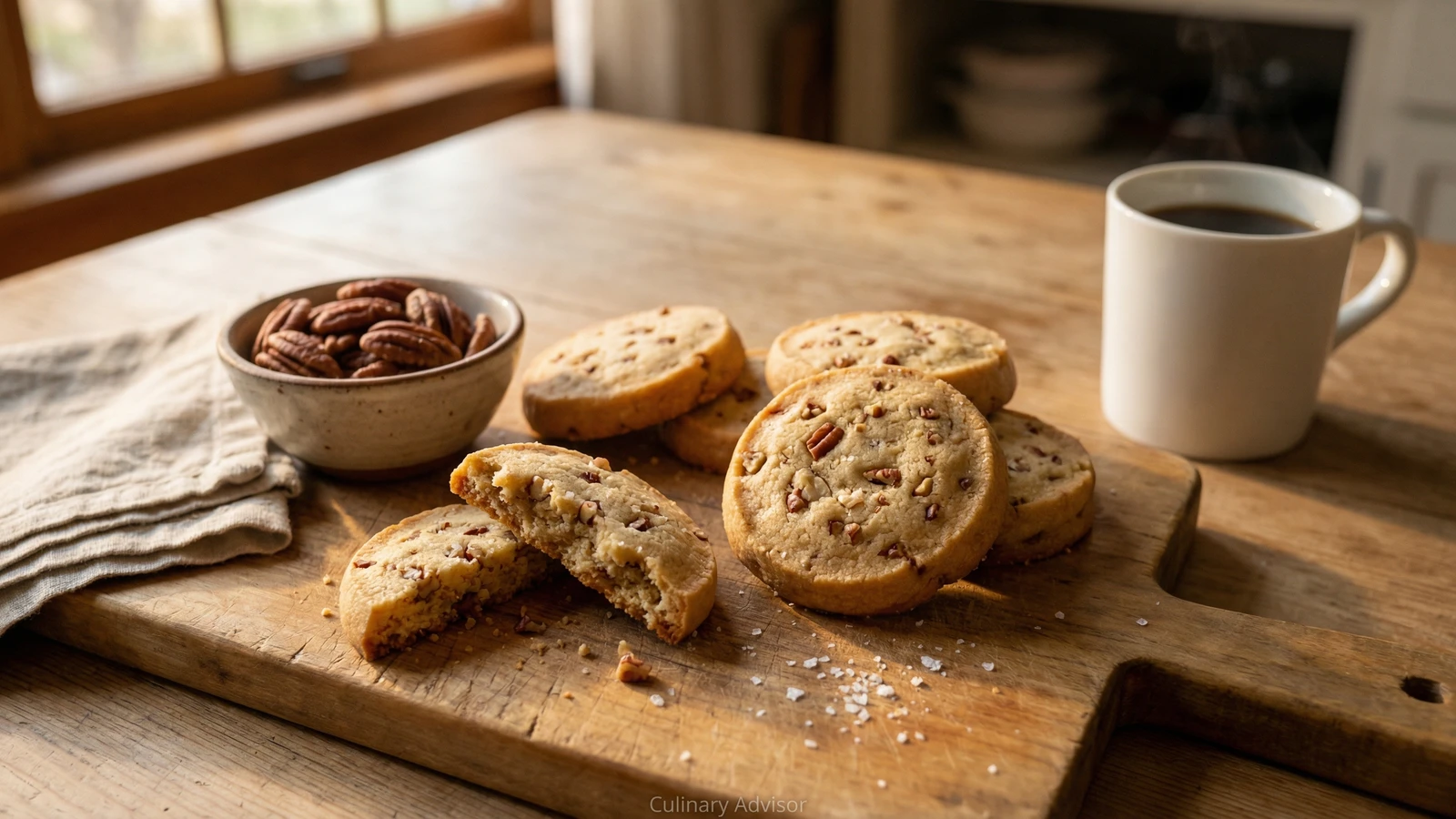
Sandy, crumbly shortbread rounds perfumed with deeply nutty brown butter and studded with toasted Louisiana pecans, finished with a whisper of flaky salt that makes every bite sing.
Brown butter changes everything. That moment when the milk solids turn from pale foam to golden specks, when your kitchen fills with the smell of toasting hazelnuts, that is when you know magic is happening in that pan. My grandmother Evangeline used brown butter in everything: her pecan pie, her butter cakes, her holiday cookies. She called it beurre noisette, the French way, because Cajun cooks have always understood that this simple transformation turns good into extraordinary.
These shortbread cookies carry that tradition forward. The technique is straightforward, but the flavor is anything but simple. Louisiana pecans, toasted until fragrant, folded into butter-rich dough that crumbles at first bite. At Lagniappe, we serve a version of these with coffee at the end of the meal. Guests always ask for the recipe. Now you have it.
Shortbread rewards patience. The dough needs time to chill so it slices clean. The butter needs watching so it browns without burning. The cookies need a gentle hand so they stay tender. This is not fussy baking. It is attentive baking. There is a difference. When you take that first bite and taste the layers of toasted nuts and caramelized butter coming together with just enough salt to make it interesting, you will understand why the extra care matters.
Quantity
1 cup (2 sticks/226g)
Quantity
1 cup (120g)
Quantity
2 cups (250g)
Quantity
1/2 cup (60g)
Quantity
1/4 cup (50g)
packed
Quantity
1 teaspoon
Quantity
1 teaspoon
Quantity
for finishing
| Ingredient | Quantity |
|---|---|
| unsalted butter | 1 cup (2 sticks/226g) |
| pecan halves | 1 cup (120g) |
| all-purpose flour | 2 cups (250g) |
| powdered sugar | 1/2 cup (60g) |
| light brown sugarpacked | 1/4 cup (50g) |
| fine sea salt | 1 teaspoon |
| pure vanilla extract | 1 teaspoon |
| flaky sea salt (optional) | for finishing |
Spread the pecans in a single layer on a dry baking sheet. Toast in a 350F oven for 8 to 10 minutes, stirring once halfway through, until fragrant and a shade darker. You want to smell that deep, toasty aroma filling your kitchen. Watch them closely because pecans go from perfect to burnt in about thirty seconds. Let them cool completely, then chop medium-fine. You want pieces, not dust.
Cut the butter into tablespoon-sized pieces and place in a light-colored saucepan. Light-colored is important because you need to see the butter change. Set over medium heat and let it melt completely, then keep cooking. The butter will foam and sputter as the water cooks off. Swirl the pan occasionally. After 4 to 6 minutes, the foam will subside and you will see golden-brown specks forming at the bottom. The kitchen will smell like toasting hazelnuts. The moment those specks turn the color of a pecan shell and the butter smells intensely nutty, pull it off the heat.
Pour the brown butter, including every speck of those precious browned milk solids, into a heatproof bowl. Scrape the pan well. Those bits are concentrated flavor. Let the butter cool to room temperature, then refrigerate until solid but still pliable, about 1 hour. It should have the consistency of cold cream cheese when you press it. Too soft and your dough will be greasy. Too hard and it will not incorporate properly.
Whisk together the flour and fine sea salt in a medium bowl. Set aside. In a separate small bowl, combine the powdered sugar and brown sugar, breaking up any lumps in the brown sugar with your fingers. The two sugars work together: powdered sugar creates that sandy, melt-in-your-mouth texture while brown sugar adds depth and a hint of molasses sweetness.
Beat the chilled brown butter with the sugar mixture using a stand mixer fitted with the paddle attachment, or a hand mixer. Start on low to prevent a sugar cloud, then increase to medium speed. Beat for 2 to 3 minutes until the mixture is lighter in color and slightly fluffy. Add the vanilla and beat to combine. Do not overwork it. Shortbread is not cake. You want structure, not air.
Add the flour mixture in two additions, mixing on low speed just until the flour disappears. Stop the moment you see a cohesive dough forming. Fold in the chopped toasted pecans by hand with a sturdy spatula, distributing them evenly throughout. The dough will be stiff and slightly crumbly. This is correct.
Turn the dough out onto a clean work surface. Divide it in half. Working with one portion at a time, shape into a log about 2 inches in diameter. If the dough cracks as you roll, press it back together firmly. The warmth from your hands will help. Wrap each log tightly in plastic wrap, twisting the ends like a candy wrapper to compress and smooth the shape. Roll gently on the counter to even out any lumps.
Refrigerate the wrapped logs for at least 2 hours, or overnight. The dough must be thoroughly chilled to slice cleanly. A soft log will squash and give you misshapen cookies. Patience here makes all the difference between neat rounds and sad ovals.
Preheat your oven to 325F. Line baking sheets with parchment paper. Unwrap the chilled dough and use a sharp knife to slice into rounds about 1/3-inch thick. A gentle sawing motion works better than pressing straight down, which can crack the edges. Place the rounds 1 inch apart on the prepared sheets. These cookies do not spread much.
Bake one sheet at a time in the center of the oven for 15 to 18 minutes. The cookies are done when the edges turn light golden and the tops look dry and set. The centers will still feel soft when you touch them. Do not wait for them to brown all over or you will have overdone it. Shortbread firms as it cools.
Remove from oven and immediately sprinkle each cookie with a few flakes of finishing salt while still warm. Let them rest on the baking sheet for 5 minutes before transferring to a wire rack. They are fragile when hot. Once completely cooled, they should snap cleanly when broken, with a sandy, crumbly texture that dissolves on your tongue.
1 serving (about 20g)
Culinary guides, cultural storytelling, and the editorial depth that makes cooking meaningful.
Discover Culinary ExplorerChef Ally
Pillowy squares of yeasted dough, fried until golden and hollow inside, then buried beneath a mountain of powdered sugar. Simple enough for a Sunday morning, celebratory enough for any occasion worth marking.

Chef Remy
Tender, fluffy buttermilk biscuits with golden tops and soft centers, split warm from the oven and flooded with dark, earthy Louisiana cane syrup, the way four generations of bayou families have started their mornings.

Chef Remy
Soft, golden yeast rolls cradling spicy Cajun boudin in every bite, where Czech-Texan baking tradition meets Louisiana sausage-making, proving that good cooks have always borrowed from their neighbors.
Chef Remy
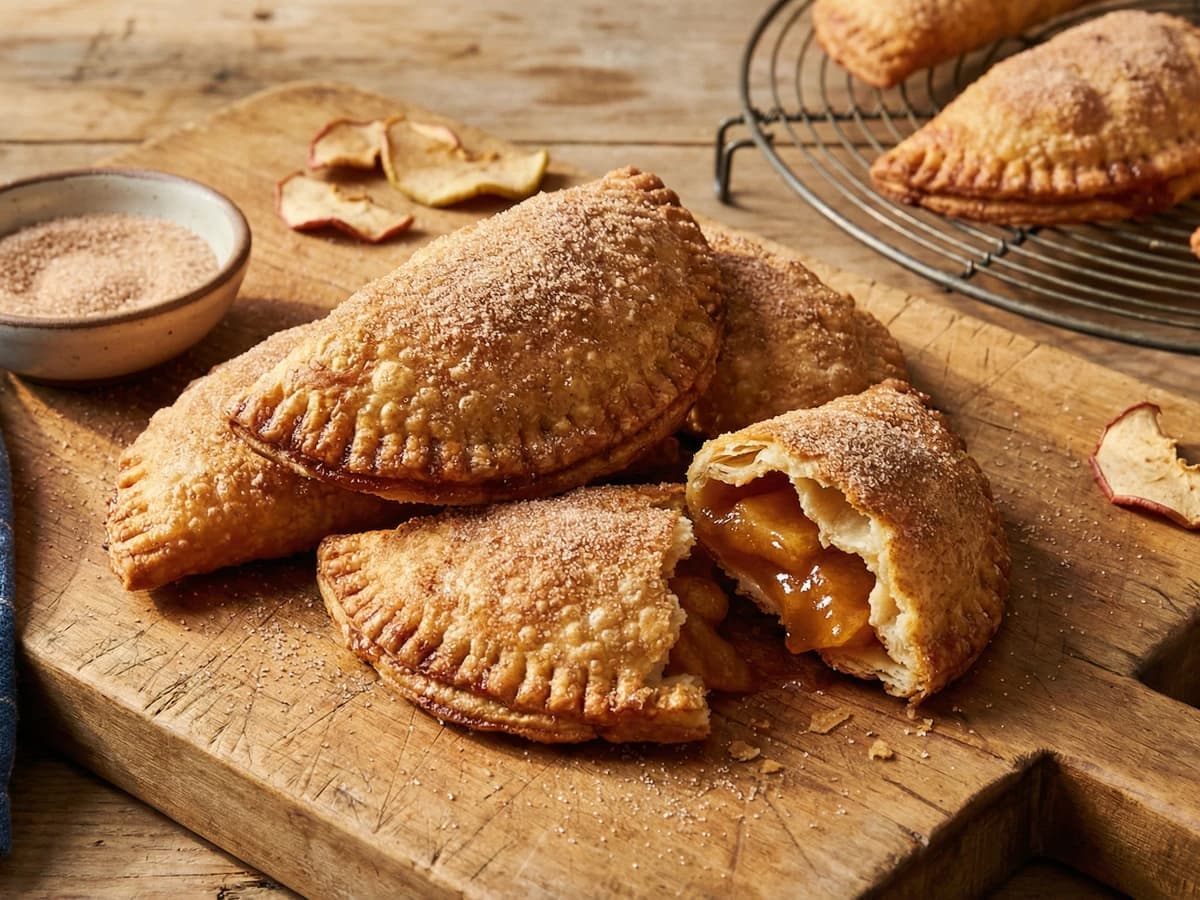
Flaky buttermilk pastry wrapped around tender spiced apples kissed with cane syrup and a whisper of cayenne, fried until golden and tumbled in cinnamon sugar while still warm from the oil.