Chef Lupita
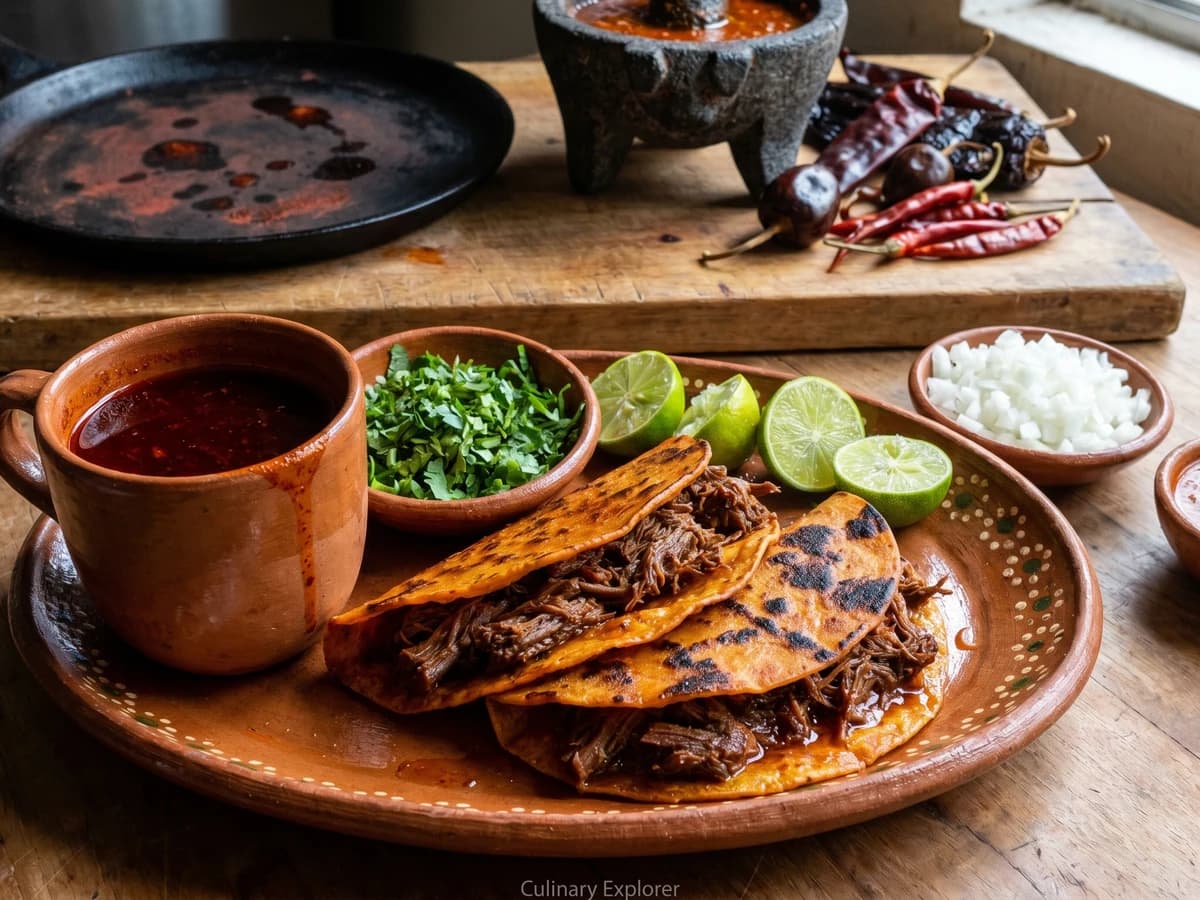
Birria Tacos with Consome
Jalisco's goat birria, born around Cocula and carried into Guadalajara's markets, slow-braised in ancho, guajillo, cascabel, and chile de arbol, then tucked into corn tortillas crisped in its own red fat.
A cooking platform built around craft, culture, and the stories behind what we eat.
Created by
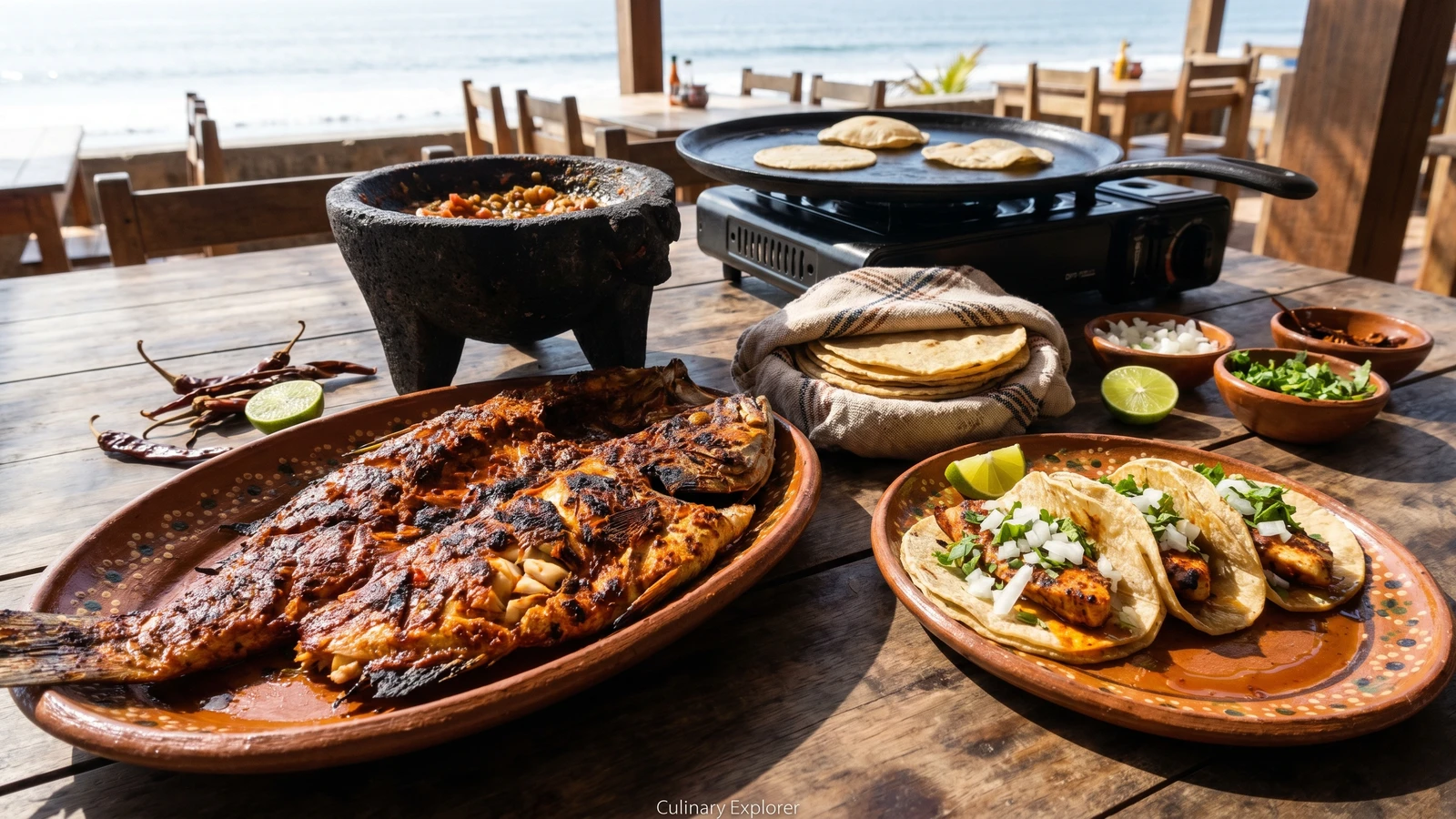
Nayarit's pescado zarandeado, born on the Pacific coast and grilled split open over smoky coals, becomes serious tacos with corn tortillas, salsa huevona, lime, and charred fish skin.
Nayarit owns pescado zarandeado. Put your finger on the map at San Blas, move south along the coast toward Chacala and La Cruz de Huanacaxtle, then look inland toward Mexcaltitan, the island town that still argues for its place in the origin story. This dish lives where the estuaries meet the Pacific, where cooks learned to split the fish open, clamp it in a zaranda, and let wood smoke do what a skillet cannot.
The fish is not buried under sauce. It is brushed with a red adobo of chile guajillo, chile ancho, chile de arbol, achiote, garlic, lime, soy sauce, mustard, and a little mayonnaise so the seasoning holds to the flesh while the skin crisps over the fire. Some people get nervous when they see soy sauce in a Mexican recipe. Don't. Nayarit's coast has always cooked with what arrived by boat, by market, by working hands. Cada estado, su propia cocina.
I learned this version from a señora near San Blas who kept turning the grill basket with one hand while pressing tortillas with the other. She did not fuss. She watched the fat bead on the fish, the adobo darken, the tail edges crisp, and then she flaked the meat straight into tortillas with salsa huevona from the molcajete. That is the lesson: respect the fish, respect the fire, and don't drown the Pacific under decoration. Así se hace y punto.
Pescado zarandeado is most closely associated with Nayarit's Pacific coast and the island community of Mexcaltitan, where whole fish were traditionally butterflied and grilled in a metal basket called a zaranda over mangrove wood. The dish expanded through beach palapas in Nayarit and neighboring Sinaloa during the 20th century, with each coast defending its own marinade, some heavier with mustard and bottled sauces, others centered on dried chiles and achiote. The use of soy sauce and salsa inglesa reflects Mexico's port and trade history, especially along coastal states where imported condiments entered local cooking without making the dish any less regional.
Quantity
1, 3 to 3 1/2 pounds
scaled, gutted, butterflied from the back, head and tail left on
Quantity
1 1/2 teaspoons, plus more to taste
Quantity
3
stemmed and seeded
Quantity
1
stemmed and seeded
Quantity
2
stemmed
Quantity
1 1/2 tablespoons
Quantity
4
unpeeled
Quantity
1/4 cup
Quantity
2 tablespoons
Quantity
2 tablespoons
Quantity
1 tablespoon
Quantity
1 tablespoon
Quantity
1 tablespoon
Quantity
2 tablespoons
Quantity
2 tablespoons
softened
Quantity
1 teaspoon
Quantity
1/2 teaspoon
Quantity
2 tablespoons
for the grill grate
Quantity
18
warmed
Quantity
1/2 small
finely diced
Quantity
1/2 cup
chopped
Quantity
for serving
Quantity
for serving
Quantity
1
for salsa huevona
Quantity
4
husked and rinsed, for salsa huevona
Quantity
3
for salsa huevona
Quantity
1
for salsa huevona
Quantity
1
peeled, for salsa huevona
Quantity
1/2 teaspoon
for salsa huevona
| Ingredient | Quantity |
|---|---|
| whole red snapper or sea bassscaled, gutted, butterflied from the back, head and tail left on | 1, 3 to 3 1/2 pounds |
| kosher salt | 1 1/2 teaspoons, plus more to taste |
| dried chile guajillostemmed and seeded | 3 |
| dried chile anchostemmed and seeded | 1 |
| dried chile de arbolstemmed | 2 |
| achiote paste | 1 1/2 tablespoons |
| garlic clovesunpeeled | 4 |
| fresh lime juice | 1/4 cup |
| fresh orange juice | 2 tablespoons |
| soy sauce | 2 tablespoons |
| salsa inglesa, Worcestershire sauce | 1 tablespoon |
| Maggi seasoning | 1 tablespoon |
| yellow mustard | 1 tablespoon |
| mayonnaise | 2 tablespoons |
| unsalted buttersoftened | 2 tablespoons |
| dried Mexican oregano | 1 teaspoon |
| freshly ground black pepper | 1/2 teaspoon |
| neutral oilfor the grill grate | 2 tablespoons |
| hand-pressed corn tortillaswarmed | 18 |
| white onion (optional)finely diced | 1/2 small |
| fresh cilantro (optional)chopped | 1/2 cup |
| lime halves (optional) | for serving |
| salsa huevona | for serving |
| large ripe tomatofor salsa huevona | 1 |
| tomatilloshusked and rinsed, for salsa huevona | 4 |
| fresh chile serranofor salsa huevona | 3 |
| dried chile de arbolfor salsa huevona | 1 |
| garlic clovepeeled, for salsa huevona | 1 |
| kosher saltfor salsa huevona | 1/2 teaspoon |
Ask the fishmonger to butterfly the fish from the back so it opens like a book, with the belly still holding together. At home, pat it very dry inside and out. Score the flesh lightly in a crosshatch, not through the skin. Season with the salt and let it sit while you make the adobo. A wet fish sticks. A dry fish grills.
Heat a dry comal over medium. Toast the guajillo, ancho, and chile de arbol separately, pressing each one briefly against the hot surface until the skin darkens slightly and smells deep, about 20 to 30 seconds per side. Do not blacken them. Burned chile makes bitter adobo, and no amount of lime will save it.
Place the toasted chiles in a bowl and cover with hot water for 15 minutes. On the same comal, roast the unpeeled garlic cloves until the skins spot black and the centers soften, about 8 minutes. Peel the garlic. Hot water softens the chile flesh. Boiling water beats it up and brings bitterness.
Drain the chiles and put them in a blender with the peeled roasted garlic, achiote paste, lime juice, orange juice, soy sauce, salsa inglesa, Maggi, mustard, mayonnaise, butter, Mexican oregano, and black pepper. Blend until completely smooth, scraping the jar once or twice. The adobo should be thick enough to coat a spoon and red-orange from the achiote and chiles.
Rub the adobo over the flesh side of the fish, pushing it into the score marks. Brush a thin layer over the skin too. Let the fish rest 20 minutes at room temperature, no longer. Lime and salt season the flesh, but if you leave it too long, the surface starts to cure and tighten before it hits the grill.
While the fish rests, put the tomato, tomatillos, serranos, dried chile de arbol, and garlic on the hot comal. Turn them until the skins blister and the tomatillos slump, 8 to 10 minutes. Pound the garlic and salt in a molcajete first, then add the chiles, tomato, and tomatillos. Leave it rough. Salsa huevona is called lazy because it does not ask for perfection. It still asks you to use the molcajete.
Build a medium-hot charcoal fire with a few pieces of fruit wood if you cannot get mangrove. In Nayarit, mangrove wood is traditional, but outside the coast you cook with what you can source responsibly. Oil the grill grate well. If you have a fish basket, oil that too. You want steady heat, not flames licking the adobo until it turns black.
Place the fish skin side down in the oiled basket or directly on the grill. Cook 8 to 10 minutes with the grill covered, until the skin releases and the edges of the tail begin to crisp. Do not poke it every minute. The fish will tell you when it is ready to move because it stops clinging to the metal.
Turn the fish carefully and cook flesh side down for 5 to 7 minutes, just long enough for the adobo to darken in patches and the thickest part of the fish to flake. Turn it back skin side down for the final 2 minutes if the flesh needs more time. The fish is done at 135F to 140F in the thickest part, or when the meat lifts cleanly from the backbone.
Warm the corn tortillas on a comal until they puff in spots and show light char. Flake the grilled fish into large pieces, keeping some crisp skin with the flesh. Set the fish, tortillas, salsa huevona, diced white onion, cilantro, and lime halves on the table. Each taco gets fish first, salsa next, then onion and cilantro if you want them. Flour tortillas belong to the north. This is Nayarit, so use corn.
1 serving (about 310g)
Culinary guides, cultural storytelling, and the editorial depth that makes cooking meaningful.
Discover Culinary ExplorerChef Lupita
Jalisco's goat birria, born around Cocula and carried into Guadalajara's markets, slow-braised in ancho, guajillo, cascabel, and chile de arbol, then tucked into corn tortillas crisped in its own red fat.
Chef Lupita
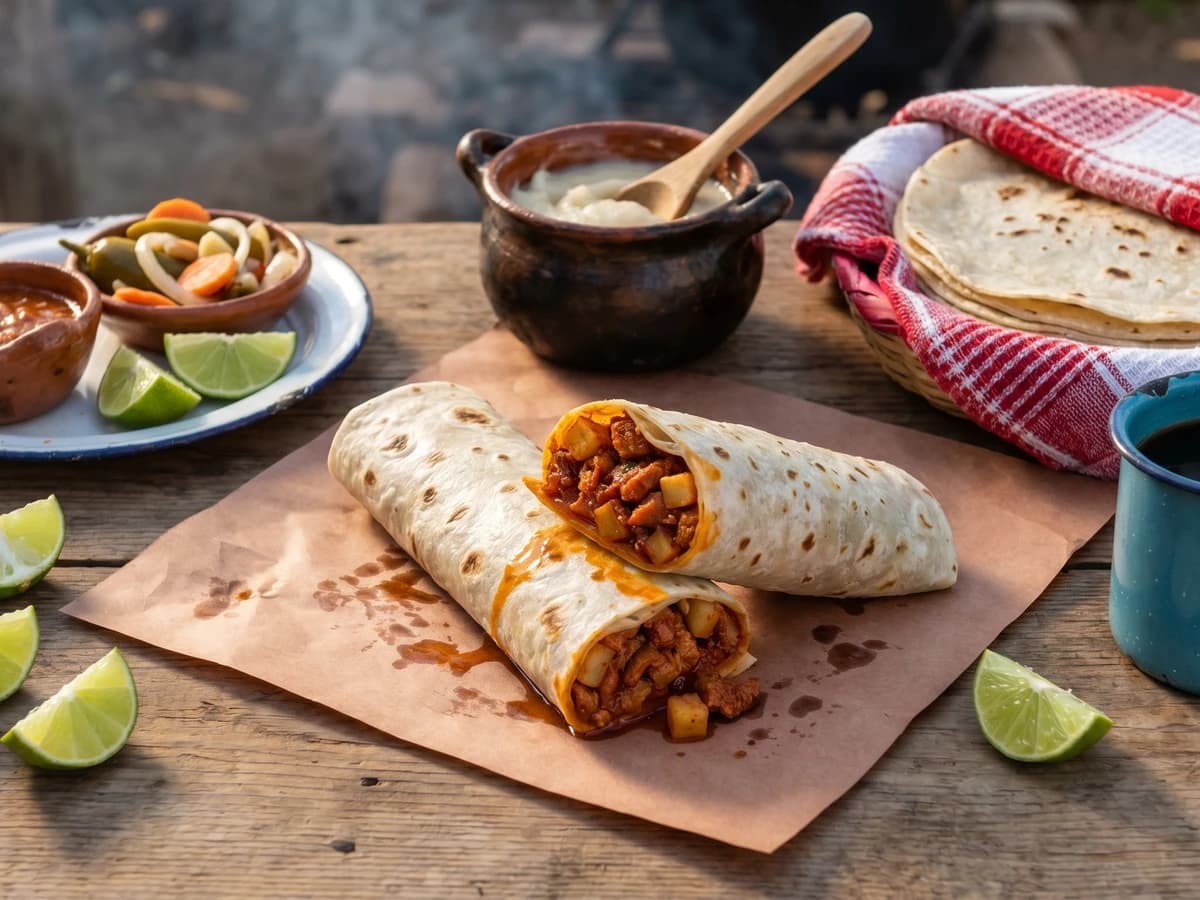
Sonora's working morning burrito: chicharrón de cáscara stewed in chile colorado with diced potato, rolled tight in a paper-thin tortilla sobaquera and eaten standing up at the carreta.
Chef Lupita
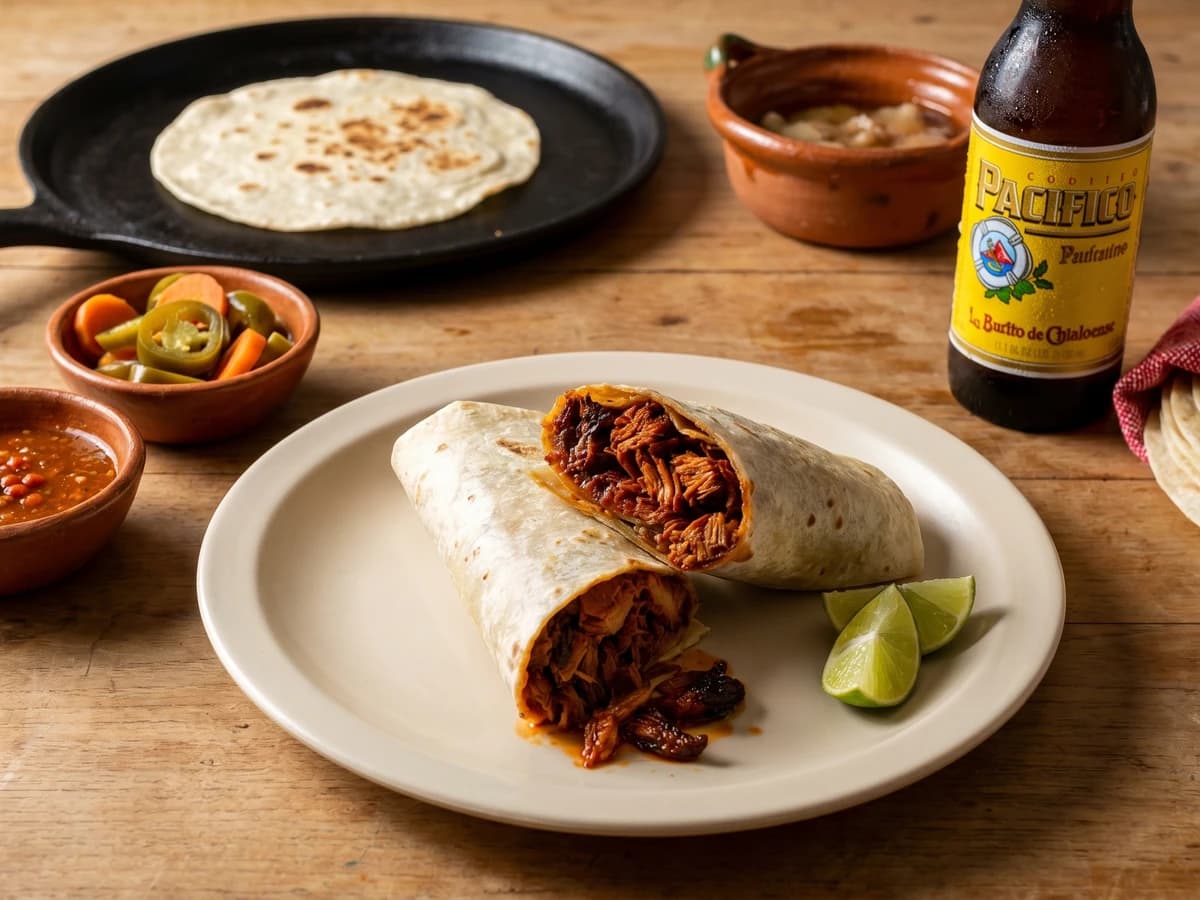
Mocorito's pork chilorio, shredded and confited in lard with chile ancho and pasilla, rolled into a thin handmade flour tortilla. The burrito Sinaloa sends out into the world.
Chef Lupita
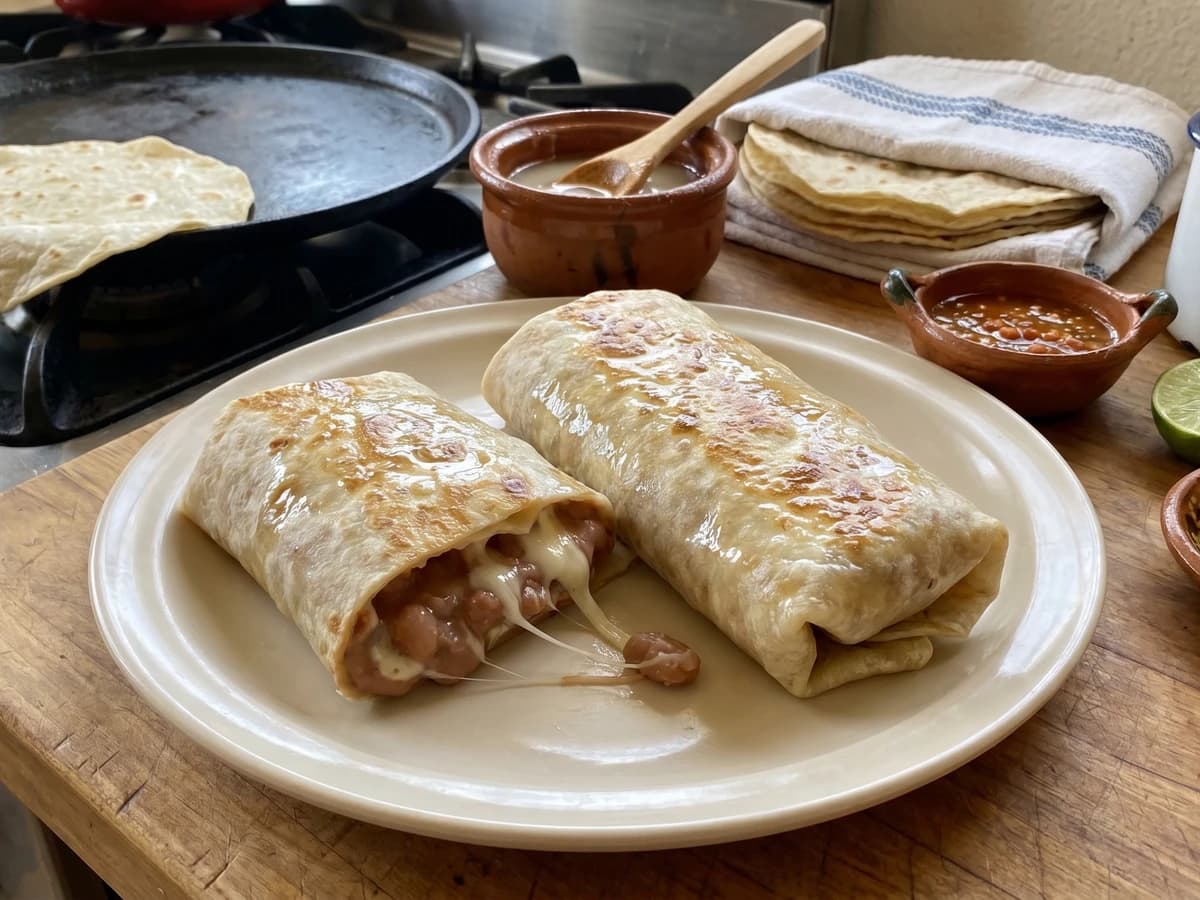
Sonora's morning burrito of mashed pinto frijoles puercos and melted queso asadero, wrapped in a paper-thin sobaquera and seared on the comal until the cheese pulls in long strings.