
Chef Juliette
Flan aux Carottes
A pale short-paste shell holds silken, lightly sweet carrot purée beneath neat glazed half-discs, their butter syrup catching the light: a classical tart poised between vegetable course and sweet.
A cooking platform built around craft, culture, and the stories behind what we eat.
Created by
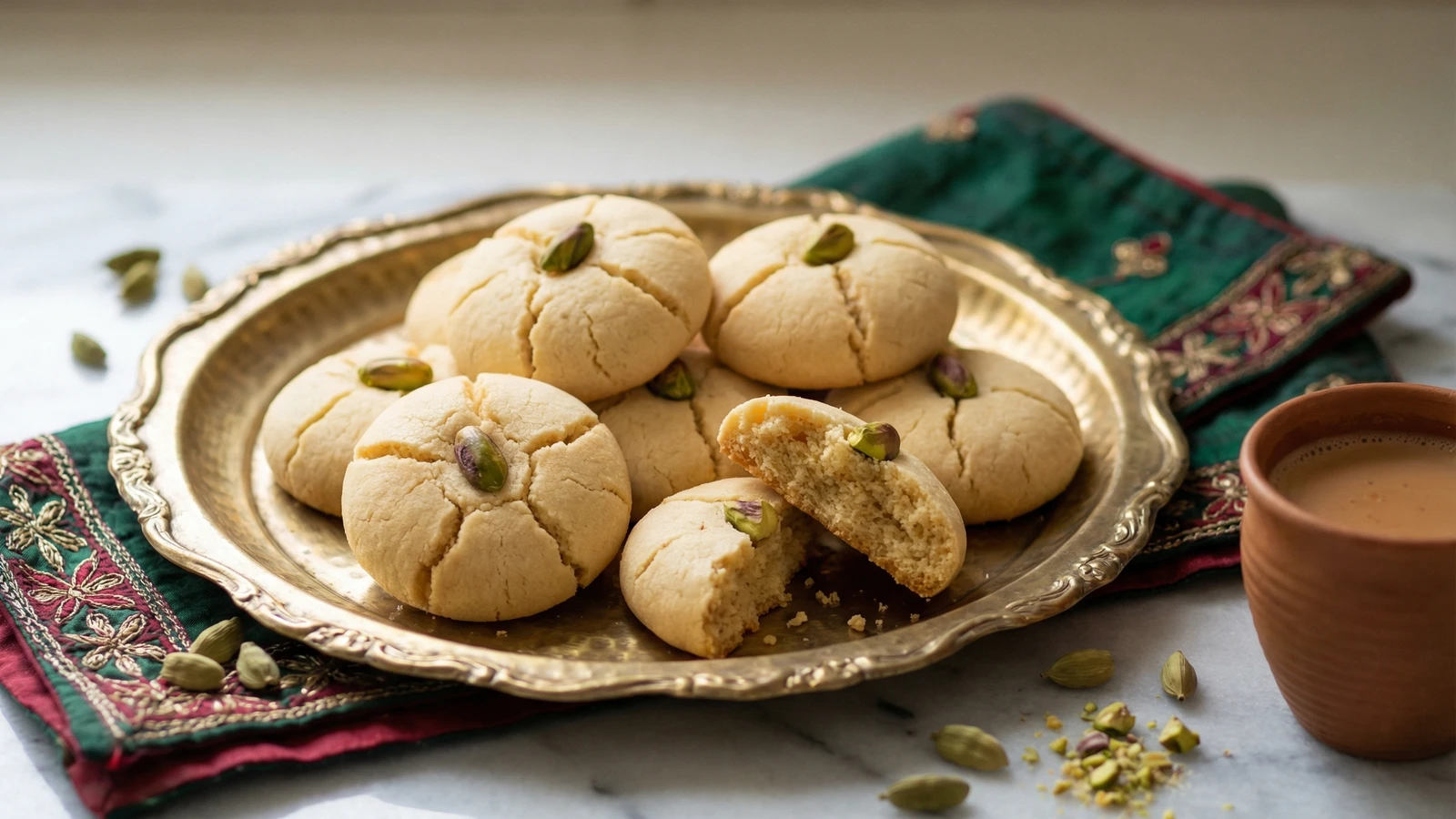
Buttery, cardamom-scented Indian shortbread with a tender crumb that dissolves on your tongue, crowned with emerald pistachios and carrying centuries of celebration in every bite.
Nan Khatai arrived in India through Persian traders during the Mughal Empire, sometime in the sixteenth century. The name tells its story: nan means bread, khatai means biscuit. What emerged was neither, but something entirely new. Indian bakers replaced butter with ghee, added chickpea flour for its distinctive sandy texture, and perfumed the dough with cardamom from the Malabar Coast. The result became inseparable from celebration itself.
I first encountered these cookies at a Diwali gathering in New York, where a grandmother had made them by the hundreds. She worked without measuring cups, shaping each one by feel, pressing a pistachio into the center with her thumb while telling stories of her mother's kitchen in Gujarat. The cookies emerged from the oven cracked and golden, their fragrance filling every corner of the apartment. One bite and I understood why families guard their recipes.
The magic of Nan Khatai lies in the chickpea flour. It creates a crumb so tender it practically dissolves, leaving behind waves of cardamom and the rich, nutty depth of browned ghee. These are not crisp cookies. They yield. They surrender. They remind you that the best baked goods are sometimes the simplest ones, where three or four ingredients in proper proportion create something no elaboration could improve.
Make these for Diwali, certainly. But make them also for any gathering where you want to offer something unexpected, something with history, something that proves the cookie traditions of the world extend far beyond European borders.
Quantity
1 cup (200g)
Quantity
3/4 cup (90g)
Quantity
1 1/2 cups (190g)
Quantity
1 cup (90g)
Quantity
1/2 teaspoon
Quantity
1 teaspoon
Quantity
1/4 teaspoon
freshly grated
Quantity
24
| Ingredient | Quantity |
|---|---|
| ghee, at room temperature | 1 cup (200g) |
| powdered sugar | 3/4 cup (90g) |
| all-purpose flour | 1 1/2 cups (190g) |
| chickpea flour (besan) | 1 cup (90g) |
| fine sea salt | 1/2 teaspoon |
| ground cardamom | 1 teaspoon |
| nutmegfreshly grated | 1/4 teaspoon |
| raw pistachios, for topping | 24 |
Place the room-temperature ghee in a large bowl. It should be soft enough to hold a fingerprint but not melted or oily. Add the powdered sugar and beat with a wooden spoon or hand mixer until the mixture turns pale and fluffy, about 3 minutes by hand or 2 minutes with a mixer. You're incorporating air here. The mixture should look almost white and hold soft peaks when you lift the spoon.
Place the chickpea flour in a dry skillet over medium-low heat. Stir constantly for 3 to 4 minutes until the raw, beany smell disappears and you detect a warm, nutty fragrance. The color will deepen slightly. Remove from heat immediately. Sift together the toasted chickpea flour, all-purpose flour, salt, cardamom, and nutmeg into a separate bowl. Breaking up any lumps now prevents streaky dough later.
Add the flour mixture to the creamed ghee in three additions, folding gently with a spatula after each. The dough will seem dry at first. Keep folding. It will come together into a soft, slightly oily mass that holds its shape when pressed. Do not overwork it. The moment the flour disappears, stop mixing. Let the dough rest for 10 minutes at room temperature to allow the flours to hydrate evenly.
Preheat your oven to 325°F (165°C). Line two baking sheets with parchment paper. Scoop rounded tablespoons of dough and roll between your palms into smooth balls. The warmth of your hands will help. Place them 2 inches apart on the prepared sheets. Flatten each ball gently with your palm to about half-inch thickness. The edges may crack slightly. This is correct.
Press a single pistachio into the center of each cookie. Push firmly enough that the nut embeds but doesn't disappear entirely. The green against the pale dough will look beautiful after baking. Some traditional recipes use blanched almonds or cashew pieces. Use what you have, but pistachios are the classic choice for a reason.
Bake for 12 to 15 minutes, rotating the pans halfway through. The cookies are done when the bottoms turn golden and the tops remain pale with just a hint of color at the edges. They will feel soft to the touch. This is correct. Nan Khatai firms as it cools. Overbaking produces dry, crumbly cookies that lack the proper melt-in-your-mouth quality. Trust the color of the bottom, not the texture of the top.
Let the cookies rest on the baking sheet for 10 full minutes. They are extremely fragile when warm. After 10 minutes, transfer carefully to a wire rack using a thin spatula. They will crack if handled roughly. Cool completely before storing or serving. The texture improves after an hour of resting, as the crumb sets and the cardamom flavor deepens.
1 serving (about 19g)
Culinary guides, cultural storytelling, and the editorial depth that makes cooking meaningful.
Discover Culinary ExplorerChef Juliette
A pale short-paste shell holds silken, lightly sweet carrot purée beneath neat glazed half-discs, their butter syrup catching the light: a classical tart poised between vegetable course and sweet.
Chef Juliette
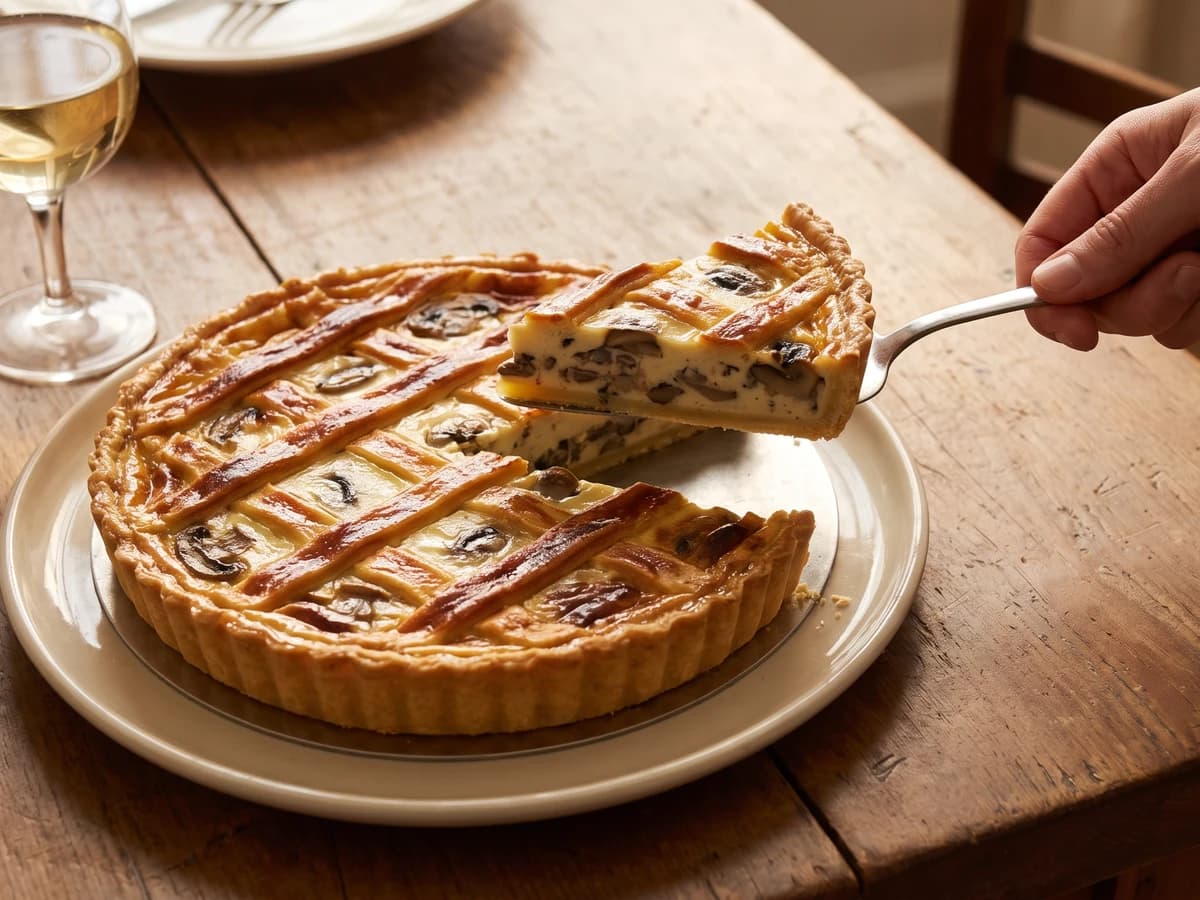
A hot mushroom flan under a butter-gold lattice, with cream reduced close around barely opened caps and a crisp short-paste base protected by one discipline: cool the filling completely.
Chef Juliette
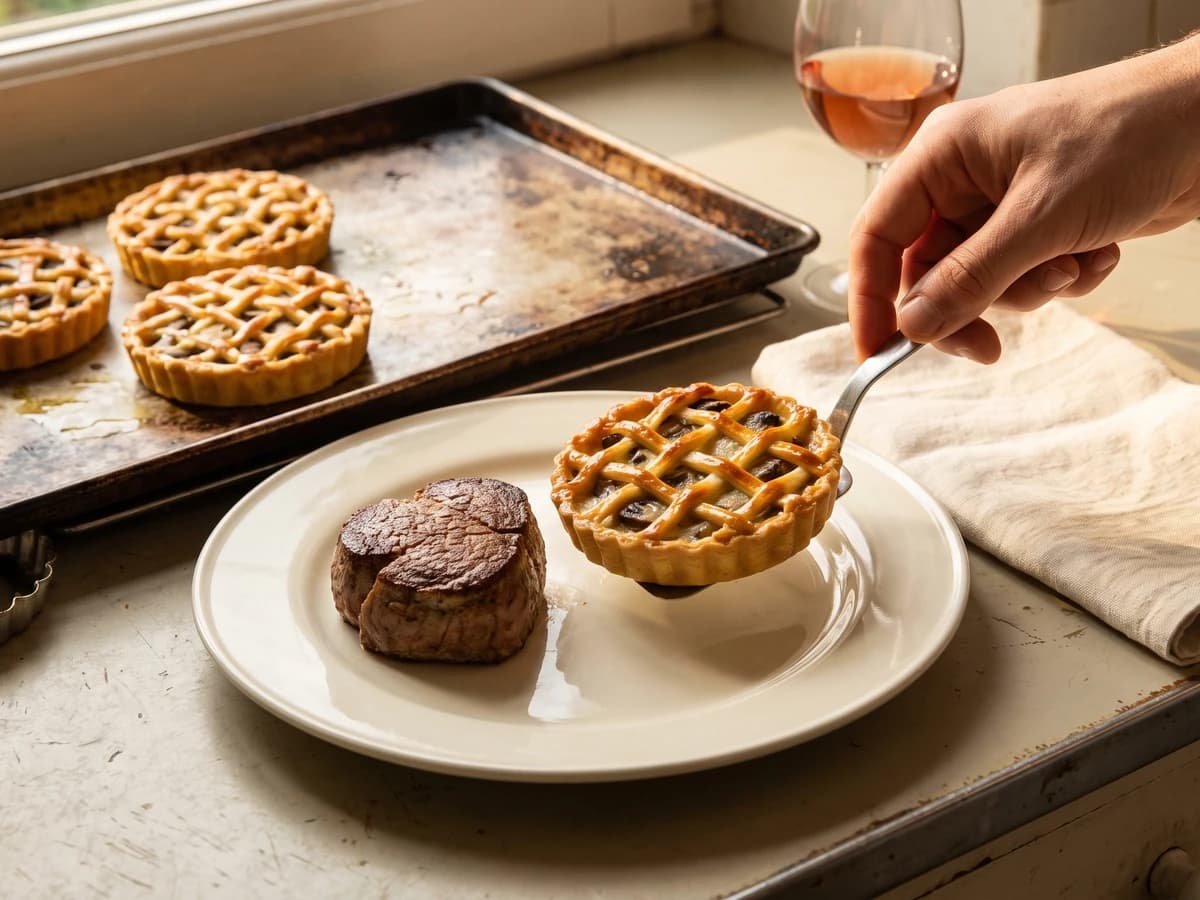
Four little mushroom flans, latticed and gilded, baked hard and fast until butter-gold: a classical garnish scaled to the meat it accompanies and served before its crispness has time to fade.

Chef Juliette
Morels surrender their liquor, then take it back as a glossy cream-and-butter sauce inside burnished puff pastry. The lesson is simple and absolute: reduce with patience, then heat gently and never boil.