
Chef Jeong-sun
Albaechu-mul-kimchi (Baby Cabbage Water Kimchi)
Tender baby napa cabbage in a clear pear-garlic brine, lightly fermented until the broth turns clean and bright, the summer kimchi a beginner can make without a kimjang floor.
A cooking platform built around craft, culture, and the stories behind what we eat.
Created by
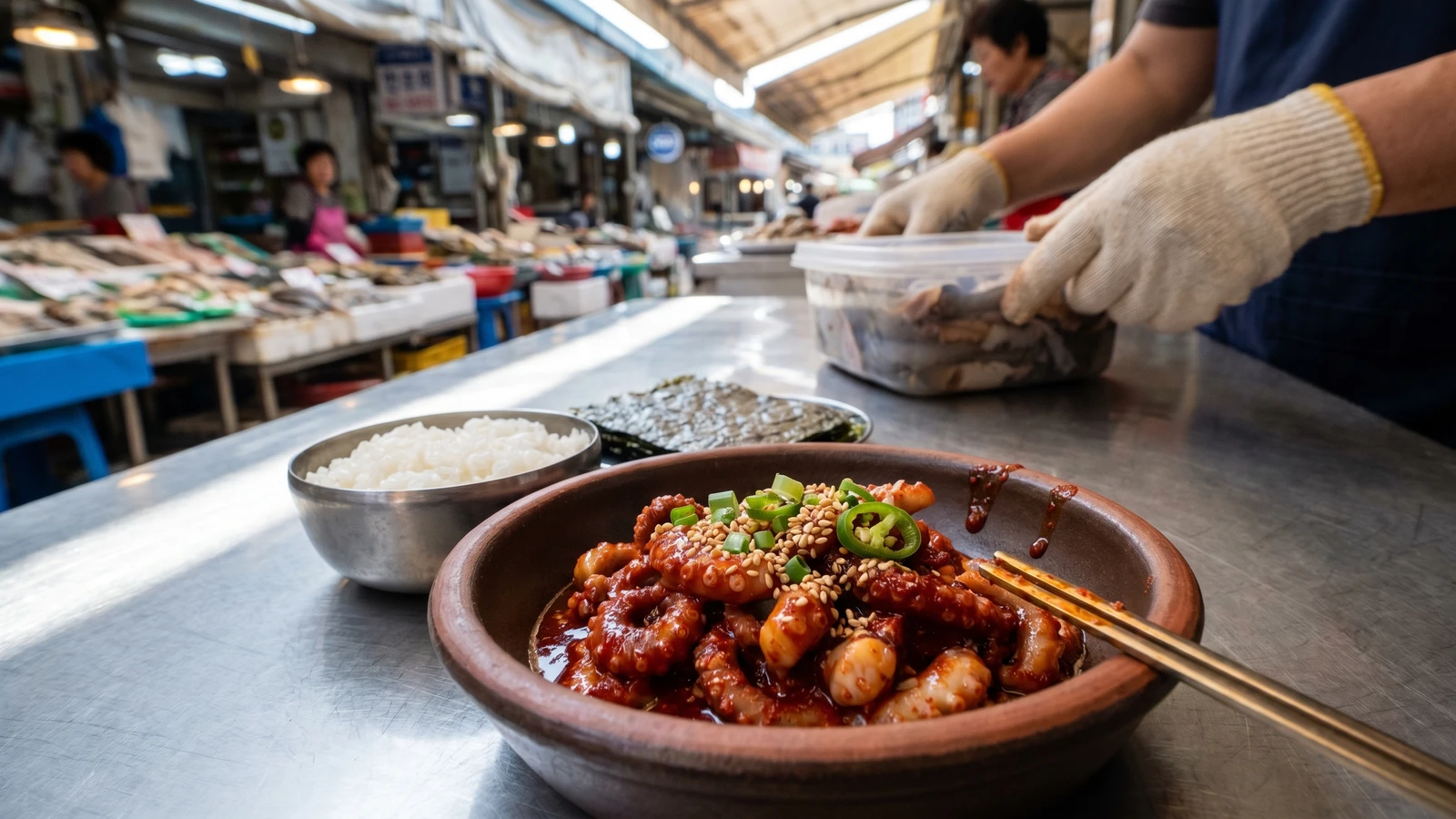
Small octopus cleaned hard with coarse salt, cold-cured until firm, then seasoned with gochugaru, garlic, ginger, and sesame so each chewy piece still tastes of the sea.
Nakji-jeot lives or dies in the cleaning. People talk about the seasoning first because it is red and easy to praise, but the real work is earlier: coarse salt rubbed into the octopus until the slime loosens, the skin tightens, and your hands know the difference between clean and merely rinsed. Skip that, and no chili paste can save it.
This is jeotgal (salted seafood), a small banchan meant to wake up plain rice. It belongs to coastal markets and home refrigerators, especially where the west coast gives good small octopus from mudflat water. I won't tell you this is casual food. You are handling raw seafood, salt, time, and cold, so the measures matter. Ten percent salt by weight for the first cure, then a restrained seasoning after the flesh firms. That number is not decoration. It keeps the octopus from going soft and gives the seasoning something clean to hold.
My teacher made us cut the pieces smaller than we wanted, about 1 cm, because nakji-jeot is eaten by the chopstick tip, not the spoonful. Too large and it fights the rice. Too sweet and it becomes candy wearing chili. Let it taste like itself: chewy octopus, salt, clean garlic heat, sesame at the end. 손맛 is real. I still measure it, so it can be handed on.
Jeotgal, Korea's family of salted and fermented seafood preserves, appears throughout Korean food history because salt made coastal abundance last inland and through lean months. Nakji-jeot is especially associated with the western coast and Chungcheong tables, where small octopus from tidal flats became a salty banchan eaten in tiny amounts with rice. Modern home versions are usually cold-cured under refrigeration rather than kept in warm crocks, a change in vessel and storage that keeps the old technique more practical and safer for today's kitchen.
Quantity
500g
very fresh, cleaned weight if possible, thawed if frozen
Quantity
3 tablespoons
for scrubbing
Quantity
50g
for curing, 10 percent of octopus weight
Quantity
2 tablespoons
medium-coarse
Quantity
1 tablespoon
minced
Quantity
1 teaspoon
minced
Quantity
1 tablespoon
Quantity
1 tablespoon
Quantity
1 teaspoon
Quantity
1 teaspoon
Quantity
1
finely chopped
Quantity
1 small
finely chopped
Quantity
1/2 teaspoon
| Ingredient | Quantity |
|---|---|
| small octopus (nakji)very fresh, cleaned weight if possible, thawed if frozen | 500g |
| coarse saltfor scrubbing | 3 tablespoons |
| fine sea saltfor curing, 10 percent of octopus weight | 50g |
| gochugaru (Korean chili flakes)medium-coarse | 2 tablespoons |
| garlicminced | 1 tablespoon |
| gingerminced | 1 teaspoon |
| maesil-cheong (green plum syrup) or rice syrup | 1 tablespoon |
| soju or clear rice wine | 1 tablespoon |
| toasted sesame oil | 1 teaspoon |
| toasted sesame seeds | 1 teaspoon |
| scallionfinely chopped | 1 |
| green chili (optional)finely chopped | 1 small |
| sugar (optional) | 1/2 teaspoon |
Use only very fresh octopus from a fishmonger you trust, or properly frozen octopus thawed overnight in the refrigerator. It should smell clean and briny, never sour or ammoniated. If it smells tired, cook something else. Jeotgal does not forgive poor seafood.
Put the octopus in a large bowl with 3 tablespoons coarse salt. Rub firmly for 3 to 4 minutes, turning the tentacles through your fingers until the slime foams and loosens. This is not polite washing. The salt grips the skin and pulls away slickness that would make the finished jeot muddy.
Rinse the octopus under cold running water until the water runs clear and no salt foam remains. Drain in a colander for 10 minutes, then pat very dry with clean towels. Water dilutes the cure, and dilution is how a preserve becomes unsafe and dull.
Remove any hard beak or remaining innards if your fishmonger has not done it. Cut the tentacles and body into 1 cm pieces. Keep them even. Nakji-jeot is eaten in pinches with rice, so the cut has to be small enough to season through and tender enough not to fight the chopsticks.
Weigh the cut octopus, then add fine sea salt equal to 10 percent of that weight. For 500g octopus, use 50g salt. Mix with gloved hands until every piece is coated, pack into a clean glass jar, press down, cover, and refrigerate 24 hours. The octopus will give off liquid and firm up. That is what you want.
After 24 hours, drain off the salty liquid through a fine sieve. Do not rinse. Taste one tiny piece. It should be salty enough that you would not eat much alone, but clean and firm, not mushy. If it is still soft, refrigerate it in the cure for another 12 hours before draining.
In a clean bowl, mix the gochugaru, garlic, ginger, maesil-cheong or rice syrup, soju, sesame oil, sesame seeds, scallion, and green chili if using. Add the drained octopus and fold until every piece is red and glossy. Use the sugar only if the seasoning tastes sharp after mixing. Do not bury the octopus under sweetness.
Pack the seasoned octopus into a clean jar, press out air pockets, cover tightly, and refrigerate at least 24 hours before eating. The seasoning needs that time to enter the cut surfaces. Keep it cold, always use clean chopsticks, and eat within 7 days.
Serve a small spoonful in a little dish with hot rice, gim (roasted seaweed), or a plain bowl of juk (rice porridge). Stir before serving because the seasoning settles. Jeotgal is meant to be strong, but it should still taste like octopus first.
1 serving (about 60g)
Culinary guides, cultural storytelling, and the editorial depth that makes cooking meaningful.
Discover Culinary ExplorerChef Jeong-sun
Tender baby napa cabbage in a clear pear-garlic brine, lightly fermented until the broth turns clean and bright, the summer kimchi a beginner can make without a kimjang floor.

Chef Jeong-sun
The kimchi from before chili, salted napa cabbage packed with radish, pear, jujube, and pine nuts in a clear brine that turns quietly tart in the jar.

Chef Jeong-sun
A pale summer cucumber kimchi, split and stuffed with radish and chives, then held in a cool pear brine so the cucumber stays clean, crunchy, and plainly itself.

Chef Jeong-sun
Flat spring bomdong cabbage, lightly brined and tucked into a clear pear-radish kimchi broth, made without chili and eaten young while the leaves still taste like spring.