Chef Joost
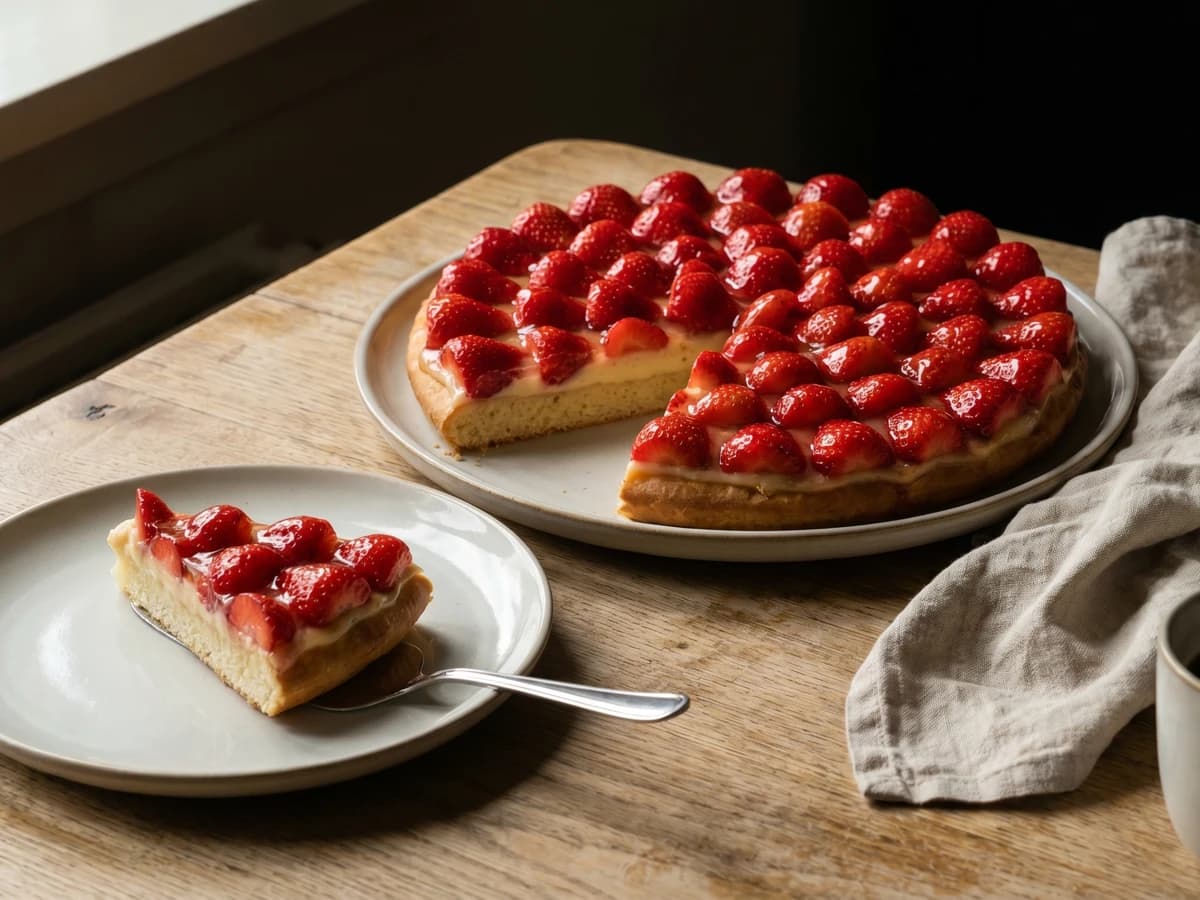
Aardbeienvlaai (Limburg Strawberry Vlaai)
The summer vlaai that politely breaks Limburg's baked-fruit rule: soft gistdeeg, cool pastry cream, and strawberries left fresh because June knows better than the oven.
A cooking platform built around craft, culture, and the stories behind what we eat.
Created by
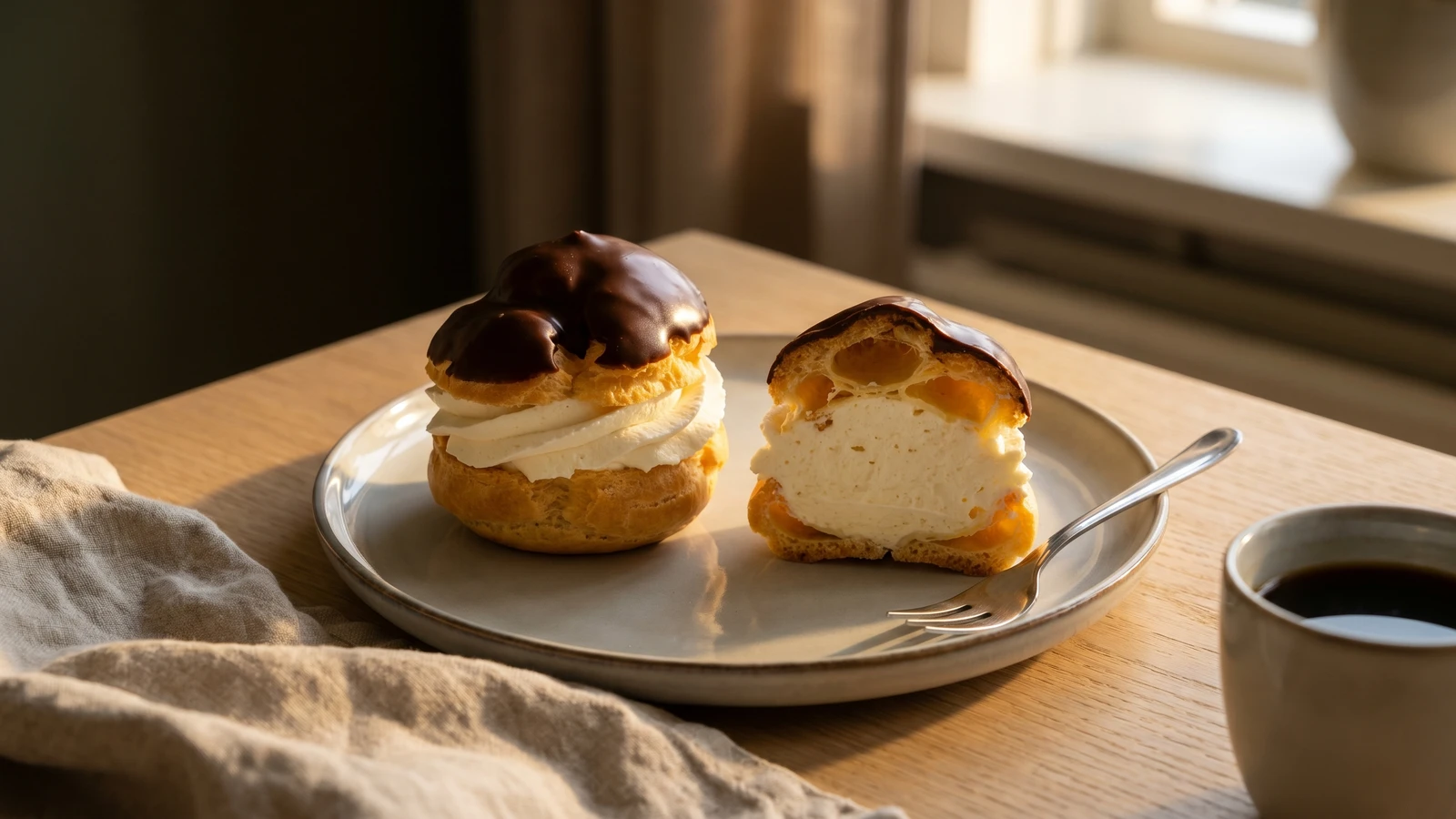
The moorkop is a Dutch bakery counter secret with a difficult old name: crisp choux, a mountain of cream, and a dark chocolate cap you eat before it notices.
The first lesson of the moorkop is that pastry names remember what polite society later tries to forget. The name already tells you the problem: Moor's head, a Dutch bakery label from an age when chocolate, colonial imagination, and careless naming sat too easily together. Many bakers now sell it as chocoladebol, chocolate ball, or roomkop, cream head, and I don't object. History and cookery, they cannot be separated, but history also asks us to wash our hands before we touch the dough.
But let me tell you a secret. Behind that awkward old name sits one of the most cheerful pastries in the Dutch display case: a choux puff baked hollow, split open, filled with sweet whipped cream, and given only a dark chocolate cap. Not a full chocolate armor like the Bossche bol from Brabant, that grander cousin eaten with a fork and a certain amount of surrender. The moorkop is smaller, more direct, more bakery-window Tuesday that somehow became birthday-table Saturday.
The method is French by technique and Dutch by temperament. Choux pastry asks for heat, eggs, and nerve. You cook the flour in the pan until it leaves a film, then beat in the eggs until the dough falls from the spoon in a thick ribbon. That cooked paste makes its own hollow in the oven, so don't open the door early, unless you enjoy edible disappointment. After that, hou het altijd simpel: cream, chocolate, and a cap set back on top, like a little hat with excellent manners.
The moorkop belongs to the nineteenth- and twentieth-century Dutch bakery tradition that adopted French choux pastry and filled it for the local pastry counter, alongside soesjes, eclairs, and roomsoezen. Its older name uses Moor, a historical European term with roots in Latin Maurus, and reflects a period when dark chocolate colouring and racialized naming were treated casually in sweets and shop signs. In recent years many Dutch bakeries and institutions have replaced the name with chocoladebol or roomkop, while the pastry itself remains distinct from the larger Brabant Bossche bol by being split and filled rather than injected and fully glazed.
Quantity
125ml
Quantity
125ml
Quantity
100g
cubed
Quantity
1 teaspoon
Quantity
1/2 teaspoon
Quantity
150g
sifted
Quantity
4
at room temperature
Quantity
500ml
Quantity
40g
Quantity
1 teaspoon
Quantity
180g
60 to 70 percent cocoa, chopped
Quantity
30g
Quantity
1 tablespoon
| Ingredient | Quantity |
|---|---|
| water | 125ml |
| whole milk | 125ml |
| unsalted buttercubed | 100g |
| granulated sugar | 1 teaspoon |
| fine salt | 1/2 teaspoon |
| plain floursifted | 150g |
| large eggsat room temperature | 4 |
| cold whipping cream | 500ml |
| icing sugar | 40g |
| vanilla extract | 1 teaspoon |
| dark chocolate60 to 70 percent cocoa, chopped | 180g |
| unsalted butter for the chocolate cap | 30g |
| golden syrup or light corn syrup | 1 tablespoon |
Heat the oven to 200C. Line a baking tray with parchment and draw eight circles about 7cm wide on the underside as guides. Choux rises by force of trapped moisture, so give each puff room to swell without leaning into its neighbour.
Put the water, milk, butter, sugar, and salt in a saucepan and bring to a full boil. Tip in the flour all at once and beat with a wooden spoon until the dough gathers into a ball and leaves a thin film on the bottom of the pan, about two minutes. That film matters. It tells you the flour has cooked enough to drink in the eggs without sulking.
Scrape the paste into a bowl and let it cool for five minutes. Beat in the eggs one at a time, adding the next only when the dough looks smooth again. Stop when the dough is glossy and falls from the spoon in a thick V-shaped ribbon; if your eggs are very large, hold back the last spoonful rather than making the paste loose.
Spoon or pipe the dough into eight mounds, using the circles as guides. Smooth any sharp peaks with a wet fingertip so they don't burn before the puff is baked through. Slide the tray into the oven and leave the door closed. Choux is a dramatic creature and collapses when interrupted.
Bake for 25 to 30 minutes, until the puffs are deep golden and feel light when lifted. Turn off the oven, prick each puff once with a skewer to let moisture escape, and return them to the turned-off oven with the door ajar for 10 minutes. A dry shell stays crisp under cream; a damp one becomes pudding with ambitions.
Whip the cold cream with the icing sugar and vanilla until it holds firm, soft-edged peaks. Don't beat it to butter. You want cream that can stand proudly inside the pastry but still tastes like cream, not a dairy argument.
Melt the chopped chocolate with the butter and syrup in a heatproof bowl set over barely simmering water, stirring until smooth and glossy. Let it cool for a few minutes so it thickens slightly. It should coat the cap, not run down the sides like a nervous confession.
Slice each cooled puff horizontally. Dip the top halves into the chocolate and set them on parchment until just set. Heap or pipe the whipped cream onto the bottom halves, then place the chocolate caps back on top. Serve the same day, while the pastry still has its crisp edges and the cream sits cold and generous.
1 serving (about 155g)
Culinary guides, cultural storytelling, and the editorial depth that makes cooking meaningful.
Discover Culinary ExplorerChef Joost
The summer vlaai that politely breaks Limburg's baked-fruit rule: soft gistdeeg, cool pastry cream, and strawberries left fresh because June knows better than the oven.

Chef Joost
A Limburg vlaai is not a pie trying to be grand. It is a thin yeast-dough round, fruit-bright and generous, made for birthdays, coffee, and second slices.

Chef Joost
The December bakery counter made small: cold leafed pastry wrapped around lemon-scented amandelspijs, brushed gold, and scattered with almonds so one person gets the whole holiday in both hands.

Chef Joost
A thin Amsterdam cookie carrying a cog ship in its name: caramelized butter dough, almond nougatine, and a 1934 contest that turned municipal pride into something for coffee.