
Chef Lupita
Acúmara Tatemada al Comal
Michoacán's Lake Pátzcuaro acúmara, a whole kurucha from the lago tatemada on a comal de leña and served with chile perón atápakua, corn tortillas, and P'urhépecha discipline.
A cooking platform built around craft, culture, and the stories behind what we eat.
Created by
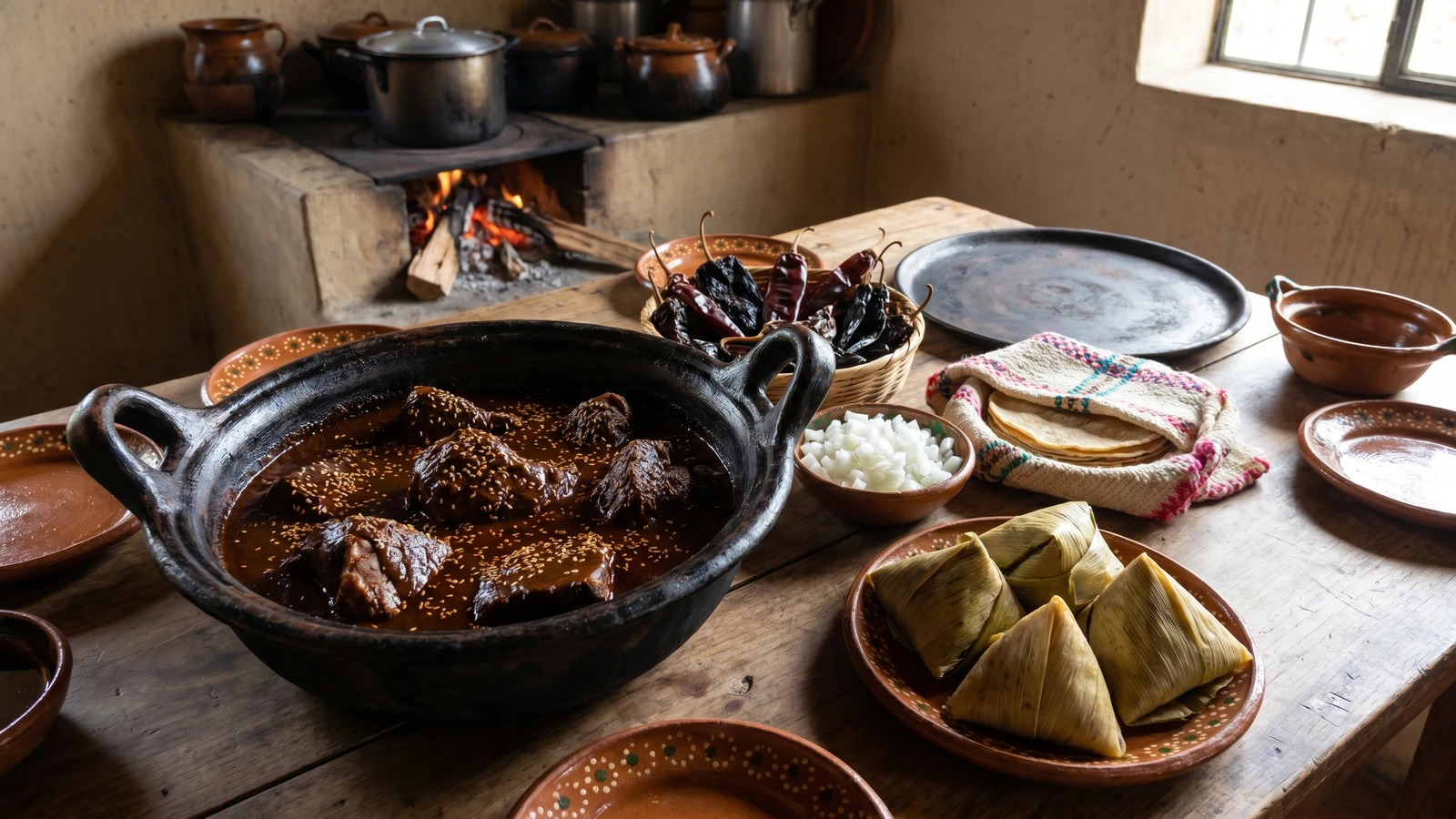
Michoacán's Meseta P'urhépecha wedding mole, built in Zacán with becerro, tatemado chile ancho and guajillo, toasted seeds, and manteca until the sauce turns dark, glossy, and serious.
Michoacán, Meseta P'urhépecha, Zacán. This mole lives in the highland towns west of Uruapan, where the fogón, the comal, and the hands of the cocineras tradicionales still decide what a wedding tastes like.
Becerro de boda is not everyday beef stew. It is calf cooked for a celebration, the kind of pot that belongs to an anniversary, a boda, a family gathering where nobody eats alone. The mole is tatemado: chile ancho, chile guajillo, tomato, onion, garlic, tortilla, bolillo, sesame, pumpkin seed, and spices touched by the comal until they darken and wake up. Tatemar does not mean burn everything like you forgot the pan. It means controlled char. The women of Zacán know that line because they learned it beside leña, not from a timer.
I first wrote this formula after watching Doña Ángeles Alfaro's Zacán method, the kind of cooking that made the UNESCO committee pay attention to Michoacán in 2010. The milpa gives the corn tortillas and pumpkin seeds. The monte gives the dry wood, the herbs, the memory of cooking outside. The lago belongs to other P'urhépecha dishes, kurucha and acúmara near Pátzcuaro, but here the Meseta speaks through chile, fat, clay, and patience.
Use manteca de cerdo. Use a black-clay cazuela from Patamban if you have one, or a heavy pot if you don't. Serve it in barro from Capula or Tzintzuntzan with warm corn tortillas and corundas if your table is Michoacán enough to deserve them. Cada estado, su propia cocina.
The P'urhépecha state, ruled by the Cazonci from Tzintzuntzan before the Spanish conquest, controlled much of western Mexico while remaining politically distinct from the Mexica empire. Michoacán's cocineras tradicionales from Zacán, Janitzio, Cocucho, Cherán, Uruapan, and nearby communities became central to the 'Michoacán paradigm' cited when Traditional Mexican Cuisine was inscribed by UNESCO as Intangible Cultural Heritage in 2010. Mole tatemado reflects older fire-based techniques, especially charring on comal and cooking over leña, joined after the 16th century with introduced livestock, wheat bread, sesame, cloves, cinnamon, and black pepper.
Quantity
5 pounds
cut into large serving pieces
Quantity
1
halved
Quantity
1
halved crosswise
Quantity
3
Quantity
1 tablespoon, plus more to taste
Quantity
12 cups, or enough to cover the meat
Quantity
8
stemmed and seeded
Quantity
6
stemmed and seeded
Quantity
3
stemmed and seeded
Quantity
2 medium
Quantity
1
quartered
Quantity
5
unpeeled
Quantity
1
Quantity
1
sliced
Quantity
1/2 cup, plus 2 tablespoons
extra seeds reserved for serving
Quantity
1/3 cup
Quantity
1/4 cup
Quantity
1/4 cup
Quantity
1/4 cup
Quantity
1 small
peeled and sliced
Quantity
1 stick, about 3 inches
Quantity
4
Quantity
5
Quantity
1/2 teaspoon
Quantity
1/2 teaspoon
Quantity
3 tablespoons
Quantity
2 ounces
chopped
Quantity
2 tablespoons
grated, or to taste
Quantity
2 teaspoons, plus more to taste
Quantity
for serving
Quantity
for serving
Quantity
for serving
| Ingredient | Quantity |
|---|---|
| bone-in calf shoulder or young beef shank and chuckcut into large serving pieces | 5 pounds |
| large white onionhalved | 1 |
| head of garlichalved crosswise | 1 |
| bay leaves | 3 |
| kosher salt | 1 tablespoon, plus more to taste |
| water | 12 cups, or enough to cover the meat |
| dried chile anchostemmed and seeded | 8 |
| dried chile guajillostemmed and seeded | 6 |
| dried chile pasilla mexicanostemmed and seeded | 3 |
| ripe tomatoes | 2 medium |
| small white onionquartered | 1 |
| garlic clovesunpeeled | 5 |
| stale corn tortilla | 1 |
| bolillo or telera rollsliced | 1 |
| sesame seedsextra seeds reserved for serving | 1/2 cup, plus 2 tablespoons |
| raw pumpkin seeds | 1/3 cup |
| raw peanuts | 1/4 cup |
| blanched almonds | 1/4 cup |
| raisins | 1/4 cup |
| ripe plantainpeeled and sliced | 1 small |
| Mexican cinnamon stick | 1 stick, about 3 inches |
| whole cloves | 4 |
| whole black peppercorns | 5 |
| cumin seeds | 1/2 teaspoon |
| dried Mexican oregano | 1/2 teaspoon |
| manteca de cerdo | 3 tablespoons |
| Mexican table chocolatechopped | 2 ounces |
| piloncillograted, or to taste | 2 tablespoons |
| kosher salt for the mole | 2 teaspoons, plus more to taste |
| warm corn tortillas (optional) | for serving |
| corundas (optional) | for serving |
| diced raw white onion (optional) | for serving |
Put the calf or young beef pieces in a heavy stockpot with the halved onion, halved head of garlic, bay leaves, salt, and enough water to cover by two inches. Bring to a gentle simmer and skim the gray foam during the first 20 minutes. Lower the heat, cover partly, and cook 2 1/2 to 3 hours, until the meat is tender but not falling apart into threads. The broth is part of the mole, so keep it clean. A violent boil gives you cloudy broth and tired meat.
Lift the meat into a large bowl and cover it so it does not dry out. Strain the broth through a fine sieve and reserve at least 8 cups. Discard the spent onion, garlic, and bay leaves. Taste the broth. It should taste like meat and salt, not like dishwater. If it is weak, simmer it uncovered until it has body.
Heat a dry comal over medium heat. Toast the chile ancho, chile guajillo, and chile pasilla mexicano separately, a few seconds per side, pressing them flat with tongs until the skin blisters and the color deepens. The ancho smells sweet, like dried fruit. The guajillo goes sharp and red. The pasilla is thin and burns fast, so watch it. Tatemado is controlled char, not carelessness. If a chile turns black all over, throw it away.
Put the toasted chiles in a bowl and cover them with hot water, not boiling water. Let them soften for 25 minutes. Drain them and discard the soaking water. That water can carry bitterness from the skins and seeds. Use the becerro broth for blending. That is where the flavor belongs.
On the same comal, tatemar the tomatoes, quartered onion, and unpeeled garlic cloves until the tomatoes collapse in spots, the onion edges blacken, and the garlic skins are toasted. Peel the garlic. This is the flavor of leña translated to a home stove. If you have a fogón, use it. If not, use the comal properly and do not apologize.
Toast the stale tortilla until dark brown in places but not burned to ash. Toast the bolillo slices until dry and golden. In a dry skillet, toast the sesame seeds, pumpkin seeds, peanuts, and almonds separately until fragrant, moving each constantly so they brown evenly. Pumpkin seed comes from the milpa and gives body. Sesame came later, but Michoacán's cooks made it their own. That is how cuisine survives.
Melt 1 tablespoon of the manteca in a small skillet. Fry the raisins until they puff, then remove them. Fry the plantain slices until browned on both sides. Keep the fat. These sweet pieces do not make the mole dessert. They round the bitterness of the tatemado chiles. Mole is not chocolate sauce. Learn that once and stop repeating nonsense.
Toast the cinnamon, cloves, black peppercorns, cumin seeds, and dried Mexican oregano on the warm comal for 30 to 45 seconds, just until fragrant. Spices burn faster than chiles. The smell should open, not turn harsh. Grind them in a molcajete or spice mill.
In batches, blend the softened chiles, charred tomatoes, onion, garlic, toasted tortilla, bolillo, sesame seeds, pumpkin seeds, peanuts, almonds, raisins, plantain, ground spices, and 4 to 5 cups of warm becerro broth. Blend longer than you think. The sauce should look smooth and heavy, not sandy. Strain through a medium-fine sieve, pressing with a spoon. This is work. La cocina no es decoración, es trabajo.
Heat the remaining 2 tablespoons manteca de cerdo in a large black-clay cazuela or heavy Dutch oven over medium heat. Pour in the strained mole carefully because it will sputter. Stir with a wooden spoon for 12 to 15 minutes, until the sauce darkens, thickens, and the fat begins to shine at the edges. La manteca es el sabor. Oil gives you a flat sauce. Manteca gives you the wedding mole.
Add 3 cups of reserved broth, the chopped Mexican chocolate, piloncillo, and 2 teaspoons salt. Stir until the chocolate dissolves. Return the becerro pieces to the cazuela and simmer gently for 45 to 60 minutes, adding more broth as needed. The mole should coat the meat in a dark, glossy layer and pool slowly at the bottom of the spoon. If it runs like soup, keep cooking. If it sits like paste, add broth.
Turn off the heat and let the mole rest 20 minutes before serving. Toast the reserved sesame seeds and scatter them over the cazuela. Serve family-style in barro de Capula or Tzintzuntzan, with warm corn tortillas and corundas on the side. Diced raw white onion can sit at the table, but do not bury the mole under garnish. This is Zacán's dish. Let it speak.
1 serving (about 445g)
Culinary guides, cultural storytelling, and the editorial depth that makes cooking meaningful.
Discover Culinary ExplorerChef Lupita
Michoacán's Lake Pátzcuaro acúmara, a whole kurucha from the lago tatemada on a comal de leña and served with chile perón atápakua, corn tortillas, and P'urhépecha discipline.

Chef Lupita
Puebla's weekday adobo of pork shoulder braised in a thick guajillo and ancho sauce sharpened with vinegar, cumin, and clove. The deep red of a market spice stall, the dish a poblana cooks without thinking.

Chef Lupita
Loreto's pit-roasted clams, planted hinge-up in beach sand and tatemadas under a fast fire of dried romerillo brush, the resinous Baja desert shrub that gives this dish its smoke.

Chef Lupita
Oaxaca's eighth mole, the silky, almond-and-cinnamon almendrado, served over poached chicken. Mild, sweet, restrained, and a quiet rebuttal to anyone who thinks Mexican food has to be hot to be Mexican.