
Chef Lupita
Acúmara Tatemada al Comal
Michoacán's Lake Pátzcuaro acúmara, a whole kurucha from the lago tatemada on a comal de leña and served with chile perón atápakua, corn tortillas, and P'urhépecha discipline.
A cooking platform built around craft, culture, and the stories behind what we eat.
Created by
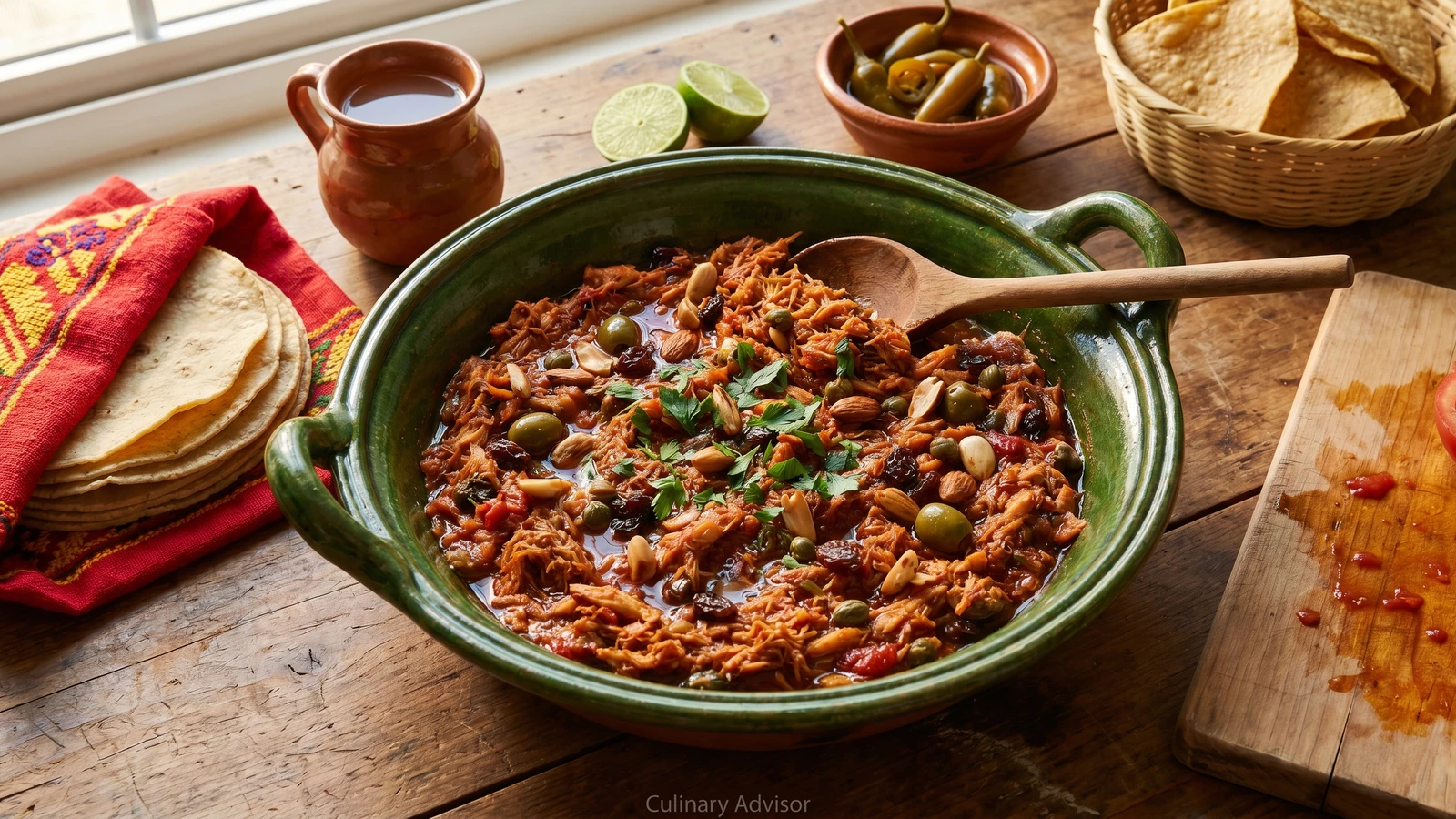
Oaxaca's Isthmus shredded fish hash, dorado or robalo cooked down with tomato, olives, capers, and raisins. A Zapotec home dish that carries five hundred years of trade routes in a single cazuela.
This is from Oaxaca, but not the Oaxaca that everyone knows. Not the Valles Centrales, not the seven moles, not the chapulines on the comal. This is the Istmo de Tehuantepec, the narrow strip where the Pacific almost touches the Gulf and where Zapotec women have run the markets for centuries. Juchitan, Tehuantepec, Salina Cruz. That is where minilla lives.
The dish reads like a map of Mexico's trade history. The fish is local, dorado or robalo pulled from the Pacific by Zapotec fishermen. The tomato and chile are American. The olives and capers came from Spain on the Atlantic crossing. The raisins, almonds, canela, and clove came from Asia on the Manila galleon, landed at Acapulco, and traveled south. Five hundred years of trade routes, all of it pulled together in a clay cazuela by a senora in Juchitan who would correct your hand if you stirred the fish too hard.
Minilla is a home dish, not a restaurant dish. You will not find it on tasting menus. You will find it in lunch boxes, on weeknight tables, spread on bolillo bread the morning after, eaten cold from a tupper at the office. The shred has to be done by hand. The tomatoes have to be charred on a comal, not in a pan. The canela and clove are not optional. Pull any one of those out and you have a generic tomato fish that could come from anywhere.
My mother did not cook Istmo food. She was from Jalisco. But her notebook had a page in another woman's handwriting, a recipe for minilla copied at a teachers' conference in 1981 from a Zapotec teacher named Rosenda. The page is stained with tomato. I cooked it for the first time when I was twenty-eight and I understood, in the first bite, why the Zapotec women guard these recipes the way they do. Cada estado, su propia cocina, and the Istmo has its own kitchen inside Oaxaca's kitchen.
Minilla belongs to a family of shredded-fish preparations that emerged across coastal Mexico after the Spanish conquest, when olives, capers, raisins, almonds, and Mediterranean spices were grafted onto pre-Columbian techniques for preserving and stretching seafood. The Isthmus version carries a distinctive Asian inflection through the use of canela and clove, ingredients that arrived at the port of Acapulco aboard the Manila galleons between 1565 and 1815 and traveled overland through Oaxaca. Among the matriarchal Zapotec communities of Juchitan and Tehuantepec, where women have historically controlled markets, kitchens, and household economies, minilla became a practical dish of abundance and frugality at once: a single cooked fish stretched with pantry staples to feed a family for two days, the leftovers eaten cold on bread the next morning.
Quantity
2 pounds
Quantity
1 medium
halved, one half whole, one half finely diced
Quantity
4
2 whole, 2 finely minced
Quantity
2
Quantity
1 teaspoon, plus more to taste
Quantity
2 pounds
Quantity
2
stemmed
Quantity
1/4 cup
Quantity
1/2 teaspoon
preferably oregano del Istmo
Quantity
1/4 teaspoon
Quantity
2
ground in a molcajete
Quantity
1/3 cup
roughly chopped
Quantity
2 tablespoons
drained
Quantity
1/3 cup
Quantity
1/3 cup
toasted and roughly chopped
Quantity
2 tablespoons
Quantity
for serving
Quantity
for serving
Quantity
for serving
| Ingredient | Quantity |
|---|---|
| skinless dorado (mahi-mahi) or robalo (snook) fillets | 2 pounds |
| white onionhalved, one half whole, one half finely diced | 1 medium |
| garlic cloves2 whole, 2 finely minced | 4 |
| bay leaves | 2 |
| kosher salt | 1 teaspoon, plus more to taste |
| ripe red tomatoes | 2 pounds |
| fresh chile jalapenostemmed | 2 |
| manteca de cerdo (pork lard) or good olive oil | 1/4 cup |
| dried Mexican oreganopreferably oregano del Istmo | 1/2 teaspoon |
| ground canela (Mexican cinnamon) | 1/4 teaspoon |
| whole clovesground in a molcajete | 2 |
| pitted green olivesroughly chopped | 1/3 cup |
| capersdrained | 2 tablespoons |
| raisins | 1/3 cup |
| whole blanched almondstoasted and roughly chopped | 1/3 cup |
| chopped flat-leaf parsley | 2 tablespoons |
| pickled chile jalapeno en escabeche (optional) | for serving |
| hand-pressed corn tortillas or totopos del Istmo (optional) | for serving |
| lime halves (optional) | for serving |
Place the fish fillets in a wide pot. Cover with cold water by an inch. Add the whole onion half, the two whole garlic cloves, the bay leaves, and the salt. Bring to the barest simmer over medium heat. The water should tremble, never boil. Boiling water turns dorado tough and stringy. Cook for 8 to 10 minutes, until the flesh flakes when you press it with a fork.
Lift the fish out with a slotted spoon and let it cool on a plate for 10 minutes. Reserve a cup of the poaching liquid. With your fingers, pull the fish apart into long fine threads, working out any small bones as you go. The texture is the dish. A food processor will turn it to paste. The senoras of Juchitan use their hands and so do you. No me vengas con atajos.
Heat a dry comal over medium-high. Place the whole tomatoes and the jalapenos directly on the surface. Let them char in patches, turning every few minutes, until the tomato skins blister and split and the chiles are blackened on all sides. This takes 10 to 12 minutes. The char is what gives the sofrito its smoke and depth. Pull them off, let them cool until you can handle them, then peel the tomato skins and pull the stems off the chiles. Do not rinse them. The black is the flavor.
Place the peeled tomatoes and the charred jalapenos in a blender. Pulse a few times until you have a textured puree, not a smooth liquid. You want some body. The minilla is a hash, not a soup.
In a wide, heavy cazuela or skillet, melt the lard over medium heat. Add the diced onion and cook until translucent and edged with gold, about 5 minutes. Add the minced garlic and cook one more minute, until fragrant but not browned. Add the oregano, canela, and ground cloves. Stir for 30 seconds. The kitchen will smell like an Isthmus market in the morning. La manteca es el sabor.
Pour the blended tomato and chile into the cazuela. It will sputter. Raise the heat to medium-high and cook, stirring often, for 10 to 12 minutes. The sofrito is ready when the color deepens from bright red to a darker brick red, the liquid has cooked off, and the fat shows at the edges. If you stop short, the minilla tastes raw and watery. Cook it down properly. Asi se hace y punto.
Lower the heat to medium. Stir in the olives, capers, raisins, and toasted almonds. Cook for 3 minutes so the raisins plump and the olives release their salt into the sofrito. Add the shredded fish and fold it in gently, lifting from the bottom rather than stirring hard. Stringy fish broken into mush is fish you stirred too aggressively. Add a few tablespoons of the reserved poaching liquid if the mixture looks dry. You want it moist but not wet.
Cook for 5 more minutes so everything marries. Taste for salt. The olives and capers carry their own, so adjust carefully. Pull the cazuela off the heat. Stir in the parsley. Cover and let the minilla rest for 10 minutes before serving. The rest is part of the recipe. The flavors need a moment to settle into one another.
Bring the cazuela to the table. Serve with warm corn tortillas, totopos, lime halves, and a small dish of pickled jalapenos. Each person builds their own taco or piles the minilla onto a totopo. It is also eaten cold the next day, spread on bolillo bread. Recetas probadas y garantizadas.
1 serving (about 220g)
Culinary guides, cultural storytelling, and the editorial depth that makes cooking meaningful.
Discover Culinary ExplorerChef Lupita
Michoacán's Lake Pátzcuaro acúmara, a whole kurucha from the lago tatemada on a comal de leña and served with chile perón atápakua, corn tortillas, and P'urhépecha discipline.

Chef Lupita
Puebla's weekday adobo of pork shoulder braised in a thick guajillo and ancho sauce sharpened with vinegar, cumin, and clove. The deep red of a market spice stall, the dish a poblana cooks without thinking.

Chef Lupita
Loreto's pit-roasted clams, planted hinge-up in beach sand and tatemadas under a fast fire of dried romerillo brush, the resinous Baja desert shrub that gives this dish its smoke.

Chef Lupita
Oaxaca's eighth mole, the silky, almond-and-cinnamon almendrado, served over poached chicken. Mild, sweet, restrained, and a quiet rebuttal to anyone who thinks Mexican food has to be hot to be Mexican.