
Chef Graziella
Zuppa alla Pavese
The soup that sustained a defeated king: nothing but toasted bread, a trembling egg, and broth hot enough to barely set it. Lombardy's proof that desperation can create genius.
A cooking platform built around craft, culture, and the stories behind what we eat.
Created by
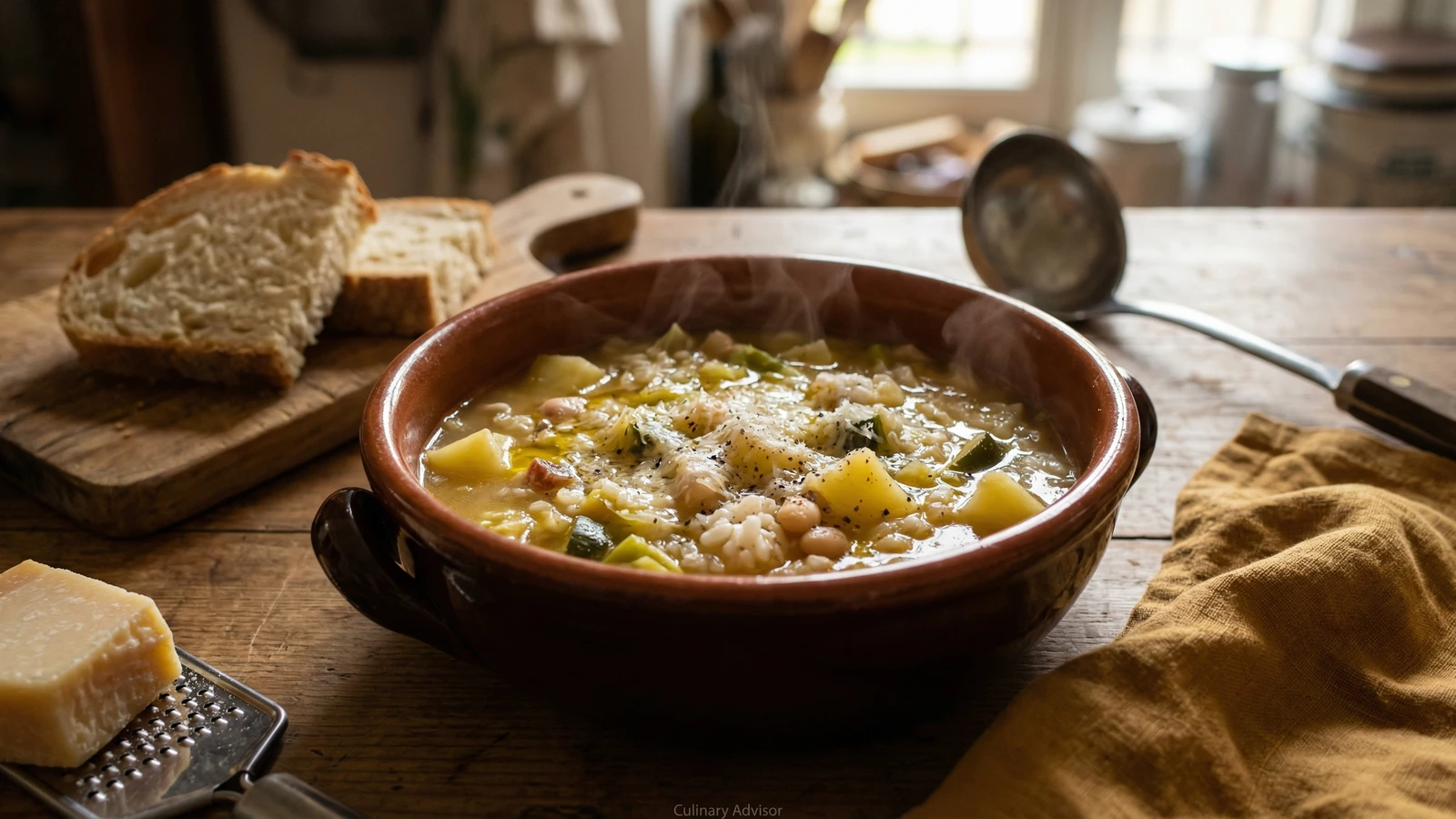
Milan's definitive vegetable soup, finished with rice and enriched with pancetta. Not the thin broth Americans call minestrone, but a substantial bowl that stands as a meal.
The cooking of Milan is so distant from that of Naples that not a single authentic dish from one is to be found on the other's table. This truth reveals itself nowhere more clearly than in minestrone. While Genoa finishes theirs with pesto and the South might use pasta, Milan insists on rice. Arborio, the same rice that becomes risotto, simmers directly in the vegetable broth until it releases its starch and thickens everything into one coherent thing.
The soffritto here begins with pancetta, not merely olive oil and onion. The pork fat renders slowly, coating each vegetable that follows. This is not a garnish. This is the foundation. Flavor in Italian dishes builds up from the bottom, and if you skip this step or rush it, every spoonful will betray you.
Minestrone alla Milanese is not a recipe for using up whatever languishes in your refrigerator. It demands specific vegetables in specific proportions: the holy trinity of carrot, celery, and onion; the earthiness of potato and beans; the freshness of zucchini and cabbage. You add them in stages, respecting that some take longer to cook than others. What emerges after an hour of patient simmering is a soup so thick your spoon nearly stands upright. This is correct.
Minestrone has Roman origins, but the Milanese version took its distinctive form in the rice-growing plains of Lombardy, where risotto culture influenced even the soup pot. By the 19th century, Milanese cooks had codified their version: pancetta in the base, rice instead of pasta, and the traditional stir of lardo or butter at the end that wealthy families could afford.
Quantity
4 ounces
diced fine
Quantity
3 tablespoons
Quantity
1 medium
diced
Quantity
2 medium
peeled and diced
Quantity
3
diced
Quantity
2
minced
Quantity
2 tablespoons
chopped fine
Quantity
1 pound
peeled and diced
Quantity
1 can (14 ounces)
drained and rinsed
Quantity
2 medium
diced
Quantity
1/4 head
cored and shredded
Quantity
1 can (14 ounces)
crushed by hand
Quantity
8 cups
Quantity
3-4 inches
Quantity
3/4 cup
Quantity
to taste
Quantity
to taste
freshly ground
Quantity
2 tablespoons
Quantity
for serving
freshly grated
| Ingredient | Quantity |
|---|---|
| pancettadiced fine | 4 ounces |
| extra virgin olive oil | 3 tablespoons |
| yellow oniondiced | 1 medium |
| carrotspeeled and diced | 2 medium |
| celery stalksdiced | 3 |
| garlic clovesminced | 2 |
| flat-leaf parsleychopped fine | 2 tablespoons |
| Yukon Gold potatoespeeled and diced | 1 pound |
| cannellini beansdrained and rinsed | 1 can (14 ounces) |
| zucchinidiced | 2 medium |
| Savoy cabbagecored and shredded | 1/4 head |
| whole peeled tomatoescrushed by hand | 1 can (14 ounces) |
| chicken broth | 8 cups |
| Parmigiano-Reggiano rind | 3-4 inches |
| Arborio rice | 3/4 cup |
| kosher salt | to taste |
| black pepperfreshly ground | to taste |
| unsalted butter | 2 tablespoons |
| Parmigiano-Reggianofreshly grated | for serving |
In a heavy 8-quart pot, combine the diced pancetta with the olive oil. Cook over medium-low heat, stirring occasionally, until the pancetta has rendered most of its fat and the edges turn golden and slightly crisp, about 10 minutes. Do not let it brown too deeply. The fat should remain pale and sweet.
Add the onion, carrots, and celery to the pot. Stir to coat in the rendered fat. Cook over medium-low heat, stirring occasionally, until the vegetables are completely soft and the onion is translucent with golden edges, about 15 minutes. Add the garlic and parsley in the final minute. The garlic must soften but not color.
Add the diced potatoes and the drained cannellini beans. Stir everything together and cook for 5 minutes, allowing the potatoes to begin absorbing the flavors of the soffritto. The beans will hold their shape if you handle them gently.
Add the zucchini and Savoy cabbage to the pot. The cabbage will seem like too much. It will cook down. Stir to combine and cook for 5 minutes until the cabbage begins to wilt.
Add the crushed tomatoes, chicken broth, and Parmigiano rind. Bring to a simmer, then reduce heat to low. The soup should bubble gently, not vigorously. Simmer uncovered for 45 minutes, stirring occasionally. The potatoes should be tender and beginning to break apart at the edges.
Add the Arborio rice directly to the simmering soup. Stir well to distribute. The rice will cook in about 18 minutes, releasing its starch and thickening the broth considerably. Stir every few minutes to prevent sticking. The soup is ready when the rice is tender but retains a slight firmness at the center.
Remove the pot from heat. Fish out and discard the cheese rind. Stir in the butter until it melts completely and enriches the soup with a subtle richness. Season with salt and pepper. The soup should be very thick, almost a stew. Ladle into warm bowls and pass freshly grated Parmigiano-Reggiano at the table. Once served, invite everyone to eat promptly.
1 serving (about 400g)
Culinary guides, cultural storytelling, and the editorial depth that makes cooking meaningful.
Discover Culinary ExplorerChef Graziella
The soup that sustained a defeated king: nothing but toasted bread, a trembling egg, and broth hot enough to barely set it. Lombardy's proof that desperation can create genius.

Chef Juliette
Marseille's great fish stew, saffron-gold and garlic-scented, proves that a hard boil can be the careful choice: it binds olive oil into broth before the whole pot meets bread.

Chef Juliette
Waterzoi asks fresh, bone-in river fish to thicken its own buttery broth, with parsley root and pepper for company. No flour, no stockpot, just a brisk simmer watched closely.
Chef Juliette
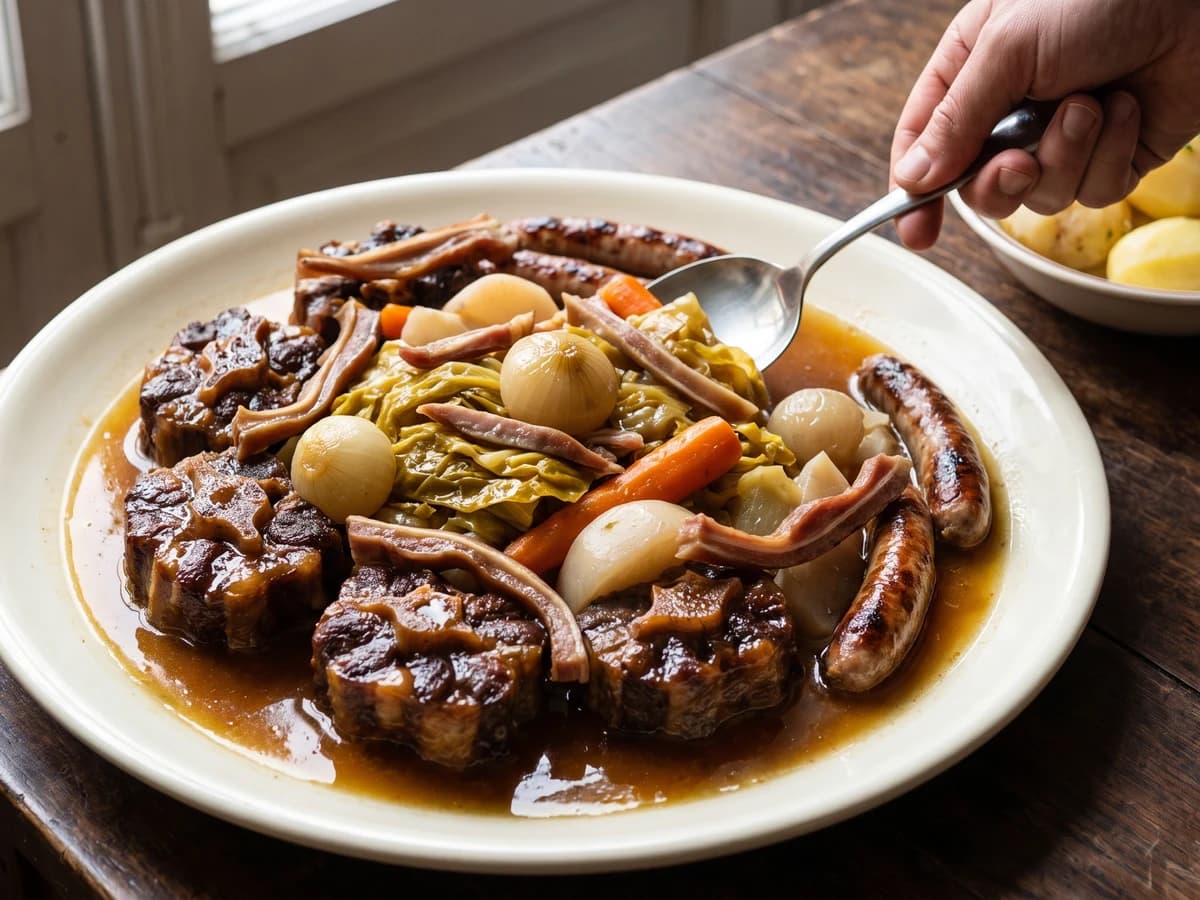
Queue de Bœuf en Hochepot gathers oxtail, pig's trotter and ear, cabbage, roots, and grilled chipolatas around a clear, gelatin-rich broth whose quiet simmer keeps every piece tender and distinct.