Chef Joost
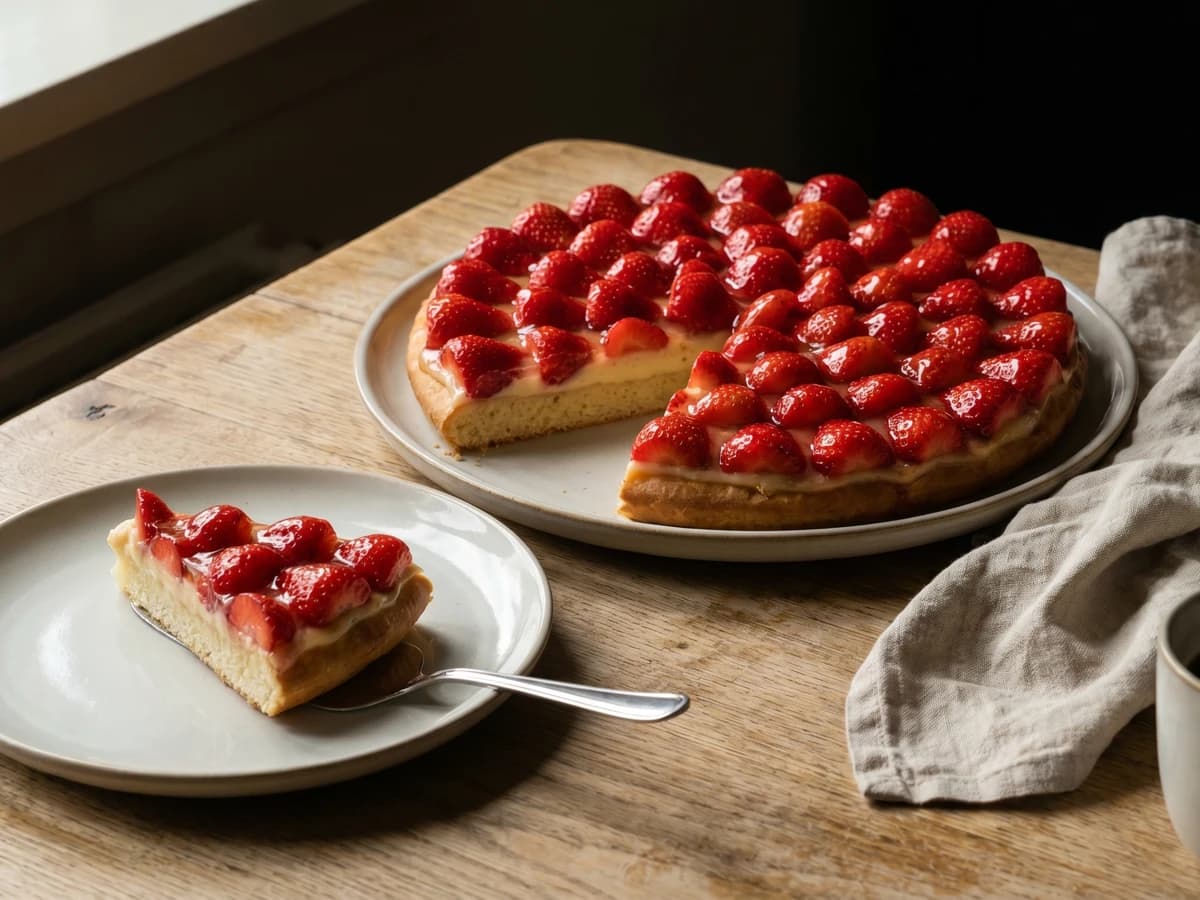
Aardbeienvlaai (Limburg Strawberry Vlaai)
The summer vlaai that politely breaks Limburg's baked-fruit rule: soft gistdeeg, cool pastry cream, and strawberries left fresh because June knows better than the oven.
A cooking platform built around craft, culture, and the stories behind what we eat.

Created by
The name means little marrow bones, but the joke is sweet: sponge, jam, buttercream, almond marzipan, and chocolate from the Dutch pastry-shop window.
The first time I saw a mergpijpje in a banketbakker's window, I thought the pastry cook had been having a private laugh with the butcher. A neat white cylinder, two dark ends, the exact shape of a sawn marrow bone, but inside no bone at all: sponge cake, red jam, soft cream, and almond marzipan. The Dutch are accused of being too serious in food. Then we name a pastry after offal and serve it with coffee.
The name already tells you the joke. Merg is marrow, pijpje is a little pipe or tube, so a mergpijpje is a little marrowbone. But let me tell you a secret: this is not rustic baking. This is the banketbakkerij, the pastry shop, where Dutch thrift put on a clean apron and learned to be precise. A thin sheet of sponge becomes a roll, a little jam gives its red line, buttercream holds the marzipan, and the chocolate ends make the illusion complete.
The method rewards calm hands more than clever ones. Chill the roll before you cut it, chill the wrapped pieces before dipping, and don't fight the marzipan. It behaves best when rolled thin and handled as little as possible. Hou het altijd simpel, always keep it simple: one soft cake, one clean filling, one almond coat, two chocolate ends. That is enough. The whole pleasure is in the neat little deception.
Mergpijpjes belong to the Dutch banketbakkerij tradition, the pastry-shop culture that grew strongly in the nineteenth and early twentieth centuries as sugar, chocolate, almond paste, and fine wheat flour became ordinary celebration ingredients for urban households. The name is literal Dutch wordplay: merg means marrow and pijpje means little pipe or tube, describing the pastry's resemblance to a cut marrow bone rather than any ingredient. Their close cousins are the small marzipan-covered petits fours of wider European patisserie, but the blunt, butcher-shop name is unmistakably Dutch.
Quantity
4
room temperature
Quantity
100g
Quantity
1 teaspoon
Quantity
100g
Quantity
1/4 teaspoon
Quantity
2 tablespoons
warmed and sieved
Quantity
125g
softened
Quantity
100g
sifted
Quantity
1 tablespoon
Quantity
300g
Quantity
as needed
Quantity
150g
chopped
| Ingredient | Quantity |
|---|---|
| large eggsroom temperature | 4 |
| caster sugar | 100g |
| vanilla extract | 1 teaspoon |
| plain flour | 100g |
| fine salt | 1/4 teaspoon |
| apricot jam or raspberry jamwarmed and sieved | 2 tablespoons |
| unsalted buttersoftened | 125g |
| icing sugarsifted | 100g |
| milk | 1 tablespoon |
| white almond marzipan | 300g |
| icing sugar for rolling | as needed |
| dark chocolatechopped | 150g |
Heat the oven to 200C and line a 30 by 40 centimetre Swiss roll tin with baking paper. Beat the eggs, caster sugar, and vanilla for five to seven minutes until pale, thick, and ribboning from the whisk. Fold in the flour and salt gently, spread the batter thinly and evenly, and bake for 10 to 12 minutes until the sponge springs back when touched.
Turn the sponge onto a sheet of baking paper dusted lightly with caster sugar. Peel away the baking paper from the base, then roll the warm sponge up from the long side with the fresh paper inside it. Let it cool completely like this. Warm sponge remembers its shape; cold sponge cracks and sulks.
Beat the softened butter with the icing sugar until pale and smooth, then beat in the milk to loosen it. Unroll the cooled sponge carefully, spread it thinly with the sieved jam, then spread the buttercream over the jam in an even layer. Roll it up again, tight but not strangled, and chill for 30 minutes so it cuts cleanly.
Trim the uneven ends from the roll, then cut it into 12 short pieces, each about 6 centimetres long. If the knife drags the cream, wipe it clean between cuts. Pastry-shop neatness is mostly wiping the knife and pretending it was skill.
Dust the worktop with icing sugar and roll the marzipan into a thin rectangle, about 3 millimetres thick. Cut it into pieces large enough to wrap around each sponge log with a slight overlap. Brush the outside of each log very lightly with buttercream if it needs help sticking, wrap with marzipan, and roll gently under your palm to make a smooth cylinder.
Melt the dark chocolate gently in a bowl set over barely simmering water, then let it cool until glossy and a little thickened. Dip both ends of each marzipan roll into the chocolate and set them on baking paper. Chill until the chocolate is firm, then serve at room temperature, when the sponge is soft and the almond scent has opened.
1 serving (about 86g)
Culinary guides, cultural storytelling, and the editorial depth that makes cooking meaningful.
Discover Culinary ExplorerChef Joost
The summer vlaai that politely breaks Limburg's baked-fruit rule: soft gistdeeg, cool pastry cream, and strawberries left fresh because June knows better than the oven.

Chef Joost
A Limburg vlaai is not a pie trying to be grand. It is a thin yeast-dough round, fruit-bright and generous, made for birthdays, coffee, and second slices.

Chef Joost
The December bakery counter made small: cold leafed pastry wrapped around lemon-scented amandelspijs, brushed gold, and scattered with almonds so one person gets the whole holiday in both hands.

Chef Joost
A thin Amsterdam cookie carrying a cog ship in its name: caramelized butter dough, almond nougatine, and a 1934 contest that turned municipal pride into something for coffee.