Chef Lupita
Birria Tacos with Consome
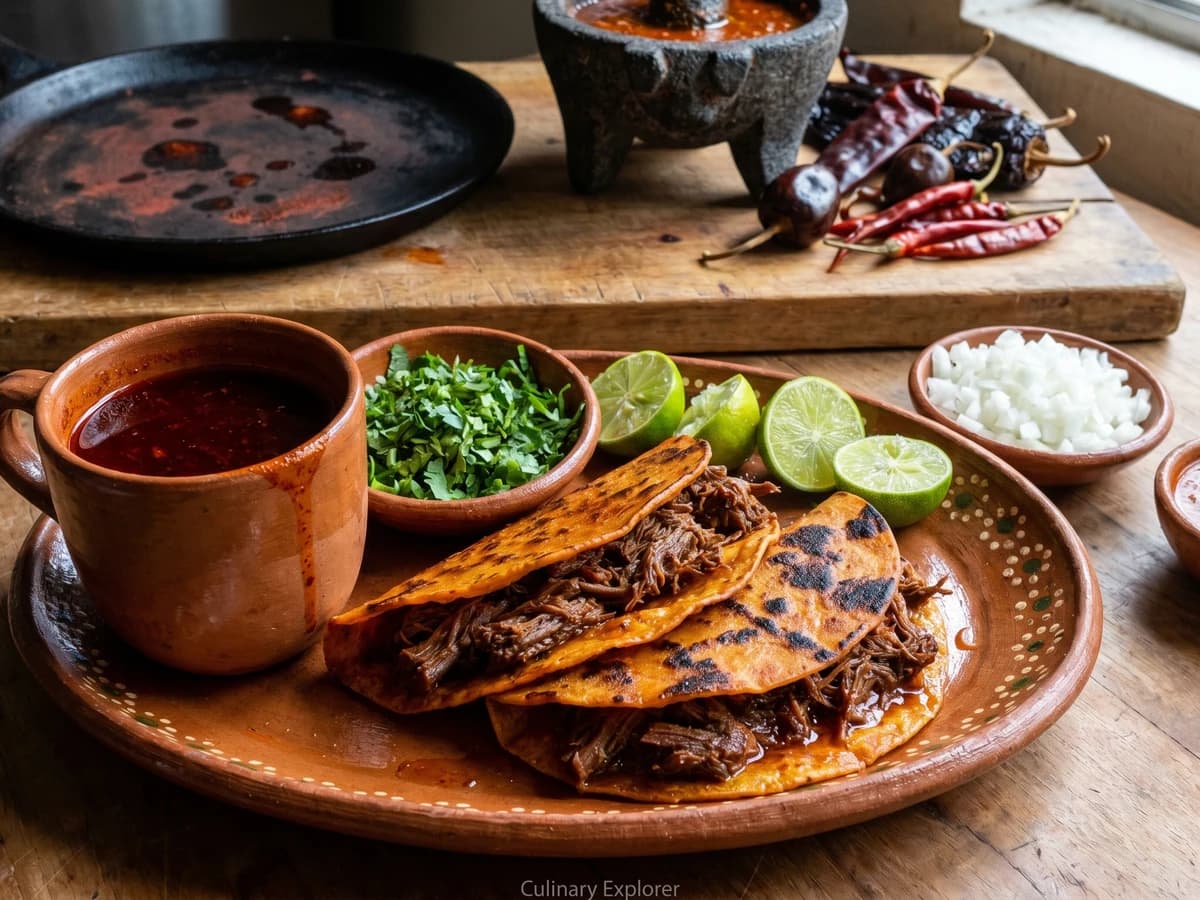
Jalisco's goat birria, born around Cocula and carried into Guadalajara's markets, slow-braised in ancho, guajillo, cascabel, and chile de arbol, then tucked into corn tortillas crisped in its own red fat.
A cooking platform built around craft, culture, and the stories behind what we eat.
Created by
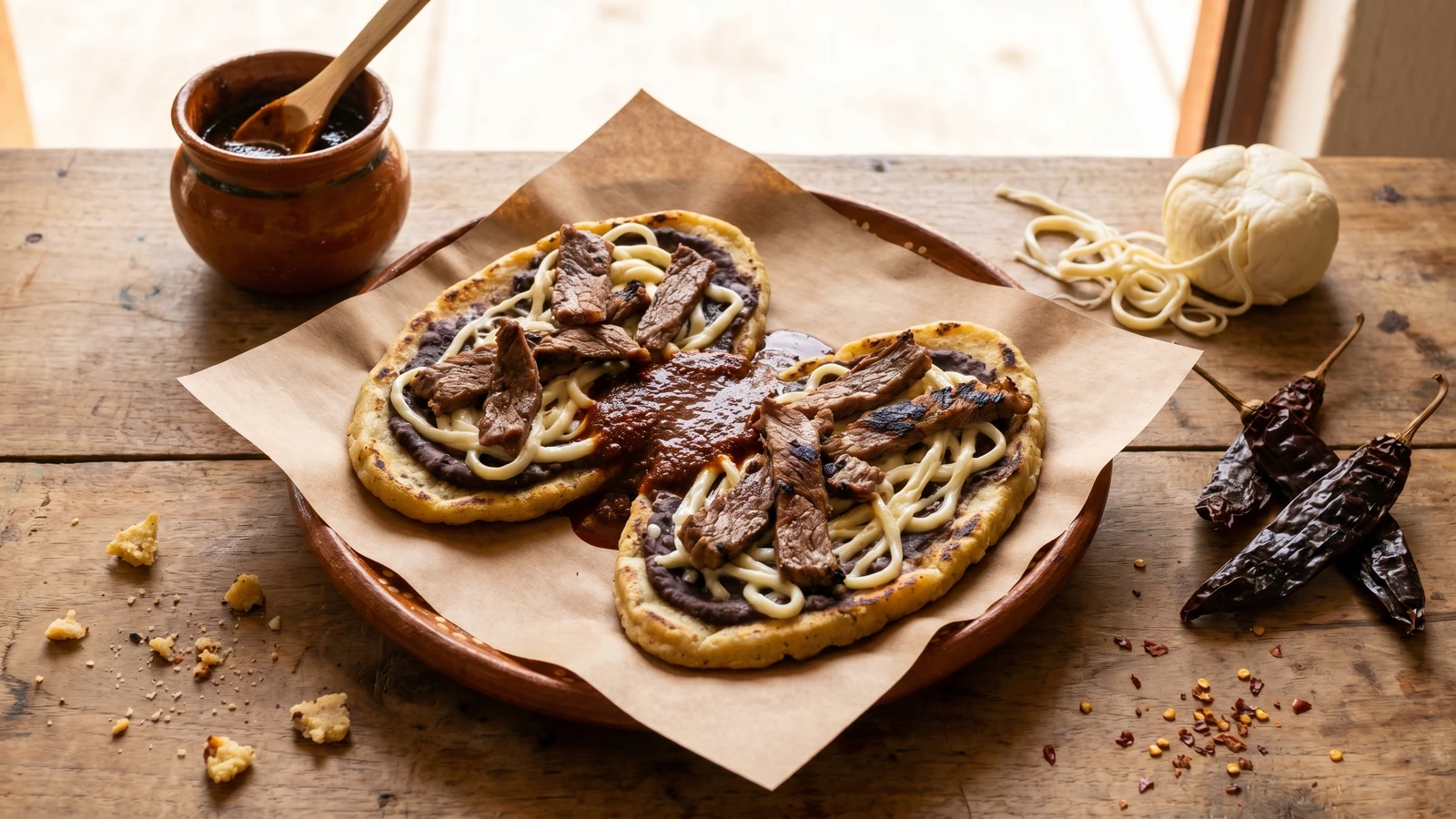
Oaxaca's meal-scale memela: the thick oval masa cake toasted on the comal with asiento, smeared with black bean paste, and crowned with salt-cured tasajo and strings of quesillo pulled by hand
This is Oaxaca. The Valles Centrales, specifically. The memela lives on every comal in every market from the Central de Abastos to the Sunday tianguis in Tlacolula de Matamoros. It is not a tortilla. Thicker, oval, pinched at the edges to hold what goes on top. And what goes on top tells you exactly where you are on the map.
In the Valles Centrales, it starts with asiento. Not manteca, not butter, not oil. Asiento: the dark, grainy sediment left at the bottom of the cazuela after rendering pork lard. It tastes like smoke and pork and everything a clean fat does not. You spread it across the surface of the memela while the masa is still on the comal, and it soaks into the warm dough and becomes part of it. If someone tells you to substitute with vegetable oil, find someone else to cook with.
Doña Vale sold memelas outside the Mercado 20 de Noviembre in Oaxaca City for over thirty years. I sat on a plastic stool at her comal in 2014 and watched her hands work: masa pressed into ovals by feel, not measurement. Flipped once, pinched, painted with asiento from a clay jar she kept at the edge of the fire. A smear of black bean paste cooked with avocado leaf. Strings of quesillo pulled from the ball and draped so the heat from the memela softened them just enough. Strips of tasajo, grilled on the hottest part of the comal until the salt-cured edges darkened. A spoonful of her salsa de pasilla oaxaqueño on top. She handed it to me on a square of brown paper and said nothing. The memela said everything. Recetas probadas y garantizadas.
Tasajo is salt-cured dried beef, a preservation tradition born from the dry air of the Valles Centrales, where the climate does half the work. Quesillo is Oaxaca's string cheese, pulled and wound into balls at the market, tangy and supple in a way that mozzarella only approximates. These ingredients are not interchangeable with their substitutes. They are the reason this memela belongs to Oaxaca and nowhere else. Cada estado, su propia cocina.
The memela belongs to the broad family of thick-masa antojitos, including tlacoyos, huaraches, and sopes, whose origins predate the Spanish conquest and are rooted in the Mesoamerican practice of shaping nixtamalized corn dough into forms beyond the flat tortilla. The word 'memela' likely derives from a Nahuatl root, though its precise etymology is debated; in Oaxaca, the term specifically denotes the oval comal-toasted cake spread with asiento, distinguishing it from the round sopes of central Mexico or the larger huaraches of the capital. Tasajo as a preservation method exploits the Valles Centrales' semi-arid climate, where thinly sliced salt-rubbed beef dries efficiently in open air, a technique that parallels Spanish cecina but developed independently among Zapotec and Mixtec populations using native game long before cattle arrived with the conquest in the 16th century.
Quantity
1 1/4 pounds
or 2 1/2 cups masa harina mixed with 1 1/2 cups warm water and 1/2 teaspoon fine salt
Quantity
1/4 cup
divided
Quantity
2 cups
with 1/4 cup of their broth
Quantity
1
Quantity
to taste
Quantity
1 pound
Quantity
8 ounces
Quantity
4
Quantity
2
unpeeled
Quantity
1/4 cup
Quantity
to taste
| Ingredient | Quantity |
|---|---|
| fresh masa for tortillasor 2 1/2 cups masa harina mixed with 1 1/2 cups warm water and 1/2 teaspoon fine salt | 1 1/4 pounds |
| asiento (unrefined pork lard sediment)divided | 1/4 cup |
| cooked black beanswith 1/4 cup of their broth | 2 cups |
| dried avocado leaf (hoja de aguacate) | 1 |
| fine salt | to taste |
| tasajo (Oaxacan salt-cured dried beef) | 1 pound |
| quesillo (Oaxacan string cheese) | 8 ounces |
| dried chile pasilla oaxaqueño | 4 |
| garlic clovesunpeeled | 2 |
| water or bean broth | 1/4 cup |
| salt | to taste |
Heat a dry comal or cast iron skillet over medium heat. Toast the chile pasilla oaxaqueño for about 20 seconds per side, pressing gently with a spatula. They will puff and release a deep, smoky fragrance that is nothing like any other dried chile you have worked with. This is a smoked chile, dried over wood fires in the Sierra Mixe, and that smoke is the point. Set them aside. Place the unpeeled garlic cloves on the same comal and roast, turning occasionally, until the skins are charred in spots and the cloves feel soft when pressed, about 8 minutes. Peel the garlic. Tear the toasted chiles open and shake out the seeds. Place the chiles, garlic, water, and a pinch of salt in a blender. Blend until you have a rough, textured salsa, not a smooth puree. It should have body. Taste for salt. Set aside.
Heat 1 tablespoon of asiento in a small skillet over medium heat. Lightly toast the avocado leaf in the asiento for 10 seconds, just until it becomes fragrant, like anise and fresh green wood. Add the cooked black beans with their broth. Mash with a bean masher or the back of a large wooden spoon until you have a thick, spreadable paste, not smooth, not chunky, somewhere between. The consistency should hold on the back of a spoon without sliding off. If it is too thick, add another tablespoon of broth. Season with salt. Keep warm. Discard the avocado leaf.
Heat the comal over high heat until it is very hot, the kind of heat where a drop of water vanishes on contact. Lay the tasajo strips flat on the comal. Do not crowd them. The salt-cured surface should sizzle the moment it touches the metal. Cook for 2 to 3 minutes per side. You want dark spots where the salt and the natural sugars in the beef char slightly, but not burned through. The edges will curl and crisp. The center should stay tender. Remove to a cutting board and chop or tear into rough strips about the width of your finger. Tasajo is not sliced delicately. It is torn the way it is eaten in the market.
Divide the masa into 8 equal portions, each roughly the size of a golf ball. If using masa harina, make sure the dough is hydrated and smooth but not sticky: it should press without cracking at the edges. Roll each ball between your palms, then press it into an oval shape about 5 inches long, 3 inches wide, and roughly 1/4 inch thick. Thicker than a tortilla. Thicker than a sope. The thickness is what holds the toppings and gives the memela its chew. Use your fingers, not a press. Memelas are shaped by hand and they should look it. Uneven edges are correct.
Heat the comal over medium-high heat. Lay a memela on the dry comal. Cook for about 2 minutes on the first side until the bottom sets and develops pale brown spots. Flip it. Now, while the second side cooks, use your fingertips to pinch the edges of the oval upward, creating a shallow rim about half an inch high all the way around. Work quickly because the masa is hot. This rim holds the toppings. Once the edges are pinched, spread about 1 teaspoon of asiento across the entire surface of the memela with the back of a spoon. The asiento will melt into the warm masa, darkening it slightly and perfuming it with that unmistakable pork smoke. Cook for another minute until the bottom is golden and the memela releases from the comal easily. Transfer to a wire rack or plate. Repeat with the remaining ovals.
Spread a generous tablespoon of the warm bean paste across each memela, right on top of the asiento layer. Pull the quesillo into long, thin strings withyour fingers, the way it is done at every market stall in Oaxaca, and drape the strings over the beans. The residual heat from the memela will soften the cheese just enough. Pile the chopped tasajo on top. Spoon the salsa de pasilla oaxaqueño over everything. Serve immediately, on the brown paper if you want to honor how Doña Vale did it, or on a clay plate if you are sitting down. Pick it up with your hands. A memela is not fork food. Asi se hace y punto.
1 serving (about 400g)
Culinary guides, cultural storytelling, and the editorial depth that makes cooking meaningful.
Discover Culinary ExplorerChef Lupita
Jalisco's goat birria, born around Cocula and carried into Guadalajara's markets, slow-braised in ancho, guajillo, cascabel, and chile de arbol, then tucked into corn tortillas crisped in its own red fat.
Chef Lupita
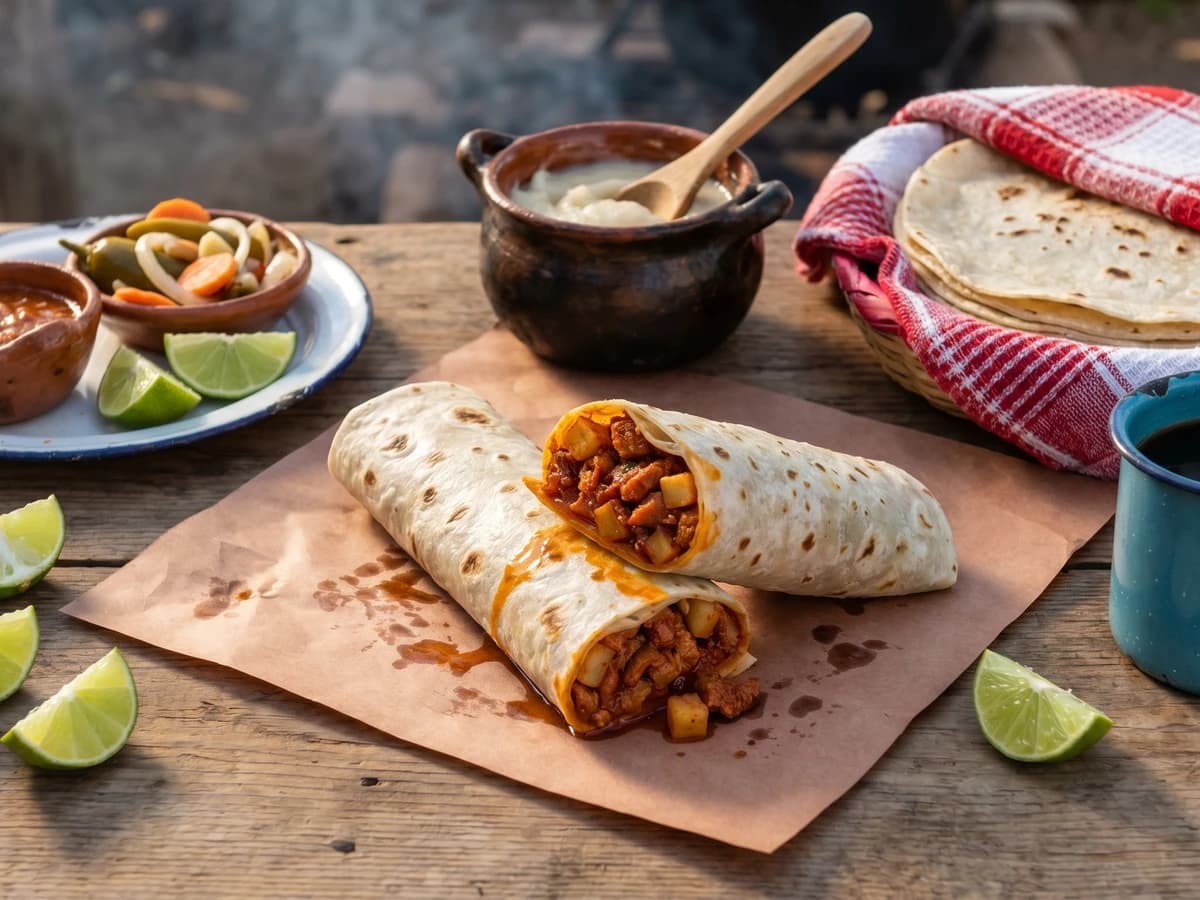
Sonora's working morning burrito: chicharrón de cáscara stewed in chile colorado with diced potato, rolled tight in a paper-thin tortilla sobaquera and eaten standing up at the carreta.
Chef Lupita
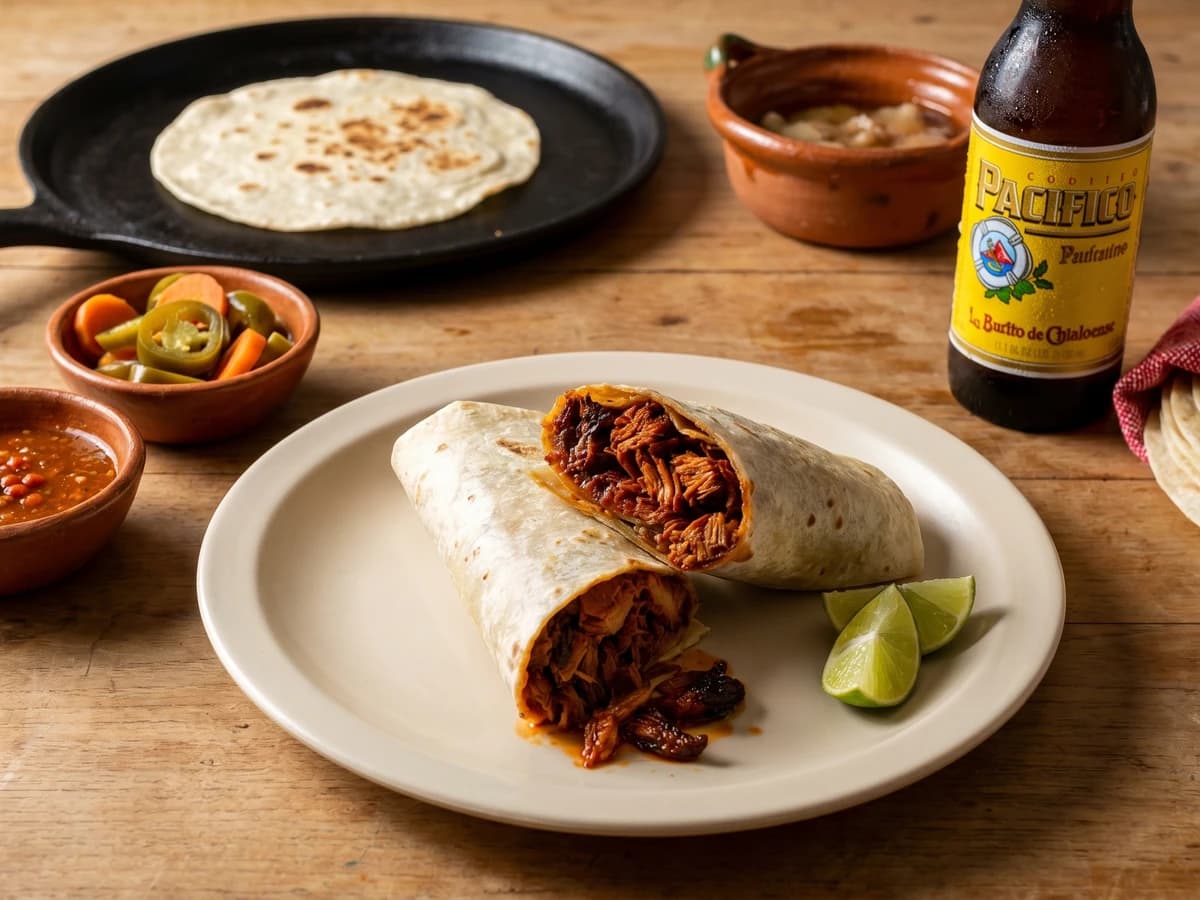
Mocorito's pork chilorio, shredded and confited in lard with chile ancho and pasilla, rolled into a thin handmade flour tortilla. The burrito Sinaloa sends out into the world.
Chef Lupita
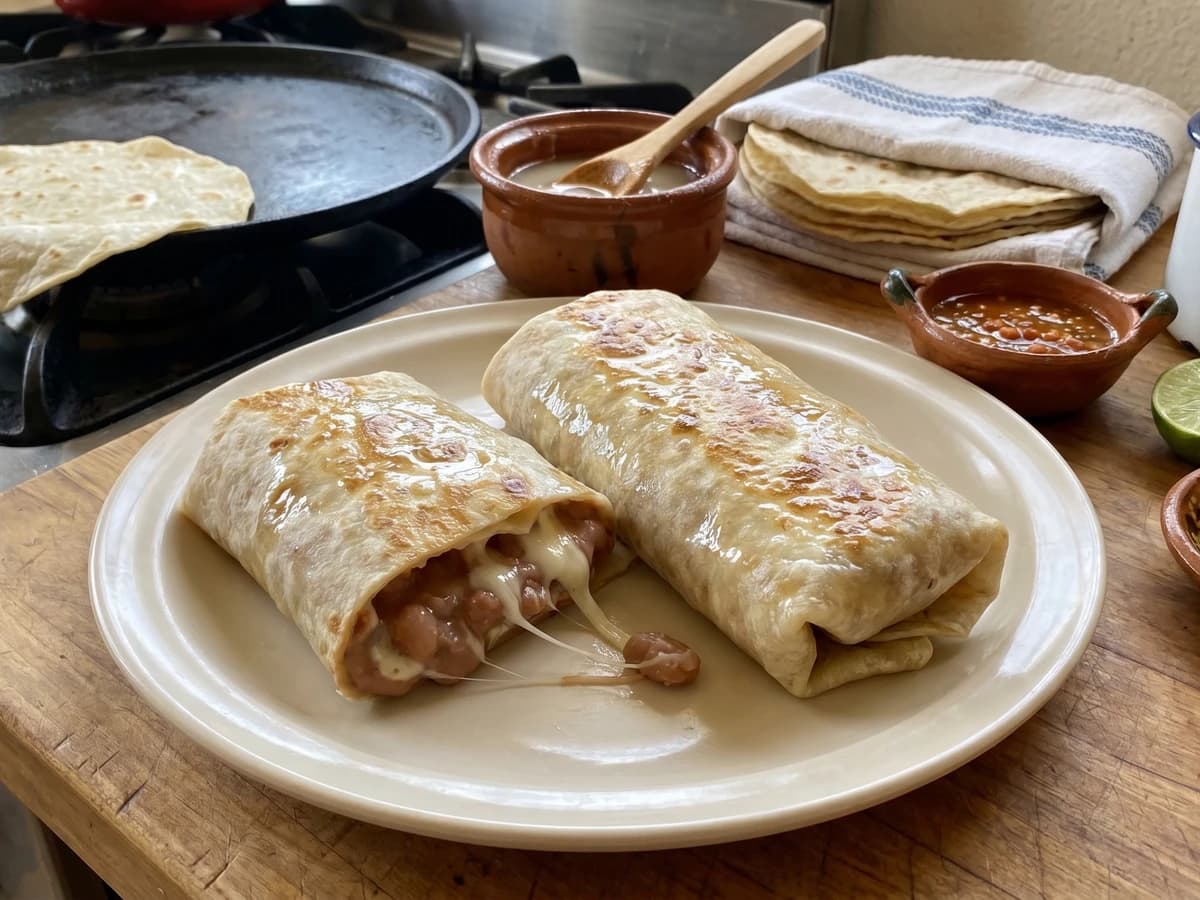
Sonora's morning burrito of mashed pinto frijoles puercos and melted queso asadero, wrapped in a paper-thin sobaquera and seared on the comal until the cheese pulls in long strings.