
Chef Juliette
Various Almond Preparations
Five almond preparations, one discipline: remove the skins cleanly, dry every kernel through, then cut, toast, or cloak it in pale caramel without letting its fragrant oils escape.
A cooking platform built around craft, culture, and the stories behind what we eat.

Created by
The Philippines' gift to the dessert world: layers of honeyed graham crackers, clouds of sweetened cream, and sunset-gold mangoes that collapse into silky indulgence after a night in the refrigerator.
Every nation has a dessert that transcends recipe and becomes ritual. For Filipinos, it is the mango float. This no-bake wonder appears at every birthday, every reunion, every celebration where family gathers and someone needs to bring something impressive without spending the afternoon at the stove.
The genius lies in patience. You layer crackers, cream, and fruit, then walk away. Overnight, the graham crackers soften from crisp to cake-like, absorbing the sweetened cream until the whole thing cuts like a proper torte. The mangoes release their perfume into every layer. What emerges from the refrigerator the next day bears little resemblance to what went in.
I first encountered this dessert at a potluck in San Francisco's SOMA district, brought by a young woman whose grandmother had taught her the proportions by feel. She apologized that it wasn't fancy. I told her it was one of the most clever constructions I'd tasted in years. The technique borrows from European icebox cakes but the soul is purely Filipino: generous, celebratory, and designed to feed a crowd without fuss.
Quantity
4 cups (960ml)
very cold
Quantity
1 can (14 oz/396g)
Quantity
1 teaspoon
Quantity
3 packages (about 27 full sheets)
Quantity
4 large (about 3 pounds total)
peeled and sliced
Quantity
from 1 additional mango
| Ingredient | Quantity |
|---|---|
| heavy whipping creamvery cold | 4 cups (960ml) |
| sweetened condensed milk | 1 can (14 oz/396g) |
| pure vanilla extract | 1 teaspoon |
| graham crackers | 3 packages (about 27 full sheets) |
| ripe mangoespeeled and sliced | 4 large (about 3 pounds total) |
| mango slices for topping (optional) | from 1 additional mango |
Place your mixing bowl and whisk attachment in the freezer for at least fifteen minutes before starting. Cold equipment is essential for whipping cream to proper volume. The cream itself should be straight from the refrigerator, as cold as possible.
Slice the mangoes by cutting along each side of the flat pit, as close to the seed as you can manage. Score each half in a crosshatch pattern without cutting through the skin, then invert and slice the cubes away. You want pieces roughly half an inch thick, uniform enough to create an even layer. Reserve a handful of your prettiest slices for the top.
Pour the cold heavy cream into your chilled bowl. Beat on medium-high speed until the cream begins to thicken and hold soft trails, about two minutes. The whisk should leave visible tracks that slowly dissolve. Do not overbeat at this stage.
Reduce mixer speed to low and pour in the sweetened condensed milk in a steady stream. Add the vanilla. Increase speed to medium and continue beating until the mixture reaches stiff peaks that hold their shape when you lift the whisk, another minute or two. The cream should be thick, glossy, and voluminous. Taste it. The sweetness should be pronounced but not cloying.
Select a 9x13-inch baking dish, glass or ceramic. No greasing required. Spread a thin layer of the whipped cream mixture across the bottom, just enough to coat. This prevents the first layer of crackers from becoming soggy on the bottom.
Arrange graham crackers in a single layer over the cream, breaking pieces as needed to fill gaps. The crackers should cover the surface completely without overlapping. Spread one-third of the remaining cream over the crackers in an even layer, using an offset spatula or the back of a spoon. Work gently so you don't shift the crackers beneath.
Arrange one-third of your mango slices in a single layer over the cream, spacing them evenly so every bite will contain fruit. Press them gently into the cream so they nestle rather than perch.
Continue layering: graham crackers, cream, mangoes. You should have three complete layers. For the final top layer, spread the remaining cream smoothly and arrange your reserved mango slices in a decorative pattern. Fans, rows, or a scattered arrangement all work beautifully.
Cover the dish tightly with plastic wrap, pressing it gently against the surface to prevent a skin from forming. Refrigerate for a minimum of eight hours, preferably overnight. The graham crackers must soften completely. Patience here is non-negotiable.
Cut into squares with a sharp knife dipped in hot water and wiped clean between cuts. The float should slice cleanly, revealing distinct layers of cream and golden mango. Serve immediately after cutting; it softens quickly at room temperature.
1 serving (about 610g)
Culinary guides, cultural storytelling, and the editorial depth that makes cooking meaningful.
Discover Culinary ExplorerChef Juliette
Five almond preparations, one discipline: remove the skins cleanly, dry every kernel through, then cut, toast, or cloak it in pale caramel without letting its fragrant oils escape.

Chef Juliette
A pastry pantry lesson in one tray: filberts warmed only until their red skins release, rubbed clean, cooled, and chopped into a fragrant mise-en-place for cakes, creams, pralines, and petits fours.

Chef Juliette
The smallest pâtisserie discipline decides whether a cake leaves its mould intact: clarified butter in every corner, followed by the lightest veil of dry flour or fécule.
Chef Juliette
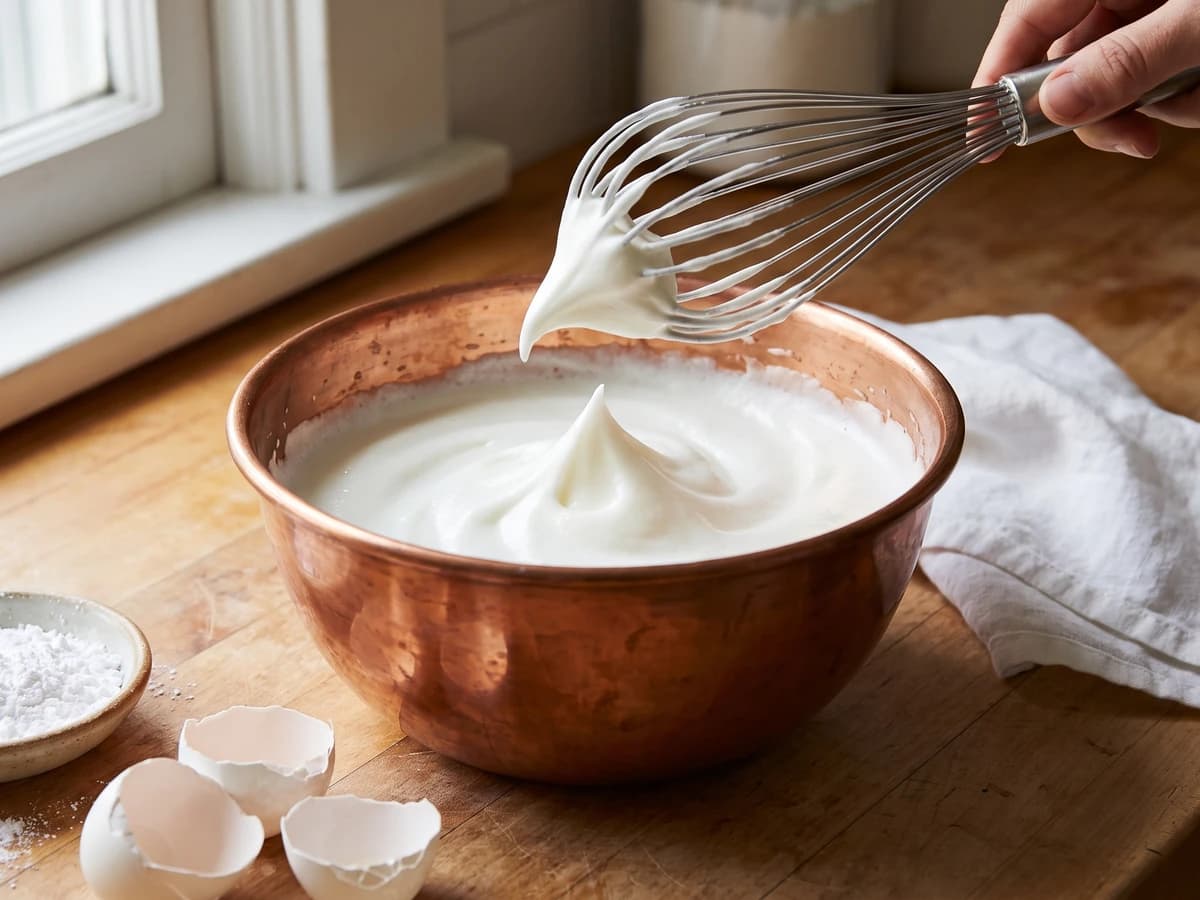
Four whites, one spotless bowl, and a patient change of speed: whisk gently until loosened, then briskly to glossy stiffness, with powdered sugar waiting if the foam begins to granulate.