
Chef Jeong-sun
Albaechu-mul-kimchi (Baby Cabbage Water Kimchi)
Tender baby napa cabbage in a clear pear-garlic brine, lightly fermented until the broth turns clean and bright, the summer kimchi a beginner can make without a kimjang floor.
A cooking platform built around craft, culture, and the stories behind what we eat.
Created by
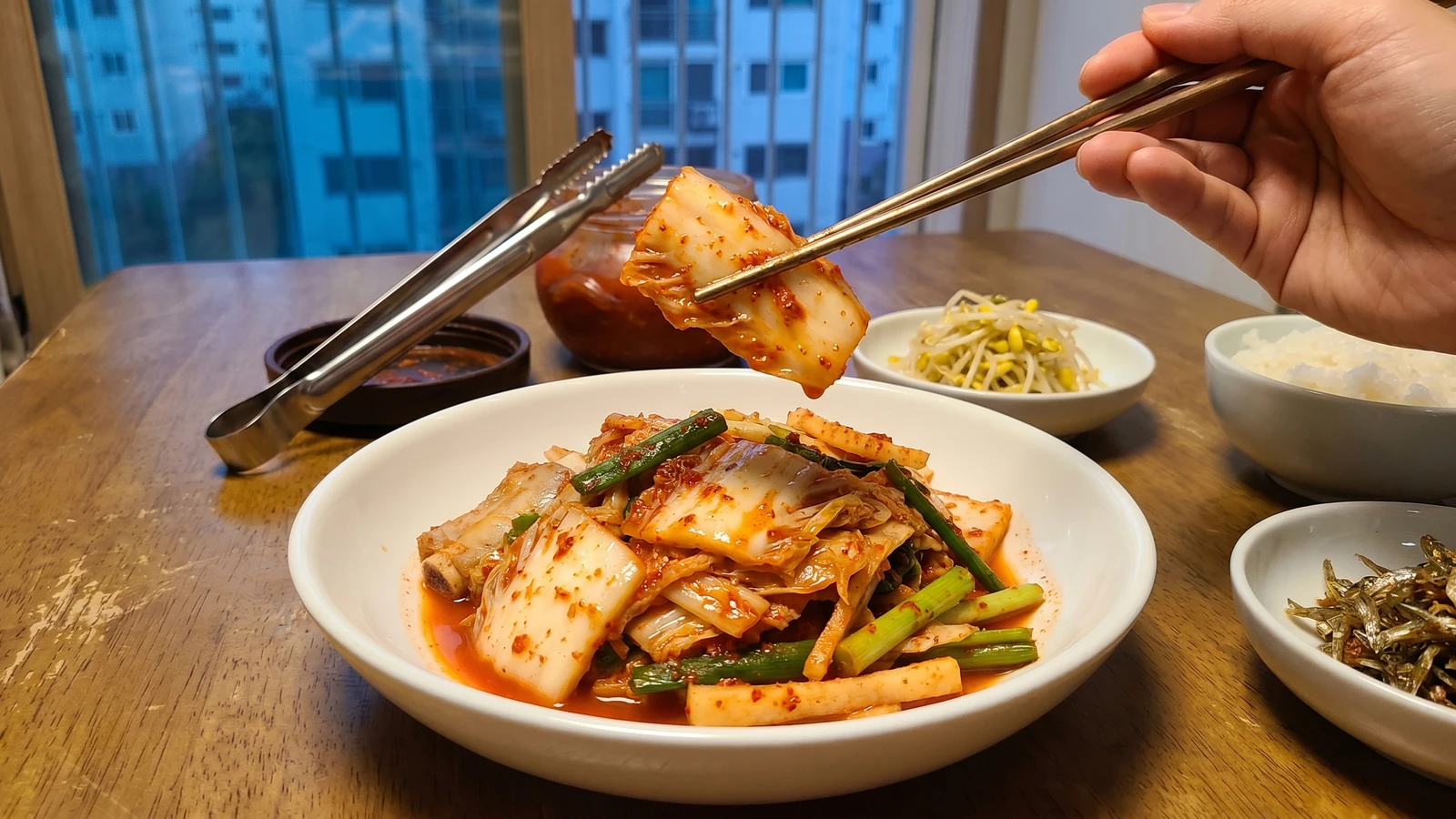
Napa cabbage cut first, salted quickly, and rubbed with a measured red paste, the weeknight kimchi that gives you whole-head flavor without turning the kitchen into a kimjang floor.
Mak-kimchi does not mean sloppy kimchi. The name points to kimchi made without the ceremony of whole cabbage quarters: cut first, salted faster, mixed in a basin, and packed into a jar small enough for a weeknight refrigerator. Master Seong-nyeo called it rough cut, not rough hands. She said it once. You wrote it down or you lost it.
This is the kimchi for a small household, a busy kitchen, or the cabbage you bought because the market had a good pile and dinner still has to happen. Cutting the baechu (napa cabbage) first saves time, but it also means the salt reaches the ribs quickly. That is where the dish lives or dies. Salt until the rib bends, rinse before it becomes harsh, and drain long enough that the paste clings instead of sliding into the bottom of the jar.
The paste is not a place to show off. Gochugaru for color and warmth, fish sauce and saeujeot (salted shrimp) for depth, garlic and ginger kept in balance, radish and scallion so the cabbage has company. Pack it tight, leave it room to breathe, and let the first day of fermentation begin. Eat a little fresh beside hot rice if the table is waiting. The rest belongs to tomorrow.
Mak-kimchi belongs to the baechu-kimchi family, but it is cut and seasoned loose rather than packed as pogi-kimchi, the whole-quarter form used for kimjang. Red cabbage kimchi in its familiar form is newer than many people think: chili peppers reached Korea only after the Columbian exchange, and tightly headed baechu became common in the late nineteenth and early twentieth centuries. Small-batch cut kimchi suited urban apartments, refrigerators, and busy households, which is why this practical style now sits beside weeknight rice as naturally as any older jar.
Quantity
1 large, 1.4 to 1.6 kg
Quantity
70g, about 1/2 cup
for salting
Quantity
1 tablespoon
Quantity
1/2 cup
Quantity
1/2 cup, about 45g
Quantity
3 tablespoons
Quantity
2 tablespoons
minced
Quantity
2 teaspoons
Quantity
5 cloves
minced or grated
Quantity
1/2 small, about 70g
grated
Quantity
1 teaspoon
grated
Quantity
300g
peeled and cut into matchsticks
Quantity
4
cut into 1 1/2-inch lengths
Quantity
1 to 2 tablespoons
only if needed to loosen the paste
| Ingredient | Quantity |
|---|---|
| napa cabbage (baechu) | 1 large, 1.4 to 1.6 kg |
| Korean coarse sea salt (cheonilyeom)for salting | 70g, about 1/2 cup |
| sweet rice flour (chapssal-garu) | 1 tablespoon |
| water | 1/2 cup |
| gochugaru (Korean red pepper flakes) | 1/2 cup, about 45g |
| fish sauce (myeolchi-aekjeot) | 3 tablespoons |
| salted shrimp (saeujeot)minced | 2 tablespoons |
| sugar | 2 teaspoons |
| garlicminced or grated | 5 cloves |
| oniongrated | 1/2 small, about 70g |
| fresh gingergrated | 1 teaspoon |
| Korean radish (mu)peeled and cut into matchsticks | 300g |
| scallionscut into 1 1/2-inch lengths | 4 |
| water (optional)only if needed to loosen the paste | 1 to 2 tablespoons |
Pull off any bruised outer leaves. Quarter the cabbage lengthwise, trim away the hard core, then cut the leaves crosswise into 1 1/2 to 2-inch pieces. Do not chop it small. Mak-kimchi is casual, not careless; the pieces need enough body to stay crisp through salting and fermentation.
Put the cabbage in a large basin and sprinkle the coarse salt through it, working more salt onto the thick white ribs than the leafy ends. Toss with your hands, then let it stand 1 1/2 to 2 hours, turning every 30 minutes. It is ready when a thick rib bends without snapping and tastes well salted, but not painful on the tongue.
While the cabbage salts, whisk the sweet rice flour and 1/2 cup water in a small saucepan. Cook over medium heat for 3 to 5 minutes, stirring, until glossy and lightly thickened. Cool completely. The paste helps the gochugaru cling to the cabbage and gives fermentation a little food; hot paste would wilt the radish and dull the garlic.
Rinse the salted cabbage twice in cool water, three times if a rib still tastes too salty. Drain in a colander for 20 to 30 minutes. Do not wring it dry. You want crisp cabbage with surface water gone, because wet cabbage thins the seasoning and gives you watery kimchi.
In the cleaned basin, mix the cooled rice paste, gochugaru, fish sauce, salted shrimp, sugar, garlic, grated onion, and ginger. Let it sit 10 minutes so the gochugaru hydrates and the color settles into a deep red-orange. Taste the paste. It should be salty, garlicky, and a little sweet, stronger than you would eat alone because the cabbage will take it in.
Fold the radish matchsticks and scallion lengths into the paste first. The radish releases juice and takes color from the chili, so it belongs in the seasoning before the cabbage. Keep the scallions in short lengths, not minced, so they stay visible and taste like themselves.
Add the drained cabbage in 3 additions, rubbing the paste over the white ribs and between the leaves with a gloved hand. Be thorough, but do not crush it. If the paste feels stiff, add 1 tablespoon water, no more at first. Taste one cabbage rib: if it tastes flat, add 1 teaspoon fish sauce; if the garlic and chili feel harsh, add 1/2 teaspoon sugar. Write that adjustment down. 손맛 is real; I measure it anyway.
Pack the kimchi into a clean 2-quart glass jar or small onggi, pressing down after each layer to push out air pockets. Leave 1 inch headspace because the kimchi will rise as it ferments. Scrape any remaining paste from the basin over the top, wipe the rim clean, and set the jar on a plate.
Leave the jar at cool room temperature, 18 to 22 C, for 12 to 24 hours, out of direct sun. Open once to release gas if using a tight lid, then press the kimchi back under its brine with a clean spoon. When you see small bubbles and smell a light tang, move it to the refrigerator. It is good fresh the first day, better after 2 to 3 days, and useful for stews and fried rice once it turns sour.
1 serving (about 200g)
Culinary guides, cultural storytelling, and the editorial depth that makes cooking meaningful.
Discover Culinary ExplorerChef Jeong-sun
Tender baby napa cabbage in a clear pear-garlic brine, lightly fermented until the broth turns clean and bright, the summer kimchi a beginner can make without a kimjang floor.

Chef Jeong-sun
The kimchi from before chili, salted napa cabbage packed with radish, pear, jujube, and pine nuts in a clear brine that turns quietly tart in the jar.

Chef Jeong-sun
A pale summer cucumber kimchi, split and stuffed with radish and chives, then held in a cool pear brine so the cucumber stays clean, crunchy, and plainly itself.

Chef Jeong-sun
Flat spring bomdong cabbage, lightly brined and tucked into a clear pear-radish kimchi broth, made without chili and eaten young while the leaves still taste like spring.