Chef Joost
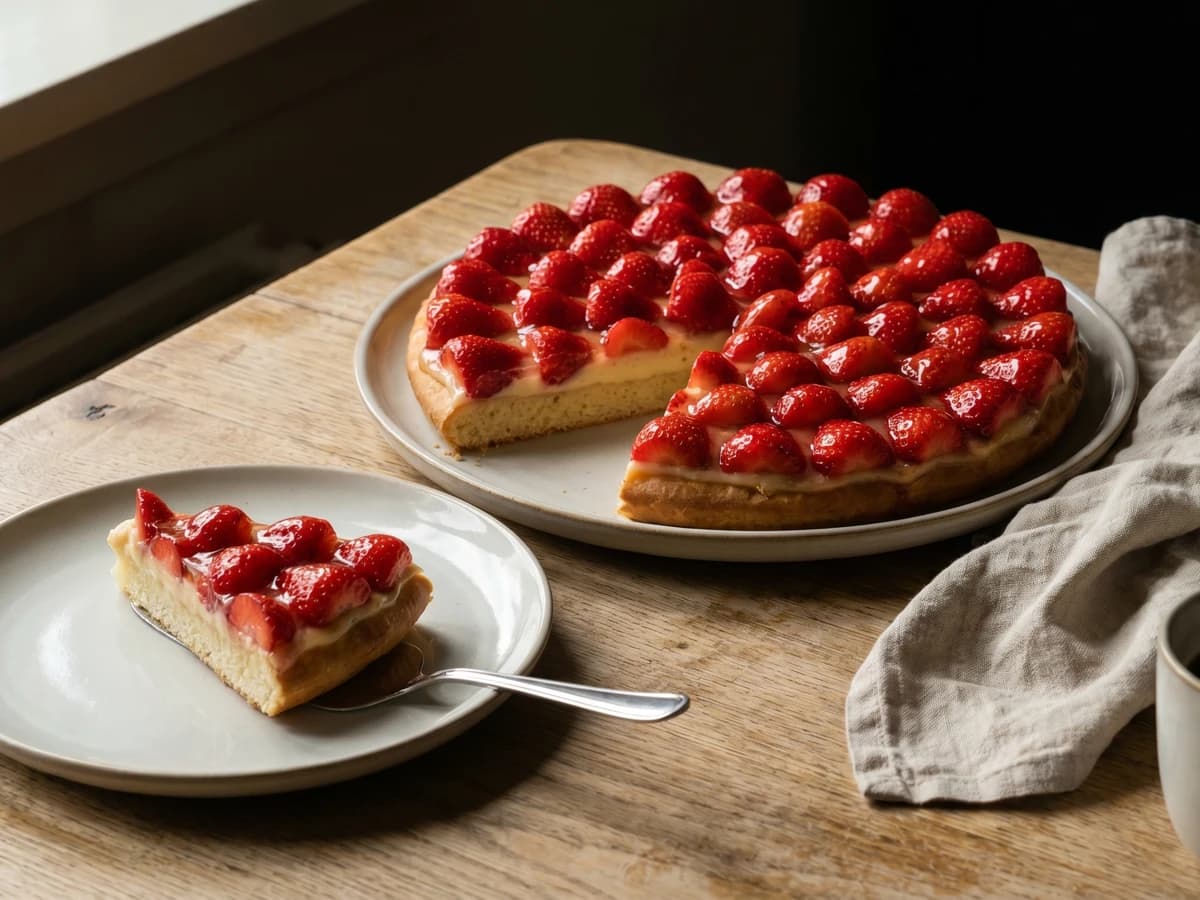
Aardbeienvlaai (Limburg Strawberry Vlaai)
The summer vlaai that politely breaks Limburg's baked-fruit rule: soft gistdeeg, cool pastry cream, and strawberries left fresh because June knows better than the oven.
A cooking platform built around craft, culture, and the stories behind what we eat.

Created by
A coconut cookie with one foot in the old European macaroon family and the other in the Dutch coffee tin: frugal, chewy, golden, and better for being left a little rough.
The humblest Dutch cookie tins keep the best secrets. Open a koektrommel, the biscuit tin that appears with coffee as reliably as rain appears in November, and there they are: kokosmakronen, craggy little mounds of coconut, golden at the ridges, chewy in the middle, often sitting on a thin white wafer like a pastry that remembered church and decided to become sociable.
The name already tells you only half the story. Kokos is simple enough, coconut, but makroon belongs to the older European macaroon family, long made with ground almonds, egg white, and sugar before coconut became the thrifty, fragrant version that Dutch bakers took into everyday life. But let me tell you a secret: this is not a lesser cookie because it has fewer ingredients. It is exactly the sort of Dutch cleverness I admire, turning a small list into something the hand reaches for twice.
The trick is not complication. Hou het altijd simpel, always keep it simple. Warm the egg whites and sugar just enough to dissolve the sugar and wake the coconut, then let the mixture sit so the dry flakes drink in the moisture. Scoop it roughly, because smooth kokosmakronen look suspicious, and bake only until the outside is crisp and the center still bends under the teeth. A dry macaroon is just sawdust with ambition.
Macaroons entered Dutch baking through the wider European tradition of egg-white cookies made with nuts, especially the French macaron and Italian macarone families known from early modern confectionery. Coconut versions became common in the Netherlands after dried coconut became cheaper and widely available through nineteenth- and twentieth-century trade, turning a once-imported luxury into a practical bakery staple. The thin wafer base, ouwel in Dutch, links the cookie to an older confectioner's habit of baking sticky mixtures on edible wafers so they release cleanly from the tray.
Quantity
200g
Quantity
175g
Quantity
3
Quantity
1 teaspoon
Quantity
1/4 teaspoon
Quantity
16
| Ingredient | Quantity |
|---|---|
| unsweetened desiccated coconut | 200g |
| caster sugar | 175g |
| large egg whites | 3 |
| vanilla extract | 1 teaspoon |
| fine salt | 1/4 teaspoon |
| edible wafer rounds (ouwel) (optional) | 16 |
Put the egg whites, sugar, vanilla, and salt in a saucepan over low heat and stir for two to three minutes, just until the sugar begins to dissolve and the mixture feels warm, not hot. Do not whip it. Kokosmakronen are chewy because the egg white binds quietly, not because we have beaten it into a cloud.
Stir in the desiccated coconut until every flake is damp and the mixture gathers into a heavy, sticky mass. Take the pan off the heat and let it stand for 10 minutes. This short rest matters: the coconut drinks in the egg white, and the finished cookie holds together instead of scattering itself across the tray.
Heat the oven to 175C. Line a baking tray with parchment, or set out the wafer rounds on the tray. With wet hands or two spoons, shape the mixture into 16 rough mounds and set one on each wafer, or directly on the parchment. Leave the tops craggy. The ridges brown first, and those crisp edges are the reward.
Bake for 16 to 18 minutes, until the peaks are deep gold and the sides are set, but the centers still feel slightly soft if you press one gently. Let them cool on the tray for 10 minutes before moving them. Fresh from the oven they are fragile; once cooled, they become the sturdy little citizens of the coffee tin.
1 serving (about 25g)
Culinary guides, cultural storytelling, and the editorial depth that makes cooking meaningful.
Discover Culinary ExplorerChef Joost
The summer vlaai that politely breaks Limburg's baked-fruit rule: soft gistdeeg, cool pastry cream, and strawberries left fresh because June knows better than the oven.

Chef Joost
A Limburg vlaai is not a pie trying to be grand. It is a thin yeast-dough round, fruit-bright and generous, made for birthdays, coffee, and second slices.

Chef Joost
The December bakery counter made small: cold leafed pastry wrapped around lemon-scented amandelspijs, brushed gold, and scattered with almonds so one person gets the whole holiday in both hands.

Chef Joost
A thin Amsterdam cookie carrying a cog ship in its name: caramelized butter dough, almond nougatine, and a 1934 contest that turned municipal pride into something for coffee.