Chef Joost
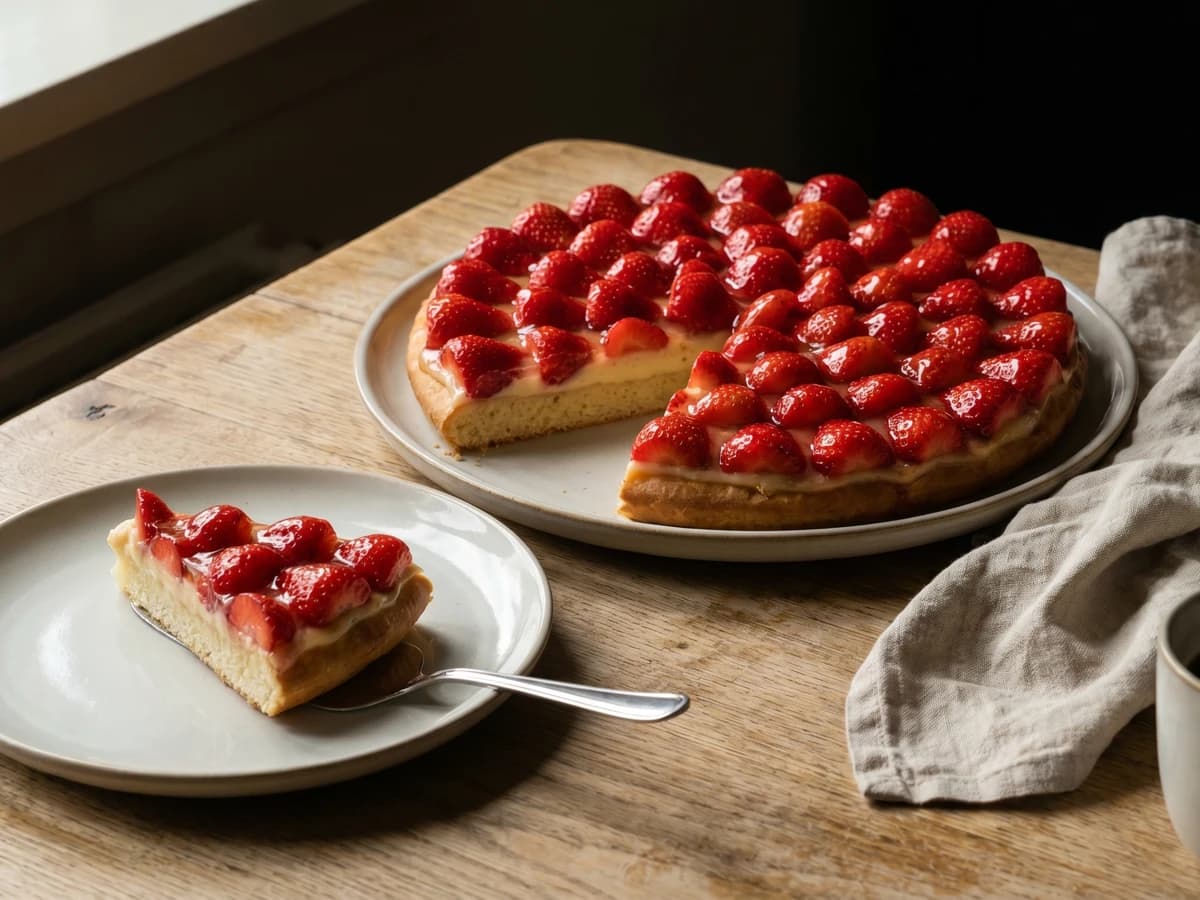
Aardbeienvlaai (Limburg Strawberry Vlaai)
The summer vlaai that politely breaks Limburg's baked-fruit rule: soft gistdeeg, cool pastry cream, and strawberries left fresh because June knows better than the oven.
A cooking platform built around craft, culture, and the stories behind what we eat.

Created by
The Limburg birthday tart with a soft gistdeeg base, whole sour cherries, and a lattice that lets the filling darken, bubble, and tell the season plainly.
In Limburg, a birthday table is not properly awake until the vlaai arrives. Coffee first, plates stacked, the knife moving through a lattice of dough into cherries that have stained themselves a deep church-window red. I grew up in Zeeland, not Limburg, so I speak here as a respectful guest. But let me tell you a secret: the Dutch provinces are separate kitchens, and Limburg has guarded the art of vlaai with the calm certainty of people who know they are right.
The name already tells you nearly everything it owes you. Kersen are cherries. Vlaai belongs to an older Low Countries family of words related to flat cakes and broad baked rounds, cousins to flade and Fladen across the German border. No mystery dragged in by force, only geography doing what geography does: Limburg sits where Dutch, Belgian, and German baking traditions have been nodding over the hedge for centuries.
Kersenvlaai is a summer tart in its heart, because sour cherries, morellen or krieken, have a short season and a long memory. The filling is not spooned into a blind-baked shell like a French tart. It cooks with the dough, and that matters. The yeast base stays tender, the cherry juice thickens in place, and the lattice browns just enough to taste of bread rather than pastry. Hou het altijd simpel, always keep it simple: good cherries, patient dough, and a tart tin wide enough to share.
Vlaai is most closely associated with Dutch and Belgian Limburg, where broad yeast-dough fruit tarts became fixtures of feast days, parish fairs, weddings, and especially birthdays. The European Union registered Limburgse vlaai as a Traditional Speciality Guaranteed in 2024, recognizing the cross-border Limburg tradition and its defining features: a round tart with a yeast dough base, baked with its filling. Kersenvlaai is one of the classic fruit versions, traditionally made with sour cherries, whose acidity keeps the sweet filling lively.
Quantity
300g
plus extra for dusting
Quantity
7g
Quantity
40g
Quantity
1/2 teaspoon
Quantity
150ml
Quantity
50g
softened
Quantity
1
beaten, divided
Quantity
700g
fresh, frozen, or jarred and drained
Quantity
120g
or to taste
Quantity
25g
Quantity
2 tablespoons
Quantity
1 teaspoon
Quantity
1 tablespoon
Quantity
as needed
| Ingredient | Quantity |
|---|---|
| all-purpose flourplus extra for dusting | 300g |
| instant yeast | 7g |
| fine sugar | 40g |
| salt | 1/2 teaspoon |
| lukewarm milk | 150ml |
| unsalted buttersoftened | 50g |
| eggbeaten, divided | 1 |
| pitted sour cherriesfresh, frozen, or jarred and drained | 700g |
| sugaror to taste | 120g |
| cornstarch | 25g |
| cherry juice, water, or kirsch | 2 tablespoons |
| lemon juice | 1 teaspoon |
| fine breadcrumbs | 1 tablespoon |
| butter for the tart tin | as needed |
Stir the flour, yeast, sugar, and salt together in a bowl. Add the lukewarm milk, softened butter, and about two thirds of the beaten egg, keeping the rest for glazing. Knead for 8 to 10 minutes until the dough is soft, elastic, and only lightly tacky. It should feel like bread dough that has learned some manners.
Cover the bowl and let the dough rise in a warm place until doubled, about 60 to 75 minutes. Butter a 28cm shallow vlaai tin or tart tin while you wait. The dough is ready when a fingertip pressed into it leaves a soft dent that slowly fills back in.
Put the cherries and sugar in a saucepan and warm gently until the fruit releases its juice. Stir the cornstarch with the cherry juice, water, or kirsch to make a smooth slurry, then add it to the pan. Cook, stirring, for 2 to 3 minutes until the juices turn glossy and thick enough to coat the cherries. Stir in the lemon juice and let the filling cool to lukewarm.
Heat the oven to 200C. Roll out about two thirds of the dough into a round large enough to line the tin with a little overhang. Lay it in gently and press it into the edges without stretching. Sprinkle the breadcrumbs over the base; they are not decoration, they are insurance against a wet bottom.
Spoon the cooled cherry filling into the dough shell and spread it evenly. Roll the remaining dough thinly and cut it into strips about 1.5cm wide. Lay the strips across the cherries in a lattice, trimming the edges and pressing them to the rim. A Limburg baker may make the lattice neater than you will. Let him. Your table will still go quiet when the first slice is cut.
Brush the lattice and rim with the reserved beaten egg. Bake for 25 to 30 minutes, until the dough is golden, the edges pull slightly from the tin, and the cherries show thick, dark bubbles between the strips. Cool in the tin for 15 minutes, then lift out carefully and let it settle before slicing. The filling needs that pause or it will run like gossip.
1 serving (about 120g)
Culinary guides, cultural storytelling, and the editorial depth that makes cooking meaningful.
Discover Culinary ExplorerChef Joost
The summer vlaai that politely breaks Limburg's baked-fruit rule: soft gistdeeg, cool pastry cream, and strawberries left fresh because June knows better than the oven.

Chef Joost
A Limburg vlaai is not a pie trying to be grand. It is a thin yeast-dough round, fruit-bright and generous, made for birthdays, coffee, and second slices.

Chef Joost
The December bakery counter made small: cold leafed pastry wrapped around lemon-scented amandelspijs, brushed gold, and scattered with almonds so one person gets the whole holiday in both hands.

Chef Joost
A thin Amsterdam cookie carrying a cog ship in its name: caramelized butter dough, almond nougatine, and a 1934 contest that turned municipal pride into something for coffee.