
Chef Ally
Kohlrabi Slaw with Caraway and Apple
Crisp kohlrabi cut into matchsticks and tossed with tart apple, toasted caraway, and a simple mustard dressing. A German tradition that makes the case for this underappreciated vegetable.
A cooking platform built around craft, culture, and the stories behind what we eat.

Created by
Tender sliced potatoes dressed warm with smoky bacon, sweet onion, and a bracing mustard vinaigrette that soaks into every slice. This is the potato salad that graces German Christmas tables, honest and unapologetic in its simplicity.
This is not the cold, mayonnaise-bound potato salad of American picnics. German Kartoffelsalat arrives at the table warm, dressed in bacon fat and vinegar, each slice of potato tender enough to absorb the dressing yet firm enough to hold its shape. It is one of the great salads of the world, though it receives far less attention than it deserves.
In Bavaria and Swabia, this salad appears on Christmas Eve alongside simple frankfurters, a tradition born of Catholic fasting customs that forbade meat on the eve of holy days. Fish and sausages were permitted, and this humble salad became their steady companion. On Christmas Day, it returns to accompany the roast goose or pork that anchors the feast. The flavors are elemental: smoke from the bacon, sharpness from the vinegar, sweetness from slowly cooked onions, and the honest starch of good potatoes holding it all together.
The technique matters more than the ingredient list. You must dress the potatoes while they're still warm. Cold potatoes form a barrier that rejects dressing. Warm potatoes drink it in, becoming saturated with flavor rather than merely coated. This is the difference between a salad that tastes layered and one that tastes assembled.
For large gatherings, this recipe scales beautifully and improves with time. Make it hours ahead, let it rest at room temperature, and rewarm gently before serving. Your guests will believe you spent the morning in the kitchen when you've actually been enjoying their company.
Quantity
3 pounds
Quantity
8 ounces
cut into 1/2-inch pieces
Quantity
1 large
finely diced
Quantity
3/4 cup
warmed
Quantity
1/3 cup
Quantity
1 tablespoon
Quantity
2 teaspoons
Quantity
1 teaspoon
Quantity
1/2 teaspoon
Quantity
3 tablespoons
finely snipped
Quantity
2 tablespoons
chopped
| Ingredient | Quantity |
|---|---|
| waxy potatoes (Yukon Gold or red) | 3 pounds |
| thick-cut baconcut into 1/2-inch pieces | 8 ounces |
| yellow onionfinely diced | 1 large |
| beef broth or chicken brothwarmed | 3/4 cup |
| white wine vinegar | 1/3 cup |
| Dijon mustard | 1 tablespoon |
| sugar | 2 teaspoons |
| fine sea salt | 1 teaspoon |
| freshly ground black pepper | 1/2 teaspoon |
| fresh chivesfinely snipped | 3 tablespoons |
| fresh flat-leaf parsleychopped | 2 tablespoons |
Place whole, unpeeled potatoes in a large pot and cover with cold water by two inches. Add a generous tablespoon of salt. Bring to a boil over high heat, then reduce to a steady simmer. Cook until a paring knife slides through the center with no resistance, about 25 to 35 minutes depending on size. The potatoes should feel tender but not waterlogged. Drain and let them rest just until cool enough to handle, about five minutes. You want them warm, not cool.
While the potatoes cook, place bacon pieces in a cold 12-inch skillet. Set over medium heat and cook slowly, stirring occasionally, until the fat renders and the bacon turns golden and crisp, about 10 to 12 minutes. The slow start extracts maximum fat without burning. Using a slotted spoon, transfer the bacon to a paper towel-lined plate. Reserve the rendered fat in the skillet.
Add the diced onion to the bacon fat and cook over medium heat, stirring occasionally, until soft and translucent with golden edges, about 6 to 8 minutes. The onion should smell sweet and look jammy, not brown or burnt. This slow cooking removes the raw bite and builds sweetness that balances the vinegar.
Remove the skillet from heat and let it cool for one minute. Whisk in the warm broth, vinegar, mustard, sugar, salt, and pepper. The mixture should smell sharp and inviting. Return to low heat and warm gently for two minutes, whisking to combine. Taste and adjust the seasoning. The dressing should be assertively tangy with a subtle sweetness that rounds the edges.
Peel the warm potatoes using a paring knife or your fingers (the skins slip off easily when warm). Slice them into rounds about 1/4-inch thick. Work quickly. Place the slices in a large, wide serving bowl, spreading them in loose layers rather than piling them high. Warm potatoes are fragile, so handle them gently.
Pour the warm dressing over the potato slices immediately. Add half the reserved bacon. Using a large rubber spatula, fold everything together with gentle strokes. You're not stirring aggressively, you're coaxing the dressing into the potatoes. Some slices will break. This is fine. They release starch that thickens the dressing and adds body.
Let the salad rest at room temperature for at least 15 minutes, or up to two hours. This resting period allows the potatoes to absorb the dressing fully and the flavors to marry. Just before serving, taste again and adjust salt and pepper as needed. Fold in most of the chives and parsley, reserving a tablespoon of each. Transfer to a warmed serving platter, scatter the remaining bacon and herbs on top, and serve.
1 serving (about 350g)
Culinary guides, cultural storytelling, and the editorial depth that makes cooking meaningful.
Discover Culinary ExplorerChef Ally
Crisp kohlrabi cut into matchsticks and tossed with tart apple, toasted caraway, and a simple mustard dressing. A German tradition that makes the case for this underappreciated vegetable.

Chef Juliette
Cold roast chicken, ciseled lettuce, and a shining coat of homemade mayonnaise, arranged with capers, olives, anchovies, eggs, and lettuce hearts, then tossed at the table as the canon intends.

Chef Juliette
Cold roast or poached chicken with fine ribbons of lettuce, dressed at the final moment with oil and vinegar: a composed salad whose freshness depends entirely on timing.
Chef Juliette
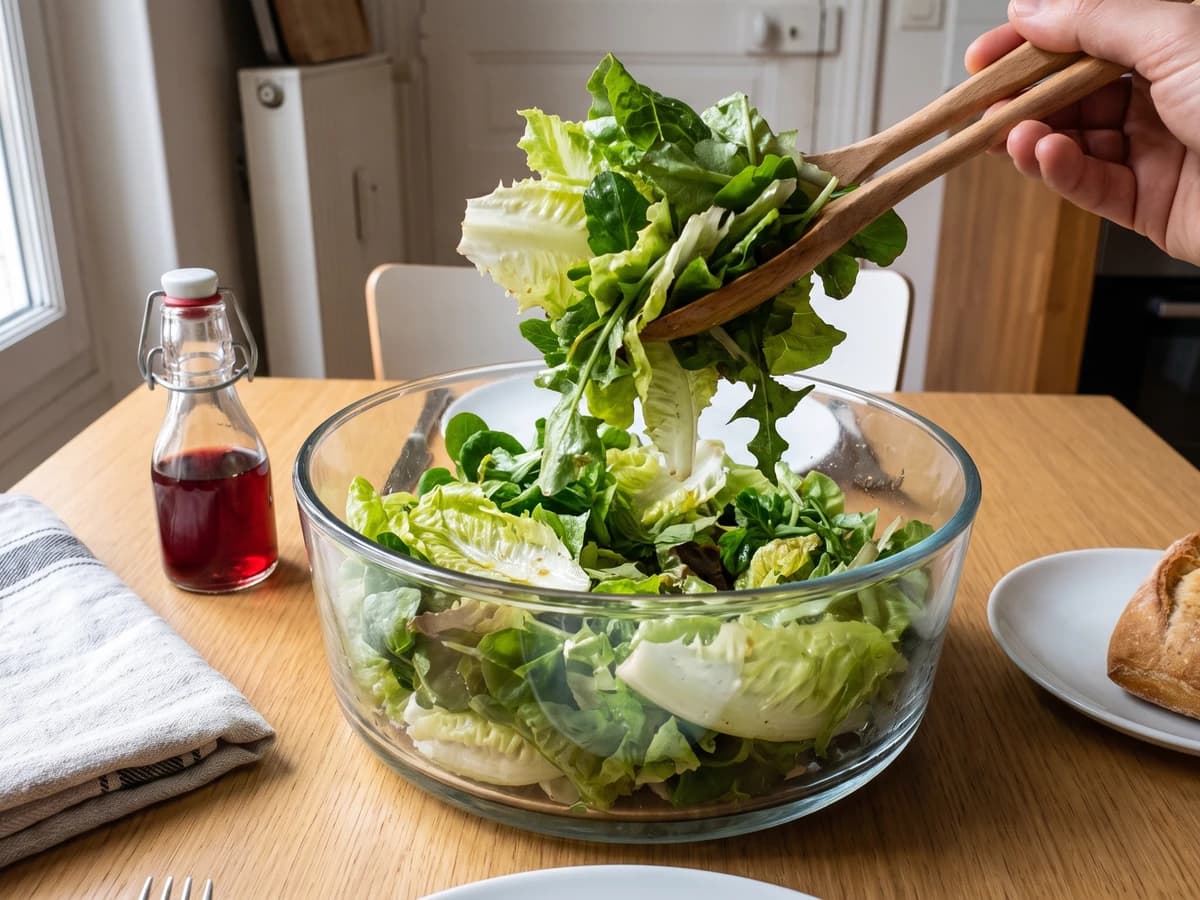
Five leaves, one living rule: laitue, romaine, chicorée, mâche, or pissenlit must be washed, dried, and dressed only as they go to the table, while every leaf still carries its light vinaigrette.