
Chef Juliette
Various Almond Preparations
Five almond preparations, one discipline: remove the skins cleanly, dry every kernel through, then cut, toast, or cloak it in pale caramel without letting its fragrant oils escape.
A cooking platform built around craft, culture, and the stories behind what we eat.
Created by
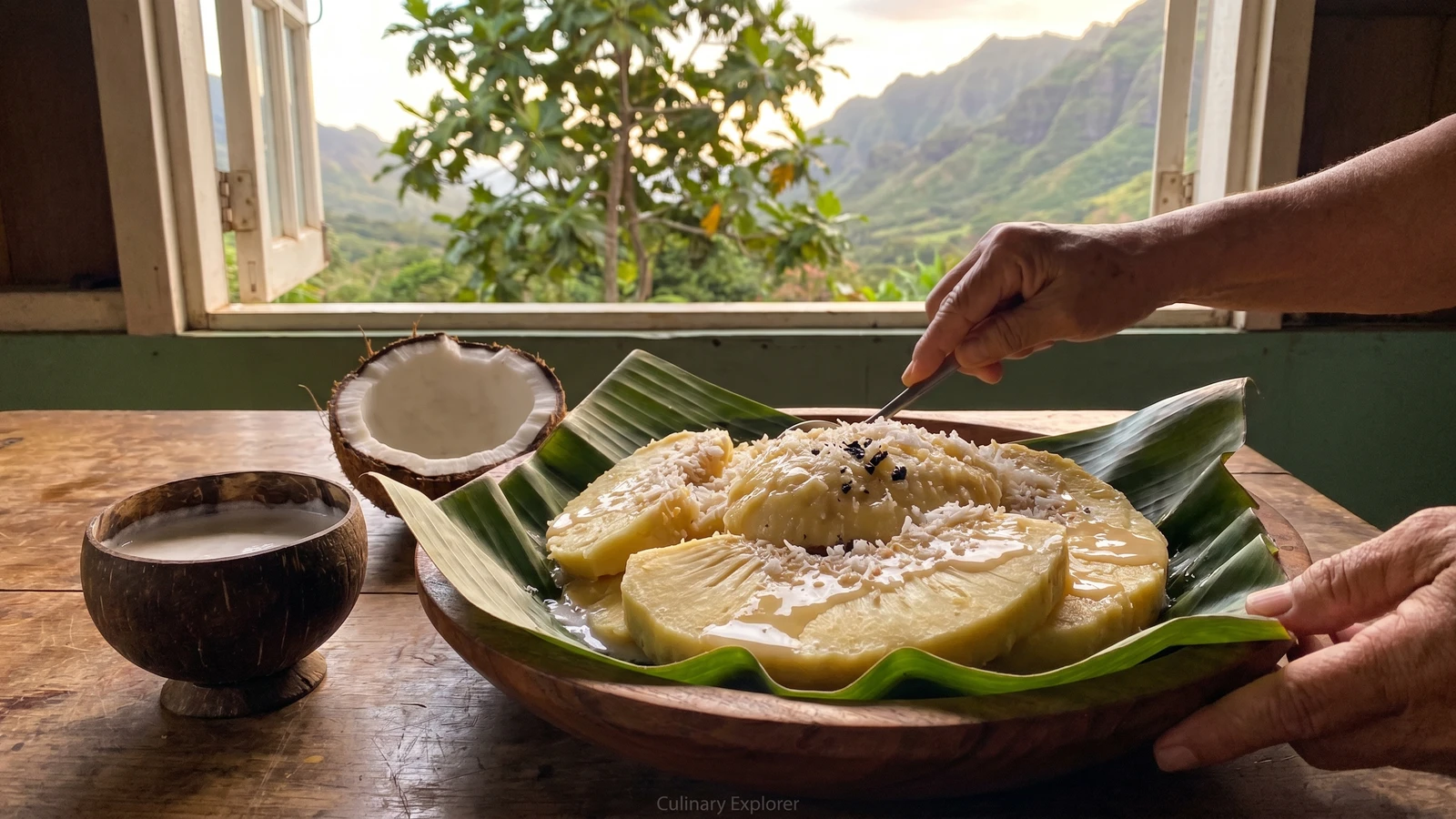
On the Marquesan table of Henua ʻEnana, roasted mei breadfruit is peeled, pounded warm, and loosened with fresh miti haari until it eats soft and rich. This is kaʻaku, not Tahitian poʻe.
The canoe plants don't travel like cargo in my mind. They travel like relatives, and in the Marquesas, Henua ʻEnana, the Land of the People, the relative that holds the valley table is mei, breadfruit. Where my own home seat in Hawaiʻi leans hard into kalo and poi, Henua ʻEnana leans into mei and ʻuru, trees rooted on steep volcanic land, feeding families where the green valleys fall straight to dark-rock bays and the open Pacific keeps speaking loud.
Kaʻaku is Marquesan, from the Marquesas, not Tahitian poʻe. Same canoe crop family, yes, but different hand. Hawaiʻi pounds kalo into poi and paʻiʻai, Tahiti makes poʻe, the Marquesas know popoi and kaʻaku from breadfruit, and each one has its own elders, its own table, its own reason. One ocean, one canoe, one root, but no smear the cousins together.
The teaching here is simple and not small. Roast the mei until the outside takes the fire and the inside gives up soft. Peel it warm, pound it slow, and feed it coconut cream little by little until it turns glossy and heavy, rich without acting fancy. The pounding matters because that is where the fruit changes from cooked starch into food with memory in it. Rush that part and it stays lumpy and stubborn. No need get mad. You rushed it.
This is not my island's dish, so I cook it open-handed. For the deep parts of the Festival des Marquises and the umu kai, the earth-oven feast, go sit with Marquesan elders and aunties, because they should tell their own story. In your kitchen today, use the oven if you have no embers, use canned coconut cream if that is what the shelf gives you, but keep the name straight and the hands patient. That is the kuleana.
In the Marquesas, Henua ʻEnana, breadfruit, called mei there and ʻuru across much of eastern Polynesia, became the chief starch because the high volcanic valleys and rugged coasts favored trees more than broad taro wetlands. East Polynesian voyagers had settled the Marquesas by about 1000 CE, carrying breadfruit, taro, coconut, and the pounded-starch way of eating that appears as Hawaiian poi and paʻiʻai, Tahitian poʻe, and Marquesan kaʻaku. The Festival des Marquises, first held on Ua Pou in 1987, helped bring public attention back to Marquesan language, carving, dance, and foods, but the deep meaning of festival and umu kai belongs with Marquesan elders.
Quantity
2
about 2 to 2 1/2 pounds each
Quantity
3 cups
for fresh miti haari
Quantity
3/4 cup
for squeezing coconut cream
Quantity
2 1/2 cups
or thick unsweetened canned coconut cream
Quantity
1/2 teaspoon
plus more to taste
Quantity
2 to 4 tablespoons
Quantity
as needed
for lining the serving bowl
Quantity
1/4 cup
for finishing
| Ingredient | Quantity |
|---|---|
| mature starchy breadfruit (mei or ʻuru)about 2 to 2 1/2 pounds each | 2 |
| finely grated mature coconutfor fresh miti haari | 3 cups |
| warm waterfor squeezing coconut cream | 3/4 cup |
| fresh coconut cream (miti haari)or thick unsweetened canned coconut cream | 2 1/2 cups |
| sea saltplus more to taste | 1/2 teaspoon |
| raw sugar (optional) | 2 to 4 tablespoons |
| banana leaves or ti leaves (optional)for lining the serving bowl | as needed |
| grated fresh coconut (optional)for finishing | 1/4 cup |
For fresh miti haari, the coconut cream sauce, knead the grated mature coconut with the warm water until the coconut gives up its fat and smells sweet and clean. Squeeze it hard through a clean cloth into a bowl. You want about 2 1/2 cups thick cream, glossy and white. Stir in the salt and set aside 1/2 cup for finishing.
Heat a charcoal grill to steady embers, or heat the oven to 425F. Wash the breadfruit, cut a shallow X near the stem, and prick a few spots so the heat can work through. Roast over the embers, turning often, or bake on a rimmed sheet until the skin is blackened in patches, the fruit gives a little under your hand, and a skewer slides into the center without a fight, 60 to 75 minutes.
Let the breadfruit rest 10 to 15 minutes, just until your hands can handle it with a towel. Pull away the charred skin, split the fruit, and cut out the tough core. Keep the golden flesh warm in big pieces. If it feels chalky or hard in the middle, put it back to the heat. No blame the mei. It just needed more time.
Put the warm breadfruit into a heavy wooden bowl or mortar and pound, mash, and fold it until the dry crumbs begin to gather into one body. Add the coconut cream a little at a time, not all at once, and keep working. First it looks rough. Then it turns smooth. Then the surface starts to shine, and that shine tells you the starch and the coconut have made peace.
Work in enough miti haari to make the kaʻaku thick, soft, and spoonable, like a warm pudding that still holds a gentle mound. Taste it. If the breadfruit is naturally sweet, leave it alone. If it is plain and this is going to the dessert table, add the raw sugar a spoonful at a time. Eat what you have, but do not bury the mei.
Line a carved wooden bowl with banana or ti leaf if you have it, mound the kaʻaku inside, and spoon the reserved coconut cream over the top so it settles into the ridges. Finish with grated coconut if you like. Serve warm or at room temperature, family-style, as a Marquesan dish from Henua ʻEnana, not a Tahitian poʻe and not a generic ocean pudding.
1 serving (about 280g)
Culinary guides, cultural storytelling, and the editorial depth that makes cooking meaningful.
Discover Culinary ExplorerChef Juliette
Five almond preparations, one discipline: remove the skins cleanly, dry every kernel through, then cut, toast, or cloak it in pale caramel without letting its fragrant oils escape.

Chef Juliette
A pastry pantry lesson in one tray: filberts warmed only until their red skins release, rubbed clean, cooled, and chopped into a fragrant mise-en-place for cakes, creams, pralines, and petits fours.

Chef Juliette
The smallest pâtisserie discipline decides whether a cake leaves its mould intact: clarified butter in every corner, followed by the lightest veil of dry flour or fécule.
Chef Juliette
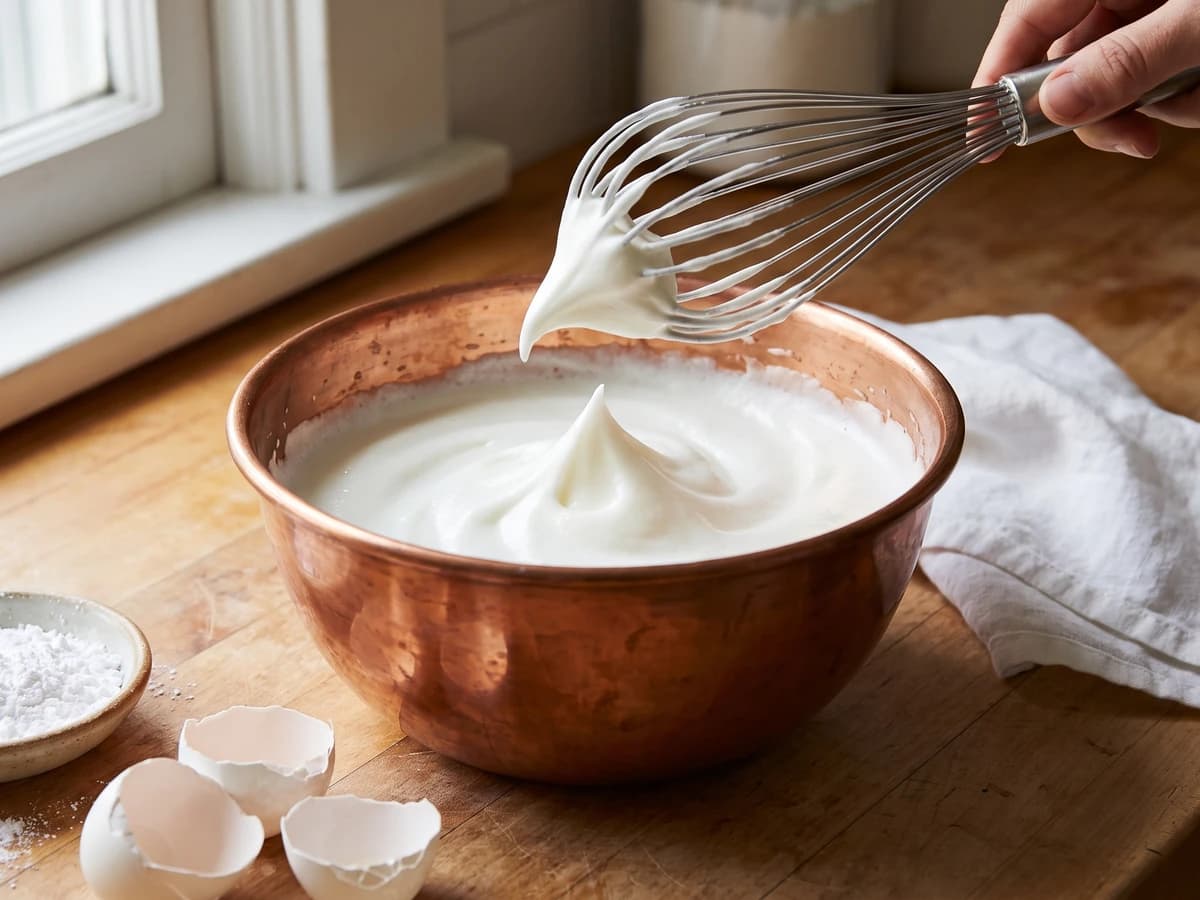
Four whites, one spotless bowl, and a patient change of speed: whisk gently until loosened, then briskly to glossy stiffness, with powdered sugar waiting if the foam begins to granulate.