Chef Joost
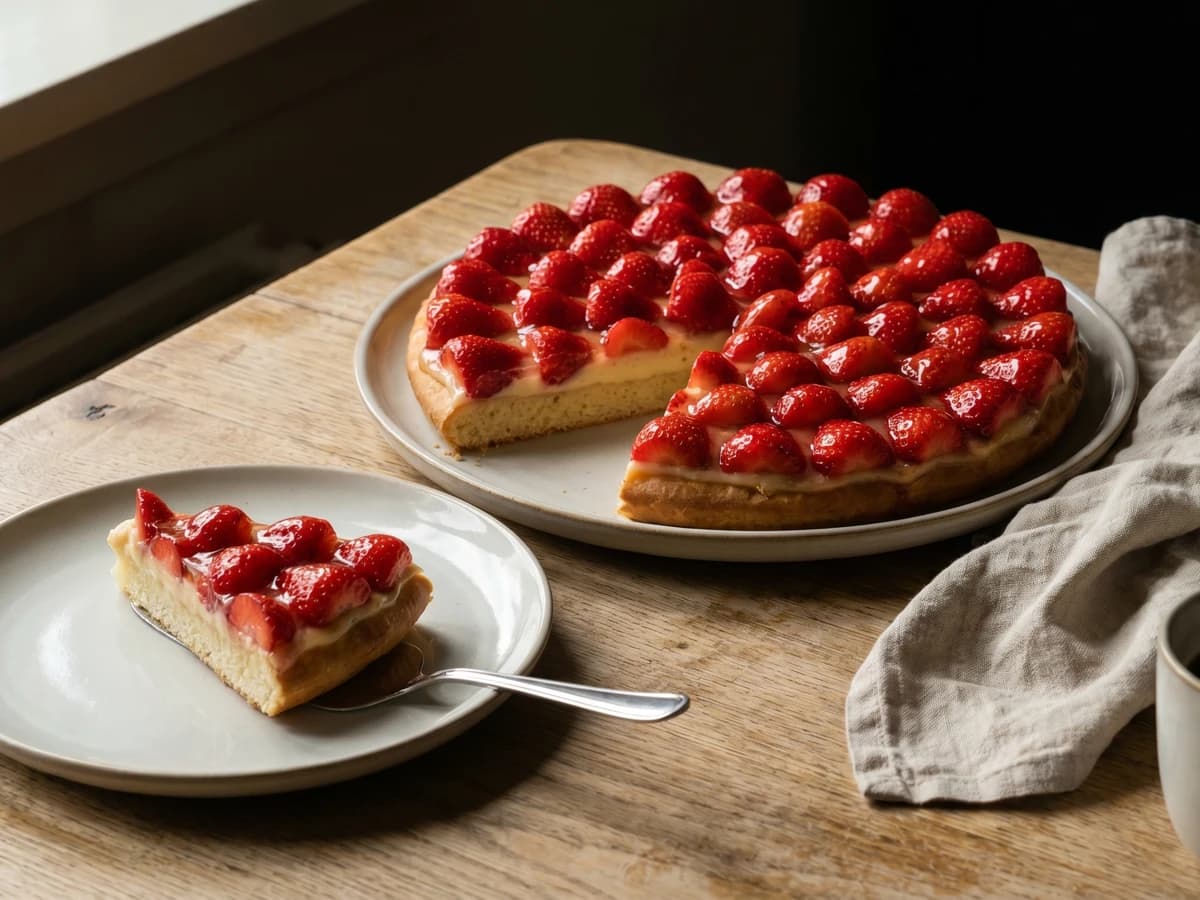
Aardbeienvlaai (Limburg Strawberry Vlaai)
The summer vlaai that politely breaks Limburg's baked-fruit rule: soft gistdeeg, cool pastry cream, and strawberries left fresh because June knows better than the oven.
A cooking platform built around craft, culture, and the stories behind what we eat.

Created by
The name is blunt, the biscuit is plain, and that is the trick: a broad North Holland butter cookie whose quiet snap carries Jewish Holland, Alkmaar bakers, and the coffee tin.
Some biscuits announce themselves with spice, saints, and carved molds. Jodenkoeken do the opposite. They lie flat in the tin, wide as a child's hand, pale gold at the rim, and trust four plain ingredients to do all the talking. That is very Dutch, for obvious reasons: we have hidden whole histories inside things that look like nothing much.
The name already tells you, and then it stops. Jodenkoek means Jewish cookie: jood, Jew, and koek, cake or biscuit. The old explanations point toward Jewish bakers and customers in Holland, especially Amsterdam and Alkmaar, but the archive does not give us a tidy birth certificate. So we don't decorate the story. We say what we know, we keep our manners, and we let the biscuit stand in the ordinary place where Dutch Jewish life and Dutch bakery once met: the counter, the tin, the coffee table.
But let me tell you a secret: plain is the difficult part. If you beat air into the butter, you get a cake pretending to be a cookie. If you bake too pale, you get flour and regret. Hou het altijd simpel, always keep it simple: soft butter, fine sugar, flour, one egg yolk, a long cold rest, and a bake just far enough that the edge goes amber. Then leave them alone until cool. The crispness arrives only when you stop interfering.
Large flat butter biscuits of the zandkoek family appear in Dutch household baking from the seventeenth century, but the specific commercial Jodenkoek became closely associated with North Holland, especially Alkmaar, in the nineteenth century. Alkmaar bakers, including Davelaar and other local firms, spread the biscuit in round tins, and by the twentieth century it was a national coffee-table cookie. The name literally means Jewish cookie, yet its exact origin is not securely documented; the strongest explanations tie it to Jewish bakers or customers in Holland rather than to a separate ritual recipe.
Quantity
175g
softened but cool
Quantity
125g
Quantity
1 large
Quantity
250g
sifted
Quantity
1/4 teaspoon
Quantity
1 teaspoon
| Ingredient | Quantity |
|---|---|
| unsalted buttersoftened but cool | 175g |
| fine caster sugar or witte basterdsuiker (Dutch soft white sugar) | 125g |
| egg yolk | 1 large |
| plain floursifted | 250g |
| fine sea salt | 1/4 teaspoon |
| cold water (optional) | 1 teaspoon |
Beat the softened butter and sugar together with a wooden spoon or mixer on low speed until smooth and pale, about two minutes. Stop there. Do not chase air; Jodenkoeken are meant to lie flat and crisp, not rise like little cakes.
Beat in the egg yolk, then add the flour and salt. Mix just until the dough looks like heavy crumbs and begins to gather when pressed. Knead it three or four times with your hand, no more. If it refuses to come together, touch in one teaspoon of cold water, but only one. A wet dough bakes dull.
Flatten the dough into a thick disc, wrap it, and chill for one hour. This is not ceremony. The flour hydrates, the butter firms, and the dough stops arguing with the rolling pin. A rested dough gives you the clean, broad round that makes a Jodenkoek look like itself.
Heat the oven to 180C, or 160C fan, and line two baking trays with parchment. Roll the dough between two sheets of parchment to about 4mm thick. Cut large rounds with a 9 to 10cm cutter or a small saucer and knife. Re-roll scraps once; after that the dough gets tough and begins to taste of effort.
Lay the rounds on the prepared trays with a little room between them and chill for fifteen minutes while the oven finishes heating. This second cold rest keeps the edges from slumping. The biscuit should spread only a little, like a sensible person making space at the table.
Bake for fourteen to sixteen minutes, rotating the trays halfway through, until the centres look matte and the rims are honey-amber. They will feel slightly yielding when they come out. Leave them on the tray for five minutes, then move them to a wire rack and let them cool completely. Only then do they take on their proper crisp bite.
1 serving (about 32g)
Culinary guides, cultural storytelling, and the editorial depth that makes cooking meaningful.
Discover Culinary ExplorerChef Joost
The summer vlaai that politely breaks Limburg's baked-fruit rule: soft gistdeeg, cool pastry cream, and strawberries left fresh because June knows better than the oven.

Chef Joost
A Limburg vlaai is not a pie trying to be grand. It is a thin yeast-dough round, fruit-bright and generous, made for birthdays, coffee, and second slices.

Chef Joost
The December bakery counter made small: cold leafed pastry wrapped around lemon-scented amandelspijs, brushed gold, and scattered with almonds so one person gets the whole holiday in both hands.

Chef Joost
A thin Amsterdam cookie carrying a cog ship in its name: caramelized butter dough, almond nougatine, and a 1934 contest that turned municipal pride into something for coffee.