
Chef Takumi
Awamori Mizuwari (泡盛水割り, awamori with water)
Awamori mizuwari is not a trick of the bar. It is three parts awamori, seven parts cold water, and enough patience to let the black-kōji aroma open.
A cooking platform built around craft, culture, and the stories behind what we eat.
Created by
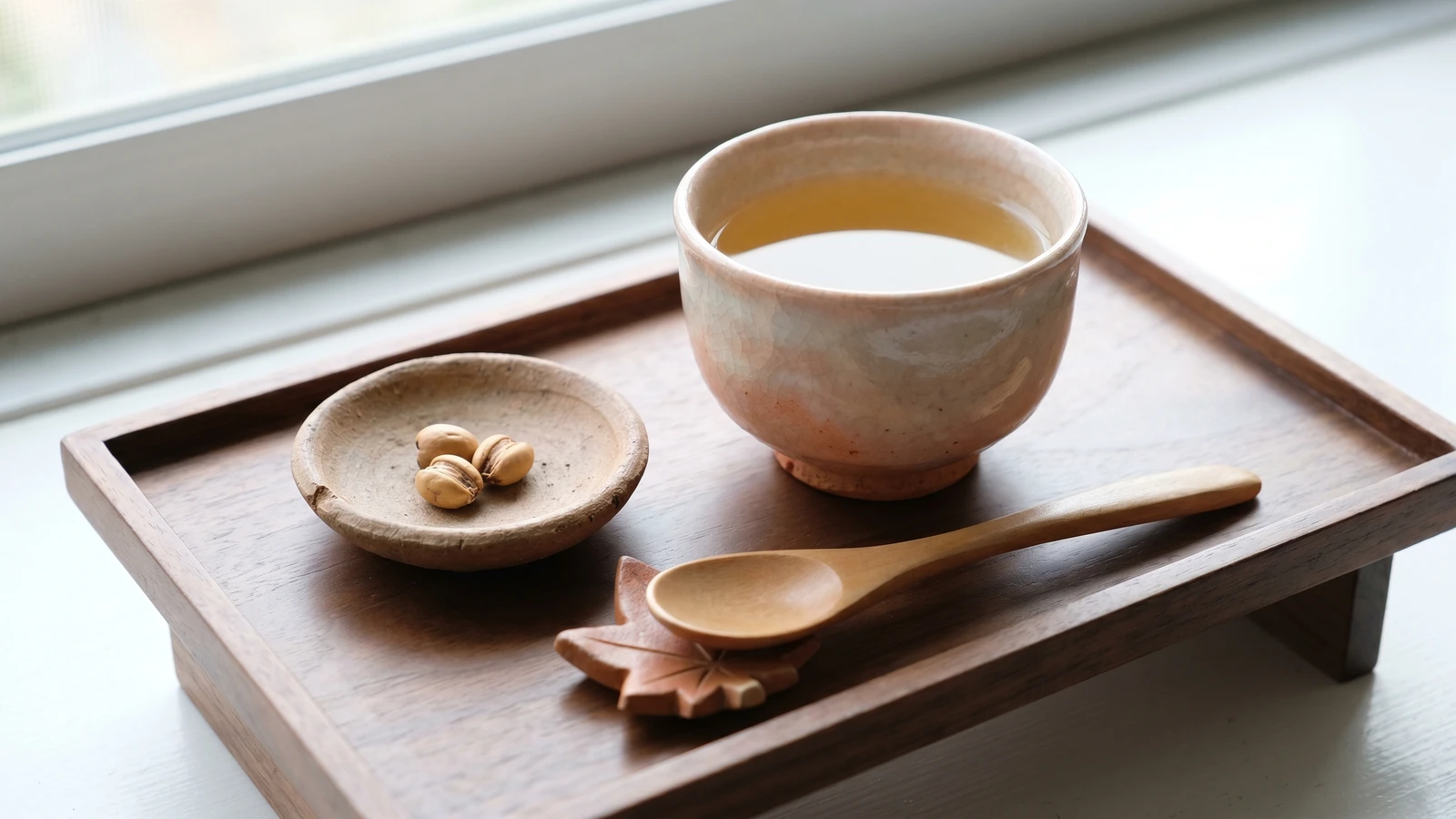
Hatomugi-cha looks like a medicinal tea and drinks like roasted grain in a cup: pale, clean, faintly nutty, and easier to make than the label would have you believe.
The name does this tea no favors. Job's tears sounds mournful in English, and some labels tuck hatomugi-cha beside the bitter remedies, where innocent grains go to frighten polite people. The cup itself is gentler than that: pale amber, clean, a little nutty, with the dry sweetness of roasted grain and nothing heavy behind it.
The one detail that decides it is the roast. Hatomugi, Job's tears, must be roasted deeply enough to smell round and toasty before it meets the water. Raw grains taste flat and grassy, and boiling them harder won't repair that. Start with roasted loose grains if you can. If what you have is raw, toast it slowly in a dry pan until the kernels deepen in color and smell like the bottom of a rice pot after a good meal. That aroma is your signal, not the clock.
After that, the method is almost shy. Simmer the roasted grains briefly, then let them steep off the heat so the flavor opens without turning muddy. Drink it hot when the weather is cold, or chill a pot for the refrigerator when the air is heavy. We serve teas like this as part of the daily table, not as a performance. A cup, a kettle, good grain, and a little patience. Honmono often arrives with less ceremony than people expect.
Hatomugi, the Japanese name for Job's tears or adlay, has long been used in East Asian food and medicine; in Japan the polished kernel is also known in Kampō practice as yokuinin. Hatomugi-cha became especially familiar as a caffeine-free household tea in the twentieth century, often grouped with roasted grain teas such as mugicha but made from a different plant. Its reputation for the skin comes from that medicinal use of yokuinin, though the everyday tea is valued just as much for its clean, roasted taste.
Quantity
1/2 cup
Quantity
5 cups
| Ingredient | Quantity |
|---|---|
| roasted hatomugi (Job's tears grains) | 1/2 cup |
| water | 5 cups |
Use roasted hatomugi if you can find it. The grains should be tan to light brown and smell nutty, not dusty or sour. This is not barley tea, though the two sit like cousins on the shelf. Barley makes mugicha; Job's tears make hatomugi-cha, and the flavor is cleaner and a little rounder.
If your hatomugi is raw or only lightly toasted, put it in a dry skillet over medium-low heat and stir for 6 to 8 minutes, until the grains deepen slightly and smell warm and nutty. Keep the pan moving so they toast, not scorch. A bitter black spot will speak louder than the whole pot, and not politely.
Combine the roasted hatomugi and water in a small pot. Bring to a gentle boil, then lower the heat and simmer for 10 minutes. The water should turn pale gold to light amber and smell cleanly toasted. A hard boil makes the liquid cloudy and rougher, so keep it quiet.
Take the pot off the heat, cover it, and let the grains steep for 10 more minutes. This resting time rounds the flavor without cooking the grains to dullness. Taste it near the end: it should be savory, faintly sweet, and clean, not sharp or medicinal.
Strain the tea through a fine-mesh strainer into cups or a heatproof pitcher. Serve it hot as it is, without sugar, or cool it and refrigerate for a summer pot. If you chill it, let it cool uncovered until warm before sealing the pitcher, so trapped heat doesn't flatten the aroma.
1 serving (about 285g)
Culinary guides, cultural storytelling, and the editorial depth that makes cooking meaningful.
Discover Culinary ExplorerChef Takumi
Awamori mizuwari is not a trick of the bar. It is three parts awamori, seven parts cold water, and enough patience to let the black-kōji aroma open.

Chef Takumi
Hot awamori asks for one small discipline: pour the hot water first, then the spirit. Do that, and the glass turns round, fragrant, and calmer than its strength suggests.

Chef Takumi
Bancha is the honest daily cup: late-season leaves, hot water, a short steep, and a clean amber-green liquor that asks for no ceremony to be good.

Chef Takumi
Whole black soybeans, roasted until their skins split, make a clear amber tea with a roasted sweetness and no caffeine. Drink it plain, then eat the softened beans while they still hold their warmth.