
Chef Klaus
Apfelschorle
Cloudy apple juice, sharp mineral water, and no sugar bowl: the German Schorle that belongs in school bags, beer gardens, picnic baskets, and the table when supper is quick.
A cooking platform built around craft, culture, and the stories behind what we eat.

Created by
The early-summer German Limonade made from hedgerow elderflowers, lemon, sugar, and patience, then poured cold with sparkling water at the garden table.
Holunderblütensirup-Limonade belongs to late May and June, when the elder bushes open along garden fences, field paths, and railway edges. In the south you hear Holler as often as Holunder, and cooks argue for apple juice, wine, or Bowle, a wine-and-fruit punch, before they agree on anything. For Limonade I keep it plain: blossoms, lemon, sugar, water. The hedgerow kept for summer.
The technique is not boiling. You pour hot syrup over clean blossoms and lemon, then let it steep cold and covered. Boil the flowers and you drive off the perfume, and what stays behind tastes green and flat. Das braucht seine Zeit. A day in the cold syrup pulls out the scent without cooking it away.
Pick only open, creamy flower heads on a dry morning, before hard sun burns off the aroma. Shake them for insects, don't wash them under the tap, because the yellow pollen is the flavour and water takes it with it. Strain through cloth, bottle clean, and mix the Limonade to taste with cold sparkling water. Nicht aus dem Glas, not from the bought bottle. This one starts at the bush.
Elder, Holunder in standard German and Holler in parts of Bavaria and Austria, has long sat in the German farm and garden larder because both flowers and berries could be preserved as syrup, jelly, soup, or wine. The use of citric acid in household syrups spread widely in the 19th and 20th centuries with pharmacy and grocery access, giving home cooks a sharper, longer-keeping Sirup without relying only on lemons. The regional split is old and practical: northern cooks often keep elderflower light in cold drinks, while the south folds Holler into fried blossoms, cakes, and sweet kitchen remedies.
Quantity
25
fully open, unsprayed
Quantity
1 litre
Quantity
1kg
Quantity
2
thinly sliced
Quantity
20g
Quantity
to serve
Quantity
to serve
Quantity
to serve
| Ingredient | Quantity |
|---|---|
| fresh elderflower headsfully open, unsprayed | 25 |
| water | 1 litre |
| granulated sugar | 1kg |
| organic lemonsthinly sliced | 2 |
| citric acid | 20g |
| cold sparkling water | to serve |
| ice cubes (optional) | to serve |
| fresh lemon slices (optional) | to serve |
Pick elderflower heads on a dry morning when the blossoms are creamy, open, and fragrant. Avoid roadside bushes and anything sprayed. Shake each head gently over the sink so insects leave, but don't rinse the flowers; the yellow pollen carries the scent, and water steals it before the syrup does.
Put the water and sugar in a pot and heat gently, stirring until the sugar dissolves. Let it come just to a clear syrup, then take it off the heat. You want the sugar dissolved and the liquid clean, not caramelised; dark sugar flavour would sit on top of the elderflower and bully it.
Put the elderflowers, lemon slices, and citric acid into a clean glass or ceramic bowl, then pour the hot syrup over them. Press the blossoms under the liquid, cover, and leave in the refrigerator for 24 hours. The heat opens the flowers, the cold steeping preserves the perfume, and boiling the blossoms would flatten the whole drink.
Strain the syrup through a fine sieve lined with clean cloth into a pot, pressing lightly but not wringing hard; hard squeezing pushes bitter green notes from the stems into the syrup. Bring the strained syrup briefly back to a boil, then bottle it in sterilised bottles while hot so it keeps clean.
For each glass, pour 2 to 3 tablespoons of Holunderblütensirup over ice, add 200ml cold sparkling water, and stir once. Taste before adding more syrup. The drink should smell of elderflower first, then lemon, with the sparkle cutting the sugar. Schön ist, was schmeckt.
1 serving (about 280g)
Culinary guides, cultural storytelling, and the editorial depth that makes cooking meaningful.
Discover Culinary ExplorerChef Klaus
Cloudy apple juice, sharp mineral water, and no sugar bowl: the German Schorle that belongs in school bags, beer gardens, picnic baskets, and the table when supper is quick.

Chef Klaus
Frankfurt's long drink for a warm table: dry Apfelwein, cold mineral water, and the ribbed Geripptes glass that tells you where you are.

Chef Klaus
Berlin's summer glass: sharp, pale Berliner Weisse softened with a red raspberry or green woodruff Schuss, cold enough to bead the glass and never from bottled syrup.
Chef Klaus
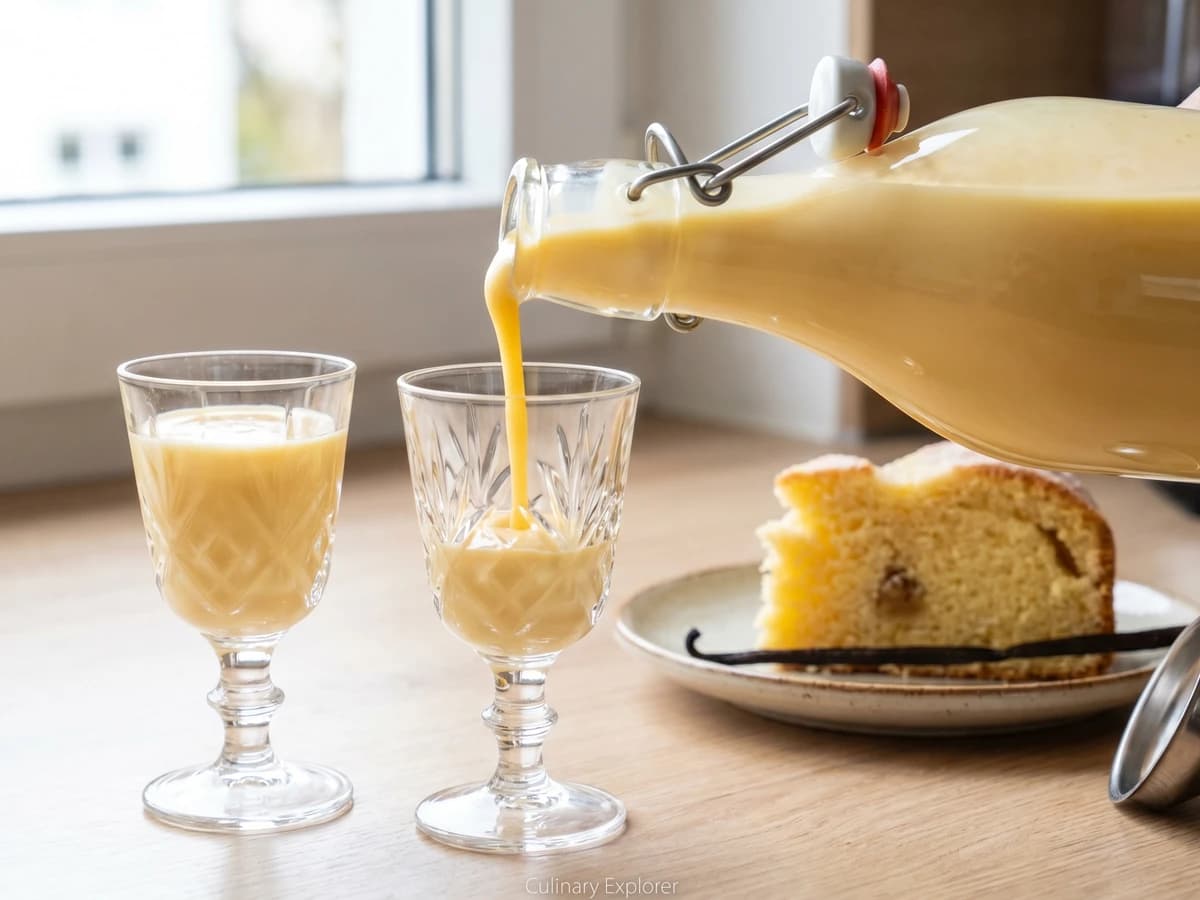
The Easter bottle from yolks, sugar, cream, and good spirit, beaten warm just enough to thicken, then cooled into a yellow liqueur for cake, coffee, and small glasses.