
Chef Lupita
Acúmara Tatemada al Comal
Michoacán's Lake Pátzcuaro acúmara, a whole kurucha from the lago tatemada on a comal de leña and served with chile perón atápakua, corn tortillas, and P'urhépecha discipline.
A cooking platform built around craft, culture, and the stories behind what we eat.
Created by
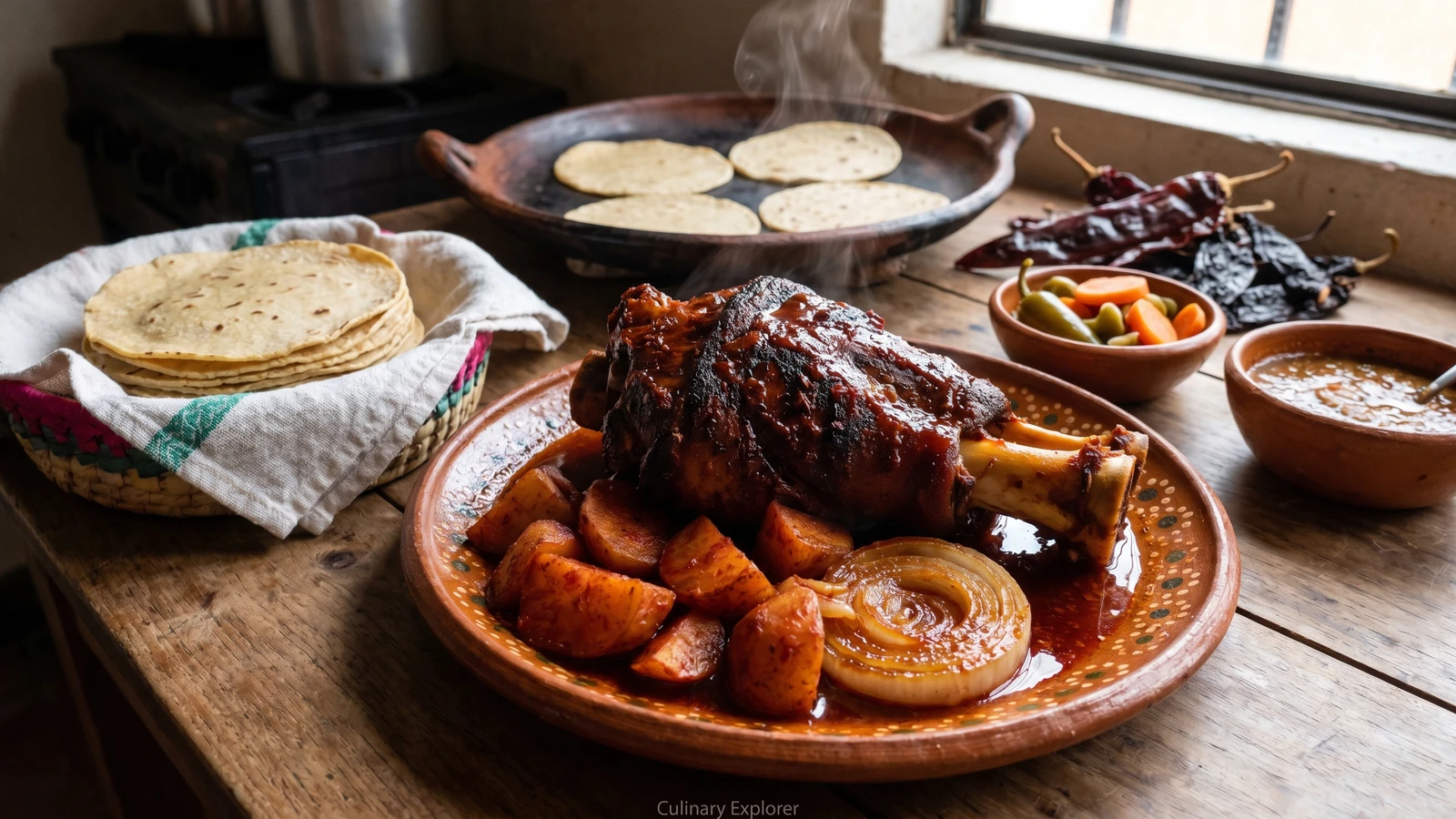
Aguascalientes chamorro al horno, pork shank marinated overnight in guajillo-pasilla adobo with naranja agria, then baked low until the skin crackles and the bone gives up clean.
Aguascalientes sits in the Bajío and the north-central plateau, small on the map and stubborn at the table. This chamorro al horno is hidrocálido food, pork shank baked slowly in a guajillo-pasilla adobo until the skin tightens and the meat releases from the bone. At the Feria de San Marcos, you understand why the state does not need to shout. The cazuela does the talking.
The chiles matter. Guajillo gives clean red color and a little brightness. Pasilla gives dark fruit and depth. A little ancho rounds the sauce without taking over. Naranja agria cuts through the pork fat, and manteca de cerdo carries the adobo into the meat. La manteca es el sabor. Vegetable oil sits on the surface like it was never invited.
I learned this version from a señora near the Mercado Terán who baked hers overnight, the old practical way, because the oven was already warm and the family would arrive hungry after feria errands. She served it on terracotta plates from Aguascalientes, with potatoes stained red from the adobo and corn tortillas wrapped in a cloth-lined chiquihuite. Nothing precious. Nothing decorated. La cocina no es decoración, es trabajo.
Understand the principle before you start: shank is not tender until time makes it tender. The adobo seasons, the oven softens, the final heat crackles the skin. Cada estado, su propia cocina.
Chamorro al horno in Aguascalientes belongs to the Bajío tradition of slow roasted pork dishes tied to family gatherings, cantina tables, and the Feria Nacional de San Marcos, whose modern fair calendar grew from the San Marcos fair established in the 19th century. The dish reflects the region's inland pantry: dried chiles such as guajillo and pasilla, pork from ranching economies, sour citrus or vinegar for preservation and balance, and clay oven cooking adapted to home kitchens. Unlike northern beef shank preparations, the hidrocálido chamorro is pork, marinated in chile adobo and baked for hours until the skin and bone announce the dish.
Quantity
4, about 1 1/4 pounds each
Quantity
2 tablespoons
Quantity
10
stemmed and seeded
Quantity
4
stemmed and seeded
Quantity
2
stemmed and seeded
Quantity
1/2 medium
roughly chopped
Quantity
6
peeled
Quantity
1 cup
Quantity
1/4 cup
Quantity
2 tablespoons
melted
Quantity
1 tablespoon
Quantity
1 teaspoon
Quantity
6
Quantity
3
Quantity
1 small piece, about 1 inch
Quantity
2
Quantity
1 tablespoon
grated
Quantity
1 cup
Quantity
2 pounds
halved
Quantity
1 large
sliced thick
Quantity
for serving
Quantity
for serving
Quantity
for serving
| Ingredient | Quantity |
|---|---|
| skin-on pork shanks (chamorros) | 4, about 1 1/4 pounds each |
| kosher salt | 2 tablespoons |
| dried chile guajillostemmed and seeded | 10 |
| dried chile pasillastemmed and seeded | 4 |
| dried chile anchostemmed and seeded | 2 |
| white onionroughly chopped | 1/2 medium |
| garlic clovespeeled | 6 |
| fresh naranja agria juice | 1 cup |
| apple cider vinegar | 1/4 cup |
| pork lard (manteca de cerdo)melted | 2 tablespoons |
| dried Mexican oregano | 1 tablespoon |
| whole cumin seed | 1 teaspoon |
| whole black peppercorns | 6 |
| whole cloves | 3 |
| Mexican cinnamon | 1 small piece, about 1 inch |
| bay leaves | 2 |
| piloncillograted | 1 tablespoon |
| pork stock or water | 1 cup |
| small waxy potatoeshalved | 2 pounds |
| white onionsliced thick | 1 large |
| warm corn tortillas (optional) | for serving |
| pickled jalapenos and carrots (optional) | for serving |
| salsa de molcajete (optional) | for serving |
Pat the pork shanks dry and rub them all over with the kosher salt, getting into the folds near the bone. Set them uncovered in the refrigerator for at least 8 hours, preferably overnight. The salt seasons the meat deeply and dries the skin so it can crackle later. Chamorro hidrocálido is pork shank, not beef. Start there or you are already lost.
Heat a dry comal over medium. Toast the guajillo, pasilla, and ancho chiles separately, 20 to 30 seconds per side, pressing them lightly with tongs until the skins puff and the color deepens. The guajillo gives the red color, the pasilla gives the dark fruit, and the ancho rounds the adobo. Do not blacken them. Burned chile makes bitter adobo, and no amount of naranja agria will fix it.
Put the toasted chiles in a bowl and cover them with hot water for 20 minutes. Drain them. Blend the softened chiles with the chopped onion, garlic, naranja agria juice, vinegar, melted lard, oregano, cumin seed, peppercorns, cloves, cinnamon, bay leaves, piloncillo, and pork stock until completely smooth. Strain through a fine-mesh sieve. You want a deep brick-red adobo that coats a spoon.
Rub the adobo over every shank, pushing it into the skin cuts and around the bone. Cover and refrigerate at least 8 hours, or overnight. No me vengas con atajos. The chile, sour orange, and salt need time to enter the meat. A quick brush of sauce on the outside gives you painted pork, not chamorro al horno.
Heat the oven to 275F. Spread the thick onion slices in a large clay cazuela or heavy roasting pan. Add the halved potatoes and set the marinated shanks on top, skin side exposed where possible. Pour any remaining adobo around the meat, not over the skin. Cover tightly with a lid or foil. The onions keep the pork from scorching and the potatoes drink the adobo as the fat renders.
Bake for 5 to 6 hours, turning the shanks once halfway through, until the meat pulls back from the bone and a fork slides in with almost no resistance. Keep the oven low. The collagen in the shank needs time, not bullying. This is why families in Aguascalientes put the pan in at night and wake to meat ready for the noon table.
Uncover the pan and raise the oven to 450F. Spoon the red fat from the bottom of the cazuela over the shanks, leaving the skin exposed. Roast 20 to 30 minutes more, until the skin tightens, blisters in spots, and turns dark mahogany at the edges. Watch closely at the end. You want crisp skin, not charred chile.
Rest the chamorros for 15 minutes before serving. Set one shank per plate with the adobo-soaked potatoes and onions, then spoon the glossy pan juices around, not over, the crackled skin. Serve with warm corn tortillas, pickled jalapenos and carrots, and salsa de molcajete. This is a knife-and-tortilla dish. Saber cocinar es saber vivir.
1 serving (about 700g)
Culinary guides, cultural storytelling, and the editorial depth that makes cooking meaningful.
Discover Culinary ExplorerChef Lupita
Michoacán's Lake Pátzcuaro acúmara, a whole kurucha from the lago tatemada on a comal de leña and served with chile perón atápakua, corn tortillas, and P'urhépecha discipline.

Chef Lupita
Puebla's weekday adobo of pork shoulder braised in a thick guajillo and ancho sauce sharpened with vinegar, cumin, and clove. The deep red of a market spice stall, the dish a poblana cooks without thinking.

Chef Lupita
Loreto's pit-roasted clams, planted hinge-up in beach sand and tatemadas under a fast fire of dried romerillo brush, the resinous Baja desert shrub that gives this dish its smoke.

Chef Lupita
Oaxaca's eighth mole, the silky, almond-and-cinnamon almendrado, served over poached chicken. Mild, sweet, restrained, and a quiet rebuttal to anyone who thinks Mexican food has to be hot to be Mexican.