
Chef Juliette
Omelette à l’Écossaise
A creamy omelette aux fines herbes closes around smoked-salmon-wrapped herring milts, gently poached in butter. Have the filling ready, then roll the eggs while they still shine.
A cooking platform built around craft, culture, and the stories behind what we eat.
Created by
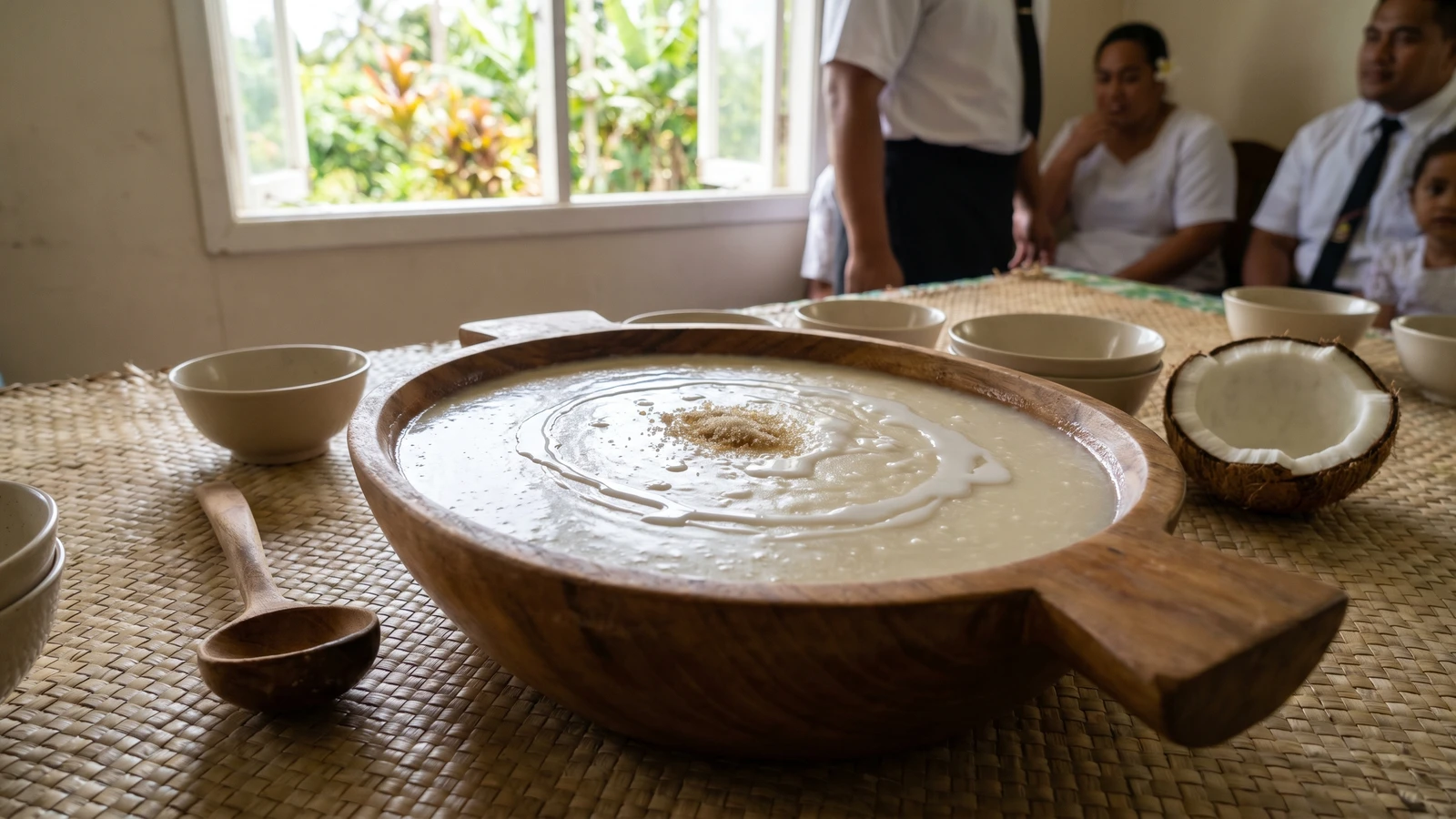
A soft Tongan morning porridge of white flour stirred into lolo, coconut milk, until smooth and warm, sweetened to taste, and shared from the family pot.
The first time a Tongan auntie set heu heu in front of me, she didn't make a speech. She just pushed the bowl closer and said eat while it's warm. That tells you plenty. This is Tonga's home food, not feast food: flour, lolo, the coconut milk, sugar if you want it, and the hand that keeps stirring so the pot feeds everybody without showing off.
Heu heu sits on the everyday side of Tonga's table, near the soft mā, the bread, the fried keke ʻisite, and the sweet lolo that pools over faikakai at the end of a feast. It isn't an old canoe-crop dish like talo, taro, or mei, breadfruit. Wheat came later with traders, missions, and church tables, and Tonga did what island kitchens do: took what arrived, put it in the home pot, and made it feed the kāinga, the family.
So cook this with respect, but don't make it precious. Whisk the flour cold first so it doesn't clump, then stir it into the hot coconut and stay with it. The porridge thickens slow, from thin milk to glossy cream, and that steady hand is the whole lesson. Same ocean, different bowl, the cousins have their own soft morning foods too, Sāmoan koko alaisa, Cook Islands porridge with coconut, Hawaiian poi with milk and sugar on a weekday. Name each one. Let Tonga's be Tonga's.
Heu heu belongs to Tonga's post-contact wheat kitchen, the same living table that made room for mā, soft bread, keke ʻisite, and other flour foods alongside older staples like talo, ʻufi, and mei. Coconut stayed central: lolo, coconut milk or cream, tied the newer flour to the older island grammar of richness, sharing, and feeding the whole kāinga. It is not chiefly ceremony or ʻumu work, but everyday comfort from the home pot, shaped by Tonga's church, trade, and family kitchens.
Quantity
1 cup
Quantity
1 cup
for the slurry
Quantity
2 cups
preferably full-fat
Quantity
1 cup
plus more as needed
Quantity
2 to 4 tablespoons
to taste
Quantity
1/4 teaspoon
Quantity
1 teaspoon
| Ingredient | Quantity |
|---|---|
| all-purpose white flour | 1 cup |
| cool waterfor the slurry | 1 cup |
| coconut milk (lolo niu)preferably full-fat | 2 cups |
| waterplus more as needed | 1 cup |
| sugarto taste | 2 to 4 tablespoons |
| fine sea salt | 1/4 teaspoon |
| vanilla extract (optional) | 1 teaspoon |
Whisk the flour with the cool water in a bowl until it turns smooth and pourable, with no dry pockets hiding at the bottom. This little cold start saves the pot from lumps. No need make it fancy, just make it smooth.
In a heavy saucepan, bring the coconut milk, the extra cup of water, sugar, and salt to a gentle boil over medium heat. Stir so the coconut doesn't catch on the bottom. You want it fragrant and moving, not angry and spitting.
Lower the heat to medium-low and pour the flour slurry into the hot coconut in a thin stream, whisking the whole time. The pot will look loose at first, then it will begin to thicken from the edges inward. Stay with it. This is the hand-work of the dish.
Switch to a wooden spoon and cook 8 to 12 minutes, stirring often, until the heu heu loses the raw flour smell and turns glossy, thick, and soft enough to fall slowly from the spoon. If it tightens too much, splash in water a few tablespoons at a time. If it tastes flat, add a pinch more salt before more sugar.
Stir in the vanilla if you're using it, then taste for sweetness. Ladle the porridge into bowls while warm, or set the pot in the middle and let everyone take their share. Tonga's everyday food doesn't need posing. It just needs enough for one more.
1 serving (about 260g)
Culinary guides, cultural storytelling, and the editorial depth that makes cooking meaningful.
Discover Culinary ExplorerChef Juliette
A creamy omelette aux fines herbes closes around smoked-salmon-wrapped herring milts, gently poached in butter. Have the filling ready, then roll the eggs while they still shine.

Chef Juliette
Four tender herbs, hot butter, and two eggs per pan: this rolled omelette teaches the quick hand and good judgment that keep the outside pale and the center creamy.

Chef Juliette
Four batters, one lesson: let the flour drink deeply before cooking, then spread the batter thinly in butter for crêpes and pannequets that bend without becoming tough.

Chef Juliette
Crêpes au Couvent trap ripe Williams pear dice between two thin pours of sweet batter, then turn in one clean toss and reach the table butter-gold, powdered, and burning hot.