
Chef Isabel
Acedías Fritas de Cádiz
Acedías fritas belong to Cádiz: tiny wedge sole, salted, dusted in frying flour, and dropped into very hot olive oil so the rims crisp while the fish stays tender.
A cooking platform built around craft, culture, and the stories behind what we eat.
Created by
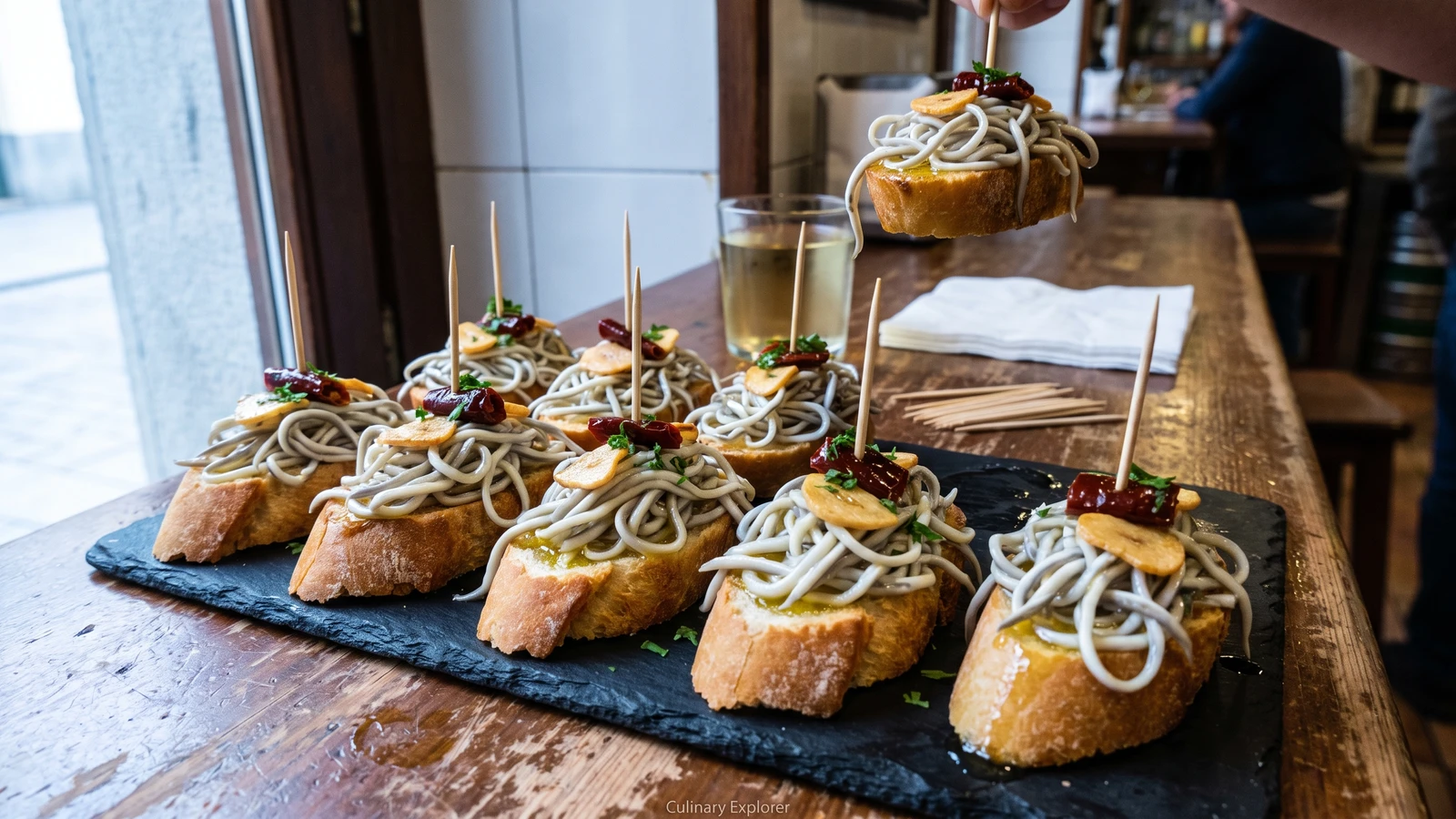
This Basque pintxo is built on gulas, garlic, guindilla, and good olive oil, heaped on bread while glossy and warm. Keep the oil below a hard sizzle and it behaves.
Gulas al ajillo is Basque in the way pintxos are Basque: small, exact, and meant to sit proudly on a slice of bread with a toothpick through it. The old luxury behind it is angulas, baby eels, cooked simply with garlic, oil, and guindilla. Gulas are the everyday substitute, made to echo their shape and bite, and they let the dish come back to the home table without emptying your purse.
The method that decides it is the garlic oil. Warm the garlic slowly in olive oil until it turns pale gold and smells sweet, then add the guindilla and the gulas only long enough to heat through. If the garlic goes brown, it tastes bitter and bullies the whole pintxo. Keep the pan gentle. This is five minutes of cooking, not five minutes of showing off.
If you can find true angulas, cook them the same way and treat them with even more restraint. Most of us will use gulas, and that's honest. Far from the Basque Country, look for chilled or frozen gulas in a Spanish or Portuguese shop; if you must use surimi strands cut thin, the flavor will be milder and the texture softer, so add a little more garlic oil and do not overcook them.
Pile them on toasted bread at once, with a little of the oil soaking into the crumb and one small guindilla on top if you like heat. Siempre sale, si lo sigues. My Margin beside this one says only: "no dorar el ajo," don't brown the garlic.
Gulas al ajillo belongs to the Basque pintxo bar, especially the cooking around Bilbao and Donostia, where small slices of bread carry precise little dishes meant to be eaten in two bites. Its model is angulas a la bilbaína, baby eels cooked in olive oil with garlic and guindilla, once a prized winter and Christmas dish along the northern rivers. As true angulas became scarce and costly, gulas gave home cooks and bars a practical way to keep the flavor pattern of garlic, chile, oil, and bread on the table.
Quantity
250g
Quantity
8 slices
about 1.5cm thick
Quantity
60ml
Quantity
4
thinly sliced
Quantity
1
broken in half
Quantity
1 tablespoon
chopped
Quantity
to taste
| Ingredient | Quantity |
|---|---|
| chilled or thawed frozen gulas | 250g |
| baguette or barra slicesabout 1.5cm thick | 8 slices |
| extra virgin olive oil | 60ml |
| garlic clovesthinly sliced | 4 |
| dried guindilla chile or small dried red chilebroken in half | 1 |
| flat-leaf parsley (optional)chopped | 1 tablespoon |
| fine salt | to taste |
Toast the bread slices until firm and lightly golden, not dry as a board. Set them on a plate or board ready for topping, because once the gulas are warm they should go straight onto the bread.
Put the olive oil and sliced garlic in a small frying pan over low heat. Let the garlic warm slowly for 2 to 3 minutes, moving it now and then, until it is pale gold and sweet-smelling. Do not brown it. Brown garlic turns bitter, and there is nowhere for bitterness to hide in this pintxo.
Add the broken guindilla to the oil and let it perfume the pan for 20 to 30 seconds. You want a clean prickle of heat, not a scorched chile taste.
Add the gulas and a small pinch of salt. Turn them through the garlic oil with tongs or two forks for 1 to 2 minutes, just until glossy and warmed through. They are already cooked, so you are seasoning them, not frying them.
Spoon the gulas onto the toasted bread, letting a little garlic oil soak into each slice. Add a few garlic chips on top and a pinch of parsley if using. Pin each one with a toothpick and serve at once, while the oil is still bright and glossy.
1 serving (about 50g)
Culinary guides, cultural storytelling, and the editorial depth that makes cooking meaningful.
Discover Culinary ExplorerChef Isabel
Acedías fritas belong to Cádiz: tiny wedge sole, salted, dusted in frying flour, and dropped into very hot olive oil so the rims crisp while the fish stays tender.

Chef Isabel
Afuega'l Pitu Roxu is Asturias in a small cheese: cow's milk set slowly to a dense curd, drained without squeezing, then kneaded with pimentón until it turns orange and grips the throat.

Chef Isabel
Albergínies farcides are Mallorca's summer stuffed aubergines: tender boiled shells, a slow pork sofrito with moraduix, and a plain breadcrumb cap baked until the top turns crisp and golden.

Chef Isabel
Carxofes farcides are Catalan stuffed artichokes: tender hearts filled with jamón, slow sweet onion, and breadcrumbs, then baked in a light creamy sauce until the tops turn golden.