
Chef Lupita
Arroz a la Oaxaqueña
Oaxaca's red rice, stained with tomato and fried in lard, steamed with carrots, ejotes, black beans, and epazote. The side that anchors a Oaxacan family meal and earns its place beside the main.
A cooking platform built around craft, culture, and the stories behind what we eat.
Created by
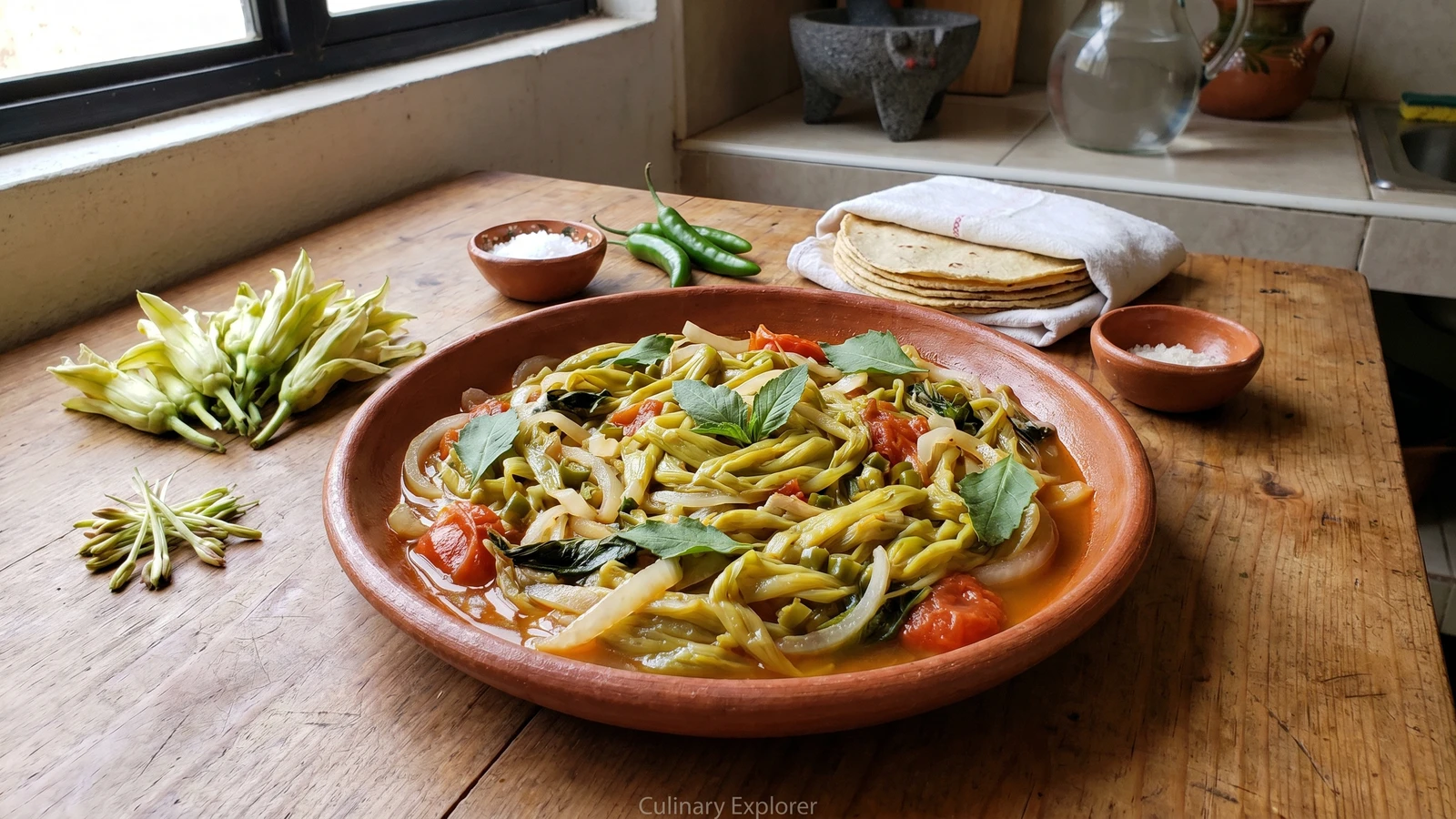
Hidalgo's spring gualumbos come from the quiote of maguey pulquero, cleaned by hand, blanched, and fried in lard with tomato, serrano, onion, and epazote until the flowers turn tender.
Hidalgo, Valle del Mezquital. That is where this dish stands, in the dry country around Ixmiquilpan, Actopan, Chilcuautla, and Santiago de Anaya, where maguey is not decoration. It gives aguamiel, pulque, pencas for barbacoa, fiber, shade, and in spring, the gualumbos that climb the quiote like tight green-yellow bells.
Gualumbos are not squash blossoms. They are maguey flowers, and they ask for different discipline. You clean out the bitter pistils and stamens by hand. You blanch the petals to tame the sap. Then you fry them in manteca de cerdo with white onion, chile serrano, jitomate, and epazote. The serrano gives brightness. It does not turn the dish into a punishment. Not all Mexican food is trying to burn your mouth. That idea is lazy.
I learned this guiso from hñähñu women who could clean a basket of flowers faster than my students can peel garlic. They used a clay cazuela, not because it was picturesque, but because that was what the kitchen had and what the dish knew. The flowers went to the table in the same cazuela, with warm corn tortillas folded in a cloth. Nothing precious. Nothing plated like jewelry. La cocina no es decoracion, es trabajo.
If the market has young gualumbos, cook them that day. If they are open, yellowed, and bitter, leave them. Mexican grandmothers cook with what the mercado is selling today, not what a calendar demands. Saber cocinar es saber vivir.
Gualumbos, called nthembo in hñähñu communities of the Valle del Mezquital, are the edible flowers of maguey pulquero, especially Agave salmiana and Agave mapisaga. A 2022 Botanical Sciences study of edible flowers sold in Pachuca markets recorded that cooks remove the pistils, stamens, and ovary because those parts make the dish bitter, then boil the petals briefly before guisarlos a la mexicana. The dish belongs to central Mexico's pulque country, where the maguey has served as food, drink, building material, fiber, and cooking wrapper since long before state borders gave the region the name Hidalgo.
Quantity
12 ounces cleaned, or about 1 1/2 pounds uncleaned clusters
pistils, stamens, ovary, and tough stems removed
Quantity
8 cups
for blanching
Quantity
1 tablespoon, plus more to taste
Quantity
3 tablespoons
Quantity
1 medium
finely chopped
Quantity
1
stemmed and finely chopped
Quantity
2 medium
finely chopped
Quantity
2 large sprigs
leaves chopped
Quantity
for serving
warmed
| Ingredient | Quantity |
|---|---|
| fresh gualumbos (maguey flowers)pistils, stamens, ovary, and tough stems removed | 12 ounces cleaned, or about 1 1/2 pounds uncleaned clusters |
| waterfor blanching | 8 cups |
| sal de grano | 1 tablespoon, plus more to taste |
| manteca de cerdo (pork lard) | 3 tablespoons |
| white onionfinely chopped | 1 medium |
| fresh chile serranostemmed and finely chopped | 1 |
| jitomates guaje or Roma tomatoesfinely chopped | 2 medium |
| fresh epazoteleaves chopped | 2 large sprigs |
| hand-pressed corn tortillas (optional)warmed | for serving |
Pull the gualumbos from their clusters and work one flower at a time. Pinch away the stiff base, then remove the pale pistil, stamens, and little ovary from the center. Keep the tender petals. This is the work the señoras in the Valle del Mezquital do before the pan ever touches the fire. Leave the centers in and the whole guiso turns bitter. No me vengas con atajos.
Put the cleaned petals in a bowl of cool water and swish them with your hands. Lift them out instead of pouring the bowl through a strainer, so any grit stays at the bottom. Drain in a colander. The flowers should feel tender but still firm, not slimy, not dark, not tired.
Bring 8 cups water to a boil in a medium pot and add the tablespoon of sal de grano. Drop in the gualumbos and cook for 5 minutes, just until the color lightens and the petals soften. Drain immediately and discard the water. That water carries the bitterness and the harsh sap. Do not use it for the guiso.
Heat the manteca de cerdo in a wide clay cazuela or heavy skillet over medium heat. Add the onion and chile serrano. Fry for 4 to 5 minutes, stirring often, until the onion turns translucent at the edges and the serrano smells green and sharp. La manteca es el sabor. Vegetable oil will cook the flowers, yes, but it will not give you the same Hidalgo table.
Add the chopped jitomate and a good pinch of salt. Cook for 6 to 8 minutes, scraping the bottom of the cazuela, until the tomato collapses, its juices reduce, and the lard turns orange at the edges. You want a thick sofrito, not watery tomato floating around the flowers.
Add the drained gualumbos to the cazuela and fold them through the tomato, onion, and serrano. Lower the heat, cover, and cook for 10 to 12 minutes. Stir once or twice. The petals should be tender with a little chew, like a vegetable that still remembers the field. If the pan gets dry, add one tablespoon of clean water, not the blanching water.
Stir in the chopped epazote during the last 2 minutes. Taste for salt. Turn off the heat and let the guiso sit covered for 5 minutes so the epazote perfumes the flowers without turning dull. Serve in the same cazuela with warm corn tortillas. Flour tortillas belong to another geography. This is Hidalgo. Cada estado, su propia cocina.
1 serving (about 200g)
Culinary guides, cultural storytelling, and the editorial depth that makes cooking meaningful.
Discover Culinary ExplorerChef Lupita
Oaxaca's red rice, stained with tomato and fried in lard, steamed with carrots, ejotes, black beans, and epazote. The side that anchors a Oaxacan family meal and earns its place beside the main.

Chef Lupita
Sinaloa's home-cook white rice topped with cold cubes of cream cheese that soften into the warm grain, finished with crema and a sprinkle of chiltepin at the table. The trick that makes a side dish feel like a small luxury.

Chef Lupita
Sonora's white rice, toasted in butter and steamed with sweet corn and tender peas. The clean, quiet partner to a plate of carne asada, not the red rice of central Mexico.

Chef Lupita
Yucatán's white rice with sweet corn kernels, toasted in lard with garlic and onion. The quiet base that holds up against the peninsula's bold achiote-stained stews.