Chef Lupita
Birria Tacos with Consome
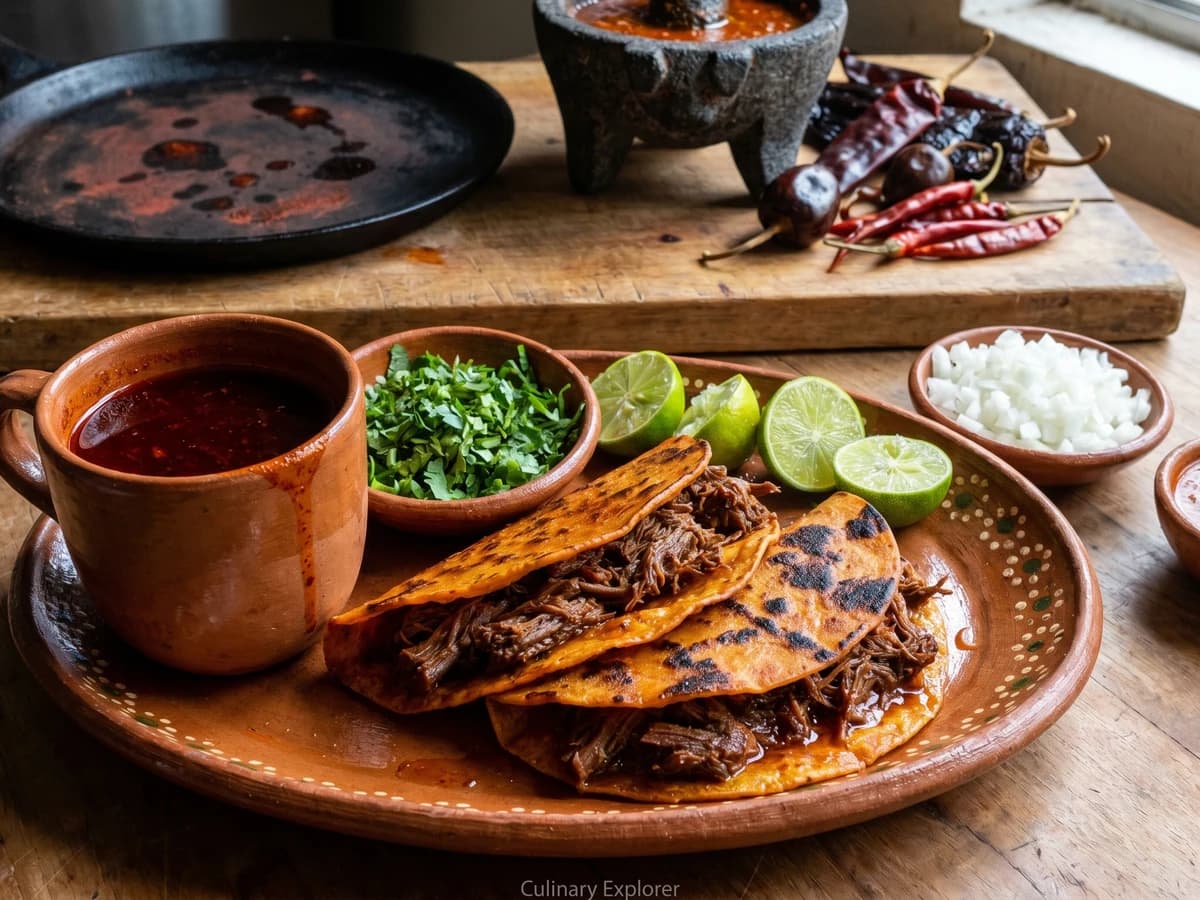
Jalisco's goat birria, born around Cocula and carried into Guadalajara's markets, slow-braised in ancho, guajillo, cascabel, and chile de arbol, then tucked into corn tortillas crisped in its own red fat.
A cooking platform built around craft, culture, and the stories behind what we eat.

Created by
Oaxaca's double-carb street breakfast: a banana-leaf tamal dark with thirty-ingredient mole negro and shredded chicken, tucked inside a crusty bolillo and finished with smoky salsa morita, sold by senoras at the bus stand before dawn.
This is Oaxaca at seven in the morning. A bus stand, a comal, a senora with a basket of tamales wrapped in banana leaf and a bag of bolillos still warm from the panaderia down the street. She splits the bread, tucks a tamal inside, spoons salsa morita over the top. Hands it to you wrapped in a paper napkin. That's breakfast. Double carb, double comfort, and if you think that sounds excessive, you haven't worked a morning shift in Oaxaca.
The guajolota is a chilanga invention. Mexico City's working-class breakfast, the torta de tamal, bread stuffed with tamal, built for people who eat on the bus and need calories that last until lunch. But the Oaxacan version is a different animal. You are not putting a corn-husk tamal of salsa verde into a telera. You are putting a banana-leaf tamal of mole negro, the most complex sauce in Mexican cooking, into a crusty bolillo. The banana leaf gives the masa an earthy, green quality that corn husk cannot touch. The mole negro brings thirty-plus ingredients and two days of work. The bolillo just holds it together and adds crunch. Cada estado, su propia cocina.
The mole negro is the heart of this recipe and the reason it takes patience. Chilhuacle negro, the dried chile that grows almost exclusively in Oaxaca's Canada region, gives the sauce its near-black color. Burned chile seeds and a coal-black tortilla give it that bitter depth that separates mole negro from every other mole in the country. You cannot shortcut this. You cannot substitute chipotles and dark chocolate and call it mole negro. The women in the Central de Abastos market in Oaxaca city would not recognize that as their sauce, and neither will I. No me vengas con atajos.
My mother did not make mole negro. She was from Jalisco and her moles were different. But she had a page in her notebook, written in someone else's handwriting, that said "mole negro, Sra. Concepcion, mercado de Tlacolula" with a list of chiles and a note in the margin: "quemar las semillas hasta que esten carbon." Burn the seeds until they are charcoal. That one line told me everything about the seriousness of this sauce. Saber cocinar es saber vivir.
The torta de tamal, colloquially called guajolota in Mexico City (the etymology is debated, possibly derived from 'guajolote,' turkey, or simply street slang for something oversized and ungainly), emerged as a working-class breakfast in the capital during the mid-20th century, when factory workers and bus commuters needed calorie-dense, portable meals before dawn. The Oaxacan adaptation substitutes the capital's corn-husk tamales with banana-leaf tamales filled with mole negro, reflecting Oaxaca's distinct tamal tradition: hoja de platano rather than hoja de maiz, and the state's seven regional moles as fillings rather than simple salsa verde or rajas. The chilhuacle negro chile essential to mole negro is an heirloom cultivar of the Canada region that has resisted commercial cultivation outside Oaxaca, making the dish a geographic marker as much as a culinary one. UNESCO's 2010 inscription of Traditional Mexican Cuisine as Intangible Cultural Heritage cited Oaxaca's mole tradition as a central supporting case.
Quantity
8
stemmed and seeded, seeds reserved
Quantity
4
stemmed and seeded
Quantity
3
stemmed and seeded
Quantity
3 tablespoons
Quantity
1
peeled and sliced into half-inch rounds
Quantity
1 roll or 2 ounces
torn into pieces
Quantity
3 tablespoons
Quantity
2 tablespoons
Quantity
10
Quantity
2 tablespoons
Quantity
1
Quantity
3 medium
Quantity
3
husked and rinsed
Quantity
1 medium
quartered
Quantity
5
unpeeled
Quantity
1 tablet, about 3 ounces
Quantity
3
Quantity
5
Quantity
1 one-inch piece
Quantity
1/2 teaspoon
Quantity
1/4 teaspoon
Quantity
3 to 4 cups
Quantity
to taste
Quantity
2 pounds
Quantity
1/2 medium
Quantity
2
Quantity
1
Quantity
1 teaspoon
Quantity
2 pounds
Quantity
1 cup
at room temperature
Quantity
1 cup
Quantity
1 and 1/2 teaspoons
Quantity
1/2 teaspoon
Quantity
1 package
thawed, cut into twelve 12-by-10-inch rectangles
Quantity
for tying
Quantity
6
Quantity
2 medium
Quantity
1
Quantity
1/2 teaspoon
Quantity
12
split lengthwise
| Ingredient | Quantity |
|---|---|
| dried chilhuacle negro chilesstemmed and seeded, seeds reserved | 8 |
| dried chile mulatostemmed and seeded | 4 |
| dried chile pasilla oaxaqueño (smoked)stemmed and seeded | 3 |
| manteca de cerdo (lard) for the mole | 3 tablespoons |
| ripe plantainpeeled and sliced into half-inch rounds | 1 |
| day-old bolillo or stale white breadtorn into pieces | 1 roll or 2 ounces |
| sesame seeds | 3 tablespoons |
| raw pumpkin seeds (pepitas) | 2 tablespoons |
| whole almonds | 10 |
| raisins | 2 tablespoons |
| corn tortilla (for burning) | 1 |
| ripe tomatoes | 3 medium |
| tomatilloshusked and rinsed | 3 |
| white onion (for the mole)quartered | 1 medium |
| garlic cloves (for the mole)unpeeled | 5 |
| Oaxacan chocolate | 1 tablet, about 3 ounces |
| whole cloves | 3 |
| black peppercorns | 5 |
| Mexican cinnamon (canela) | 1 one-inch piece |
| dried Mexican oregano | 1/2 teaspoon |
| dried thyme | 1/4 teaspoon |
| chicken broth from poaching | 3 to 4 cups |
| salt | to taste |
| bone-in skin-on chicken thighs | 2 pounds |
| white onion (for poaching) | 1/2 medium |
| garlic cloves (for poaching) | 2 |
| bay leaf | 1 |
| kosher salt (for poaching) | 1 teaspoon |
| fresh corn masa for tamales | 2 pounds |
| manteca de cerdo (lard) for the masaat room temperature | 1 cup |
| warm chicken broth for the masa | 1 cup |
| kosher salt for the masa | 1 and 1/2 teaspoons |
| baking powder | 1/2 teaspoon |
| frozen banana leavesthawed, cut into twelve 12-by-10-inch rectangles | 1 package |
| kitchen string or thin banana leaf strips | for tying |
| dried chile morita (for the salsa) | 6 |
| tomatoes (for the salsa) | 2 medium |
| garlic clove (for the salsa) | 1 |
| kosher salt (for the salsa) | 1/2 teaspoon |
| bolillossplit lengthwise | 12 |
Place the chicken thighs in a medium pot. Add the half onion, two garlic cloves, bay leaf, and salt. Cover with cold water by two inches. Bring to a gentle simmer over medium heat and skim the foam that rises in the first ten minutes. Reduce heat to low and cook for 40 to 45 minutes, until the meat pulls easily from the bone. Remove the chicken and let it cool. Strain and reserve the broth. You need this broth for the mole and the masa, so do not throw it out. When the chicken is cool enough to handle, shred it into generous pieces. Discard the skin and bones.
Heat a dry comal or heavy skillet over medium. Toast the chilhuacle negro chiles first, about 30 seconds per side, pressing gently with a spatula. They should puff slightly and release a deep, fruity, almost chocolatey smell. Then toast the mulatos, which are thinner and need less time. Finally the pasilla oaxaquenos, which are already smoked and need only a brief warming to release their oils. Do not let any chile blacken. Transfer all the toasted chiles to a heatproof bowl and cover with hot tap water. Not boiling. Hot water softens the flesh and lets the flavor come through clean. Boiling water cooks the skin and turns the mole bitter. Soak for 25 minutes.
This is the step that separates mole negro from every other mole in Mexico. On a dry comal over medium-high heat, spread the reserved chilhuacle seeds in a single layer. Let them go. They will smoke. They will smell acrid. They will turn coal-black. That is what you want. Stir them occasionally so they burn evenly, about 4 to 5 minutes total. Set them aside in a small bowl. Now take the corn tortilla and place it directly on the comal. Leave it until it is completely black on one side, flip it, and burn the other side. It should be charcoal. Crumble it into the bowl with the burned seeds. These two ingredients give mole negro its near-black color and its bitter, complex bass note. Without them, you have a dark mole. With them, you have mole negro.
In a heavy skillet, melt one tablespoon of the lard over medium heat. Fry the plantain slices until golden on both sides, about 2 minutes per side. Remove and set aside. In the same fat, fry the torn bread until golden and crisp. Remove. Add the sesame seeds and stir constantly until they turn gold, about a minute. Remove. Add the pumpkin seeds, which will puff and pop almost immediately. Remove. Add the almonds and toast until spotted, about 2 minutes. Remove. Finally, add the raisins, which will puff in seconds. Remove everything to a plate. In the same skillet, dry-toast the cloves, peppercorns, canela, oregano, and thyme for 30 seconds, just until fragrant. Every one of these ingredients is building a layer. La cocina no es decoracion, es trabajo.
On the same dry comal or under a broiler, roast the tomatoes, tomatillos, quartered onion, and unpeeled garlic cloves. Turn them as they blister. The tomatoes and tomatillos need deep char marks on at least two sides. The onion quarters should be soft and blackened at the edges. The garlic skins should be papery and dark, the cloves inside soft and sweet. This takes 10 to 15 minutes of attention. Peel the garlic once it cools. Everything else goes into the blender as is, charred skin and all. The char is flavor.
Drain the soaked chiles and discard the soaking liquid. Working in two or three batches, blend the soaked chiles with the roasted vegetables, fried aromatics (plantain, bread, sesame, pumpkin seeds, almonds, raisins), toasted spices, burned seeds, crumbled burned tortilla, and about one cup of chicken broth per batch. Blend on high for a full two minutes per batch. You want a paste so smooth it feels like velvet when you rub it between your fingers. If the blender struggles, add broth a tablespoon at a time. Strain each batch through a fine-mesh sieve into a large bowl, pressing hard on the solids with the back of a spoon. Discard whatever won't pass through. The texture of the final mole depends on this step. Do not skip the straining.
Heat the remaining two tablespoons of lard in a heavy, deep pot or cazuela over medium heat. When the lard shimmers, pour in the strained mole. It will spatter. Stand back and stir. Cook for 8 to 10 minutes, stirring constantly, until the mole darkens another shade and the fat begins to separate and pool at the edges. This frying step concentrates the flavor and kills the raw taste of the blended chiles. Add two cups of chicken broth, stir well, and bring to a low simmer. Break the Oaxacan chocolate tablet into pieces and stir it into the pot. The chocolate will melt and thicken the sauce. Simmer uncovered for 30 to 40 minutes, stirring every few minutes to prevent sticking. The mole is ready when it coats the back of a wooden spoon and holds its line when you drag a finger through it. Taste for salt. It should be deep, complex, slightly bitter, with layers you cannot name individually. That is mole negro.
If your banana leaves are frozen, thaw them completely and wipe them clean with a damp cloth. Cut them into twelve rectangles, roughly 12 by 10 inches. Some will have tears. That is fine. You can double-layer the torn ones. Now pass each rectangle briefly over an open flame on your stove burner, about 3 seconds per side. The leaf will change color from matte to glossy and become pliable instead of brittle. If it tears on the flame, go faster. Set the softened leaves aside in a stack. Cut a few extra strips for tying, or use kitchen string.
In the bowl of a stand mixer fitted with the paddle attachment, beat the room-temperature lard on medium-high for 3 to 4 minutes until it is white, fluffy, and airy. It should look like whipped butter. Add the fresh masa in three additions, beating well after each one. Add the salt and baking powder. With the mixer running on medium, drizzle in the warm chicken broth. Beat for another 5 minutes. The masa is ready when a small ball of it floats in a glass of cold water. If it sinks, beat it longer. The air you are incorporating is what makes the tamal light instead of dense. La manteca es el sabor, and in tamales, it is also the texture.
Lay a banana leaf rectangle on your work surface, glossy side up. Spread about a third of a cup of beaten masa in the center, forming a rectangle about 5 by 4 inches. Do not spread it to the edges. Leavea generous border. Place two tablespoons of shredded chicken down the center of the masa, then spoon three tablespoons of mole negro over the chicken. Fold the long sides of the banana leaf over the filling so they overlap, then fold the short ends underneath to form a neat packet. Tie it closed with string or a strip of banana leaf. Repeat with the remaining leaves, masa, chicken, and mole. Set up your tamal steamer: place a coin in the bottom of a large pot, set a steamer rack above the water line, and line the rack with extra banana leaf pieces. Stand the tamales upright in the steamer, seam side facing in. Cover with more banana leaf scraps and a clean kitchen towel, then the lid. Steam over medium heat for 1 hour and 15 minutes to 1 hour and 30 minutes. The coin will rattle as long as there is water. If it goes silent, add boiling water immediately. The tamales are done when the masa pulls away cleanly from the banana leaf. Let them rest for 10 minutes before unwrapping. Asi se hace y punto.
While the tamales steam, make the salsa. Toast the chile moritas on a dry comal over medium heat for about a minute per side, until they puff and darken slightly. They are already smoked, so they do not need long. Transfer them to a small bowl and cover with hot water for 10 minutes. Meanwhile, roast the two tomatoes on the comal, turning until charred on all sides. Drain the moritas and blend them with the roasted tomatoes, the garlic clove, and the salt. Blend until smooth but with some texture. Taste it. It should be smoky, a little sweet from the tomato, with a slow burn at the back of the throat. That smoke is what cuts through the richness of the mole and the masa.
Warm the bolillos on a comal or in a hot oven for 3 to 4 minutes, just until the crust re-crisps and the crumb softens. Split each one lengthwise if you have not already. Unwrap a hot tamal, remove the banana leaf completely, and tuck the tamal into the bolillo. It should fit snugly, the dark masa pressing against the soft bread, the mole negro visible at the edges. Spoon salsa morita over the top of the tamal before closing the bread, or serve the salsa on the side for the diner to add. Close the bolillo, press gently so it holds, and serve immediately. The bolillo goes soft if it waits. This is breakfast that moves, not breakfast that poses. Recetas probadas y garantizadas.
1 serving (about 320g)
Culinary guides, cultural storytelling, and the editorial depth that makes cooking meaningful.
Discover Culinary ExplorerChef Lupita
Jalisco's goat birria, born around Cocula and carried into Guadalajara's markets, slow-braised in ancho, guajillo, cascabel, and chile de arbol, then tucked into corn tortillas crisped in its own red fat.
Chef Lupita
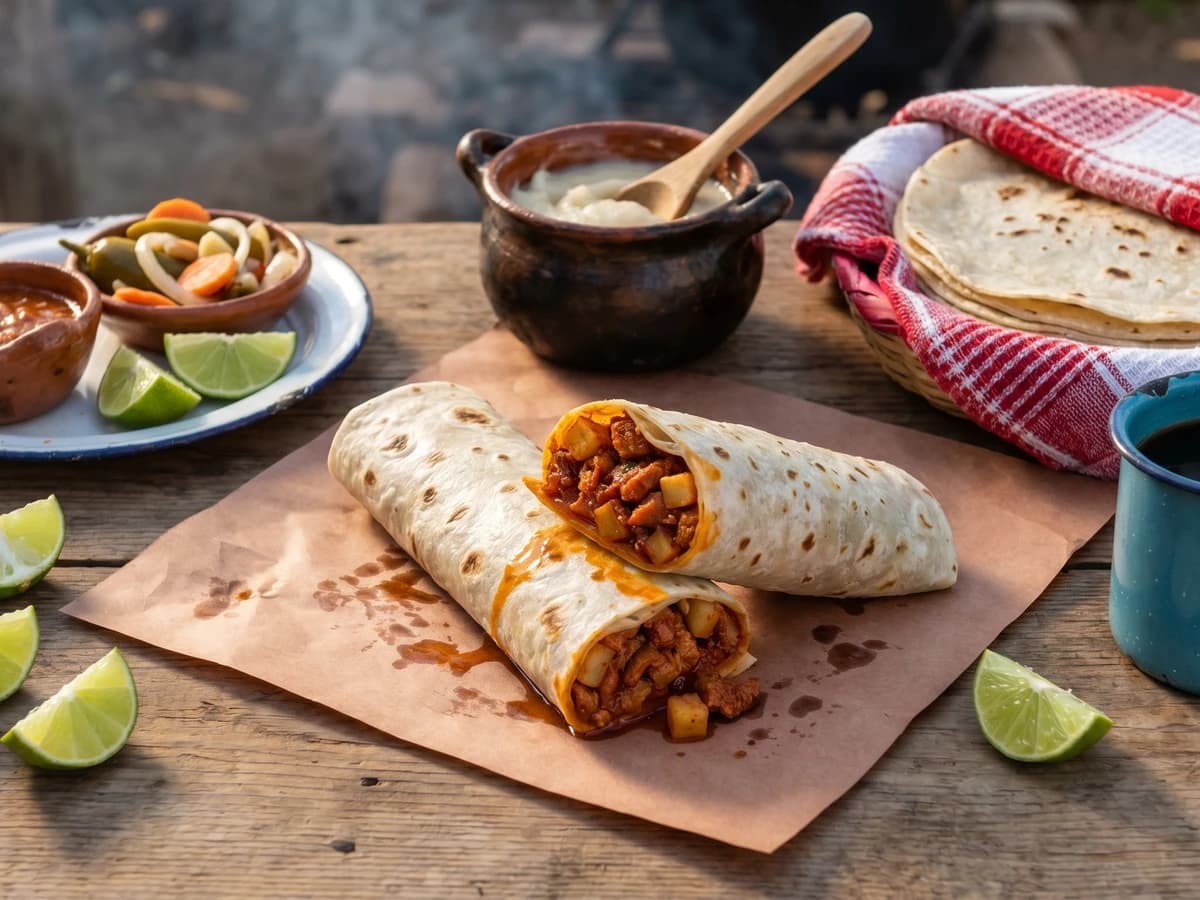
Sonora's working morning burrito: chicharrón de cáscara stewed in chile colorado with diced potato, rolled tight in a paper-thin tortilla sobaquera and eaten standing up at the carreta.
Chef Lupita
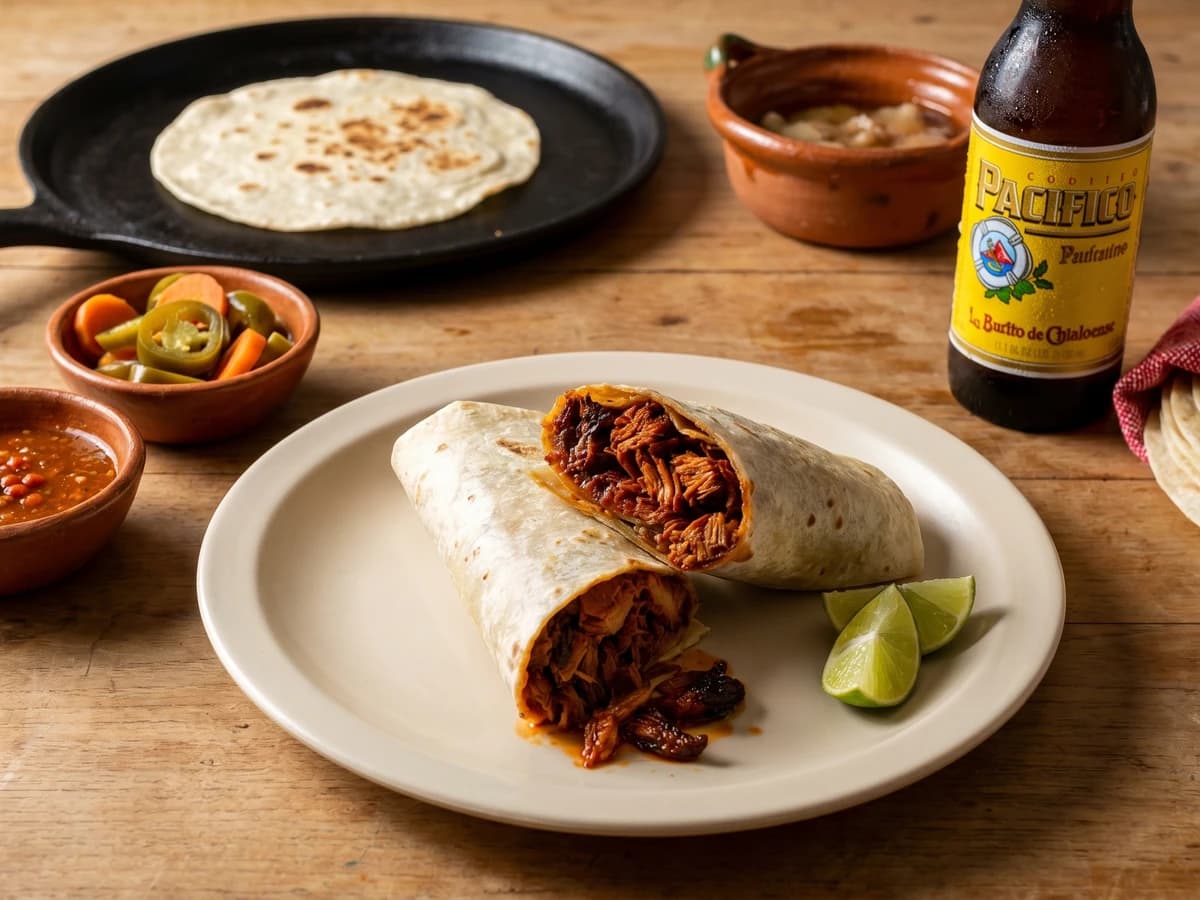
Mocorito's pork chilorio, shredded and confited in lard with chile ancho and pasilla, rolled into a thin handmade flour tortilla. The burrito Sinaloa sends out into the world.
Chef Lupita
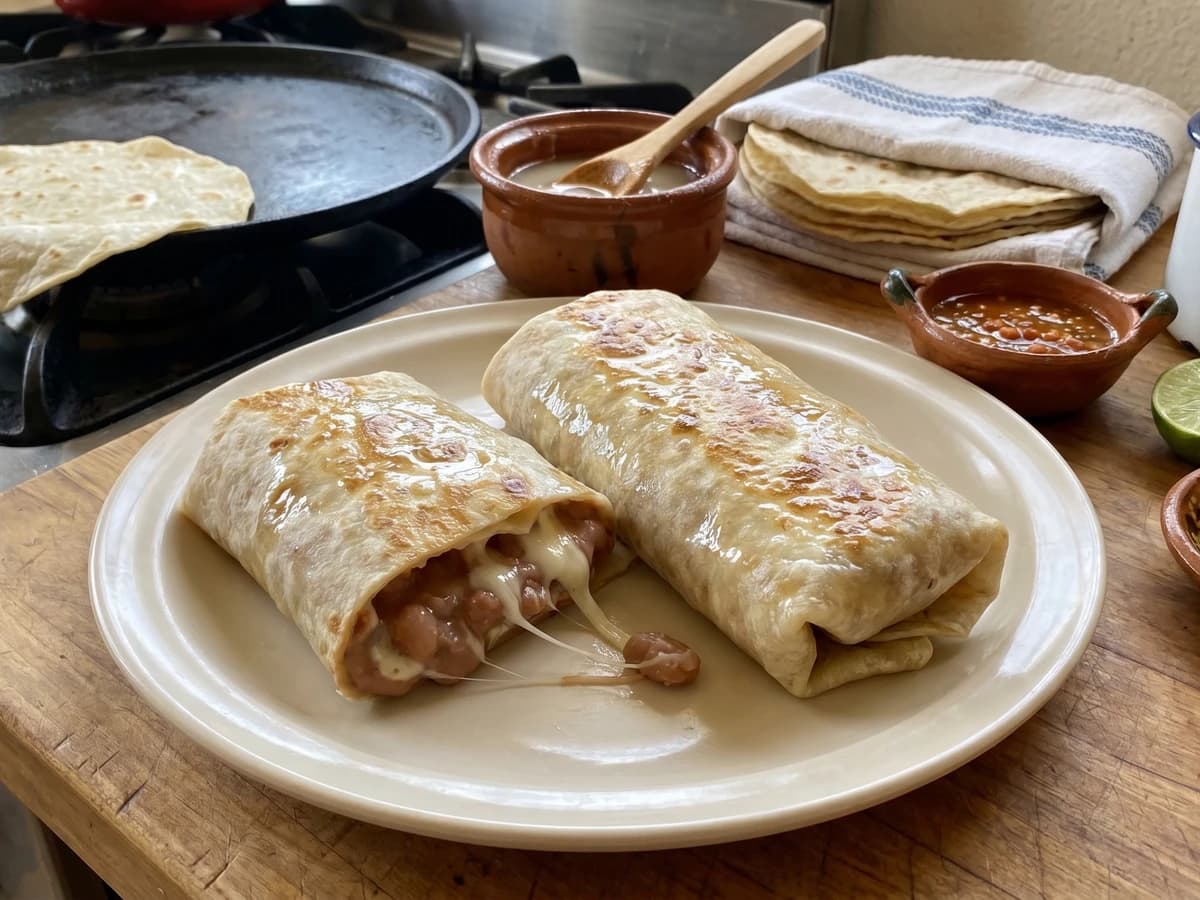
Sonora's morning burrito of mashed pinto frijoles puercos and melted queso asadero, wrapped in a paper-thin sobaquera and seared on the comal until the cheese pulls in long strings.