
Chef Graziella
Biove Piemontesi
The boat-shaped bread rolls of Piedmont, crusty and substantial, built on an overnight biga that gives them character no quick bread can match. Northern Italian baking at its most honest.
A cooking platform built around craft, culture, and the stories behind what we eat.
Created by
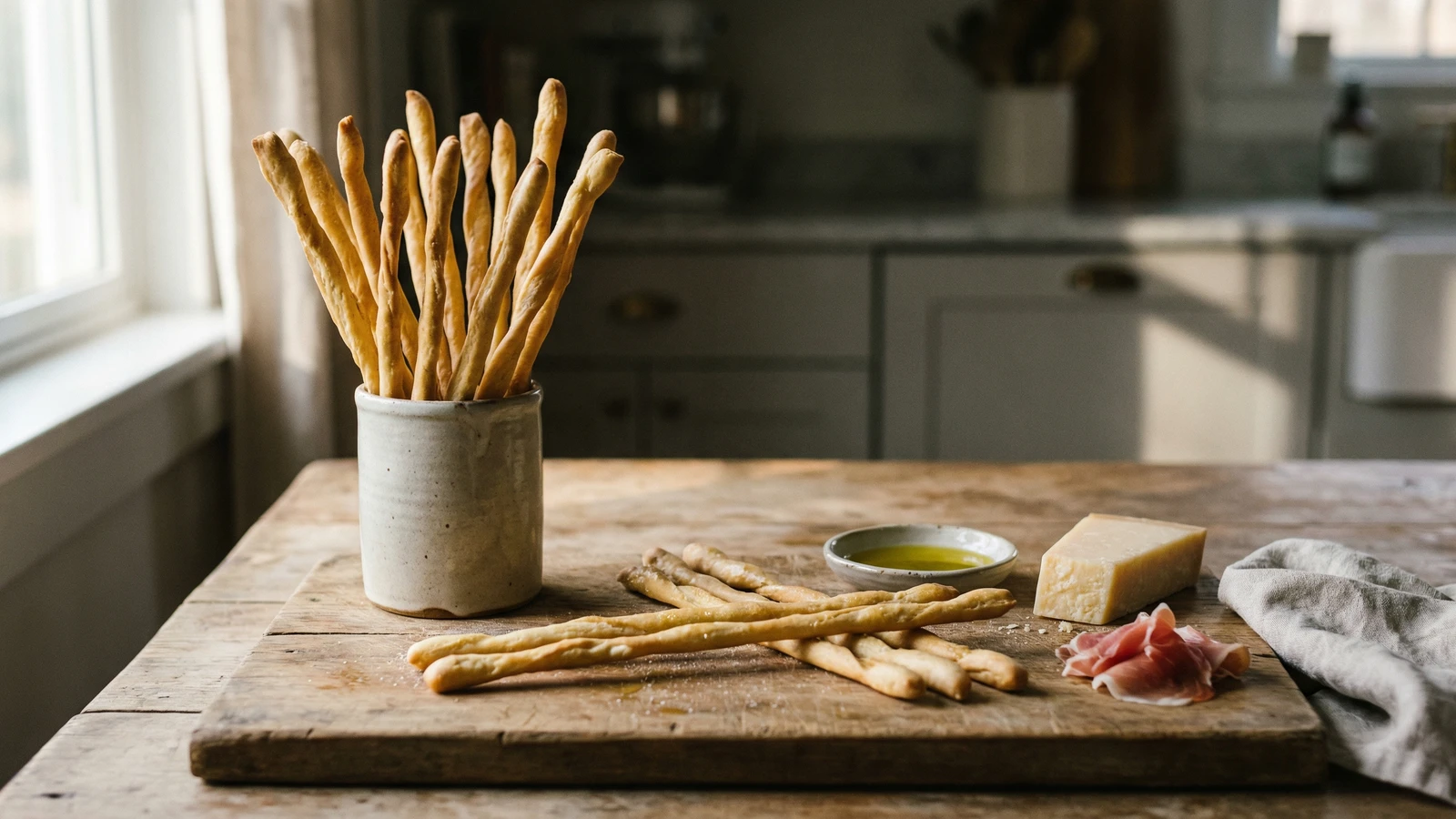
The hand-stretched breadsticks of Turin, pulled thin as pencils and baked until they shatter at the first bite. Once you make these, the packaged versions become unthinkable.
The grissini you buy in packages are an insult to Turin. They are uniform, flavorless, and break with a limp crack that satisfies no one. True grissini torinesi are hand-stretched, irregular, thin as pencils, and when you snap one it sounds like kindling. They are addictive in a way that manufactured breadsticks can never be.
The technique is not difficult, but it requires your hands and your attention. You stretch each piece of dough between your fingers, pulling gently until it becomes a long, thin rope. Some will be thicker than others. Some will have a twist. This is correct. The irregularity proves they were made by human hands in a real kitchen.
These belong on every antipasti table in Piedmont, wrapped in prosciutto, standing in a tall glass, scattered across a board with cheese and olives. They are the bread of Turin, and Turin knows what it is doing.
Grissini were invented in 17th-century Turin by a court baker for the sickly young Duke Vittorio Amedeo II, whose physician prescribed an easily digestible bread. Napoleon became so enamored with what he called 'les petits bâtons de Turin' that he established a courier service to deliver them fresh to Paris.
Quantity
500g
Quantity
325g
about 100°F
Quantity
7g (one packet)
Quantity
10g
Quantity
30g, plus more for brushing
Quantity
5g
Quantity
for dusting
| Ingredient | Quantity |
|---|---|
| bread flour | 500g |
| warm waterabout 100°F | 325g |
| active dry yeast | 7g (one packet) |
| fine sea salt | 10g |
| extra virgin olive oil | 30g, plus more for brushing |
| malt syrup or honey | 5g |
| semolina flour | for dusting |
Pour the warm water into a large bowl. It should feel pleasantly warm against your wrist, not hot. Sprinkle the yeast over the surface and add the malt syrup. Let it sit for 5 minutes until the yeast blooms and becomes foamy. If nothing happens, your yeast is dead. Start again with fresh yeast.
Add the flour and salt to the yeast mixture. Stir with a wooden spoon until a shaggy mass forms. Add the olive oil and mix until incorporated. Turn the dough onto a clean work surface and knead for 8 to 10 minutes. The dough should become smooth, elastic, and slightly tacky but not sticky. It will feel alive under your hands.
Shape the dough into a ball and place it in a lightly oiled bowl. Cover with plastic wrap and let rise in a warm place until doubled in size, about 1 to 1 and a half hours. The dough should spring back slowly when poked with a finger.
Turn the risen dough onto a work surface dusted generously with semolina. Pat it into a rectangle about 12 inches by 8 inches, with the long side facing you. Using a bench scraper or sharp knife, cut the dough into strips about three-quarters inch wide. You should have roughly 40 strips. Cover loosely with a kitchen towel and let rest 15 minutes. This relaxes the gluten and makes stretching easier.
Set your oven to 400°F. Line two or three baking sheets with parchment paper. You will bake in batches.
Take one strip of dough and roll it gently between your palms to form a rope about 6 inches long. Then pick it up by both ends and stretch it, pulling gently and letting gravity help, until it reaches 10 to 12 inches. The grissino should be about the thickness of a pencil, thinner in places. Lay it on the prepared baking sheet. Repeat with remaining strips, spacing them about an inch apart.
Brush the grissini lightly with olive oil. This creates a beautiful golden color. Bake for 15 to 20 minutes, rotating the pan halfway through, until the grissini are deep golden brown and completely crisp. They should feel hard and dry when tapped. There is no underbaking grissini. They must be baked through entirely or they will become chewy as they cool.
Transfer the grissini to a wire rack and cool completely before serving. They will crisp further as they cool. Repeat with remaining dough, allowing baking sheets to cool between batches. Once cool, store in an airtight container at room temperature.
1 grissini (about 15g)
Culinary guides, cultural storytelling, and the editorial depth that makes cooking meaningful.
Discover Culinary ExplorerChef Graziella
The boat-shaped bread rolls of Piedmont, crusty and substantial, built on an overnight biga that gives them character no quick bread can match. Northern Italian baking at its most honest.
Chef Juliette
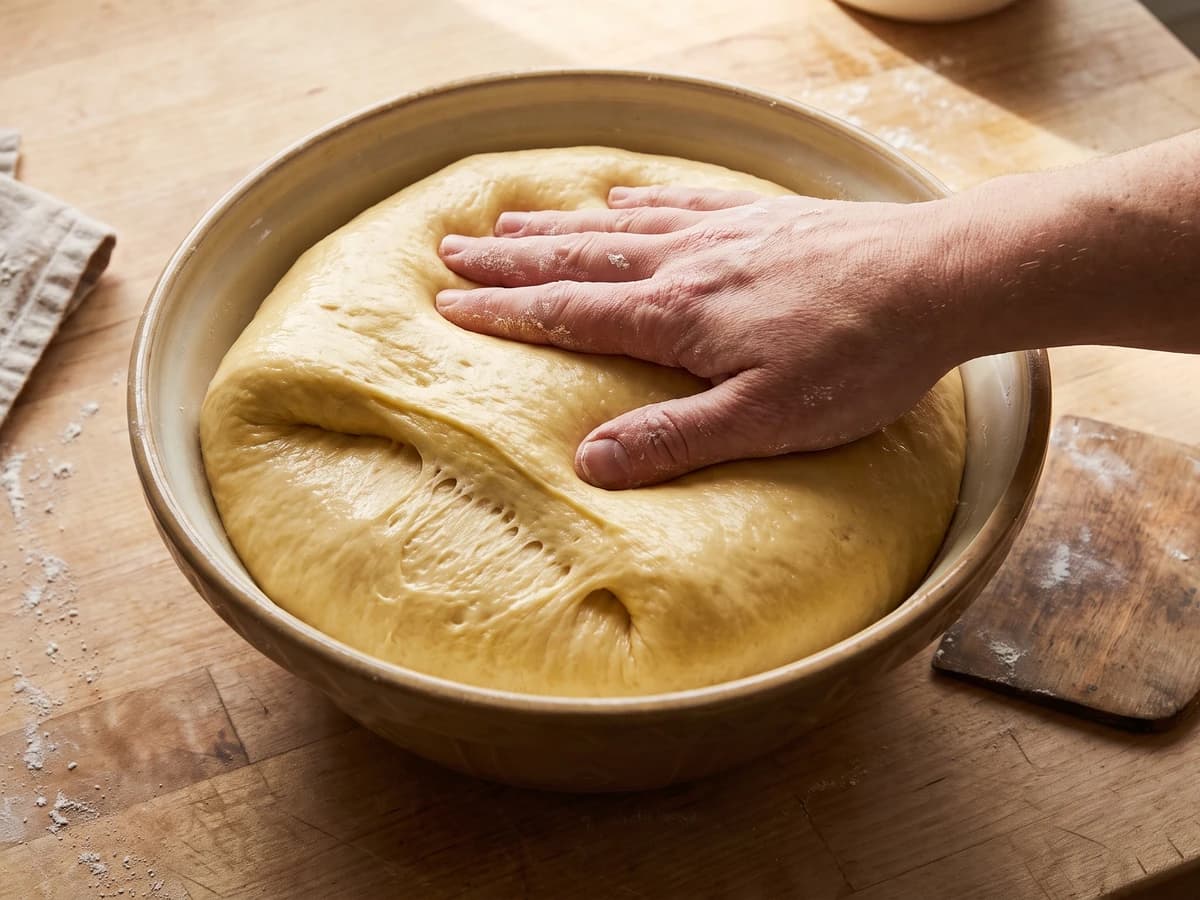
Pâte à brioche ordinaire teaches enriched dough properly: wake the leaven, build strength before the last egg, then work in pliable butter by stages and let one long fermentation do its quiet work.

Chef Juliette
Ordinary brioche takes one exact measure of butter and a patient rise in the mould, becoming so light and silken that it can cradle fruit without losing its tender crumb.
Chef Juliette
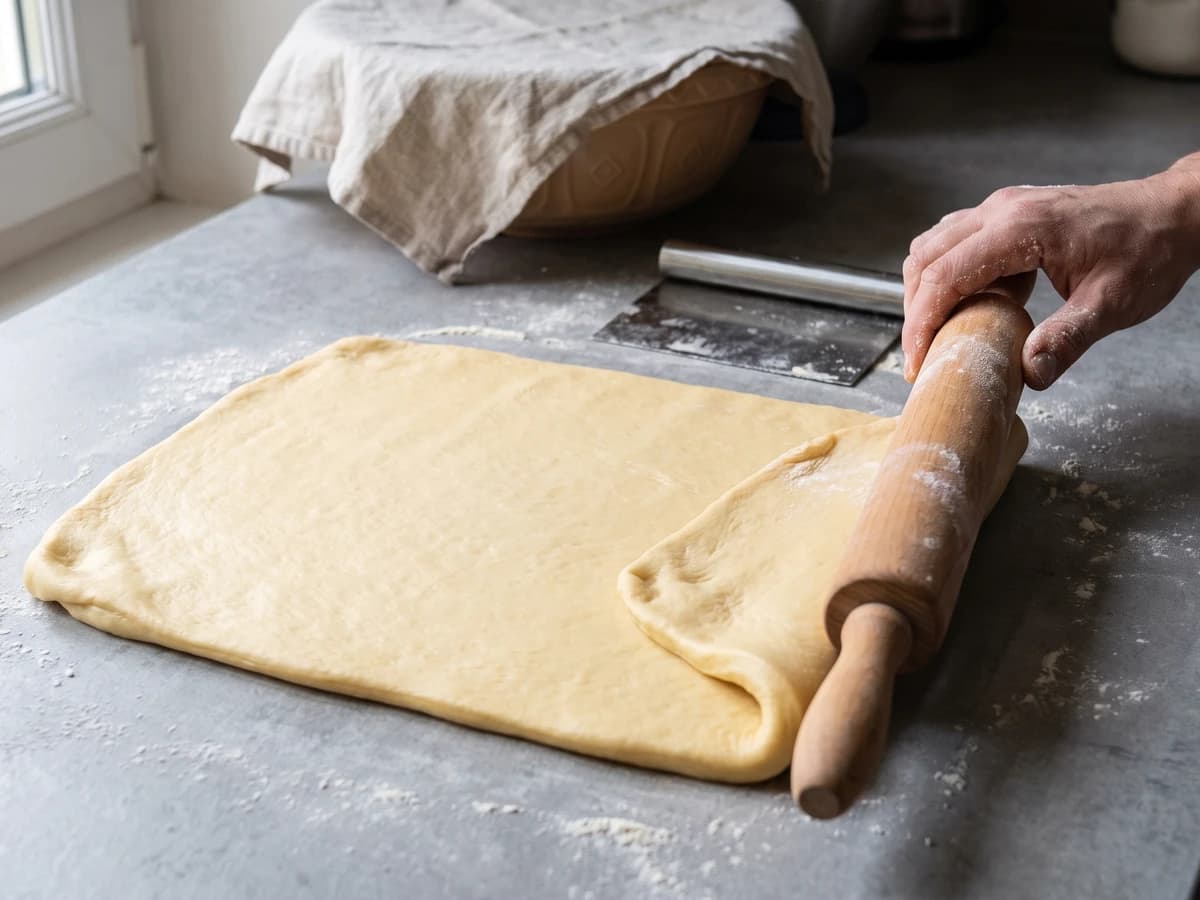
Pâte à brioche ordinaire, butter-rich yet firm, teaches the useful side of brioche: slow fermentation, disciplined mixing, and a dough that rolls cleanly for lining, wrapping, and every sturdy pastry job.