
Chef Graziella
Grissini Torinesi
The hand-stretched breadsticks of Turin, pulled thin as pencils and baked until they shatter at the first bite. Once you make these, the packaged versions become unthinkable.
A cooking platform built around craft, culture, and the stories behind what we eat.
Created by
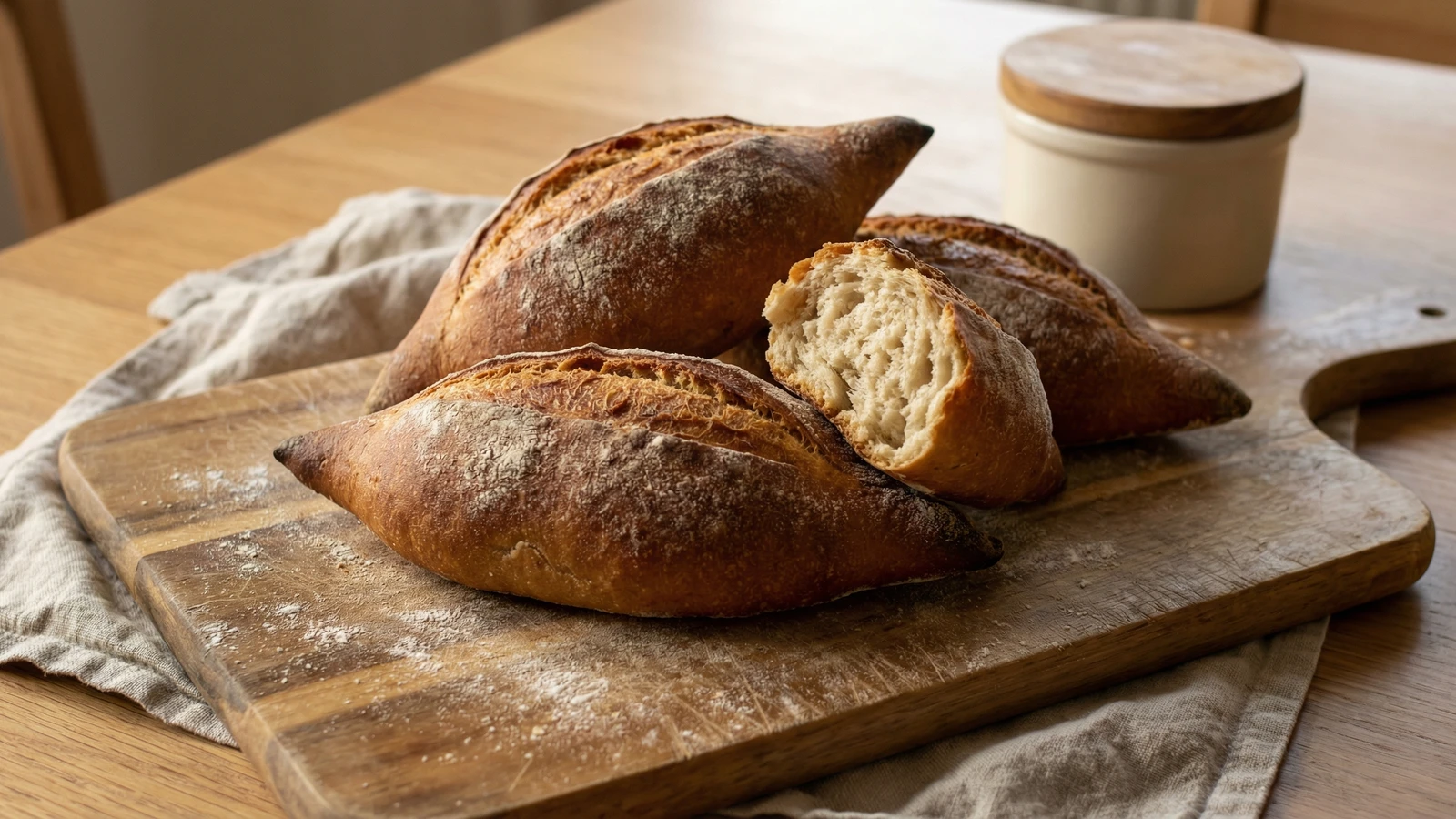
The boat-shaped bread rolls of Piedmont, crusty and substantial, built on an overnight biga that gives them character no quick bread can match. Northern Italian baking at its most honest.
Biove are the daily bread of Piedmont, and they are built for purpose. The crust is thick enough to shatter when you tear it. The crumb is dense enough to stand up to the region's rich braises and fondues. These are not soft dinner rolls meant to disappear unnoticed. These are rolls that announce themselves.
The shape matters. Biova means boat, and the tapered oval creates more crust per bite than a round roll. Piedmontese workers carried these in their pockets to the factories and fields. The substantial crust kept the interior protected. The pointed ends, deeply caramelized, became the reward for finishing.
I have watched bakers in Turin shape these rolls with movements so practiced they border on unconscious. The technique is simple: fold, seal, taper. But simple does not mean easy. You must develop the feel for the dough, the pressure of your palms, the moment when the oval achieves its proper form. There are no shortcuts. There is only practice.
Biove emerged from the bakeries of Turin and the surrounding Piedmont countryside in the 19th century, becoming the standard bread for working families who needed something sturdy enough to last the day. The overnight biga method reflects an era before commercial yeast, when bakers relied on slow fermentation to develop flavor and structure in their doughs.
Quantity
150g
Quantity
100g
Quantity
1g (1/4 teaspoon)
Quantity
350g
Quantity
200g
Quantity
10g
Quantity
3g (3/4 teaspoon)
Quantity
all of it
| Ingredient | Quantity |
|---|---|
| bread flour (for biga) | 150g |
| cool water (for biga) | 100g |
| instant yeast (for biga) | 1g (1/4 teaspoon) |
| bread flour (for dough) | 350g |
| water at room temperature | 200g |
| fine sea salt | 10g |
| instant yeast (for dough) | 3g (3/4 teaspoon) |
| biga | all of it |
The night before you bake, combine the flour, cool water, and yeast for the biga in a medium bowl. Mix with your hands until no dry flour remains. The mixture will be shaggy and stiff, more like a dough than a batter. Cover tightly and leave at cool room temperature (65-70°F) for 12 to 16 hours. When ready, the biga will have tripled in size and smell pleasantly yeasty and slightly alcoholic.
Tear the biga into rough pieces and place in a large mixing bowl. Add the room temperature water and squeeze the biga through your fingers until it dissolves into the water. It need not be perfectly smooth. Add the flour, salt, and yeast. Mix with your hand, rotating the bowl, until a shaggy dough forms. There should be no dry flour visible.
Turn the dough onto an unfloured surface. Knead by pressing the heel of your hand into the dough, pushing forward, then folding it back over itself. Continue for 10 to 12 minutes. The dough will transform from rough and sticky to smooth and elastic. When you poke it, it should spring back slowly. If your hands stick, wet them slightly. Do not add flour. The stickiness is correct.
Shape the dough into a ball and place in a lightly oiled bowl. Cover with plastic or a damp towel. Let rise at room temperature until doubled in size, about 1 to 1 1/2 hours. The dough is ready when a floured finger pressed into it leaves an impression that fills in slowly.
Turn the dough onto a lightly floured surface. Divide into 8 equal pieces, approximately 100g each. Use a scale. Uneven rolls bake unevenly. Shape each piece into a rough ball by pulling the edges underneath and pinching them together. Let these rounds rest, covered with a towel, for 15 minutes. This relaxation makes the final shaping possible.
Working with one ball at a time, flatten it gently with your palm. Fold the top edge down to the center and press to seal. Fold the bottom edge up to meet it and seal again. You have created a cylinder. Now roll it under your palms, applying more pressure at the ends than the center, until it forms a tapered oval about 15 centimeters long. The shape should resemble a small boat, thicker in the middle and pointed at the ends. This is the biova.
Place the shaped rolls on parchment-lined baking sheets, leaving at least 8 centimeters between them. Cover loosely with oiled plastic or a damp towel. Let rise until nearly doubled, about 45 minutes to 1 hour. The rolls are ready when they hold a slight impression when pressed gently.
While the rolls complete their rise, set a rack in the center of your oven and place a baking stone or inverted sheet pan on it. Place an empty metal pan on the lowest rack. Heat the oven to 450°F (230°C) for at least 30 minutes. The oven and stone must be thoroughly heated.
Using a sharp blade or razor, make one decisive slash down the length of each roll, about 1/2 centimeter deep. The cut should run from pointed end to pointed end. Do not hesitate or the blade will drag. Slide the parchment with the rolls onto the hot stone. Immediately pour 1 cup of hot water into the pan on the lower rack and close the oven door quickly. The steam creates the crackling crust.
Bake for 10 minutes with the steam, then carefully remove the water pan. Continue baking until the rolls are deeply golden brown and sound hollow when tapped on the bottom, about 12 to 15 minutes more. The crust should be substantial, almost aggressive. Pale rolls are undercooked rolls. Transfer to a wire rack and let cool for at least 20 minutes before eating. The interior continues to set as it cools.
1 roll (about 90g)
Culinary guides, cultural storytelling, and the editorial depth that makes cooking meaningful.
Discover Culinary ExplorerChef Graziella
The hand-stretched breadsticks of Turin, pulled thin as pencils and baked until they shatter at the first bite. Once you make these, the packaged versions become unthinkable.
Chef Juliette
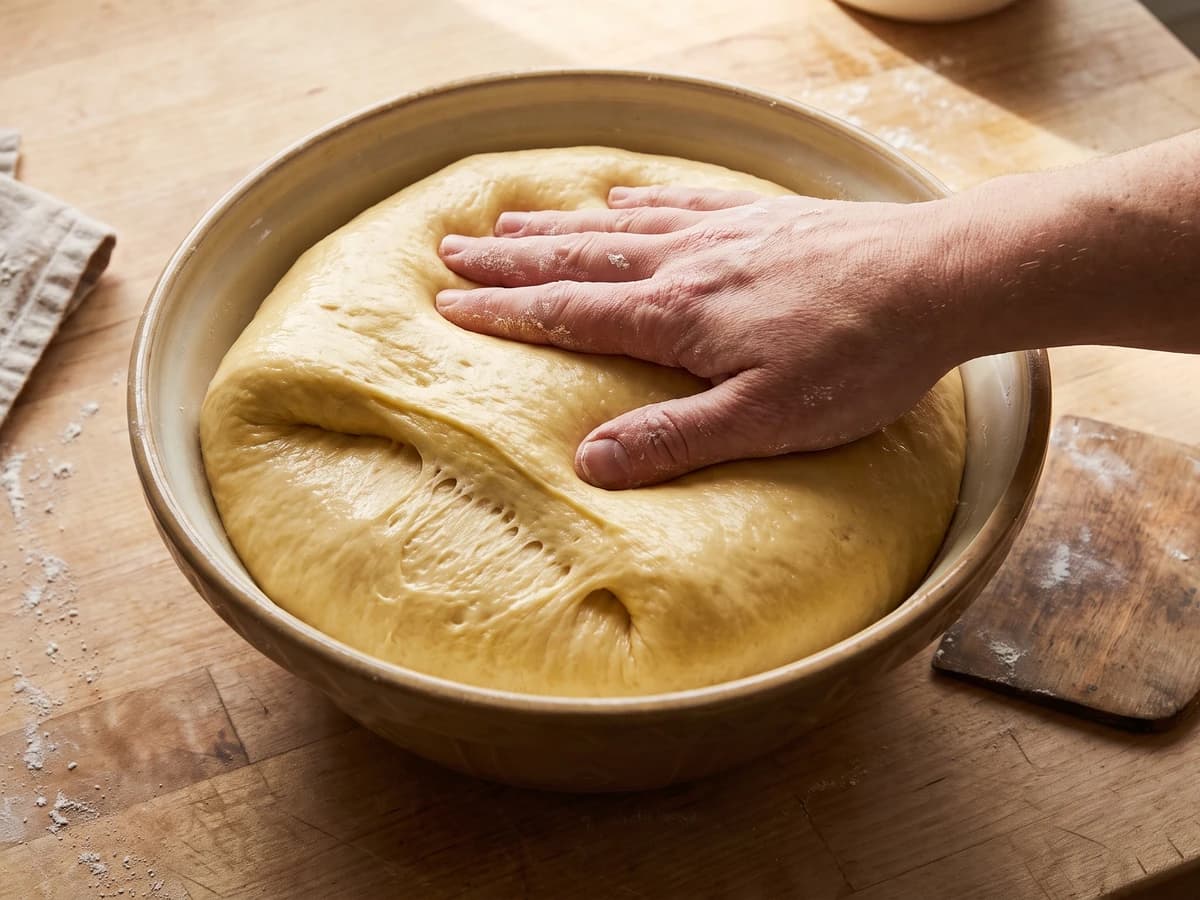
Pâte à brioche ordinaire teaches enriched dough properly: wake the leaven, build strength before the last egg, then work in pliable butter by stages and let one long fermentation do its quiet work.

Chef Juliette
Ordinary brioche takes one exact measure of butter and a patient rise in the mould, becoming so light and silken that it can cradle fruit without losing its tender crumb.
Chef Juliette
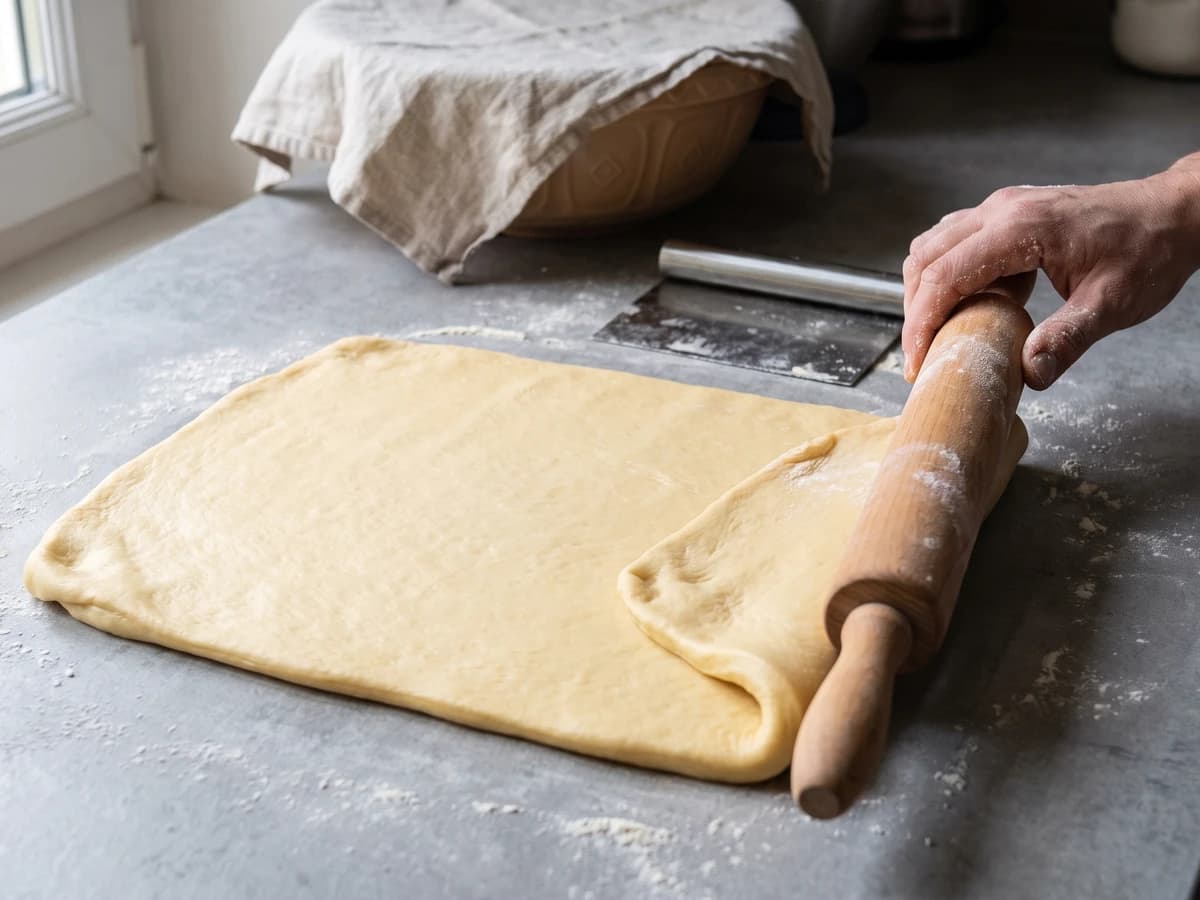
Pâte à brioche ordinaire, butter-rich yet firm, teaches the useful side of brioche: slow fermentation, disciplined mixing, and a dough that rolls cleanly for lining, wrapping, and every sturdy pastry job.