
Chef Isabel
Acedías Fritas de Cádiz
Acedías fritas belong to Cádiz: tiny wedge sole, salted, dusted in frying flour, and dropped into very hot olive oil so the rims crisp while the fish stays tender.
A cooking platform built around craft, culture, and the stories behind what we eat.
Created by
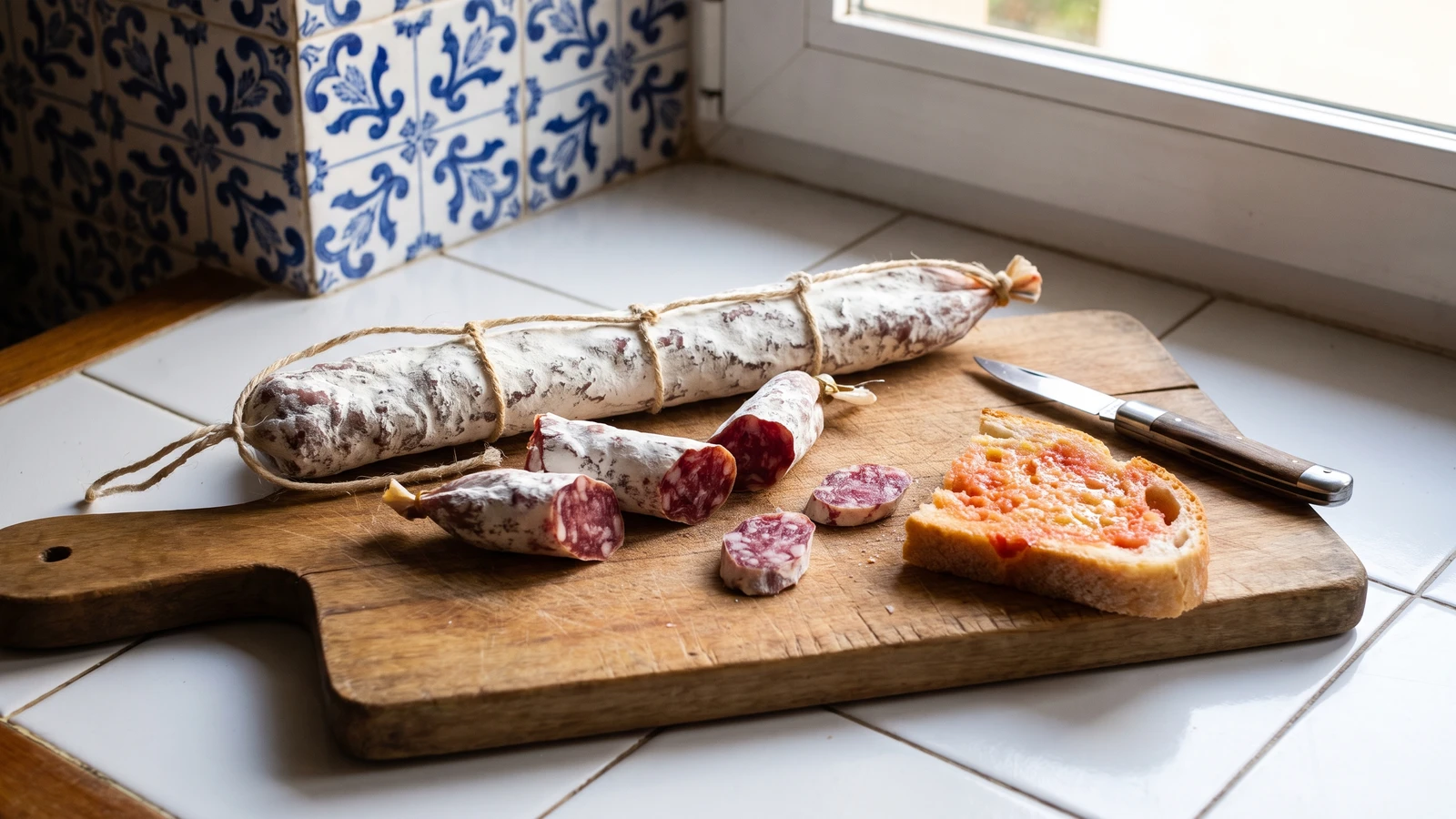
Fuet is Catalan: a thin dry sausage of pork, fat, salt, pepper, and time, dried until firm under its white bloom and snapped into short pieces for the table.
Fuet is Catalan, one of the everyday embotits, the cured sausages of the region, thin enough to dry quickly and mild enough to eat by the hand with bread, cheese, or a glass of wine. What makes it fuet and not its neighbour is the small calibre, the clean pork flavour, the black pepper, and the pale white bloom on the casing. No pimenton. That belongs elsewhere.
The method that decides it is control: weigh the salt, weigh the cure, keep the meat cold, ferment it gently, then dry it until it has lost about 35 percent of its weight. Pésalo, no lo adivines. With cured sausage, guessing isn't rustic, it's careless. The white mould is not decoration; it protects the surface and helps the sausage dry evenly instead of crusting hard outside while staying soft inside.
If you're far from Catalonia, no hace falta haber pisado España. Use good pork shoulder, clean pork back fat, hog casings, Cure No. 2, and a safe starter culture from a sausage supplier. If you cannot get natural white mould, use a commercial Penicillium nalgiovense culture; it gives the clean white coat fuet wants. It won't be the same as a Catalan obrador, but it will be honest and safe. Siempre sale, si lo sigues.
Fuet belongs to Catalonia's cured-pork tradition, especially the inland comarques where the matança, the household pig slaughter, filled the winter larder with embotits such as fuet, llonganissa, secallona, and botifarra. Its name means whip in Catalan, a plain reference to the sausage's long, thin shape. The white surface mould is part of the old curing ecology of these sausages, helping preserve the meat and giving fuet its dry rind and clean, gently tangy aroma.
Quantity
700g
very cold, diced
Quantity
300g
very cold, diced
Quantity
28g
Quantity
2.5g
Quantity
3g
Quantity
4g
freshly cracked
Quantity
1g
Quantity
1 small
crushed to a paste
Quantity
as directed for 1kg meat
Quantity
as directed
Quantity
32-36mm
soaked and rinsed
| Ingredient | Quantity |
|---|---|
| pork shouldervery cold, diced | 700g |
| pork back fatvery cold, diced | 300g |
| fine sea salt | 28g |
| Cure No. 2, Prague Powder No. 2 | 2.5g |
| dextrose | 3g |
| black pepperfreshly cracked | 4g |
| white pepper | 1g |
| garlic clove (optional)crushed to a paste | 1 small |
| dry sausage starter culture | as directed for 1kg meat |
| Penicillium nalgiovense mould culture | as directed |
| natural hog casingssoaked and rinsed | 32-36mm |
Chill the diced pork shoulder, back fat, grinder parts, and bowl until very cold but not frozen solid. Weigh the salt and Cure No. 2 exactly; this is not the place for handfuls. Keep the meat below 4C while you work, because cold fat cuts cleanly and gives fuet its firm, even bite.
Grind the pork shoulder and back fat through a 6mm plate into a chilled bowl. If the fat smears, stop and chill everything again. Fuet should cut clean, with little white flecks of fat held in the lean, not a greasy paste.
Mix in the salt, Cure No. 2, dextrose, black pepper, white pepper, garlic if using, and the starter culture prepared according to its packet. Knead the mixture with cold hands or a paddle until it turns tacky and holds together when pressed. That bind keeps air pockets out and helps the sausage dry evenly.
Thread the soaked hog casing onto the stuffer and fill it firmly, making thin sausages about 25-30cm long. Do not overstuff until they split, but leave no loose pockets. Twist or tie with butcher's twine, then prick any visible air bubbles with a clean sausage pricker or sterilized needle.
Prepare the Penicillium nalgiovense mould culture as directed and spray or wipe it lightly over the stuffed sausages. Hang them so they do not touch. This clean white bloom is what you want; green, black, fuzzy, or wet-looking mould is not fuet behaving itself.
Ferment the sausages at 20-22C with high humidity, about 85-90 percent, for 24 to 48 hours, following the starter culture instructions. The sausages should take on a gentle tang and the surface should begin to feel settled, not wet. If you use pH strips or a meter, aim for the safe target given by your culture supplier, commonly below pH 5.3.
Move the fuet to a curing space at 11-14C and 75-80 percent humidity with gentle air movement. Weigh one sausage and write the starting weight on a tag. Dry until each sausage loses 30-35 percent of its weight, usually 12 to 18 days for this thin size. Weight loss is the truth here; the calendar only gives you a guess.
When the fuet is firm from end to end and has reached its target weight loss, wrap it in parchment and rest it in the refrigerator for a day so the moisture evens out. Serve it at room temperature. In Catalonia it is often snapped into short lengths rather than sliced thin; that little break is part of the pleasure.
1 serving (about 113g)
Culinary guides, cultural storytelling, and the editorial depth that makes cooking meaningful.
Discover Culinary ExplorerChef Isabel
Acedías fritas belong to Cádiz: tiny wedge sole, salted, dusted in frying flour, and dropped into very hot olive oil so the rims crisp while the fish stays tender.

Chef Isabel
Afuega'l Pitu Roxu is Asturias in a small cheese: cow's milk set slowly to a dense curd, drained without squeezing, then kneaded with pimentón until it turns orange and grips the throat.

Chef Isabel
Albergínies farcides are Mallorca's summer stuffed aubergines: tender boiled shells, a slow pork sofrito with moraduix, and a plain breadcrumb cap baked until the top turns crisp and golden.

Chef Isabel
Carxofes farcides are Catalan stuffed artichokes: tender hearts filled with jamón, slow sweet onion, and breadcrumbs, then baked in a light creamy sauce until the tops turn golden.