Chef Dean
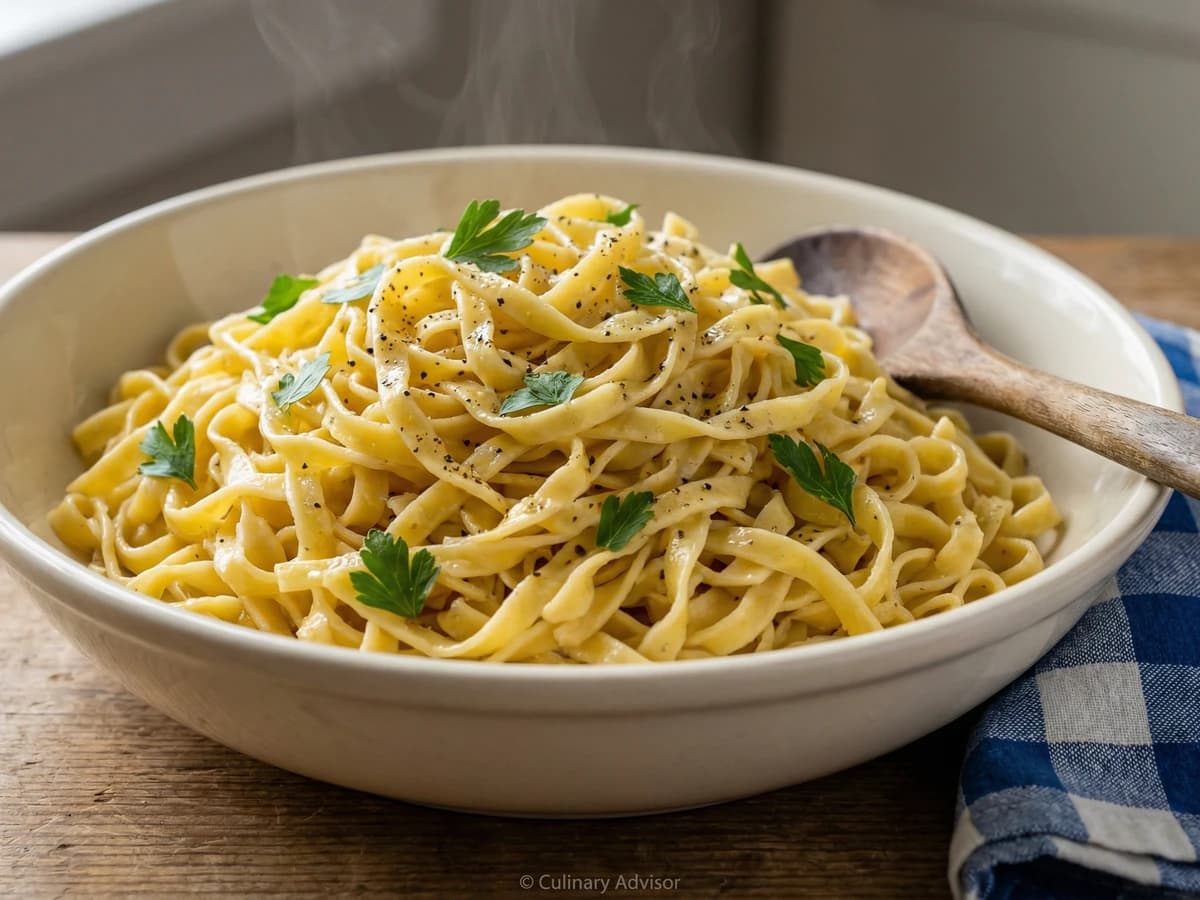
Amish Buttered Egg Noodles
The humblest side dish in the Pennsylvania Dutch tradition, where wide egg noodles and good butter need nothing more than salt and a warm bowl to become the thing everyone remembers from the church supper.
A cooking platform built around craft, culture, and the stories behind what we eat.

Created by
Summer corn at its peak, kernels sliced from the cob and barely kissed with butter, seasoned simply to let the natural sweetness shine through.
There is a window in July and August when corn needs nothing from you. The ears are fat and heavy, the kernels so sweet they taste like dessert. Your job is to recognize that moment and get out of the way.
I learned this from farmers who would eat corn raw, standing in the field. If it is good enough to eat straight from the stalk, why would you boil it into submission? A few minutes in butter, a pinch of salt. That is the whole recipe.
Every meal is a meaningful choice. When you buy corn from a farmer who picked it that morning, you are supporting a way of growing food that makes sense. The flavor is your reward, but the connection matters too. Know your farmers. Ask when the corn was picked. They will tell you, and they will be proud to.
Quantity
6 ears
shucked just before cooking
Quantity
3 tablespoons
Quantity
to taste
Quantity
to taste
freshly cracked
| Ingredient | Quantity |
|---|---|
| fresh cornshucked just before cooking | 6 ears |
| unsalted butter | 3 tablespoons |
| flaky sea salt | to taste |
| black pepperfreshly cracked | to taste |
This recipe begins at the market, not the stove. Look for ears that feel heavy and full through the husk. The silk should be pale gold and slightly tacky, not dried out or brown. If the farmer lets you, peel back a corner of the husk and press a kernel with your fingernail. Milky juice should run. That is ripeness. That is what you are after.
Peel back the husk and remove the silk. Stand each ear upright in a wide bowl, flat end down. Run a sharp knife down the cob in long strokes, letting the kernels fall into the bowl. Stay close to the cob but do not scrape it. You want whole kernels, not mush. After cutting, run the back of the knife down the bare cob to release the milky liquid. This is where sweetness lives.
Melt the butter in a wide skillet over medium heat. When it foams and the foam subsides, add the corn kernels and their milky liquid. Stir gently. Cook for two to three minutes, just until the kernels brighten in color and lose their raw edge. The corn should still have snap when you bite it. You are warming, not cooking.
Remove from heat. Season with flaky sea salt and a few grinds of black pepper. Taste. Adjust. Transfer to a warm bowl and serve immediately. Good corn waits for no one.
1 serving (about 135g)
Culinary guides, cultural storytelling, and the editorial depth that makes cooking meaningful.
Discover Culinary ExplorerChef Dean
The humblest side dish in the Pennsylvania Dutch tradition, where wide egg noodles and good butter need nothing more than salt and a warm bowl to become the thing everyone remembers from the church supper.

Chef Dean
Golden-topped, impossibly creamy shredded potato casserole with a shattering cornflake crust. This is the dish that appears at every church supper, potluck, and time of need across the American heartland.

Chef Dean
Golden-topped stuffing with tender, savory bread cubes perfumed by fresh sage and sweet onions. This is the dish people return to year after year, the one that makes Thanksgiving taste like Thanksgiving.

Chef Dean
Plump hominy kernels braised in smoky bacon fat with roasted Hatch chiles, cumin, and a bright hit of lime. This is the side dish that disappears first at every potluck, the one neighbors ask you to bring again and again.