
Chef Joost
Appelpannenkoek
The apple pannenkoek is supper pretending to be breakfast: a plate-wide Dutch pancake, tart apple softened into the batter, and cinnamon sugar doing honest work.
A cooking platform built around craft, culture, and the stories behind what we eat.
Created by
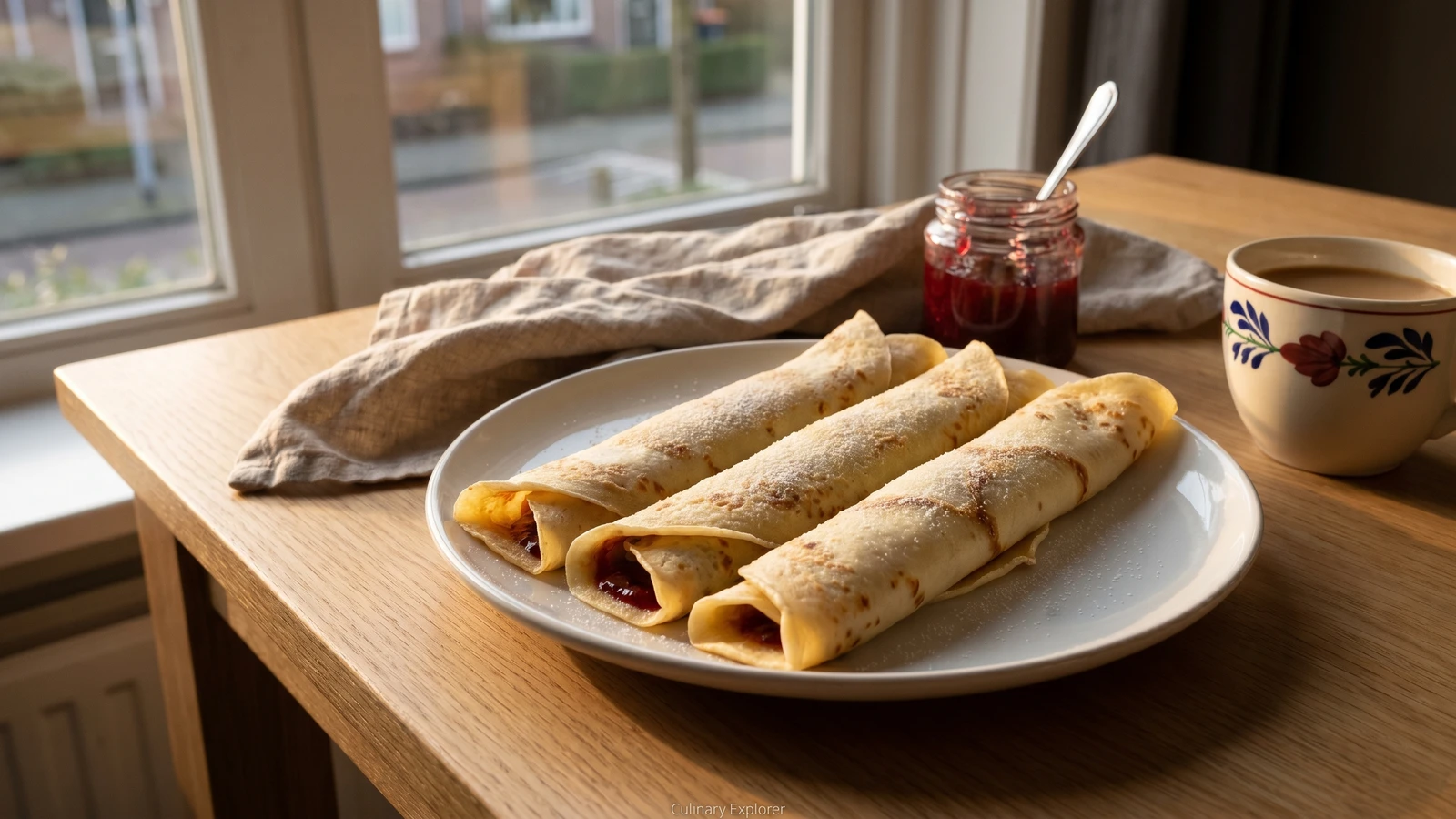
The delicate end of the Dutch pancake family: thin flensjes, rolled rather than stacked, made from a plain batter that proves how much a humble table can hold.
In my grandmother's second notebook, the pancake pages are the most stained. Not the feast dishes. Not the Christmas things. The pancakes. That tells you something about a Dutch household: the dishes that mattered most were often the ones made when there was little time, little money, or a child waiting with a plate already in hand.
Flensjes sit at the delicate edge of that family. Smaller and thinner than pannenkoeken, closer to the French crêpe but less concerned with being impressive, they are rolled with jam, sugar, stroop (syrup), or whatever the cupboard will honestly give. The name already tells you only part of the truth: the little Dutch ending, -je, makes it small and domestic. The older root is less obedient, and I won't bully a word into a story it doesn't want to tell. A forced etymology is worse than none.
But let me tell you a secret. The trick is not a special pan or a clever wrist. It is rest. Flour and milk need twenty minutes together so the batter loosens and the flensjes cook thin, tender, and without leathery edges. Hou het altijd simpel, always keep it simple: a thin batter, a lightly buttered pan, a quick turn, and a filling put on with restraint. Roll them while they're still soft. Breakfast has a memory, too.
Flensjes belong to the broad Dutch pancake tradition recorded in household cookery from the seventeenth century onward, when flour, milk, eggs, and a hot pan made one of the most reliable quick meals in the Low Countries. Unlike the larger pannenkoek, a flensje developed as the smaller, thinner, often sweet version, commonly served rolled with jam, sugar, or stroop at the family table rather than as a full supper pancake. The dish also shows the long European conversation between Dutch pancakes, French crêpes, and Central European Palatschinken, close relatives made distinct by local habits of size, filling, and occasion.
Quantity
150g
Quantity
2
Quantity
300ml
Quantity
50ml
Quantity
1 tablespoon
melted, plus more for the pan
Quantity
1 tablespoon
Quantity
1/4 teaspoon
Quantity
1 teaspoon vanilla sugar or 1/2 teaspoon extract
Quantity
to serve
| Ingredient | Quantity |
|---|---|
| plain flour | 150g |
| large eggs | 2 |
| whole milk | 300ml |
| water | 50ml |
| buttermelted, plus more for the pan | 1 tablespoon |
| sugar | 1 tablespoon |
| fine salt | 1/4 teaspoon |
| vanilla sugar or vanilla extract (optional) | 1 teaspoon vanilla sugar or 1/2 teaspoon extract |
| jam, caster sugar, Dutch stroop, or lemon (optional) | to serve |
Put the flour, sugar, salt, and vanilla sugar if using into a bowl. Whisk in the eggs, then add the milk little by little until you have a smooth batter. Whisk in the water and melted butter at the end. It should pour like thin cream, not sit like pancake batter with ambitions.
Let the batter stand for 20 minutes. This is the quiet step that makes the dish work: the flour hydrates, the bubbles settle, and the flensjes cook tender instead of rubbery. If it thickens while resting, whisk in a spoonful or two of water.
Set a 20cm nonstick or well-seasoned skillet over medium heat and brush it with the thinnest film of butter. The pan is ready when a drop of batter sizzles gently on contact. Too hot, and the flensje browns before it spreads; too cool, and it dries while you wait.
Pour in about 3 tablespoons of batter and immediately tilt the pan in a circle so it runs to the edges in a thin layer. Cook for 45 to 60 seconds, until the surface loses its wet shine and the edge lifts easily with a spatula. Turn and cook the second side for another 20 to 30 seconds, just until pale gold patches appear.
Slide each flensje onto a plate and keep the stack loosely covered with a clean towel while you cook the rest. Spread each one thinly with jam or stroop, or scatter with caster sugar and a few drops of lemon, then roll it up. The filling should season the pancake, not drown it.
1 serving (about 65g)
Culinary guides, cultural storytelling, and the editorial depth that makes cooking meaningful.
Discover Culinary ExplorerChef Joost
The apple pannenkoek is supper pretending to be breakfast: a plate-wide Dutch pancake, tart apple softened into the batter, and cinnamon sugar doing honest work.

Chef Joost
The name is plain because the dish is plainspoken: eggs, bacon, onion, and yesterday's potato, folded into the sort of meal that kept a farm kitchen moving.

Chef Joost
The boerenpannenkoek is the pancake that stopped pretending to be breakfast: bacon, ham, onion, mushrooms, pepper, and cheese folded into one wide, honest Dutch meal.

Chef Joost
The name means exactly what the pan can hold: three small yeasted pancakes, fat with raisins, born from thrift and made for a table that expects seconds.