
Chef Joost
Appelpannenkoek
The apple pannenkoek is supper pretending to be breakfast: a plate-wide Dutch pancake, tart apple softened into the batter, and cinnamon sugar doing honest work.
A cooking platform built around craft, culture, and the stories behind what we eat.
Created by
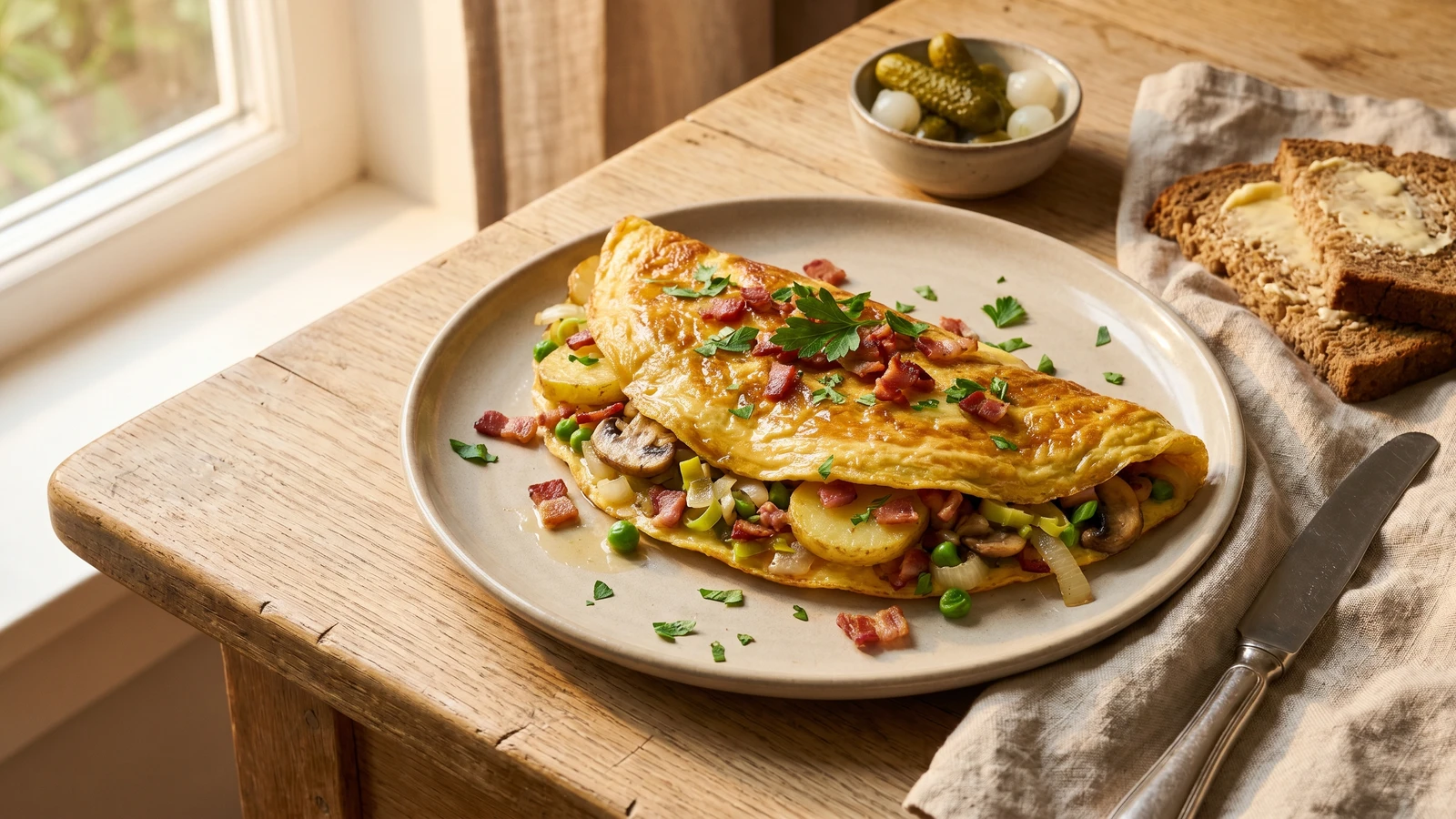
The name is plain because the dish is plainspoken: eggs, bacon, onion, and yesterday's potato, folded into the sort of meal that kept a farm kitchen moving.
In my grandmother's second notebook, the expensive recipes were the ones with long titles. The useful ones had names like boerenomelet, farmer's omelet, as if explanation would only slow breakfast down. That tells you almost everything. This is not the delicate French omelette that trembles when you look at it. This is a Dutch pan saying: we have eggs, we have yesterday's potatoes, we have bacon, and nobody is leaving hungry.
The name already tells you the social history. Boer means farmer, and omelet is the Dutch spelling of a French kitchen word made practical in our own pans. But let me tell you a secret: the borrowed word matters less than the Dutch habit it landed in. A farmhouse kitchen wasted nothing. Boiled potatoes from supper became breakfast, the onion softened in bacon fat, and the eggs bound the whole little economy together.
The method is as honest as the dish. Fry the bacon first so it gives the pan its salt and smoke, brown the potatoes properly so they taste like a new meal rather than leftovers, then pour in beaten eggs and let them set gently. Hou het altijd simpel, always keep it simple. If the omelet tears when you fold it, call it rustic and pass the bread. History and cookery, they cannot be separated, but neither should they make you nervous.
Boerenomelet belongs to the Dutch farmhouse and huishoudschool tradition of stretching eggs with cooked potatoes, onions, bacon, and whatever the garden offered, especially in the late nineteenth and early twentieth centuries when home-economics schools formalised thrifty domestic cooking. No single province can claim it cleanly; the dish reflects a countrywide rural habit, with local vegetables shifting by season and region. Its quiet lesson is Dutch frugality at its best: leftovers are not disguised, they are given a second good use.
Quantity
6
Quantity
2 tablespoons
Quantity
150g
diced
Quantity
1 small
finely chopped
Quantity
250g
cooled and sliced
Quantity
75g
sliced
Quantity
75g
cooked or fresh
Quantity
1 small
thinly sliced
Quantity
1 tablespoon
Quantity
1 tablespoon
chopped
Quantity
to taste
| Ingredient | Quantity |
|---|---|
| large eggs | 6 |
| milk | 2 tablespoons |
| smoked bacon or spekdiced | 150g |
| onionfinely chopped | 1 small |
| cooked waxy potatoescooled and sliced | 250g |
| mushroomssliced | 75g |
| peascooked or fresh | 75g |
| leekthinly sliced | 1 small |
| butter (optional) | 1 tablespoon |
| flat-leaf parsleychopped | 1 tablespoon |
| salt and black pepper | to taste |
Beat the eggs with the milk, a small pinch of salt, and a good turn of black pepper. Go lightly with the salt for now; the bacon will speak loudly enough once it reaches the pan.
Set a wide non-stick or well-seasoned skillet over medium heat and fry the diced bacon until the fat runs and the edges turn crisp. Lift out a spoonful for finishing if you like a little crispness on top, but leave most of the bacon and its fat in the pan. That fat is not decoration. It is the seasoning.
Add the onion and cook for two minutes until it softens. Add the sliced cooked potatoes and let them brown on one side before turning them. This is the step that makes the dish taste deliberate. Pale leftover potato tastes apologetic; browned potato tastes like breakfast with a backbone.
Add the mushrooms, peas, and leek, and cook for three to four minutes until the mushrooms lose their raw edge and the leek softens. If the pan looks dry, add the butter. The vegetables should sit in the omelet, not boil inside it, so let any watery juices cook away before the eggs go in.
Lower the heat to medium-low and pour the beaten eggs evenly over the pan. Tilt the skillet so the egg runs into the corners, then leave it alone for a minute. Draw the edges inward with a spatula once or twice, letting loose egg flow into the gaps, then stop fussing. A boerenomelet should set gently, with a tender top and a browned bottom.
When the top is just set but still soft, scatter over the parsley and the reserved bacon if you kept some back. Fold the omelet in half, or slide it open-faced onto a plate if the pan has opinions of its own. Serve at once with buttered brown bread and pickles, which cut the richness better than any lecture can.
1 serving (about 460g)
Culinary guides, cultural storytelling, and the editorial depth that makes cooking meaningful.
Discover Culinary ExplorerChef Joost
The apple pannenkoek is supper pretending to be breakfast: a plate-wide Dutch pancake, tart apple softened into the batter, and cinnamon sugar doing honest work.

Chef Joost
The boerenpannenkoek is the pancake that stopped pretending to be breakfast: bacon, ham, onion, mushrooms, pepper, and cheese folded into one wide, honest Dutch meal.

Chef Joost
The name means exactly what the pan can hold: three small yeasted pancakes, fat with raisins, born from thrift and made for a table that expects seconds.

Chef Joost
The delicate end of the Dutch pancake family: thin flensjes, rolled rather than stacked, made from a plain batter that proves how much a humble table can hold.