Chef Graziella
Fileja con 'Nduja
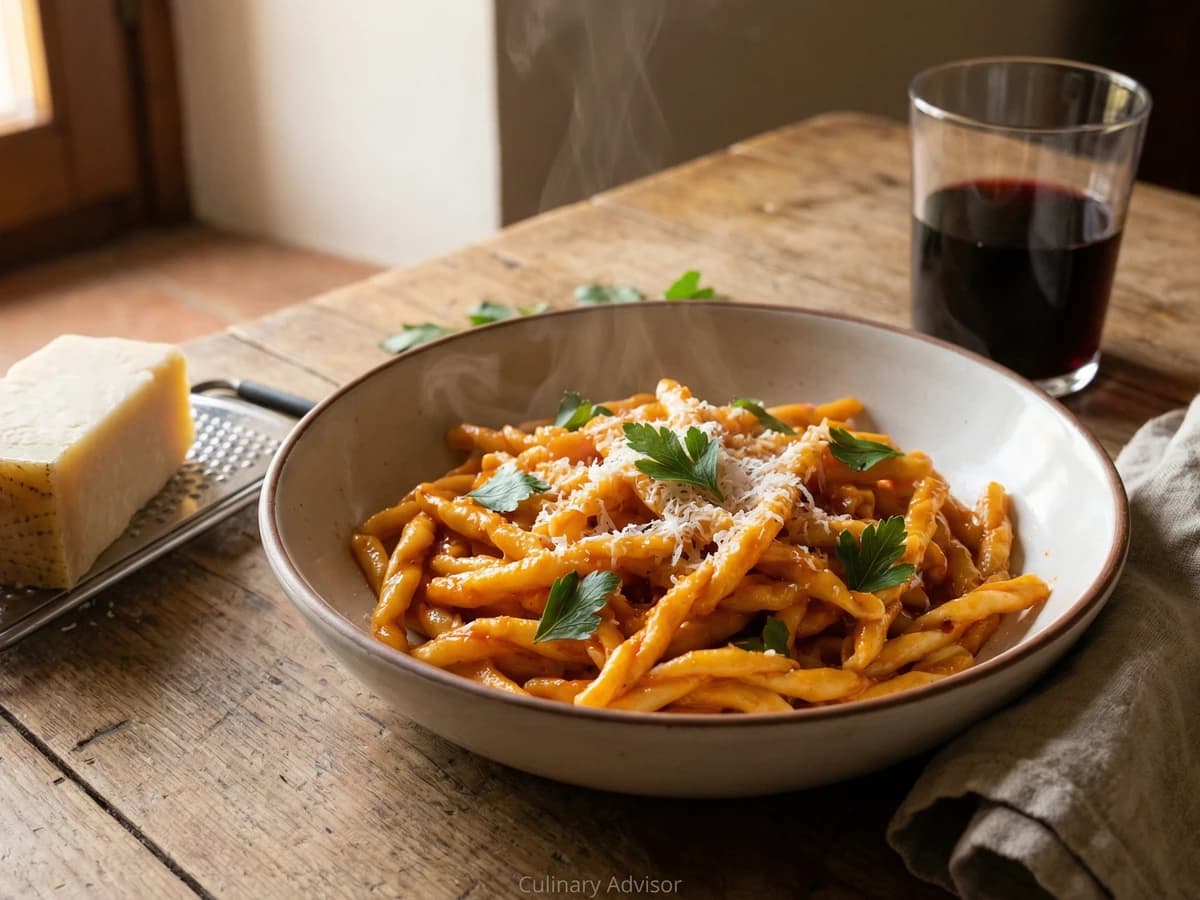
The fiery soul of Calabria in a bowl: hand-twisted pasta dressed in a sauce where 'nduja dissolves into tomatoes, releasing its slow-building heat and smoky depth.
A cooking platform built around craft, culture, and the stories behind what we eat.

Created by
Hand-twisted Calabrian pasta dressed with the famous sweet red onions of Tropea, summer vegetables, and ripe tomatoes. This is what August tastes like on the Tyrrhenian coast.
Calabria sits at the toe of Italy's boot, isolated by mountains, facing the sea. Its cooking reflects this: simple, fierce, dependent on what grows in volcanic soil under relentless sun. Fileja is the region's signature pasta, twisted by hand around a thin iron rod, requiring nothing but flour, water, and patience.
The onions of Tropea are not ordinary onions. They are sweet enough to eat raw, with none of the sharpness that makes you weep. Calabrians slice them into salads, stuff them, caramelize them slowly until they collapse into something almost jam-like. Here they meet summer vegetables: zucchini, eggplant, ripe tomatoes still warm from the garden.
This is not a sauce that smothers. The vegetables remain distinct, each contributing its character. The onions provide sweetness, the eggplant gives body, the zucchini offers freshness, the tomatoes bring acidity. What you keep out is as significant as what you put in. No cream. No cheese on top, though you may grate pecorino at the table if you must. The dish speaks for itself.
Fileja dates to ancient Greek settlements along the Calabrian coast, where colonists brought wheat cultivation and pasta-making traditions. The name likely derives from the Greek 'phyllo' for leaf, though the technique of wrapping dough around a wire suggests influences from Arab Sicily. Tropea's red onions gained IGP protected status in 2008, but fishermen and farmers have prized their sweetness for centuries.
Quantity
1 pound
Quantity
3 medium (about 12 ounces)
halved and sliced thin
Quantity
1 medium (about 12 ounces)
cut into 1/2-inch cubes
Quantity
2 medium (about 10 ounces)
cut into 1/2-inch half-moons
Quantity
1 pound
cored and chopped
Quantity
1/3 cup, plus more for finishing
Quantity
2
lightly crushed and left whole
Quantity
1 small, or pinch of red pepper flakes
Quantity
1/2 cup
torn
Quantity
to taste
Quantity
for serving
| Ingredient | Quantity |
|---|---|
| fileja pasta | 1 pound |
| Tropea onions or sweet red onionshalved and sliced thin | 3 medium (about 12 ounces) |
| eggplantcut into 1/2-inch cubes | 1 medium (about 12 ounces) |
| zucchinicut into 1/2-inch half-moons | 2 medium (about 10 ounces) |
| ripe tomatoescored and chopped | 1 pound |
| extra virgin olive oil | 1/3 cup, plus more for finishing |
| garlic cloveslightly crushed and left whole | 2 |
| dried peperoncino | 1 small, or pinch of red pepper flakes |
| fresh basil leavestorn | 1/2 cup |
| kosher salt | to taste |
| Pecorino Crotonese or ricotta salata (optional) | for serving |
Place the eggplant cubes in a colander and toss with one teaspoon of salt. Set over a bowl or in the sink and let drain for 20 minutes. The salt draws out bitter liquid and prevents the eggplant from absorbing excessive oil. Rinse briefly and pat very dry with clean towels.
In a large skillet (12 inches is ideal), warm the olive oil over medium heat. Add the sliced onions and a pinch of salt. Cook slowly, stirring occasionally, until the onions are completely soft and beginning to turn golden at the edges, 12 to 15 minutes. Tropea onions are naturally sweet; this slow cooking concentrates that sweetness. Do not rush.
Add the crushed garlic cloves and the dried peperoncino to the onions. Cook for one minute, until fragrant. The garlic should perfume the oil, nothing more. It will be removed before serving.
Push the onions to one side of the pan and add the dried eggplant cubes to the cleared space. Let them cook undisturbed for 2 minutes to develop some color on one side, then stir to combine with the onions. Cook until the eggplant is golden and nearly tender, about 5 minutes more.
Add the zucchini to the pan and stir to combine. Cook for 2 minutes. Add the chopped tomatoes and stir well. Season with salt. Let the mixture simmer gently, uncovered, until the tomatoes break down and the zucchini is tender but still holds its shape, 8 to 10 minutes. The sauce should not be watery. If it seems thin, raise the heat slightly.
While the sauce simmers, bring a large pot of water to a vigorous boil. Add salt generously. The water should taste like the sea. Cook the fileja according to package directions until al dente, typically 10 to 12 minutes for dried pasta. Reserve one cup of the starchy cooking water before draining.
Remove and discard the garlic cloves and peperoncino from the sauce. Add the drained pasta directly to the skillet. Toss vigorously over medium heat, adding pasta water a few tablespoons at a time to help the sauce cling to the twisted shapes. The pasta should be coated, not swimming. Remove from heat, add the torn basil, and toss once more. Drizzle with your best olive oil.
Divide among warmed bowls and serve at once. Offer pecorino or ricotta salata at the table for those who want it, but taste it first without. The vegetables speak clearly enough on their own. Once the pasta is sauced, invite your guests and family to put off talking and start eating.
1 serving (about 460g)
Culinary guides, cultural storytelling, and the editorial depth that makes cooking meaningful.
Discover Culinary ExplorerChef Graziella
The fiery soul of Calabria in a bowl: hand-twisted pasta dressed in a sauce where 'nduja dissolves into tomatoes, releasing its slow-building heat and smoky depth.

Chef Juliette
John Dory has the delicacy of sole and the firmness of turbot. A light flouring, a quick butter sauté, and nut-brown beurre noisette show exactly why looks never mattered.

Chef Juliette
Fresh haddock proves its delicacy in the meunière pan: a fine flour crust, moist pearly flakes, and beurre noisette sharpened with lemon and parsley, ready from one skillet in half an hour.
Chef Juliette
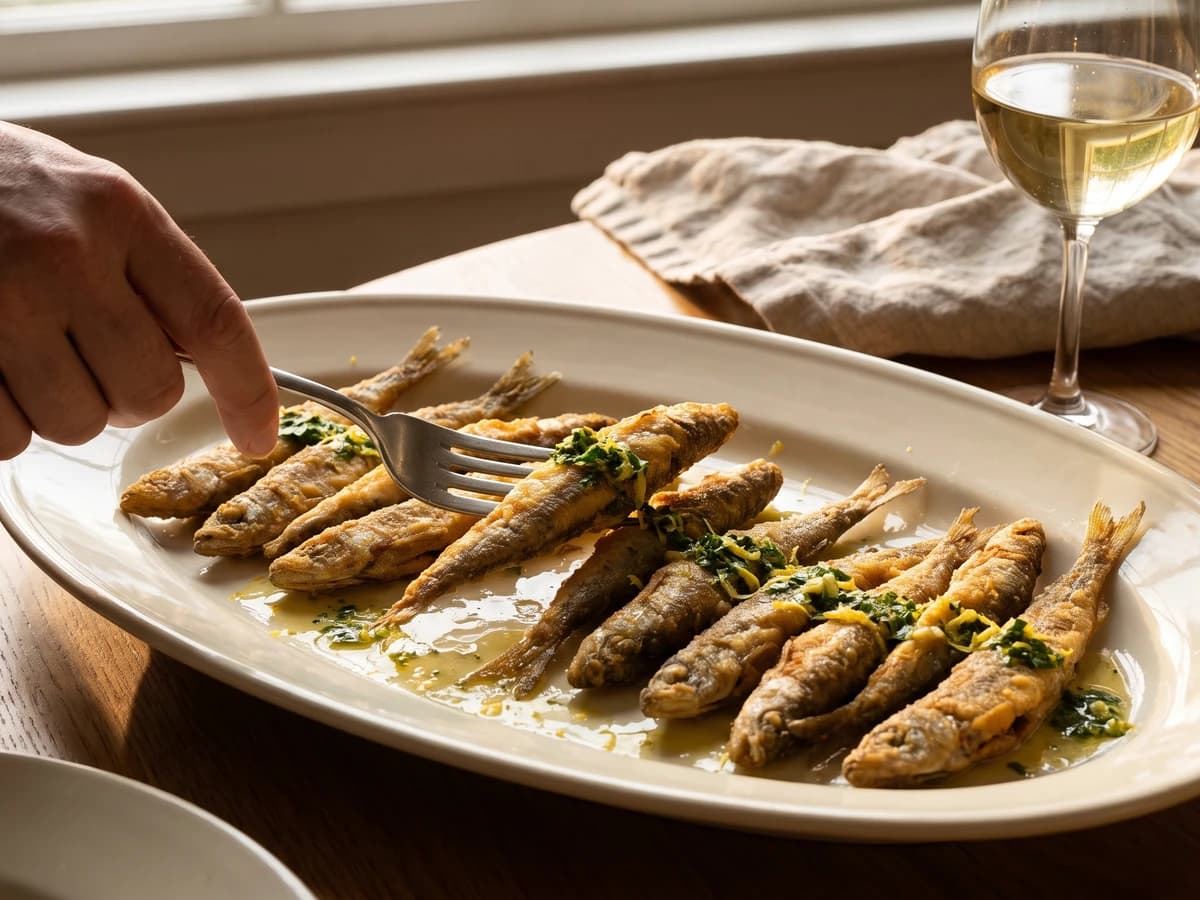
Éperlans à l’Anglaise turns small fish into a lesson in disciplined coating: boned smelts under a close, crisp crumb, pan-fried in clarified butter and finished with bright, half-melted maître d’hôtel butter.