Chef Graziella
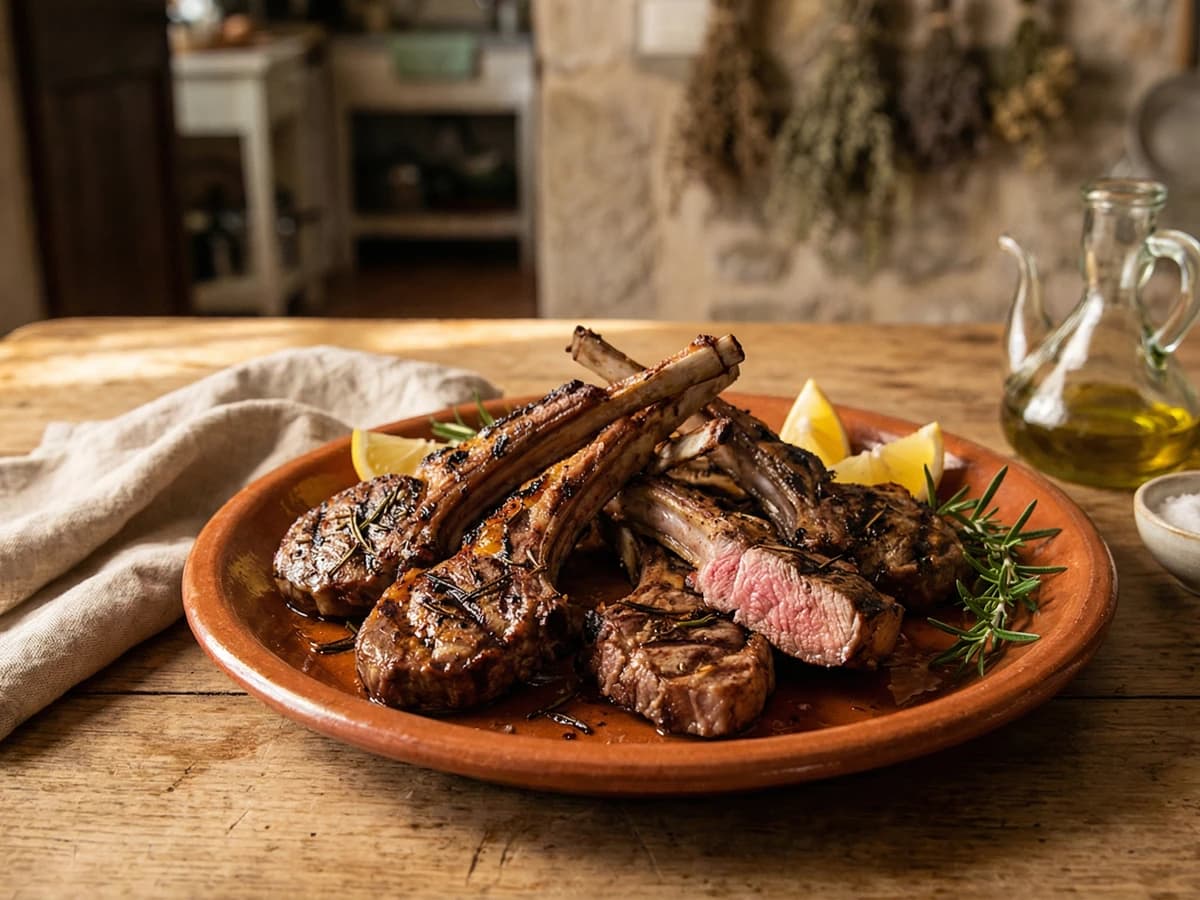
Abbacchio a Scottadito
Roman lamb chops grilled over scorching heat, seasoned with nothing but salt, rosemary, and fire. You eat them with your hands, straight from the grill, burning your fingers because you cannot wait.
A cooking platform built around craft, culture, and the stories behind what we eat.
Created by
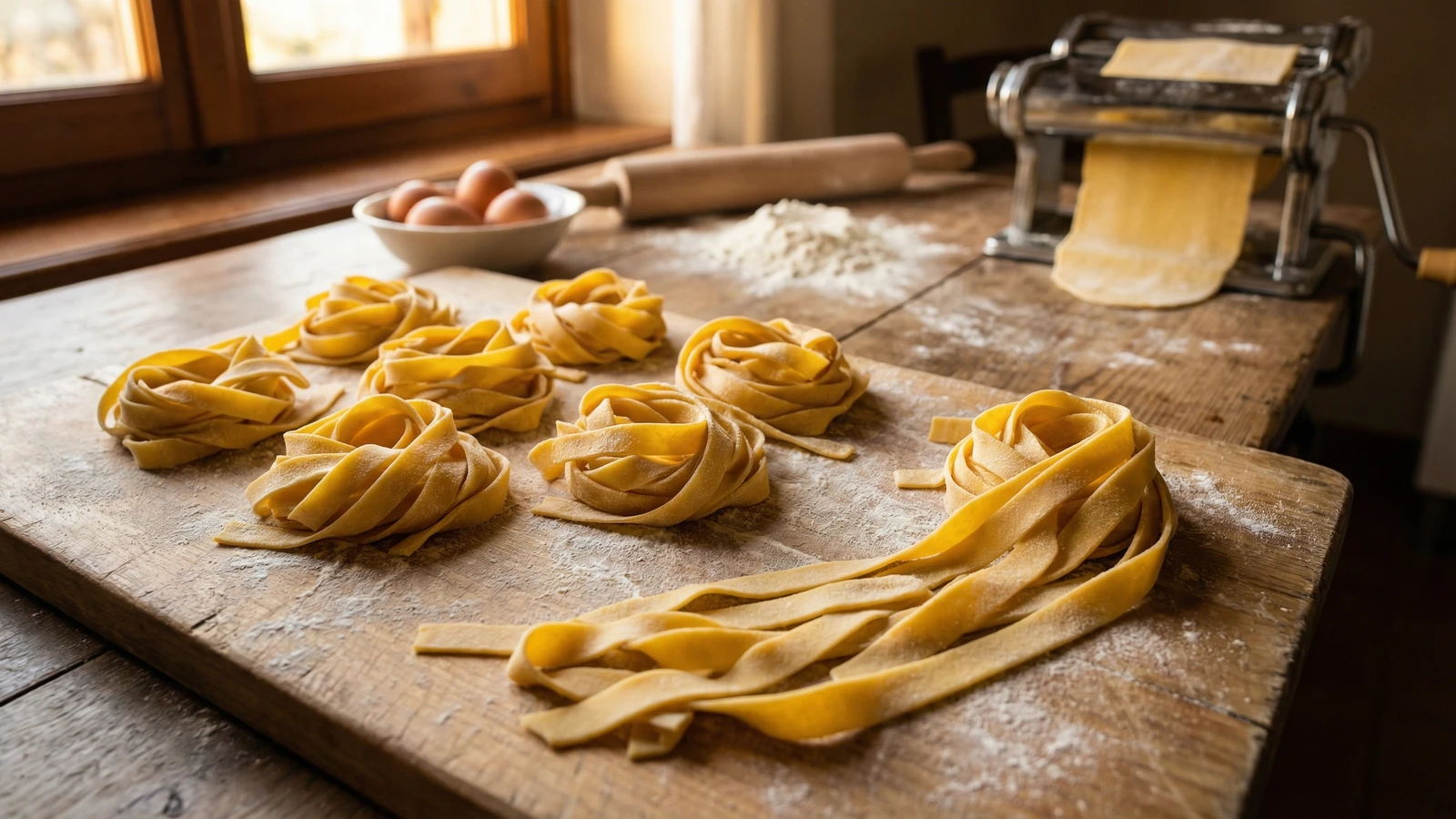
Rome's broad egg ribbons, the pasta that made Alfredo famous before Americans drowned it in cream. Master the dough and the roll, and you master a foundation of Italian cooking.
Fettuccine means 'little ribbons,' and that is precisely what they are: flat strands of egg pasta cut about a quarter-inch wide, slightly broader than Bologna's tagliatelle. Romans claim them as their own, though the truth is that every region of central and northern Italy makes some version of this elemental pasta.
The dough is simple: flour and eggs. Nothing more. The technique is not simple. You must knead until the dough transforms from shaggy to silk. You must rest it until the gluten relaxes. You must roll it thin enough to see your hand through, yet thick enough to have substance when cooked. This takes practice. There is no shame in this.
A hand-crank pasta machine makes this accessible to any home cook willing to learn. The sfogline of Emilia-Romagna roll by hand with meter-long pins, but they have done so since childhood. You can achieve excellent fettuccine with a machine, and I would rather you make pasta with a machine than not make pasta at all. The goal is home cooks making fresh pasta, not preserving difficulty for its own sake.
Fettuccine achieved international fame in 1914 when Alfredo di Lelio, a Roman restaurateur, created his butter-and-cheese sauce to tempt his pregnant wife's appetite. American silent film stars Mary Pickford and Douglas Fairbanks discovered it on their honeymoon, and fettuccine Alfredo became a sensation in America, though Romans still make it with nothing but butter, Parmigiano, and pasta water. The cream is an American addition they do not recognize.
Quantity
300g (about 2 1/3 cups)
plus more for dusting
Quantity
3
at room temperature
Quantity
1 tablespoon
Quantity
1/2 teaspoon
Quantity
for dusting cut pasta
| Ingredient | Quantity |
|---|---|
| tipo 00 flourplus more for dusting | 300g (about 2 1/3 cups) |
| large eggsat room temperature | 3 |
| extra virgin olive oil (optional) | 1 tablespoon |
| fine sea salt | 1/2 teaspoon |
| semolina flour | for dusting cut pasta |
Pour the flour onto a large wooden board or clean work surface. Make a well in the center, wide enough to contain the eggs without breaking through. The walls should be about an inch thick at the base. If working on a slippery surface, make your well in a large wide bowl instead.
Crack the eggs into the well. Add the salt and oil if using. Beat the eggs gently with a fork, staying within the well at first. Gradually begin pulling flour from the inner walls into the eggs, incorporating a little at a time. Work slowly. If you break the walls too soon, the eggs will run across your counter and you will curse.
When the mixture becomes too thick to stir with the fork, set the fork aside. Use your hands to bring the remaining flour into the center, pressing and folding until a shaggy mass forms. Not all the flour will incorporate. This is correct. Push aside any dry bits that refuse to join.
Clean your hands and the board of any dried bits. Knead the dough by pushing it away from you with the heel of your hand, folding it back over itself, giving it a quarter turn, and repeating. Press firmly. This is work. Continue for 8 to 10 minutes until the dough is completely smooth, springs back when pressed, and feels like your earlobe. The surface should be satiny, not tacky.
Perform the windowpane test: pinch off a small piece of dough and stretch it gently between your fingers. If you can stretch it thin enough to see light through without it tearing, the gluten is properly developed. If it tears immediately, knead five minutes more and test again.
Wrap the dough tightly in plastic wrap. Let it rest at room temperature for 30 minutes minimum, one hour is better. This relaxes the gluten and makes rolling infinitely easier. Do not skip this step. Impatient cooks fight springy dough and lose.
Cut the rested dough into four equal pieces. Work with one piece at a time, keeping the others wrapped. Flatten the piece with your palm into an oval roughly the width of your pasta machine. Dust lightly with flour.
Set your pasta machine to its widest setting. Feed the dough through, cranking steadily. Fold the resulting strip in thirds like a letter, flatten slightly, and feed through again. Repeat this folding and rolling three times on the widest setting. This finishes developing the gluten and creates a smooth, even sheet.
Without folding now, pass the dough through progressively thinner settings, one step at a time. Dust with flour if it sticks. For fettuccine, roll to the second-thinnest setting on most machines, about 1/16 inch thick. The sheet should be thin enough to see the shadow of your hand through it, but not so thin it tears. The sheet will become quite long. Let it hang over the edge of your board or drape over a chair back.
Lay the pasta sheets on a lightly floured surface or clean kitchen towels. Let them dry for 10 to 15 minutes, until the surface feels leathery but not brittle. If too wet, the strands will stick together. If too dry, they will crack when cut. Touch the sheet: it should not feel tacky.
If your machine has a fettuccine cutter attachment, use it now. Feed the sheets through and catch the ribbons as they emerge. If cutting by hand: dust the sheet generously with flour, roll it loosely into a flat cylinder, and cut crosswise with a sharp knife into strips about 1/4 inch wide. Unroll the nests immediately and toss with semolina flour to prevent sticking.
Twirl small portions of cut pasta into loose nests, dust with semolina, and set on a sheet pan. Fresh fettuccine can be cooked immediately or dried at room temperature for up to two hours. For longer storage, dry completely until brittle, about 24 hours, then store in airtight containers.
Bring abundant salted water to a vigorous boil. The pot should be large and the water should taste like the sea. Drop the fresh pasta into the boiling water. It will rise to the surface within seconds. Fresh fettuccine cooks in 2 to 3 minutes. Taste it. It should be tender but with pleasant resistance, never mushy. Drain and sauce immediately. Once the pasta is sauced, serve it promptly, inviting your guests and family to put off talking and start eating.
1 serving (about 200g cooked)
Culinary guides, cultural storytelling, and the editorial depth that makes cooking meaningful.
Discover Culinary ExplorerChef Graziella
Roman lamb chops grilled over scorching heat, seasoned with nothing but salt, rosemary, and fire. You eat them with your hands, straight from the grill, burning your fingers because you cannot wait.
Chef Graziella
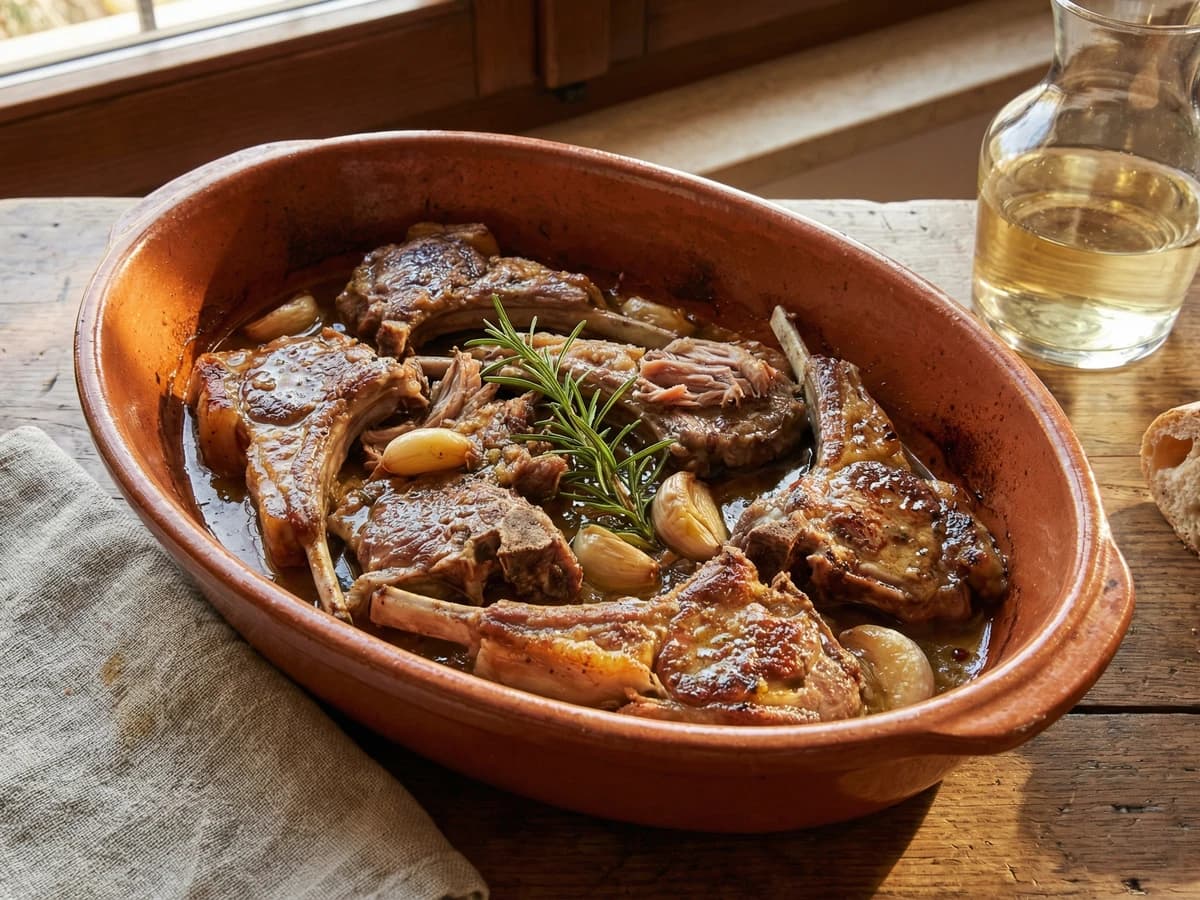
Roman milk-fed lamb cut like a chicken, braised with wine, rosemary, and anchovy until the meat surrenders to the fork. The anchovy disappears. The flavor does not.
Chef Graziella
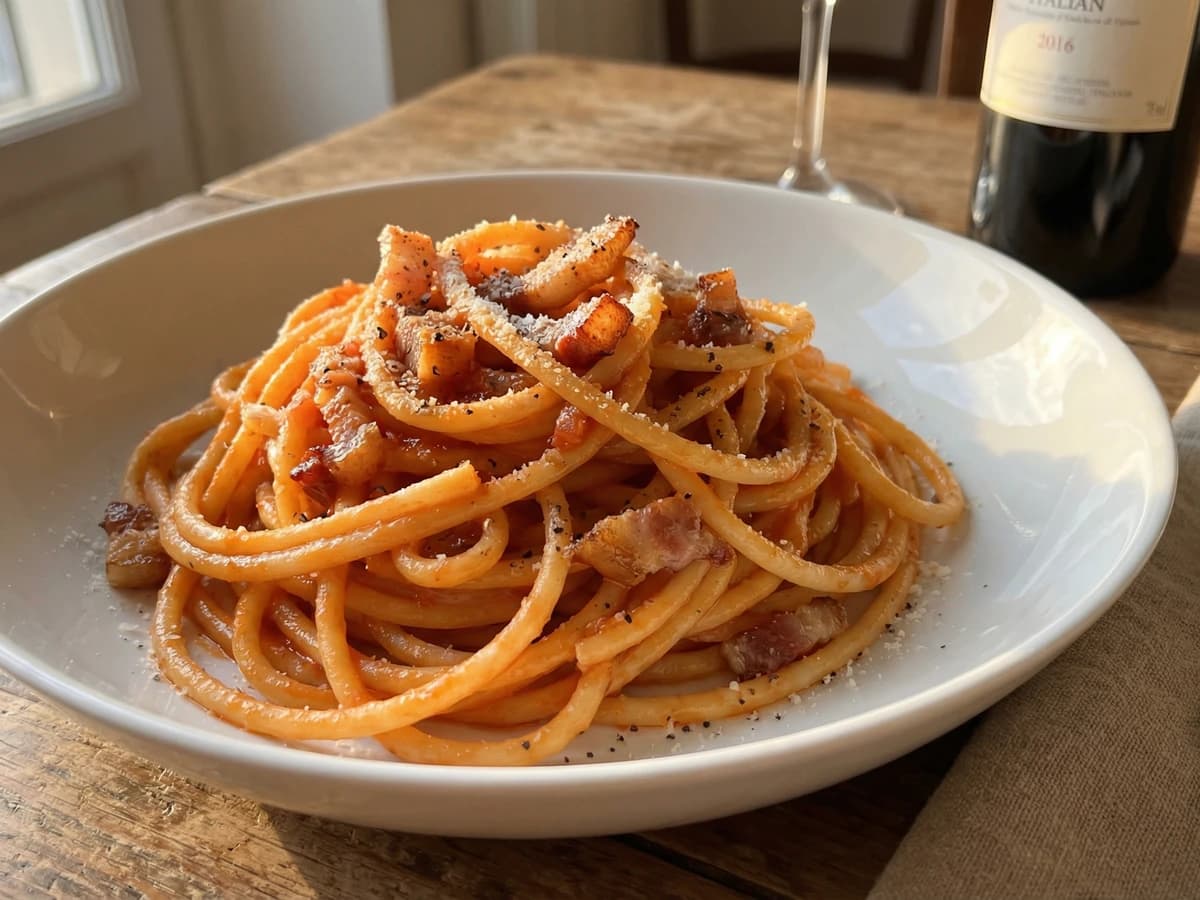
The true sauce of Amatrice: guanciale rendered to gold, tomatoes barely simmered, pecorino melted into silk. Three ingredients that tolerate no substitution and no addition.
Chef Graziella
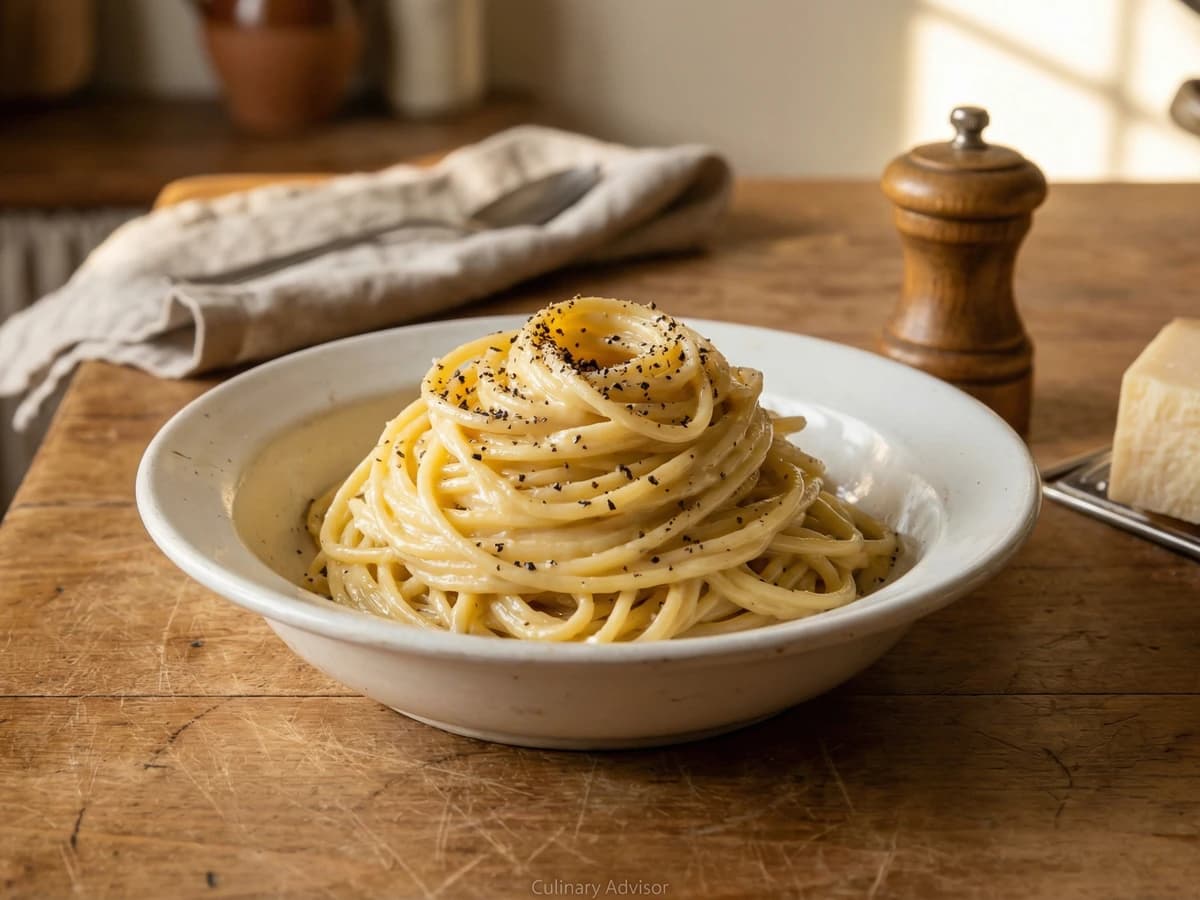
Three ingredients expose every flaw and reward every success. The silky emulsion of pecorino and pasta water, studded with cracked black pepper, is Rome's gift to cooks who understand that simple does not mean easy.