
Chef Juliana
Abobrinha Refogada
You think you'll turn zucchini into mush. Fine. Anota aí: high heat, wide pan, salt at the end, and suddenly this little green side starts solving dinner.
A cooking platform built around craft, culture, and the stories behind what we eat.
Created by
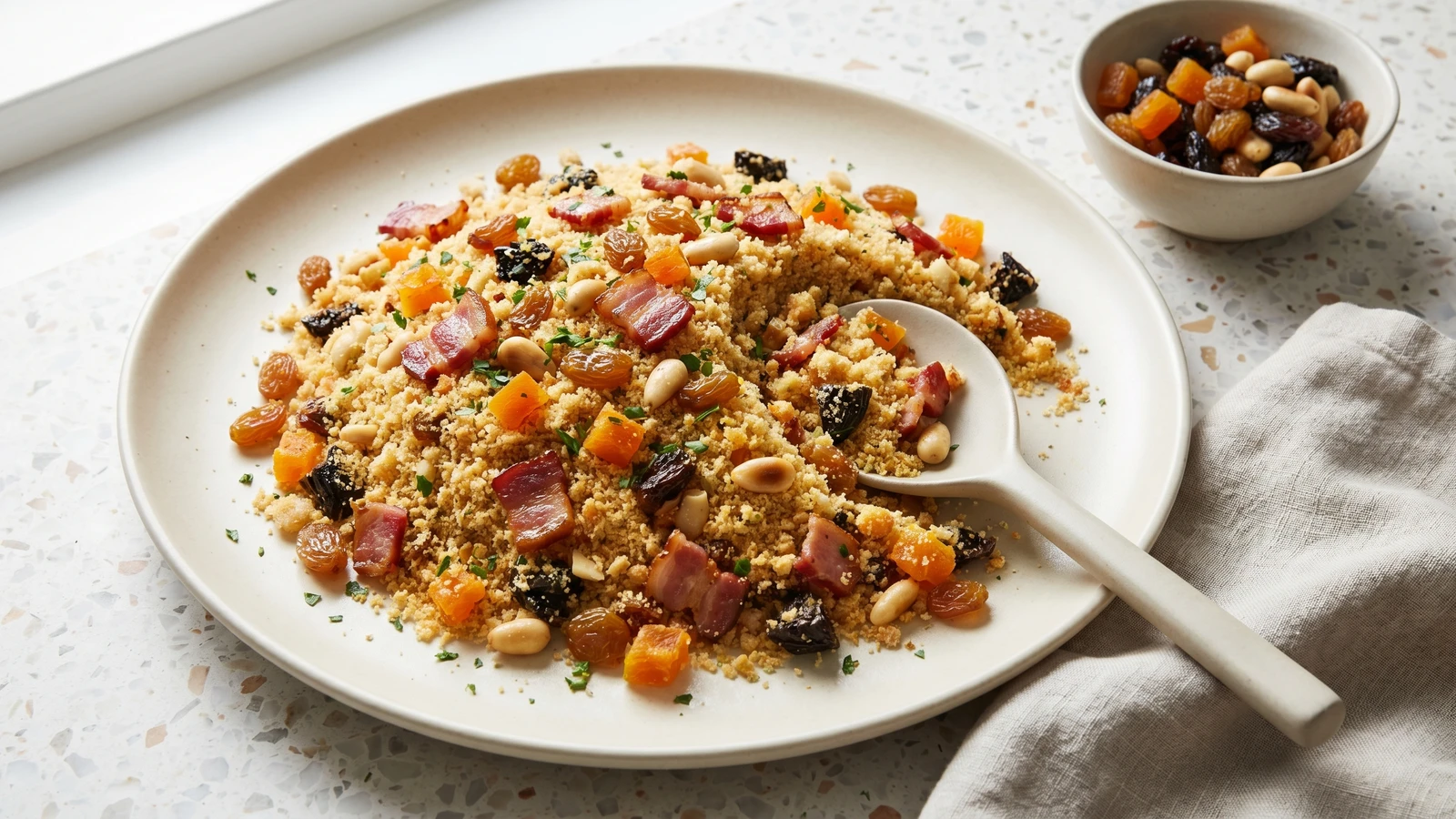
You think holiday farofa is one of those things only an aunt knows by hand. Nonsense. Low heat, good fat, and patience turn plain cassava flour into the crunch of the whole table.
You may have that little voice saying, isso não é pra mim, because farofa looks like it belongs to someone who cooks by instinct, throws things in a pan, and somehow always knows the point. I have news. That person learned too. Cozinhar não é dom, é um aprendizado. Anota aí.
Farofa is not decoration on the Brazilian table. It's structure. It catches the beans, sits beside the rice, wakes up the meat or egg, and gives the green thing some company. On Christmas it gets dressed up with dried fruit and nuts, yes, but it still belongs to the same pê-efe logic: comida de verdade, built from a pan, a refogado, and something honest to chew.
The method is simple, but it asks you to pay attention. Render the bacon slowly so it gives you flavor and fat. Let the onion murchar until sweet. Toast the farinha low and steady until it smells nutty and turns golden, because high heat burns the outside before the flour tastes cooked. Stir. Taste. Adjust. That's not mystery. That's a recipe that works.
Use the raisins if your family loves them. Leave them out if your table fights about them every December, because I'm a teacher, not a hostage negotiator. What matters is the balance: salty, sweet, buttery, crisp, and unmistakably Brazilian.
Farofa comes from farinha de mandioca, cassava flour, one of Brazil's oldest staple foods and a direct inheritance from Indigenous processing of cassava. Across Brazil it appears beside beans, grilled meats, stews, and holiday roasts, changing by region and household: dendê in parts of Bahia, eggs in everyday versions, dried fruit and nuts on many Christmas tables. The Christmas version reflects a long Brazilian habit of adapting European holiday abundance to local pantry logic, with cassava still doing the real work.
Quantity
3 cups
medium grind if possible
Quantity
150 g
diced small
Quantity
4 tablespoons
Quantity
1 tablespoon
Quantity
1 medium
finely chopped
Quantity
3 cloves
minced
Quantity
1/2 cup
Quantity
1/2 cup
chopped
Quantity
1/3 cup
chopped
Quantity
1/2 cup
roughly chopped
Quantity
1/2 teaspoon, plus more to taste
Quantity
1/4 teaspoon
Quantity
1/2 cup
finely chopped
| Ingredient | Quantity |
|---|---|
| toasted cassava flour (farinha de mandioca torrada)medium grind if possible | 3 cups |
| bacondiced small | 150 g |
| unsalted butter | 4 tablespoons |
| neutral oil (optional) | 1 tablespoon |
| onionfinely chopped | 1 medium |
| garlicminced | 3 cloves |
| raisins | 1/2 cup |
| dried apricotschopped | 1/2 cup |
| pitted pruneschopped | 1/3 cup |
| Brazil nuts or cashewsroughly chopped | 1/2 cup |
| salt | 1/2 teaspoon, plus more to taste |
| black pepper | 1/4 teaspoon |
| parsleyfinely chopped | 1/2 cup |
Put the bacon in a wide, heavy skillet over medium-low heat and cook, stirring now and then, until the pieces are browned and the fat has melted into the pan, about 8 to 10 minutes. Go slow. If the heat is too high, the bacon burns before giving you the fat that seasons the whole farofa.
Add the butter to the bacon fat. If the pan looks dry, add the oil too. Stir in the onion with a pinch of salt and cook until it goes soft, glossy, and see-through, about 5 minutes. This is your refogado, and it matters because cassava flour has no mercy for lazy flavor.
Add the garlic and stir for 1 minute, just until you can smell it. Stop there. Burnt garlic turns bitter, and farofa carries every little mistake loudly because there is no sauce to hide behind.
Add the raisins, apricots, and prunes. Stir for 2 minutes, until the fruit looks glossy and a little plump. The fat coats the fruit so the sweetness spreads through the farofa instead of sitting in random sticky pockets.
Lower the heat and add the cassava flour one cup at a time, stirring well after each addition so every grain touches the fat. Cook, stirring constantly, until the farofa turns lightly golden, smells nutty, and feels dry and loose in the spoon, about 8 to 10 minutes. Low heat is the lesson here: rush it and you get burnt dust, not farofa.
Stir in the chopped nuts, salt, and black pepper. Cook 2 more minutes, just until the nuts smell warm and the farofa sounds sandy against the pan. Taste before adding more salt, because bacon already came to the party with opinions.
Turn off the heat and stir in the parsley. Add it off the heat so it stays green and fresh instead of going dull in the pan. Serve warm or at room temperature, loose and crisp, beside roast meat, rice, beans, and something green.
1 serving (about 115g)
Culinary guides, cultural storytelling, and the editorial depth that makes cooking meaningful.
Discover Culinary ExplorerChef Juliana
You think you'll turn zucchini into mush. Fine. Anota aí: high heat, wide pan, salt at the end, and suddenly this little green side starts solving dinner.

Chef Juliana
You think this is sacred enough to be impossible. It isn't. Acaçá is patience, stirring, and ponto, taught plainly, with respect for the terreiros that carry it.

Chef Juliana
You think cornmeal will turn into lumps and shame. It won't. Cold water first, patient stirring, and a real garlic base give you angu that solves dinner.

Chef Juliana
Everyone swears they can't make good rice. They're wrong. Refogue onion and garlic, use two parts water to one rice, then close the lid and leave the poor thing alone.