Chef Isabel
Abanico Ibérico a la Plancha
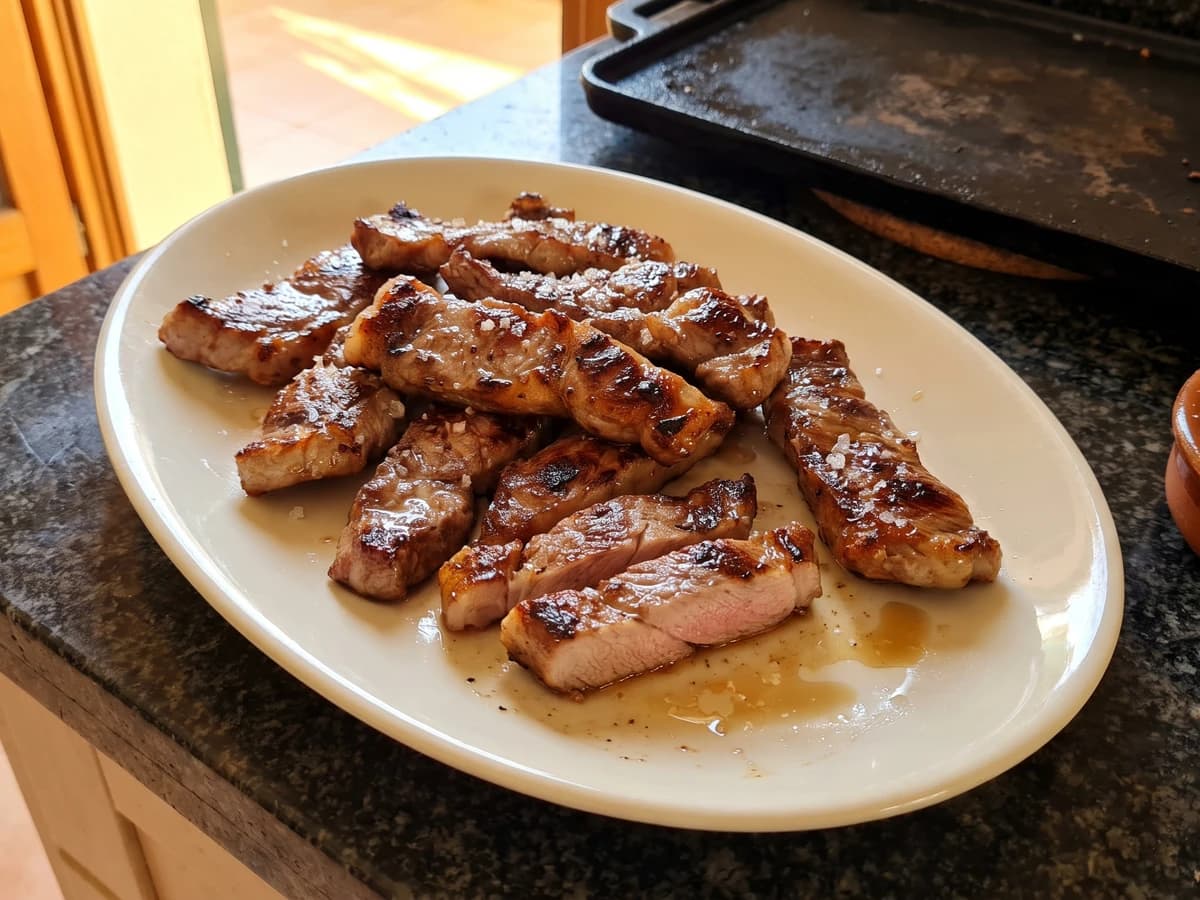
Extremadura's dehesa gives us this fan-shaped, marbled rib cut: salt it at the last moment, lay it on a fierce plancha, and count in seconds so the centre stays juicy.
A cooking platform built around craft, culture, and the stories behind what we eat.
Created by
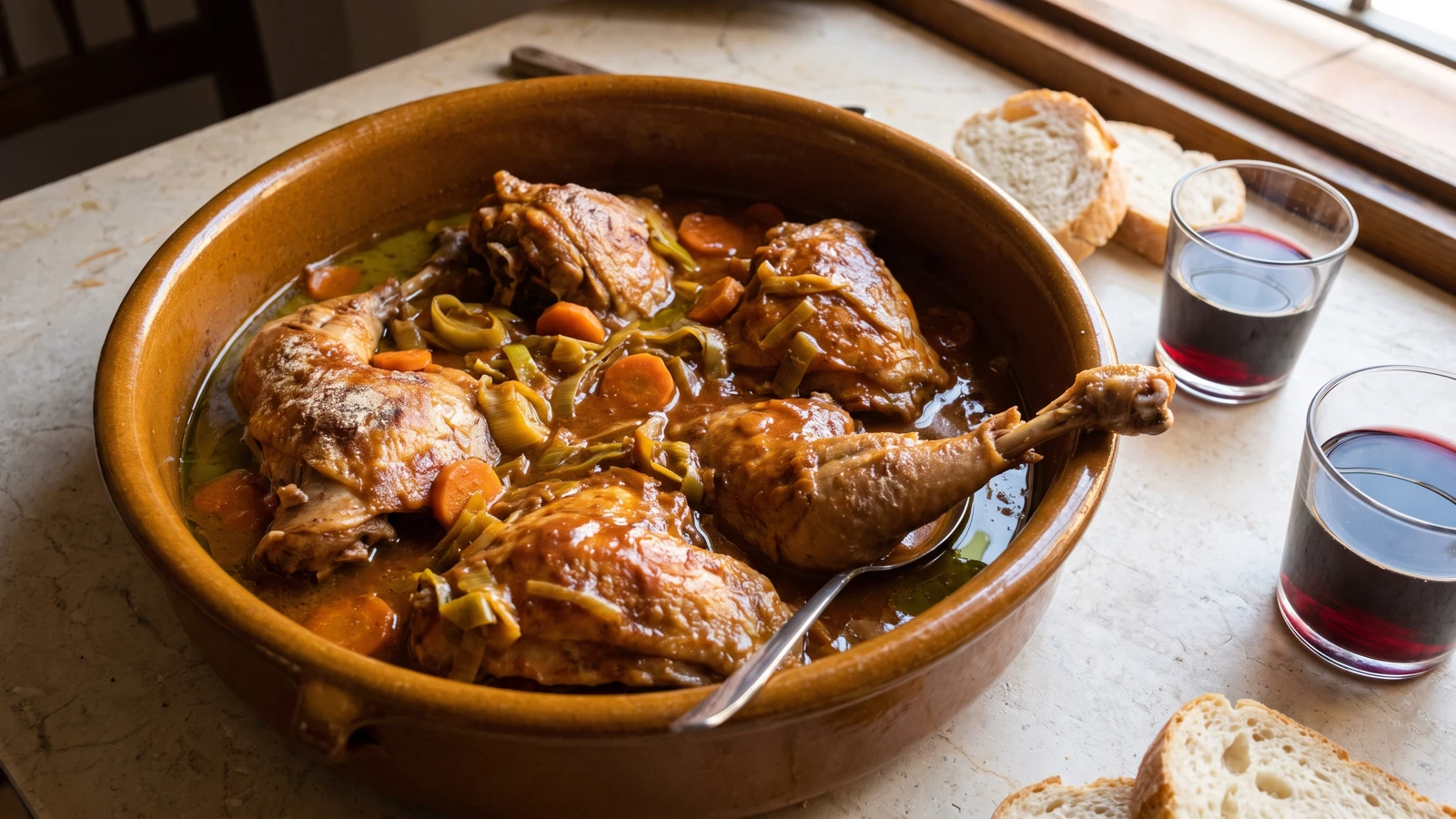
La Mancha gives lean pheasant the treatment it needs: a light coat of flour, deep browning, sweet leek-and-tomato sofrito, and a quiet braise that leaves the bird tender and the sauce glossy.
Faisán estofado manchego belongs to Castilla-La Mancha, where a lean game bird is browned under a light coat of flour, then tucked into leek, onion, carrot and tomato with local wine. It is an estofado, a covered stew, not an escabeche: the sauce is rounded by slow-cooked vegetables and wine, not led by vinegar. The flour takes on the browning from the pan and later gives the cooking liquor enough body to cling to the meat.
The braise decides it. Once the pheasant returns to the pot, let the liquid barely tremble. A hard boil tightens the breasts before the legs surrender, which is a poor bargain. I choose hen pheasants when I can because they are smaller and juicier than cocks. Check the breasts first, lift them when tender, and give the legs the extra time they need.
If pheasant is scarce where you are, use one 1.6kg free-range chicken, jointed the same way. The meat will be milder and a little fattier, and it needs only 45 to 55 minutes in the sauce. No hace falta haber pisado España, you don't need to have set foot in Spain. In the Margin beside this one I wrote, "the sauce may move; the bird mustn't knock about." Keep the simmer quiet and the measurements honest. Siempre sale, si lo sigues.
Castilla-La Mancha's cooking of caza, game, grew from the dry plain and scrub where rabbit, partridge and other birds entered the household pot during the hunting season. Pheasant was a more prized hunt-table bird than everyday chicken, and stewing it with garden vegetables and local wine made useful tenderness from a lean bird, especially an older cock. The light flour coating belongs to the estofado method: it browns with the meat and thickens the cooking liquor without a separate sauce.
Quantity
2, 800g each
jointed into 12 bone-in breast, leg and wing pieces
Quantity
16g
divided
Quantity
2g
Quantity
50g
Quantity
75ml
Quantity
300g
finely diced
Quantity
250g
thoroughly washed and sliced 5mm thick
Quantity
240g
peeled and sliced 5mm thick
Quantity
15g
finely chopped
Quantity
400g
peeled and grated if fresh, crushed if canned
Quantity
250ml
Quantity
450ml
Quantity
1
Quantity
2 small sprigs
| Ingredient | Quantity |
|---|---|
| dressed hen pheasantsjointed into 12 bone-in breast, leg and wing pieces | 2, 800g each |
| fine sea saltdivided | 16g |
| freshly ground black pepper | 2g |
| plain flour | 50g |
| extra virgin olive oil | 75ml |
| onionsfinely diced | 300g |
| leeks, white and pale-green partsthoroughly washed and sliced 5mm thick | 250g |
| carrotspeeled and sliced 5mm thick | 240g |
| garlicfinely chopped | 15g |
| ripe tomatoes or canned whole peeled tomatoespeeled and grated if fresh, crushed if canned | 400g |
| dry white wine, preferably Airén from La Mancha | 250ml |
| hot water | 450ml |
| bay leaf | 1 |
| thyme | 2 small sprigs |
Ask the butcher to joint each pheasant into two bone-in breasts, two whole legs and two wings. Pat the pieces dry without rinsing them. If the birds are wild, run clean fingers carefully over the flesh and remove any shot, loose feathers or badly bruised tissue. Season with 12g of the salt and all the pepper, then leave them for 15 minutes while you prepare the vegetables.
Spread the flour in a shallow dish. Coat each pheasant piece lightly, then shake off every loose patch. Heat 60ml of the olive oil in a wide, heavy casserole over medium-high heat. Brown the pheasant in two or three batches, starting skin-side down, for 3 to 4 minutes on the first side and 2 minutes on the second. Lift each batch to a plate. You are building a deep golden crust, not cooking the bird through.
Lower the heat and add the remaining 15ml olive oil. Add the onion, leek, carrot and remaining 4g salt. Cook gently for 20 to 25 minutes, stirring often, until the leek has collapsed and the onion is dark gold and sweet. Add the garlic and cook for 1 minute. Stir in the tomato and cook for another 12 to 15 minutes, until its raw water has gone, the colour has deepened, and the oil begins to show around the edges. This is the sofrito, the slow vegetable base. Rush it and the finished sauce tastes thin.
Pour in the wine and scrape the browned flour and meat juices from the bottom with a wooden spoon. Raise the heat slightly and let the wine bubble for 4 to 5 minutes, until reduced by about half and no raw alcoholic sharpness remains.
Put the legs and wings into the casserole first, with the breast pieces resting above them. Add the bay leaf, thyme and 450ml hot water. The liquid should reach roughly halfway up the meat, not cover it. Bring it only to the first lazy bubble, cover tightly, and turn the heat to its lowest setting. Braise for 40 minutes, turning the pieces once without stirring them around.
After 40 minutes, check the thickest breast pieces. Lift them to a covered plate as soon as they reach 74°C at the thickest part and a fine skewer enters without resistance. Continue cooking the legs and wings at the same bare tremble for another 20 to 30 minutes, until the thigh joints yield easily. Return the breast pieces for the final 5 minutes.
Transfer all the pheasant to a warm dish and discard the bay and thyme. Simmer the uncovered sauce for 5 to 10 minutes, stirring gently, until it is glossy and thick enough to coat the back of a spoon. If it is already thick, leave it alone; flour does its work quietly. Taste for salt, return the bird to the casserole, and spoon the vegetables and sauce over every piece.
Take the covered casserole off the heat and rest the stew for 10 minutes. The flour settles into the sauce and the meat relaxes after the braise. Serve one breast or leg piece per person with extra wings for the table, plenty of sofrito and thick candeal bread for the sauce.
1 serving (about 610g)
Culinary guides, cultural storytelling, and the editorial depth that makes cooking meaningful.
Discover Culinary ExplorerChef Isabel
Extremadura's dehesa gives us this fan-shaped, marbled rib cut: salt it at the last moment, lay it on a fierce plancha, and count in seconds so the centre stays juicy.

Chef Isabel
Alboronía is Andalucía's old pumpkin and aubergine stew, deepened with tomato, pimentón, and cumin, then cooked without hurry until the vegetables settle into a glossy, sweet, spoon-soft whole.

Chef Isabel
Aletría Murciana is Murcia's humble noodle guiso: fine fideos, pork ribs, potato, saffron, and a dark sweet sofrito. Get that base right and the pot knows where it's going.

Chef Isabel
Asturias opens clams in tart natural cider over a slow onion and garlic sofrito, making a bright, briny sauce that asks for bread and rewards one rule: lift each clam as it opens.