Yucatán's cantina tuna salad, built on naranja agria, minced habanero, celery, and hierbabuena. Eaten cold on saltines with a slice of habanero on top and a Montejo beer in the other hand.
Salads
Mexican
Quick Meal
Budget Friendly
Meal Prep
15 min
Active Time
0 min cook•15 min total
Yield4 to 6 servings as a botana
This is from Yucatán. Specifically from the cantinas of Mérida and the family kitchens of Valladolid, Tizimín, and Progreso, where a bowl of ensalada de atún sits on the counter at midday next to a stack of galletas de soda and a plate of sliced habanero. It is botana, the food you eat while you are drinking, and it is also lunch on a hot day when the kitchen does not want to be turned on.
The Yucatán Peninsula does not cook like the rest of Mexico. The naranja agria, the bitter orange the Spanish brought and the Maya cooks absorbed into everything from cochinita pibil to escabeche, is what makes this salad yucateco and not a generic tuna salad. If you have it, use it. If you do not, mix lime with a little sweet orange and you will get close, but understand what you are missing. Naranja agria has a perfume that lime does not have, a soft bitterness underneath the sour. It is the citrus of Yucatán the way lime is the citrus of Jalisco.
The other thing you need to understand: there is no mayonnaise in this salad. None. Mayonnaise is for Sonoran tuna sandwiches and American school lunches. The Yucatecan version is dressed with the juice of the bitter orange and a little olive oil, and the body comes from the tuna and the finely diced vegetables. The habanero is not optional. Hierbabuena is not optional. These are the ingredients that make it the dish it is.
My mother never made this. She was from Jalisco and she would have looked at habanero with suspicion. I learned it in Mérida from a woman named Doña Cristina who ran a small cantina off Calle 60 and who showed me how to dice the onion finer than I thought necessary and to drain the tuna harder than I wanted to. No me vengas con atajos. Recetas probadas y garantizadas.
The use of naranja agria, Citrus aurantium, defines Yucatecan cuisine and distinguishes it sharply from the cooking of the rest of Mexico; the fruit was introduced by the Spanish in the 16th century and was adopted into Maya cooking as the principal souring agent, displacing or coexisting with older native acidulants. Canned tuna entered Yucatecan home cooking in the early 20th century alongside the rise of Mexico's Pacific tuna fleet and became a staple cantina botana in Mérida by the 1940s, when small bars served it on saltines as a free accompaniment to beer. The dish belongs to a broader Yucatecan category of cold, citrus-dressed preparations that includes salpicón de venado, escabeche oriental, and the various ensaladas made with jícama, cabbage, radish, and beet, none of which resemble the lettuce-and-dressing salads of central or northern Mexico.
The technique, the tradition, and the story behind every dish.
stemmed, seeded, and minced (use half for less heat)
fresh naranja agria juice
Quantity
3 tablespoons
or 2 tablespoons fresh lime juice mixed with 1 tablespoon fresh sweet orange juice
good olive oil
Quantity
2 tablespoons
fresh cilantro
Quantity
2 tablespoons
chopped
fresh hierbabuena (spearmint)
Quantity
1 tablespoon
chopped
kosher salt
Quantity
1/2 teaspoon, plus more to taste
freshly cracked black pepper
Quantity
to taste
galletas de soda (saltine crackers) (optional)
Quantity
for serving
sliced chile habanero (optional)
Quantity
for serving
lime wedges (optional)
Quantity
for serving
pickled red onion (cebolla morada en escabeche) (optional)
Quantity
for serving
Ingredient
Quantity
good-quality tuna packed in oildrained well
2 cans (5 ounces each)
red onionfinely diced
1/2 medium
celery from the heartfinely diced
2 ribs
tomate saladetseeded and finely diced
1 small
chile habanerostemmed, seeded, and minced (use half for less heat)
1
fresh naranja agria juiceor 2 tablespoons fresh lime juice mixed with 1 tablespoon fresh sweet orange juice
3 tablespoons
good olive oil
2 tablespoons
fresh cilantrochopped
2 tablespoons
fresh hierbabuena (spearmint)chopped
1 tablespoon
kosher salt
1/2 teaspoon, plus more to taste
freshly cracked black pepper
to taste
galletas de soda (saltine crackers) (optional)
for serving
sliced chile habanero (optional)
for serving
lime wedges (optional)
for serving
pickled red onion (cebolla morada en escabeche) (optional)
for serving
Equipment Needed
•Sharp paring knife for the habanero
•Small glass or ceramic mixing bowl (do not use reactive metal with the citrus)
•Fork for flaking and folding
•Citrus juicer or hand reamer
Instructions
1
Drain the tuna properly
Open the cans and press the tuna against the lid with the back of a fork. Squeeze out every drop of packing oil you can. Wet tuna makes a wet salad and the naranja agria has no room to do its work. Flake the drained tuna into a glass or ceramic bowl with a fork. Not too fine. You want the texture of the fish to show.
Buy tuna packed in oil, not water. The oil-packed fish keeps its texture and does not turn to paste when you flake it. In Mérida the cantineros use the Spanish or Mexican brands in olive oil and you should too.
2
Prepare the habanero with respect
Stem the habanero. Slice it in half lengthwise. Scrape out the seeds and the white veins. Mince the flesh as fine as you can. Wash your hands twice with soap and do not touch your face for the next hour. The habanero is the soul of Yucatecan heat: floral, fruity, and ferocious. One chile is correct. Half a chile is for guests who are not ready. A whole one with seeds is for the cantina at three in the afternoon.
Habanero heat builds. It does not hit you in the front of the mouth like a serrano. It blooms in the back and stays. Respect this when you taste for seasoning.
3
Combine the vegetables and citrus
Add the diced red onion, celery, tomate, and minced habanero to the bowl with the tuna. Pour over the naranja agria and the olive oil. Add the salt and a good amount of black pepper. Fold everything together with a fork, gently, lifting from the bottom. Do not mash. The salad should look composed, not pureed.
4
Add the fresh herbs at the end
Scatter the cilantro and hierbabuena over the top and fold them in with two or three turns of the fork. The hierbabuena is what gives Yucatecan tuna salad its perfume and separates it from any other tuna salad you have eaten. Skip it and the dish loses its address. Taste now. Adjust the salt. If it tastes flat, it needs more naranja agria, not more salt. The citrus does the lifting here.
5
Rest, then serve
Cover the bowl and rest the salad in the refrigerator for at least 15 minutes. The naranja agria needs time to soften the onion and pull the flavors together. Serve cold, mounded on galletas de soda, with a thin slice of fresh habanero laid on top of each cracker for whoever is brave. Set lime wedges and a small dish of pickled red onion on the side. This is cantina food. Eat it standing up with a cold beer if you are doing it right.
Chef Tips
•Naranja agria does the work of vinegar here. If you live somewhere with a Cuban or Caribbean grocery, you can find it fresh or bottled. The bottled juice from Goya or Iberia is acceptable in a pinch. If you have neither, mix two parts fresh lime juice with one part fresh sweet orange juice and add a tiny squeeze of grapefruit. You will get the brightness and some of the bitterness. You will not get the perfume. A substitution is a compromise, not an upgrade.
•The habanero must be fresh, not pickled, not dried, not from a jar. A good Yucatecan habanero is orange or yellow, the size of a small lime, and smells like apricot and gasoline when you cut it. If your habanero has no aroma, it has no flavor, and your salad will only be hot, not delicious.
•Buy tuna packed in olive oil, the Spanish or Italian brands if you can find them. Tuna in water turns to wet cardboard the moment you flake it. La cocina no es decoración, es trabajo, and that work starts with buying the right can.
•This salad keeps for two days in the refrigerator but the texture is best in the first six hours. Past that, the onion softens too much and the celery loses its snap. Make it the morning you plan to serve it.
Advance Preparation
•The red onion can be diced and the celery prepped up to four hours ahead and held in the refrigerator in separate covered containers.
•The salad itself benefits from at least 15 minutes of rest after mixing so the naranja agria can soften the onion, but should be eaten within six hours for the best texture.
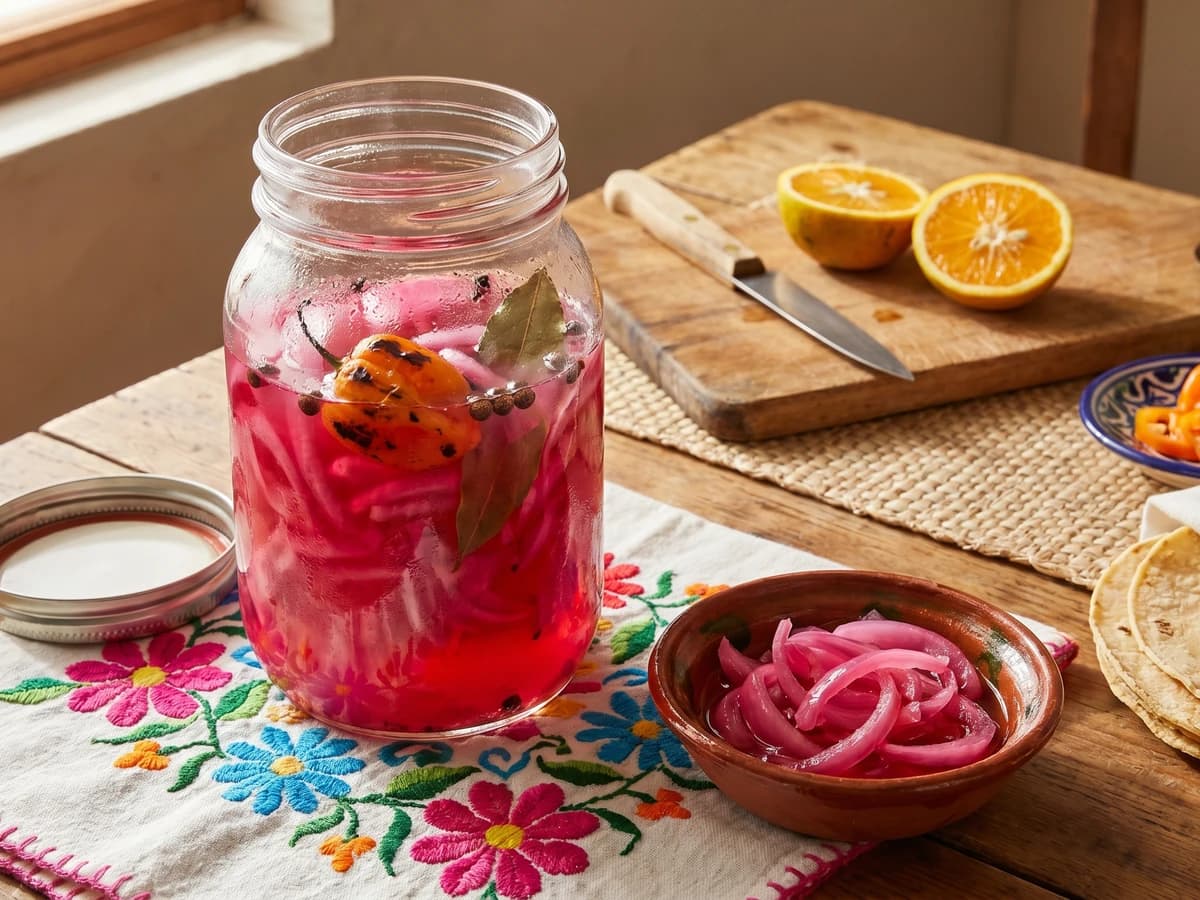
•Pickled red onion (cebolla morada en escabeche) can be made days in advance with sliced red onion, naranja agria, salt, oregano, and a little allspice. It is a Yucatecan staple and earns its place on the table next to almost anything.
Frequently Asked Questions
Nutrition Information
1 serving (about 115g)
Calories
175 calories
Total Fat
10 g
Saturated Fat
2 g
Trans Fat
0 g
Unsaturated Fat
8 g
Cholesterol
15 mg
Sodium
380 mg
Total Carbohydrates
3 g
Dietary Fiber
1 g
Sugars
1 g
Protein
17 g
Where cooking meets culture.
Culinary guides, cultural storytelling, and the editorial depth that makes cooking meaningful.