Chef Lupita
Guadalajara Fruit & Cream Cup (Bionico Tapatio)
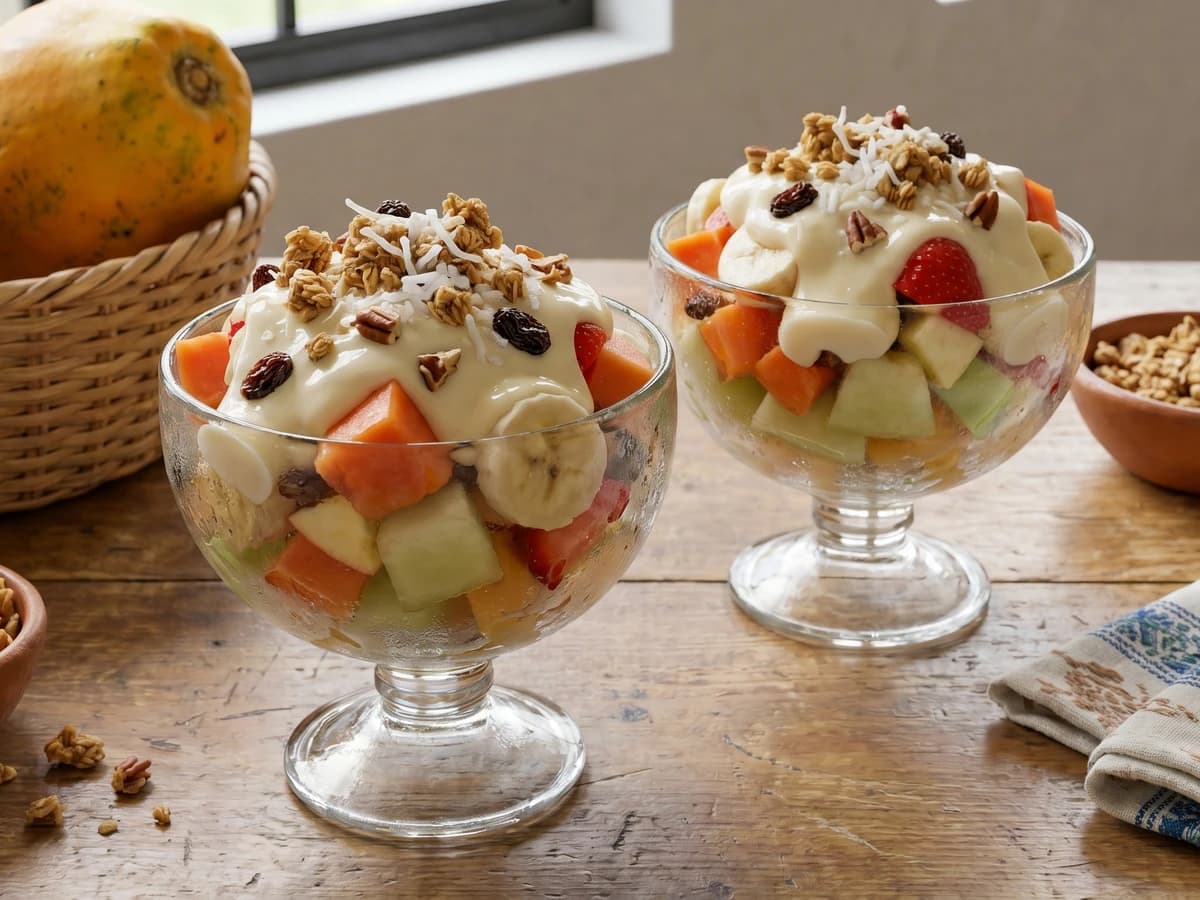
Jalisco's market fruit cup from Guadalajara, cold chopped fruit under sweet crema, granola, coconut and raisins, the quick meal that proved a city can invent tradition in a plastic cup.
A cooking platform built around craft, culture, and the stories behind what we eat.
Created by
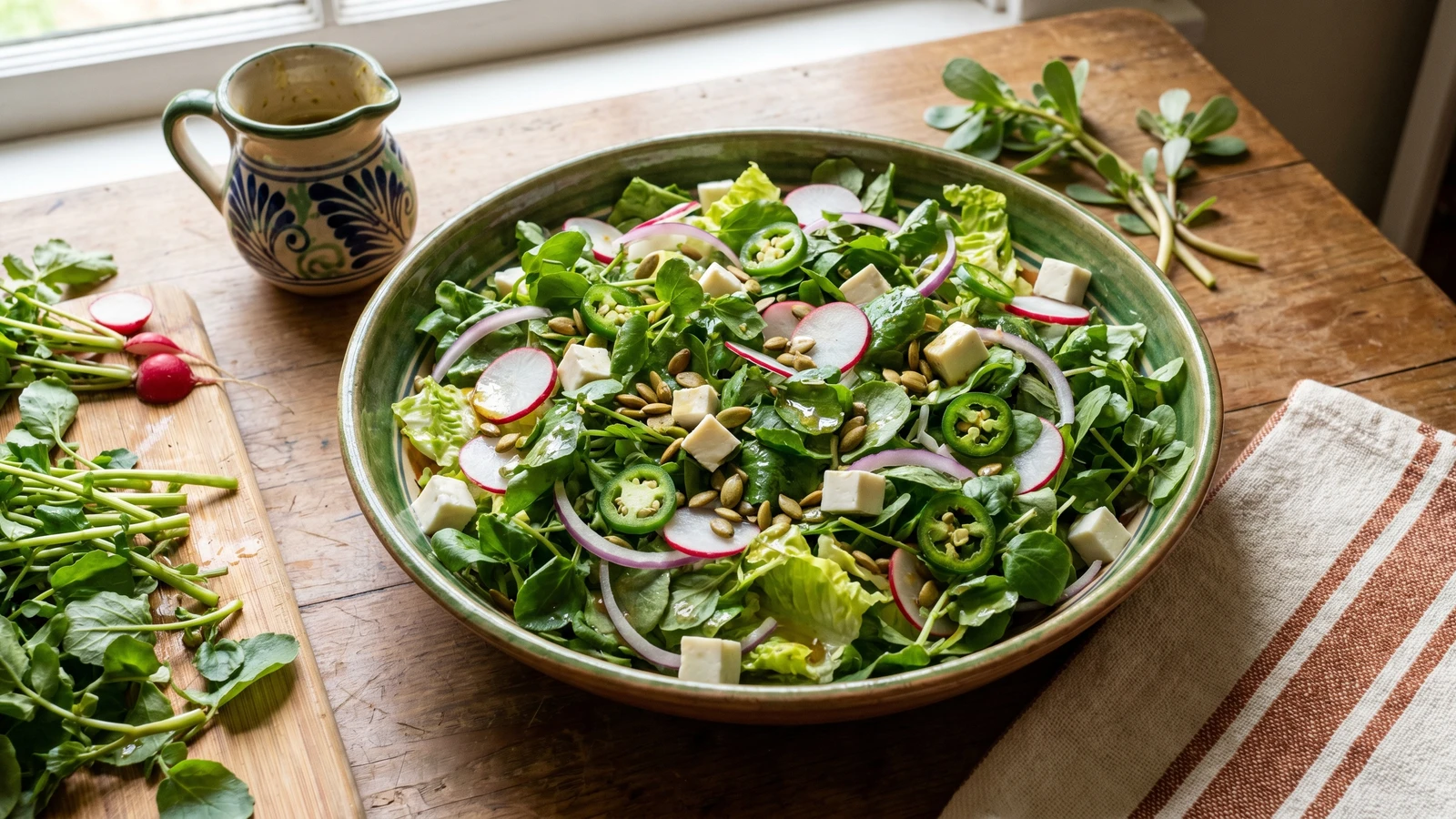
A raw quelites salad from the milpas of Puebla and the Valle de Mexico, peppery watercress and succulent purslane over romaine, dressed in a sharp mustard vinaigrette with radish, serrano, and cubes of queso panela.
Verdolagas are a quelite. That word does not translate cleanly into English, and that is part of the problem. Quelites are the edible wild and semi-wild greens that grow alongside corn and beans in the milpa, the traditional planting system of central and southern Mexico. Puebla, Tlaxcala, the State of Mexico, and the eastern edge of the Valle de Mexico are the heart of quelites country. This salad lives there.
Verdolagas (purslane) are succulent, lemony, with a faint mineral tang from the soil they grow in. Berros (watercress) are peppery and clean, the kind of green that wakes up the palate. Together, with romaine to give the bowl body, they form the kind of salad that a campesino family in Cholula or Texcoco would recognize as a Wednesday lunch. Nothing fancy. Just what came in from the field that morning.
The mustard vinaigrette is not French. Mustard has been cultivated in Mexico since the colonial period and the sharp, vinegary dressing on quelites is a Poblano habit, not an import. The queso panela goes on at the end because it is mild and fresh and lets the greens do the talking. If you want to make this with queso fresco instead, do it. Both belong in this bowl.
My mother kept a verdolagas patch on the rooftop of our building in Colonia Roma. She would pick them in the morning and rinse them three times in cold water before lunch. She used to say that verdolagas are the most generous green in Mexico because they grow where nothing else will. La cocina no es decoración, es trabajo.
Purslane (Portulaca oleracea) is one of the oldest cultivated greens in Mesoamerica, with archaeological evidence of its consumption in the Valley of Mexico dating back to pre-Columbian times, where it was known in Nahuatl as 'itzmiquilitl.' The Aztec tribute records compiled in the Codex Mendoza list quelites among the foodstuffs delivered to Tenochtitlan, and verdolagas remained a staple green in central Mexican kitchens through the colonial era and into the present, valued for thriving in poor soil and surviving drought. Watercress (berros) arrived later through European introduction but adapted so completely to the cold spring-fed waterways of states like Puebla, Veracruz, and Mexico that it now grows semi-wild and appears in regional markets year-round.
Quantity
2 large bunches
thick stems trimmed
Quantity
1 large bunch
leaves and tender stems only
Quantity
1 small head
torn into bite-sized pieces
Quantity
6
sliced into thin rounds
Quantity
1/2 small
sliced into very thin half-moons
Quantity
8 ounces
cut into 1/2-inch cubes
Quantity
1
stemmed and finely sliced into rings
Quantity
3 tablespoons (about 2 limes)
Quantity
1 tablespoon
Quantity
1 tablespoon
Quantity
1 small
finely grated
Quantity
1/2 teaspoon, plus more to taste
Quantity
1/4 teaspoon
Quantity
1/3 cup
Quantity
1 teaspoon
crumbled between your fingers
Quantity
2 tablespoons
for garnish
| Ingredient | Quantity |
|---|---|
| fresh watercress (berros)thick stems trimmed | 2 large bunches |
| fresh purslane (verdolagas)leaves and tender stems only | 1 large bunch |
| romaine lettucetorn into bite-sized pieces | 1 small head |
| red radishessliced into thin rounds | 6 |
| red onionsliced into very thin half-moons | 1/2 small |
| queso panelacut into 1/2-inch cubes | 8 ounces |
| fresh chile serranostemmed and finely sliced into rings | 1 |
| fresh lime juice | 3 tablespoons (about 2 limes) |
| apple cider vinegar | 1 tablespoon |
| Dijon mustard | 1 tablespoon |
| garlic clovefinely grated | 1 small |
| kosher salt | 1/2 teaspoon, plus more to taste |
| freshly ground black pepper | 1/4 teaspoon |
| extra-virgin olive oil | 1/3 cup |
| dried Mexican oreganocrumbled between your fingers | 1 teaspoon |
| toasted pumpkin seeds (pepitas) (optional)for garnish | 2 tablespoons |
Fill a large bowl with cold water. Submerge the watercress and the purslane in separate batches. Swish them around with your hand and let the grit settle to the bottom. Lift the leaves out by hand, do not pour. Repeat with fresh cold water until no sand sits at the bottom of the bowl. Verdolagas grow low to the ground in the milpa and they carry their dirt with them. Skip this step and you will eat the soil from the field.
Spin the washed watercress and purslane in a salad spinner in batches, or lay them on clean kitchen towels and pat dry. Water on the leaves dilutes the vinaigrette and the salad goes flat in minutes. A dry leaf takes the dressing. A wet leaf rejects it. Así se hace y punto.
Place the sliced red onion in a small bowl of cold water with a pinch of salt for ten minutes. This pulls out the harsh bite and leaves the onion crisp and sweet. Drain and pat dry before using. In the mercados of Puebla the señoras do this without thinking. It is the difference between an onion that fights the salad and one that joins it.
In a small bowl, whisk together the lime juice, apple cider vinegar, Dijon mustard, grated garlic, salt, and black pepper. Whisk until the mustard dissolves and the mixture looks cloudy and uniform. Slowly stream in the olive oil while whisking constantly. The vinaigrette will emulsify and thicken slightly. Crumble the Mexican oregano between your palms over the bowl, the heat of your hands wakes up the oils, and whisk it in. Taste. It should be sharp, mustardy, and bright. If it tastes timid, add more salt.
In a large wide bowl, combine the romaine, watercress, and purslane. Use your hands, not tongs. Tongs bruise the leaves and break the verdolagas at the stem. Hands respect them. Scatter the drained red onion and the sliced radishes across the top.
Whisk the vinaigrette one more time and pour about two-thirds of it over the greens. Toss gently with your hands, lifting from the bottom of the bowl to coat every leaf. Add the cubed queso panela and the serrano rings and toss once more, lightly. Taste a leaf. If it needs more dressing, add the rest. Scatter the toasted pepitas across the top. Serve immediately, while the leaves still stand up. A dressed salad does not wait. Recetas probadas y garantizadas.
1 serving (about 217g)
Culinary guides, cultural storytelling, and the editorial depth that makes cooking meaningful.
Discover Culinary ExplorerChef Lupita
Jalisco's market fruit cup from Guadalajara, cold chopped fruit under sweet crema, granola, coconut and raisins, the quick meal that proved a city can invent tradition in a plastic cup.
Chef Lupita
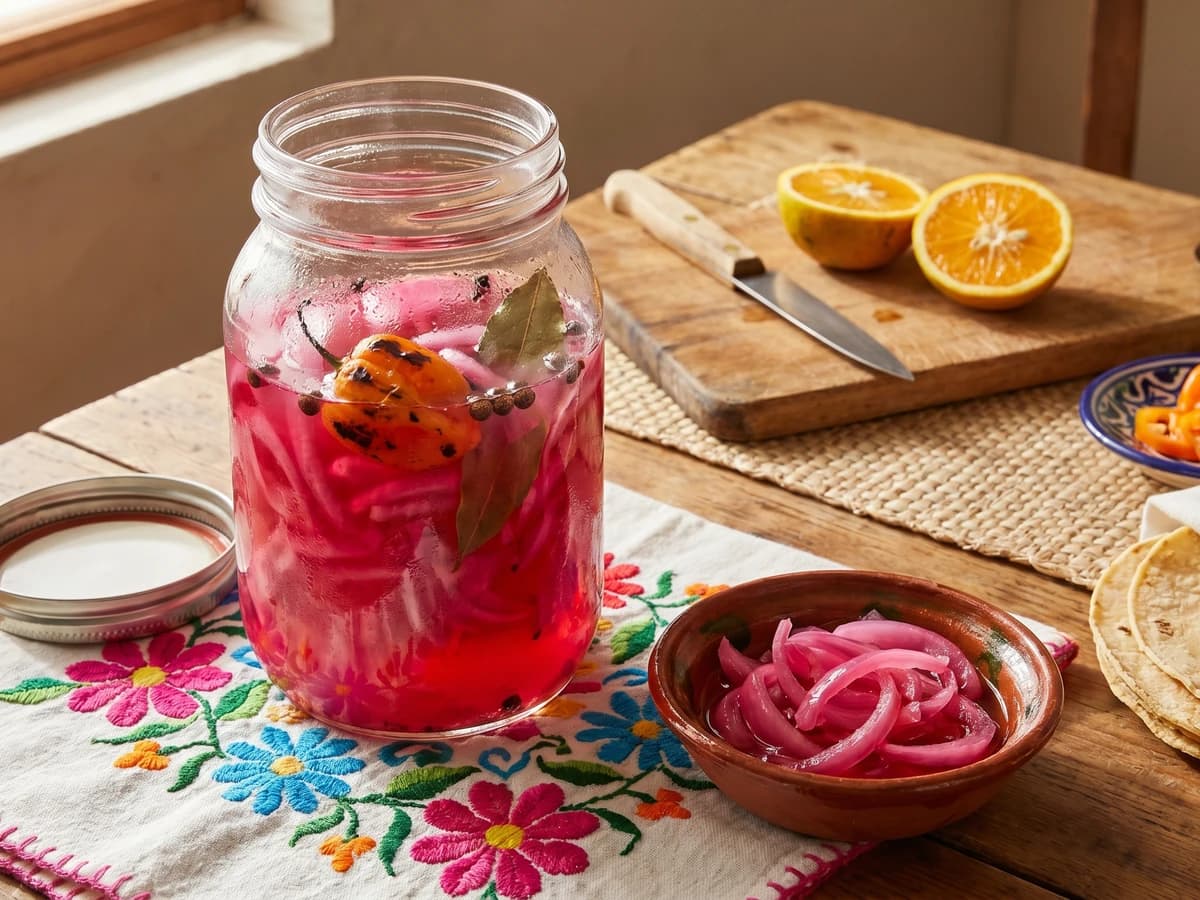
Yucatán's pink pickled red onions, blanched and steeped in naranja agria with allspice, charred habanero, and oregano yucateco. The Peninsula's table garnish, in every fonda from Mérida to Tizimín.

Chef Lupita
Sinaloa's pinata-and-wedding pasta salad. Elbow macaroni, small Pacific shrimp, mayo, crema, and the brine from a can of pickled jalapenos. Always cold. Always next to the frijoles puercos.
Chef Lupita
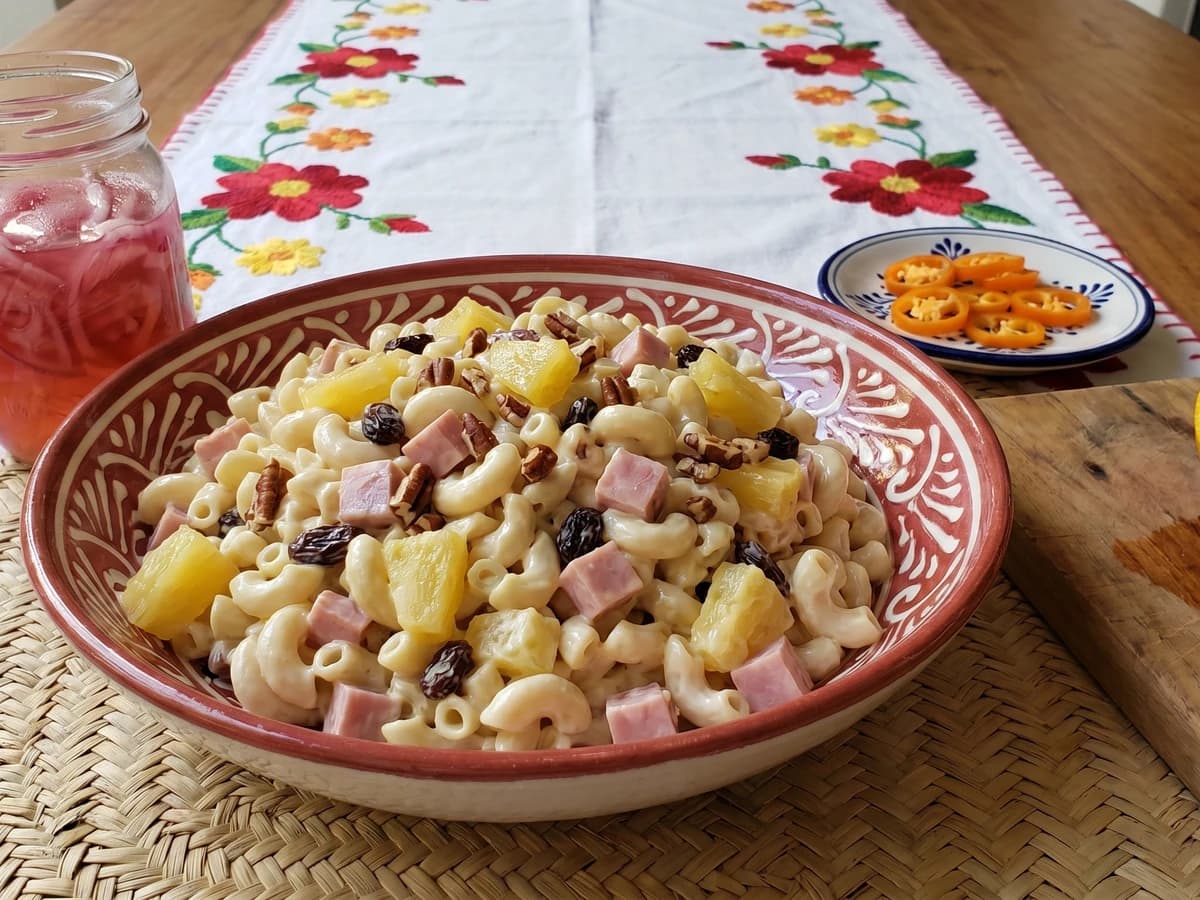
Yucatán's birthday-table coditos, elbow macaroni folded with diced jamón, pineapple in syrup, mayonesa, and media crema. Sweet, rich, and unapologetic, the pasta salad that anchors every fiesta from Mérida to Tizimín.